Explore institutional access Explore institutional access

2 min. read

Editorial

Editorial

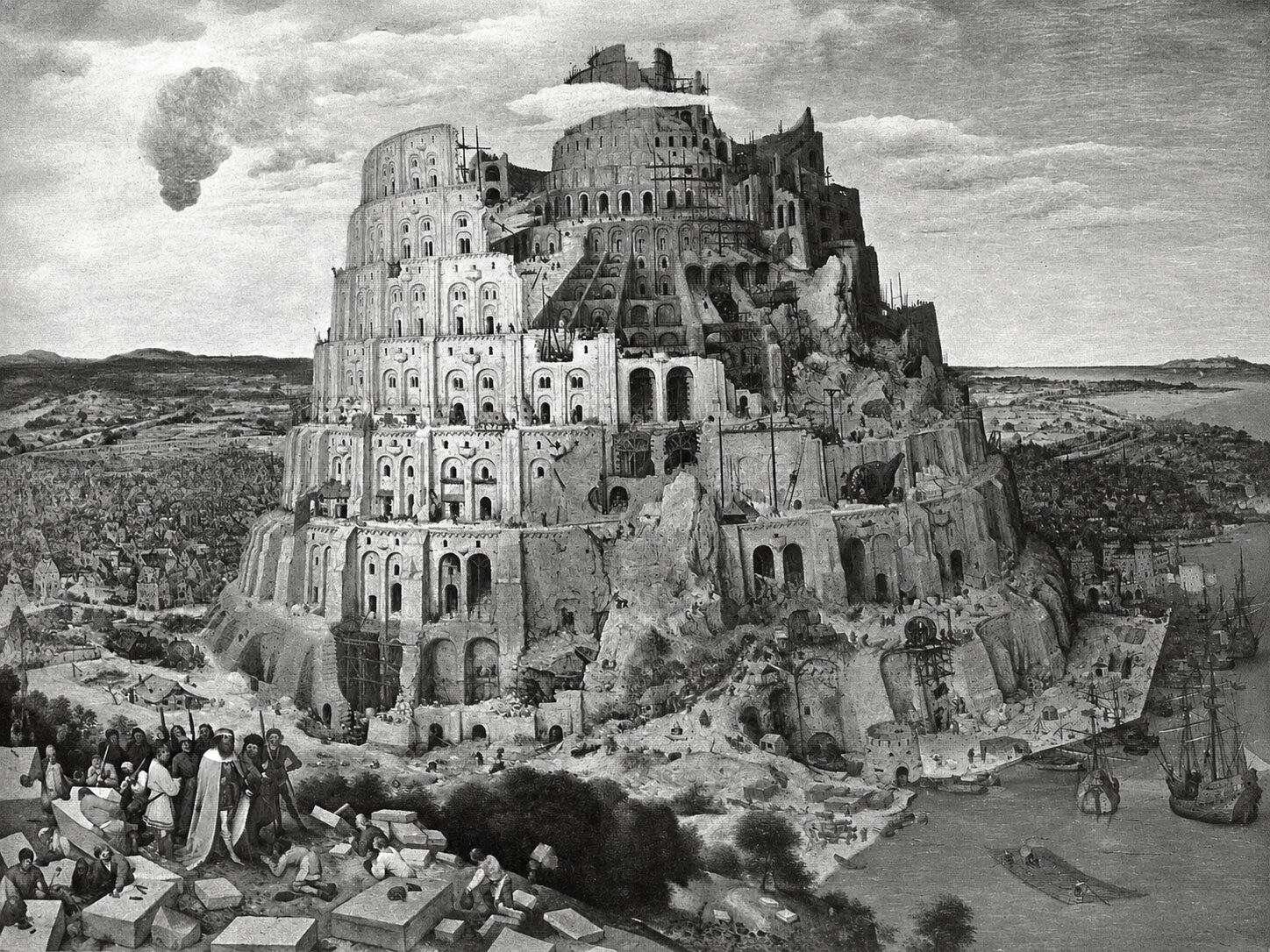
Pieter Bruegel the Elder
The Tower of Babel, 1563

In our artistic processes there is a complex phenomenon which links us fundamentally with hope, the hope of being able to improve or master our power of expression. With a combination of faith and doubt in our own capabilities we all work our way up, fast or slow, well or badly, towards that mountain peak¹ which — fortunately — always remains hidden.

Sometimes we are discouraged and come to a halt, bewildered, as if stranded on a platform, unable to find the means of climbing further. At other times, filled with euphoria, we scale the most difficult sections quickly and easily without looking back.

Often it is difficult to mould the character we would like to be (often it is the character we already are, finally revealing itself!). Think of the “internal dialogue” we so often have while practising. We step outside of ourselves to give ourselves orders or encourage or insult ourselves. Sometimes we use the first person (“I”), sometimes the second (“you”). In this way we forge the essential tool of awareness. The franker this dialogue is (not always easy!), the deeper that awareness becomes and the more this truth will favour the realisation of our ambitions.

What does all this have to do with brass? Behind every mouthpiece is a man or woman struggling, through his or her breath, with his or her identity, sensitivity, faith and hopes in an environment which is seldom ideal. Our instruments, which are capable of such power, should not delude us about our own fragility. At every moment they oblige us to offer and to accept the extraordinary challenge of our existence.

There are many things we should not forget while we blow into our fine instruments if we do not want the resulting sounds to be lost in banality or oblivion.

I have a very simple suggestion for you. Sit down somewhere comfortable in your own house, relax and concentrate. Put the Kyrie of the B minor Mass (there is no brass in this movement, so you will not be distracted). Its message is clear and forthright: progress, faith and hope come together in the transcendent universe of music. Let us try to follow it. (Do not hesitate to listen to it again, three times, as many times as necessary!)

¹ The height of this mythical mountain (for me it represents a civilisation and its culture) is proportional to every individual’s effort in trying to climb it and build it higher. All those who went before us in the history of our civilisation created and then developed the infrastructure of this mountain before expiring on their last platform, as if petrified in their final labour. The day that no-one else wants to climb any further will mark the end of our civilisation and our culture. That has already happened many times in the history of mankind.

Brass Bulletin 49, I / 1985 pages 9–11

All content is protected by copyright © Brass Bulletin 1985–2026

Share this article

Facebook LinkedIn
Loading…

Questions & Answers

How the Digital Edition works

What does the Digital Edition include?

The Digital Edition brings together the articles already digitized as searchable online texts—not simply as scans or PDF files—along with their original illustrations, notes, authorship, issue information, and available translations. Related-article suggestions currently include only this digitized material.

Are the digital articles identical to the originals?

We preserve the original text, language, illustrations, captions, footnotes, and editorial context as faithfully as possible. The presentation is adapted for comfortable online reading, and obvious transcription or scanning errors may be corrected. The substance and character of the published article remain unchanged.

Which languages are available?

Brass Bulletin was published in English, French, and German throughout its history. Italian and Spanish translations were added from issue No. 60 onward.

On the Italian and Spanish sites, articles from issues 1–59 are therefore shown in English by default.

How often are new articles added?

New articles are added almost daily, with approximately one complete issue digitized each week. The pace may vary depending on the preparation, image work, and editorial checking required.

Why aren’t all articles available digitally?

The complete Brass Bulletin collection contains 1,246 articles published between 1971 and 2003. The full index is already available online, allowing readers to discover every article in the collection, including those whose complete text has not yet been digitized.

Digitization began in February 2026. Each article is carefully prepared for online reading, checked, and connected to its issue, authors, subjects, and illustrations. At the current pace of digitization, the complete collection is expected to be available online by February 2028.

Why do some references mention articles that are not available yet?

References in the original articles are preserved even when the material they point to has not yet been digitized. This keeps the historical and editorial record intact. As more issues are added to the Digital Edition, an increasing number of these references will lead to articles that can be read online.

Can I suggest an article or report a transcription error?

Yes. If there is an article you would particularly like to see digitized, or if you notice a possible transcription error or missing detail, please contact us. Reader feedback helps us improve the Digital Edition and prioritize useful connections within the archive.

How can I support Brass Bulletin?

Your support helps fund the preparation, verification, and online publication of the complete collection.

Subscribe to the Digital Edition

Prefer to support us without subscribing?

Make a donation

Search Brass Bulletin.