Brass Bulletin is now also available in Italian and Spanish.

3 min. read

The trumpet in the north German postal service of the 19th century
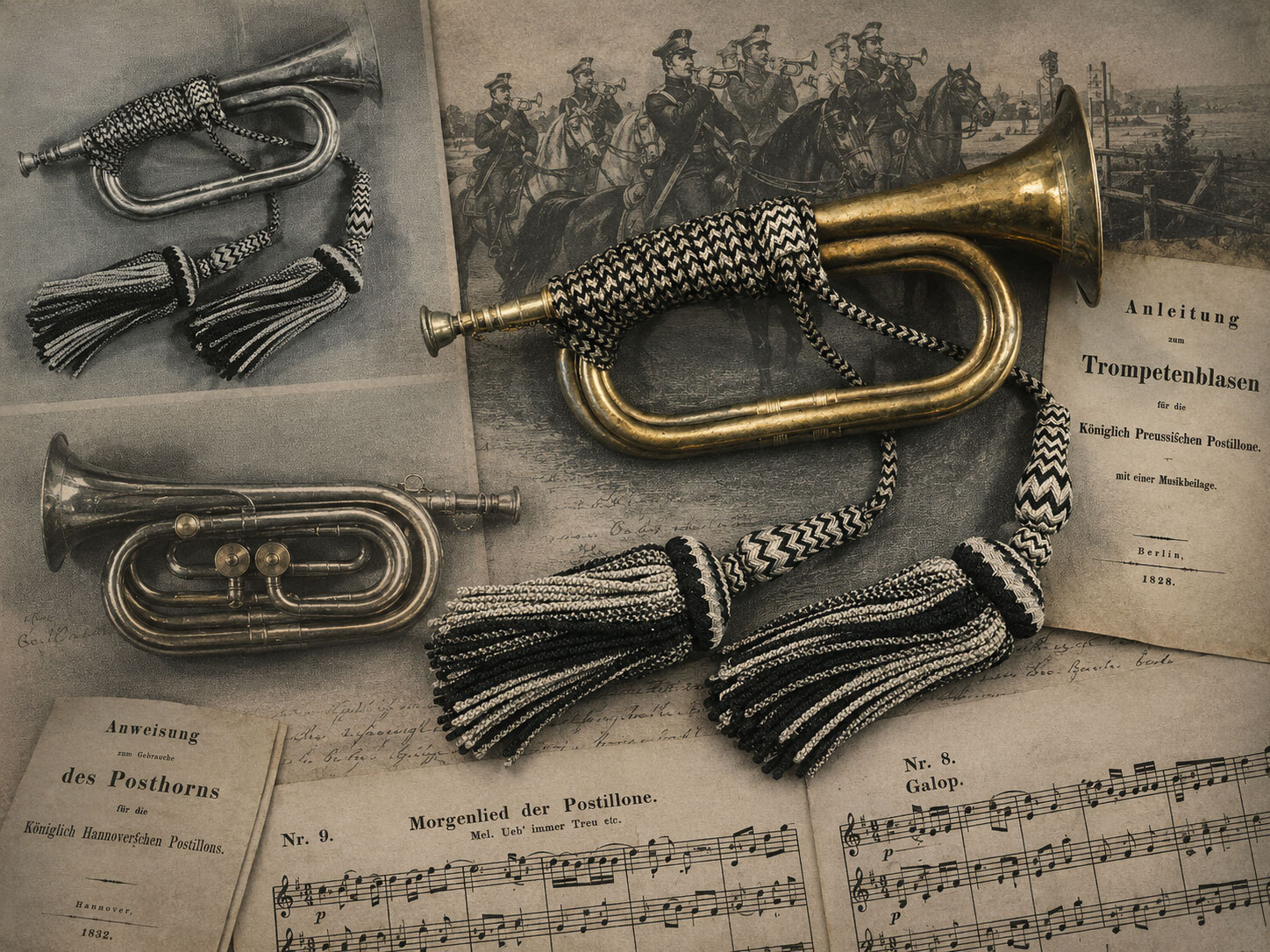
For forty years, northern German postilions exchanged the familiar post-horn for trumpets, turning postal signals into an unexpected echo of military practice.
The trumpet in the north German postal service of the 19th century

Ever since the “hereditary postmaster” Franz von Taxis (1459-1517) equipped his mounted postilions with small brass horns at the beginning of the 16th century the post-horn has been the postal signalling instrument—to such an extent that it is still used as a logo by many European post offices. It may not be generally known that there was also a time when the north German postal services completely abandoned the post-horn and gave their postilions trumpets. Thus for almost forty years there was a “post-trumpet interregnum” in north Germany.

The Royal Prussian Post Office introduced the trumpet as a signalling instrument with new calls in 1828. The postal services of Saxony, Brunswick, Oldenburg, Mecklenburg and Denmark followed suit. These were long, three-coil natural trumpets, pitched in E♭ like the Prussian field trumpets, and had a cup mouthpiece. It may have been because of the then current Prussian enthusiasm for things military that the postilions’ new signalling instrument had to be the equal of the cavalry instrument. For a long time there was criticism of this similarity and there were even demands for the E♭ post trumpets to be tuned down to D by means of a crook so as to avoid the great, and apparently unwelcome similarity between the postal and military signalling instruments (see Lehmann, Johann Georg: “Die Signale der preussischen Kavallerie”, in “Der Soldatenfreund”, vol. 30, no. 3, 1862).
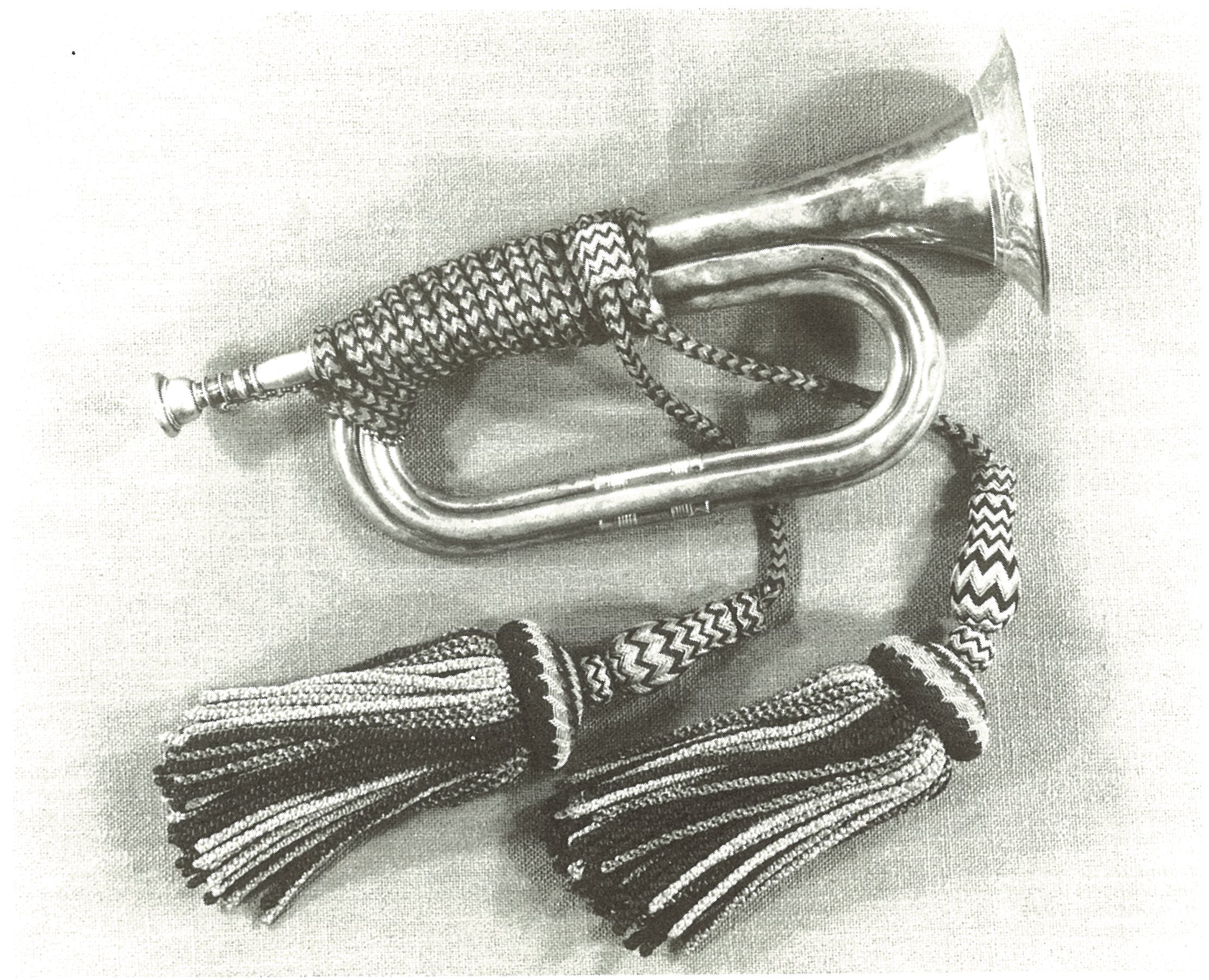
Three-coil post-trumpet in E♭ from Mecklenburg-Schwerin, c. 1840 (Bundespostmuseum, Frankfurt/Main, West Germany).

Three-coil post-trumpet in E♭ from Mecklenburg-Schwerin, c. 1840 (Bundespostmuseum, Frankfurt/Main, West Germany).

At about the same time as the Prussian post office, the Royal Hanover Post Office introduced four-coil E♭ trumpets (“post-horns in the shape of a trumpet”) with cornet mouthpieces as it was thought that “only instruments of this shape could produce the notes easily and in tune” (see “Anweisungen zum Gebrauche des Posthorns für die Königlich Hannoverschen Postillions”, Hanover, 1832).
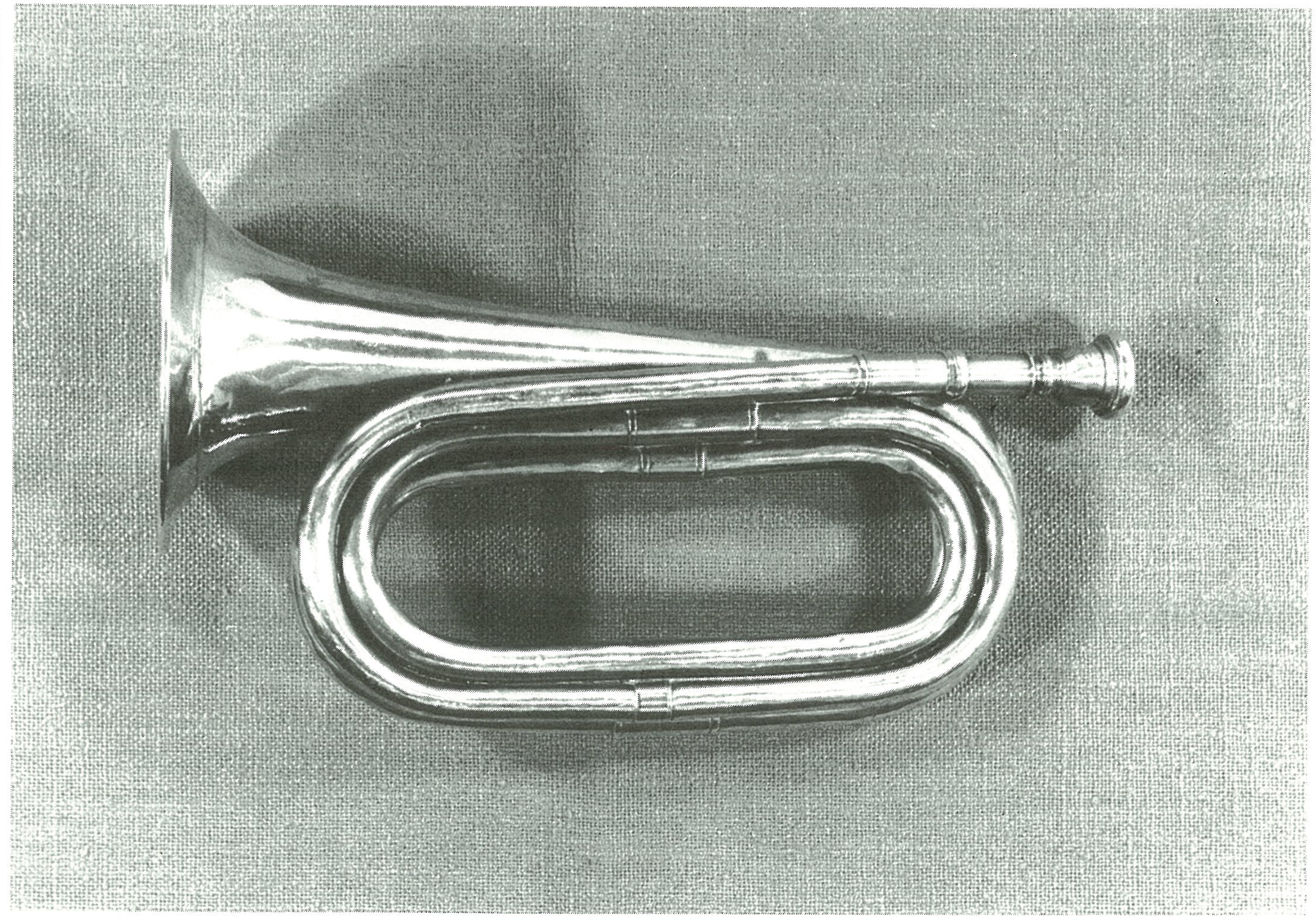
Four-coil post-trumpet in E♭ of the Royal Hanover Post Office, c. 1840 (Bundespostmuseum).

Four-coil post-trumpet in E♭ of the Royal Hanover Post Office, c. 1840 (Bundespostmuseum).

At the same time as prescribing the calls in 1828, the Prussian General Post Office gave the postilions a printed “Introduction to trumpet playing for the Royal Prussian Postilions, with a musical appendix”. The postal services of Saxony and Hanover followed this example with the “Trumpet tutor for the Royal Saxon Postilions” (Leipzig, 1828) and the “Instructions for the use of the post-horn by the Royal Hanover Postilions” (Hannover, 1832). The post-horn and post-trumpet tutors first explained some rudiments of music, then dealt with the basics of the instrument and finally, in an appendix, provided pieces for several instruments to be played for pleasure. It is interesting to note here that the postilions kept the field trumpeters’ clarino playing until after 1850 (for examples see appendix).
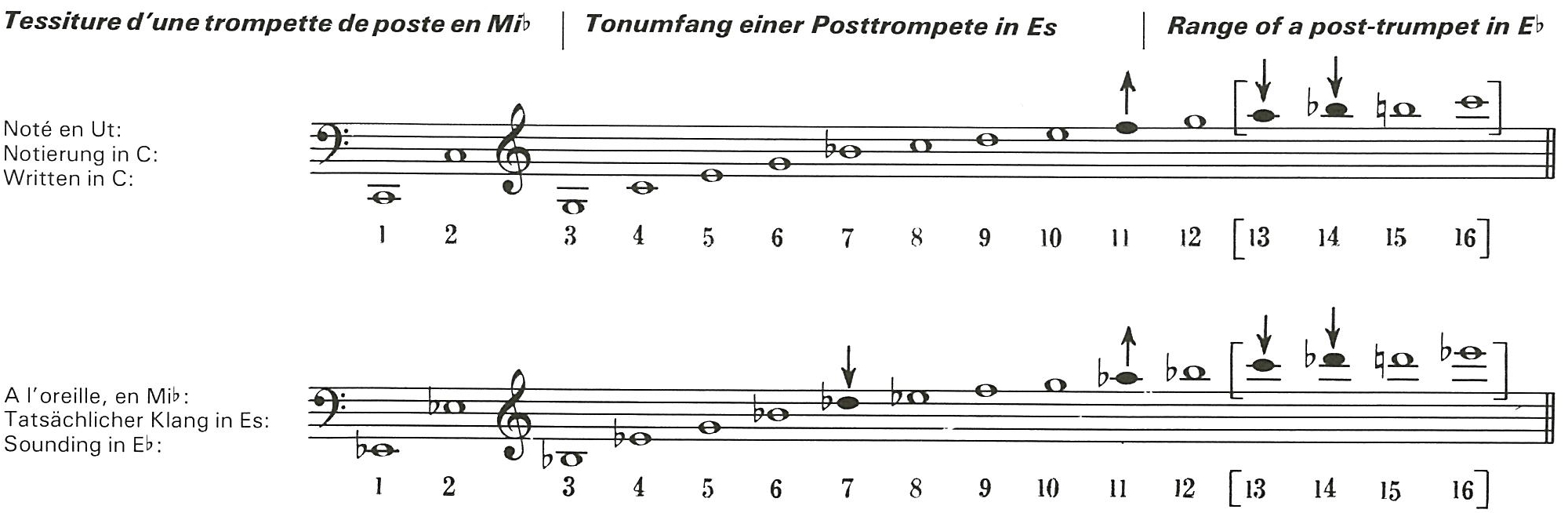
Range of a post-trumpet in E♭

Range of a post-trumpet in E♭

Continue reading

Access the full Digital Edition.

Brass Bulletin 47, III / 1984 pages 12–18

All content is protected by copyright © Brass Bulletin 1984–2026

Share this article

Facebook LinkedIn
Loading…

Questions & Answers

How the Digital Edition works

What does the Digital Edition include?

The Digital Edition brings together the articles already digitized as searchable online texts—not simply as scans or PDF files—along with their original illustrations, notes, authorship, issue information, and available translations. Related-article suggestions currently include only this digitized material.

Are the digital articles identical to the originals?

We preserve the original text, language, illustrations, captions, footnotes, and editorial context as faithfully as possible. The presentation is adapted for comfortable online reading, and obvious transcription or scanning errors may be corrected. The substance and character of the published article remain unchanged.

Which languages are available?

Brass Bulletin was published in English, French, and German throughout its history. Italian and Spanish translations were added from issue No. 60 onward.

On the Italian and Spanish sites, articles from issues 1–59 are therefore shown in English by default.

How often are new articles added?

New articles are added almost daily, with approximately one complete issue digitized each week. The pace may vary depending on the preparation, image work, and editorial checking required.

Why aren’t all articles available digitally?

The complete Brass Bulletin collection contains 1,246 articles published between 1971 and 2003. The full index is already available online, allowing readers to discover every article in the collection, including those whose complete text has not yet been digitized.

Digitization began in February 2026. Each article is carefully prepared for online reading, checked, and connected to its issue, authors, subjects, and illustrations. At the current pace of digitization, the complete collection is expected to be available online by February 2028.

Why do some references mention articles that are not available yet?

References in the original articles are preserved even when the material they point to has not yet been digitized. This keeps the historical and editorial record intact. As more issues are added to the Digital Edition, an increasing number of these references will lead to articles that can be read online.

Can I suggest an article or report a transcription error?

Yes. If there is an article you would particularly like to see digitized, or if you notice a possible transcription error or missing detail, please contact us. Reader feedback helps us improve the Digital Edition and prioritize useful connections within the archive.

How can I support Brass Bulletin?

Your support helps fund the preparation, verification, and online publication of the complete collection.

Subscribe to the Digital Edition

Prefer to support us without subscribing?

Make a donation

Search Brass Bulletin.