3 min di lettura
The trumpet in the north German postal service of the 19th century
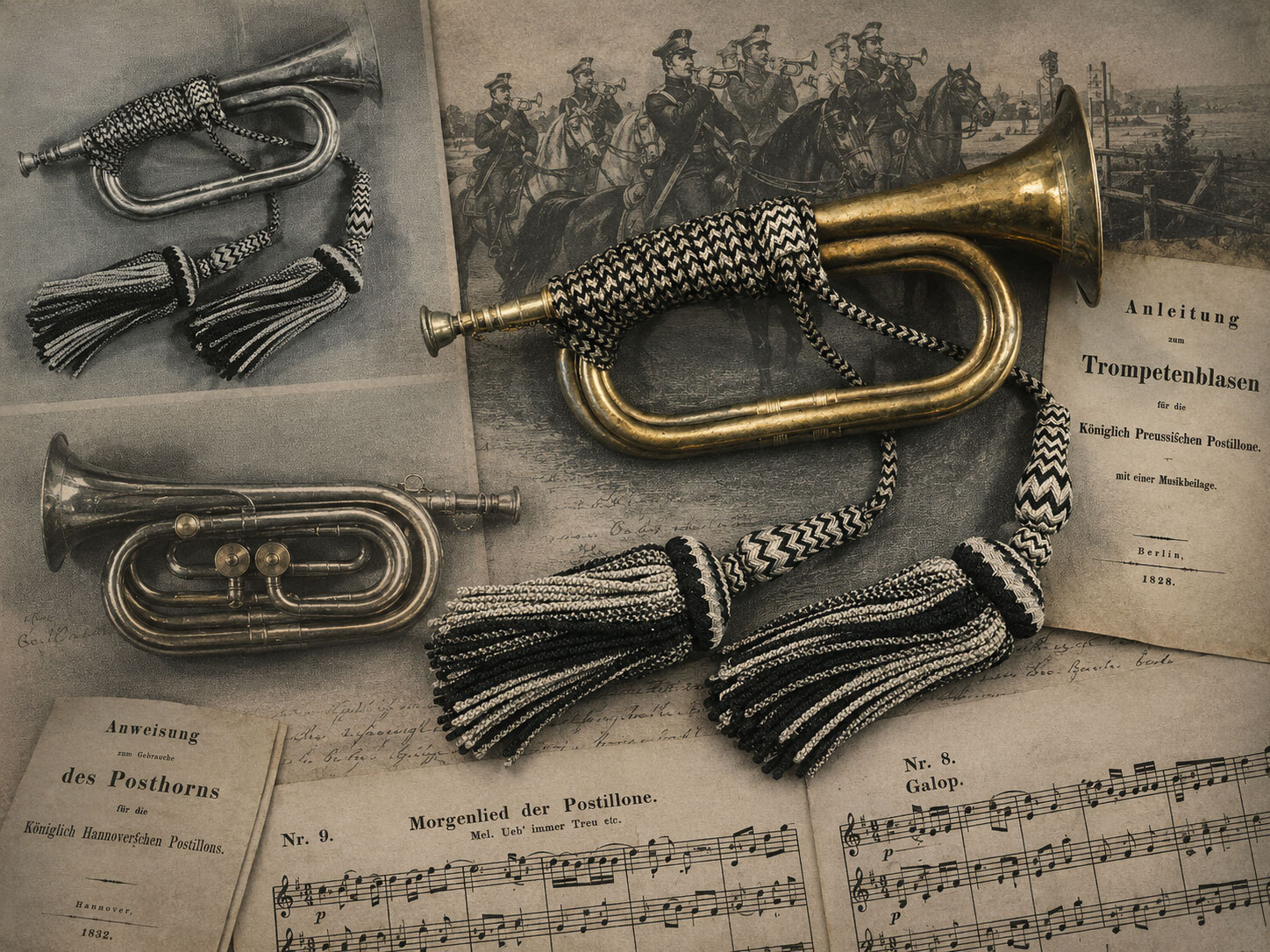
Ever since the “hereditary postmaster” Franz von Taxis (1459-1517) equipped his mounted postilions with small brass horns at the beginning of the 16th century the post-horn has been the postal signalling instrument—to such an extent that it is still used as a logo by many European post offices. It may not be generally known that there was also a time when the north German postal services completely abandoned the post-horn and gave their postilions trumpets. Thus for almost forty years there was a “post-trumpet interregnum” in north Germany.
The Royal Prussian Post Office introduced the trumpet as a signalling instrument with new calls in 1828. The postal services of Saxony, Brunswick, Oldenburg, Mecklenburg and Denmark followed suit. These were long, three-coil natural trumpets, pitched in E♭ like the Prussian field trumpets, and had a cup mouthpiece. It may have been because of the then current Prussian enthusiasm for things military that the postilions’ new signalling instrument had to be the equal of the cavalry instrument. For a long time there was criticism of this similarity and there were even demands for the E♭ post trumpets to be tuned down to D by means of a crook so as to avoid the great, and apparently unwelcome similarity between the postal and military signalling instruments (see Lehmann, Johann Georg: “Die Signale der preussischen Kavallerie”, in “Der Soldatenfreund”, vol. 30, no. 3, 1862).
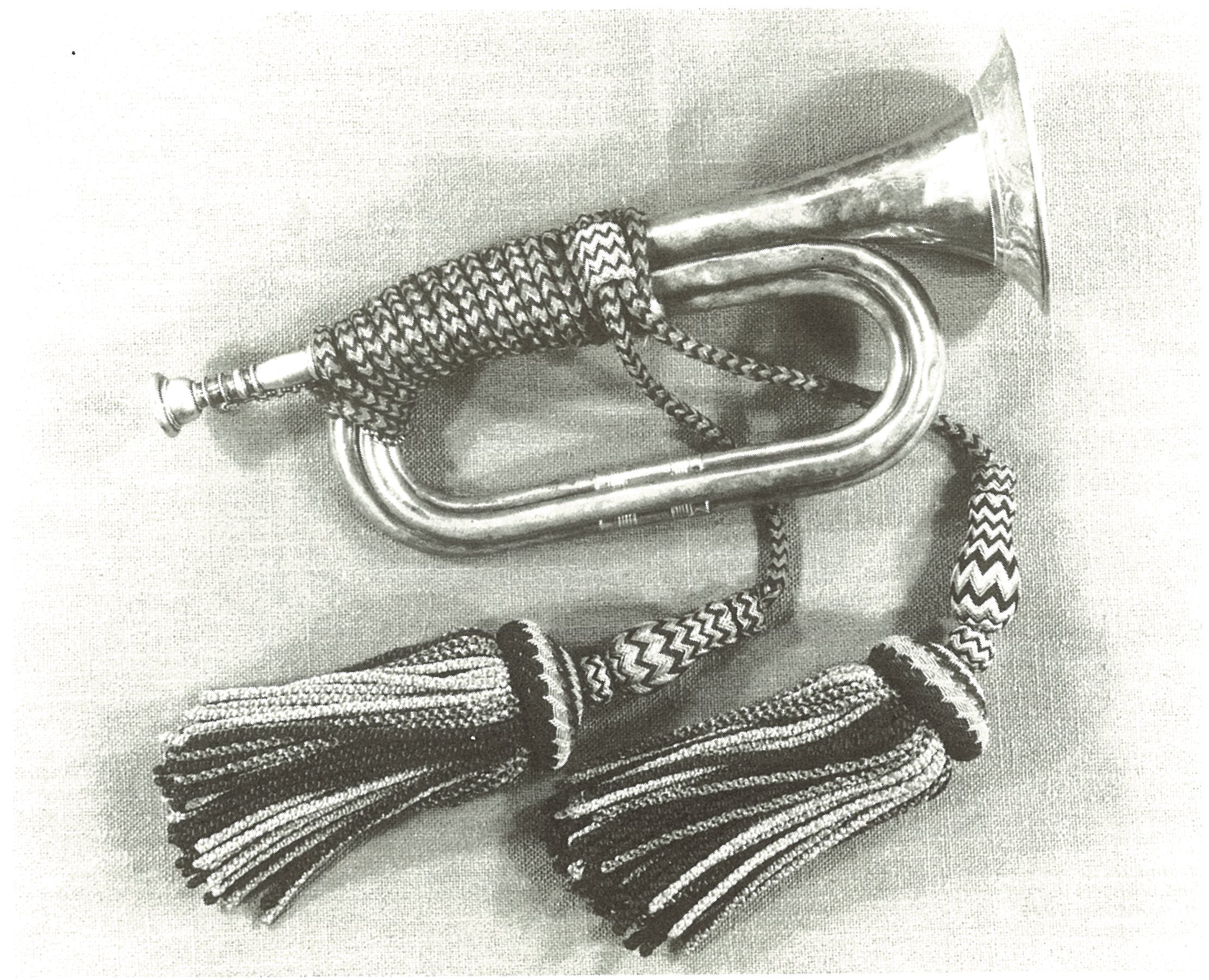
Three-coil post-trumpet in E♭ from Mecklenburg-Schwerin, c. 1840 (Bundespostmuseum, Frankfurt/Main, West Germany).
At about the same time as the Prussian post office, the Royal Hanover Post Office introduced four-coil E♭ trumpets (“post-horns in the shape of a trumpet”) with cornet mouthpieces as it was thought that “only instruments of this shape could produce the notes easily and in tune” (see “Anweisungen zum Gebrauche des Posthorns für die Königlich Hannoverschen Postillions”, Hanover, 1832).
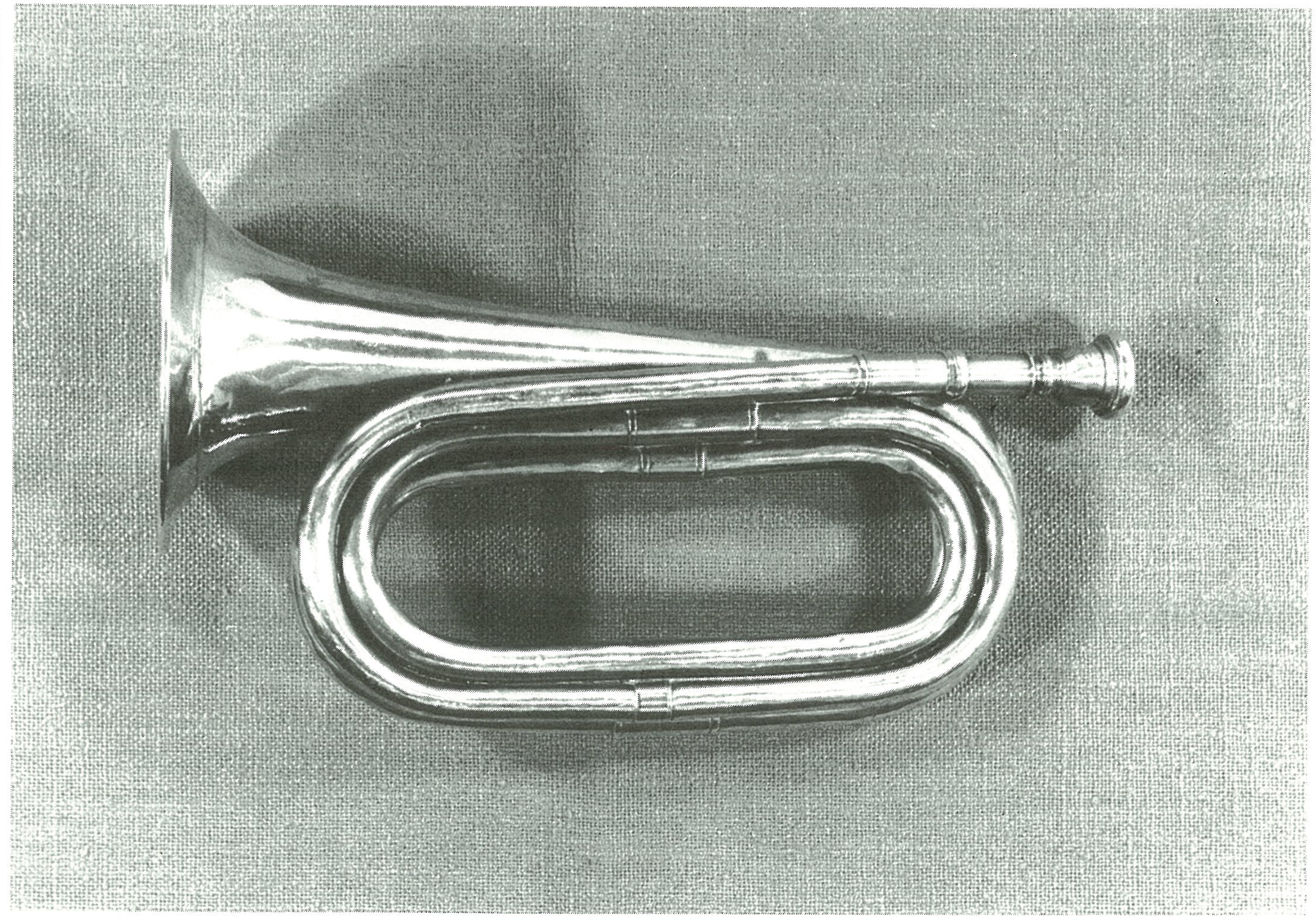
Four-coil post-trumpet in E♭ of the Royal Hanover Post Office, c. 1840 (Bundespostmuseum).
At the same time as prescribing the calls in 1828, the Prussian General Post Office gave the postilions a printed “Introduction to trumpet playing for the Royal Prussian Postilions, with a musical appendix”. The postal services of Saxony and Hanover followed this example with the “Trumpet tutor for the Royal Saxon Postilions” (Leipzig, 1828) and the “Instructions for the use of the post-horn by the Royal Hanover Postilions” (Hannover, 1832). The post-horn and post-trumpet tutors first explained some rudiments of music, then dealt with the basics of the instrument and finally, in an appendix, provided pieces for several instruments to be played for pleasure. It is interesting to note here that the postilions kept the field trumpeters’ clarino playing until after 1850 (for examples see appendix).
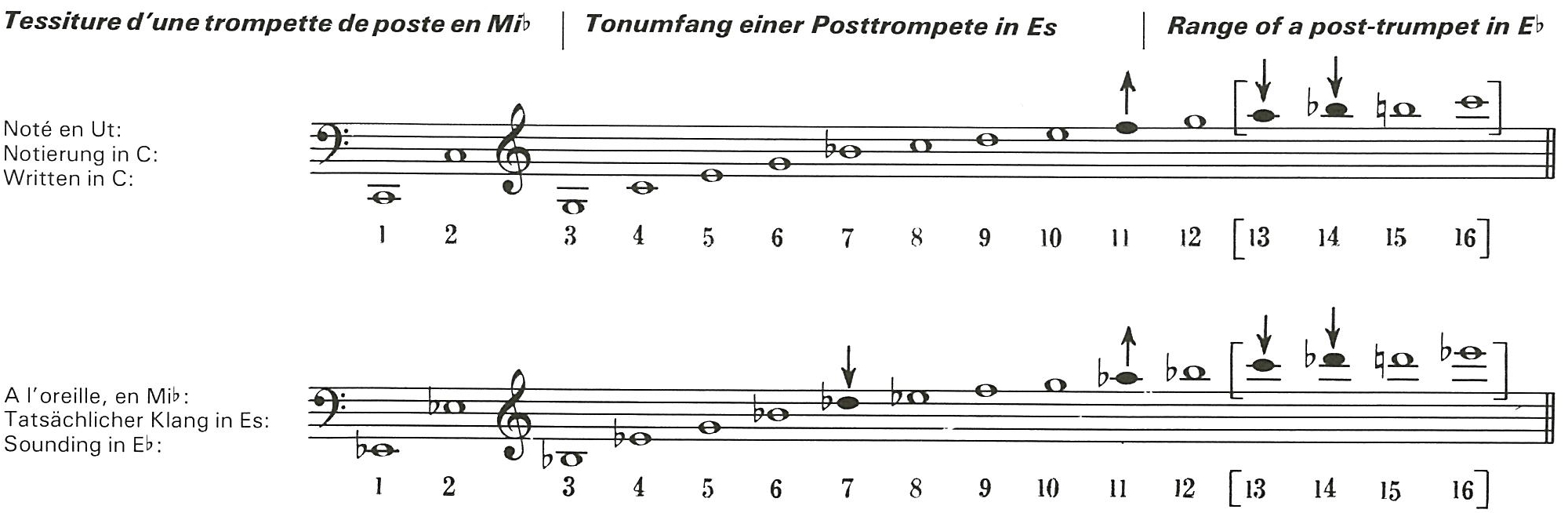
Range of a post-trumpet in E♭
Brass Bulletin 47, III / 1984 pagine 12–18
Tutti i contenuti sono protetti dal diritto d’autore © Brass Bulletin 1984–2026