3 min. read
Clément Perrin (1876-1970)
He lived at the turn of the 20th century...
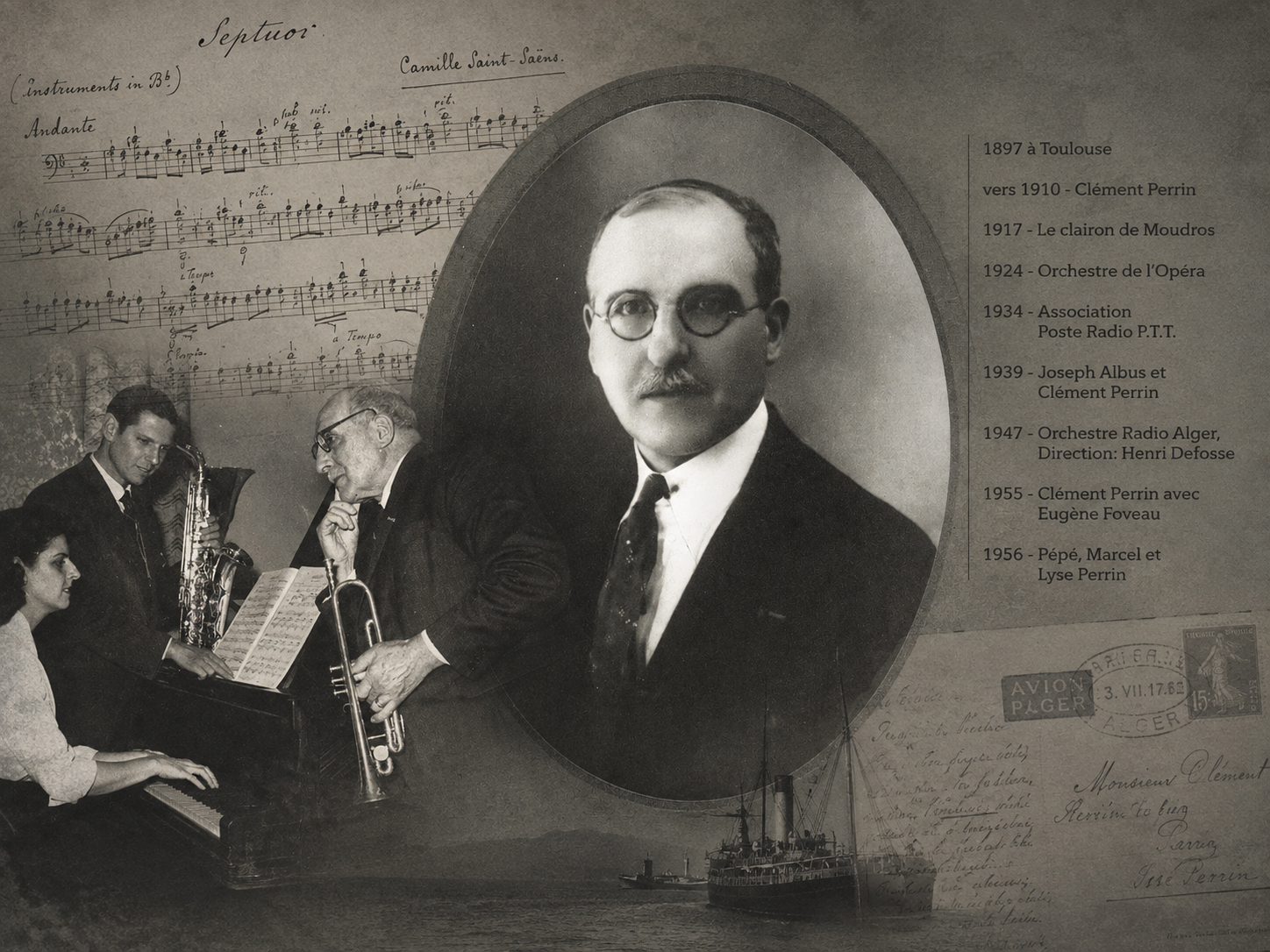
Clément Perrin
In the distance, on a hill, a bugle sounds - a French bugle. The silver notes unfold in the calm of dusk. The whole world is silent. [...] This bugler is an artist, the solo cornet of Algiers, master of his art. [...] These melodies scattered in the night, the kind they sing at village gatherings, remind us of the landscapes of old France [...].*¹
The artist who moved this reporter so deeply was Clément Perrin, when he was a soldier on the eastern front during the Great War of 1914-18, a trumpeter with a privileged destiny.
Clément Perrin was born in Carcassonne on 3rd July 1876. He followed the traditional path — a year of theory, then, at the age of ten, his first cornet lessons. In March 1897 he signed up a volunteer in the artillery school band of the 23rd Artillery Regiment in Toulouse. In this city he found a distinguished trumpet teacher, Joseph Albus², with whom he studied until he obtained a simultaneous 1st prize in trumpet and cornet in 1900 as well as a first medal in theory and a diploma as a music teacher. Freed from active military service he worked here and there until 1906, which was to be a decisive year for him. He married a girl from Perpignan and got his first solo-cornet job with the Municipal Orchestra and Municipal Theatre of Algiers.³ He had an exceptionally long career, retiring as solo trumpet only in 1957 at the age of 81. Furthermore, he marked his retirement with a staggering display of skill; together with his son Marcel⁴ he performed Jean Rivier’s Concerto for Trumpet, Saxophone and Orchestra (published by Billaudot, Paris) at his final concert.
The French press in Algiers showered him with praise.
Marcel Perrin, a most talented saxophonist, and his father, Clément Perrin, who, at the age of 81, is the object of our greatest admiration [...]
(L’Echo d’Alger).
These two artists gave us a further brilliant demonstration of their talent [...]
(Dernière Heure).
Clément Perrin showed that his musical curiosity is as lively as ever after a career lasting fifty years [...]
This was also the last public concert of the season given by the Orchestra of Radio Algeria (conducted by Jean-Louis Joubert).
But let us return to Algiers at the beginning of the century. Clément Perrin had started a family and begun to build a career. In its issue of 27th December 1908 the Revue Nord-Africaine Illustrée spoke in glowing terms of Perrin and of his skill as a composer:
There were also many delicate and subtle songs and romances, some of which were hugely successful (a recent waltz, “Si j’ai rêvé”, was printed in 250’000 copies!) [...] We hope his growing does not remove him from our midst too soon! [...]
He did not leave Algiers until 1962, when Algeria became independent, whereupon he returned to Toulouse. Another Algerian newspaper speaks of him as being
always hard at work; (he) carries almost all the weight of the summer programmes, to judge from the very great number of solos entrusted to him and from the sureness and taste he demonstrates in their execution [...]
In August 1914 he was called up and joined the 2nd Territorial Zouaves Battalion of Algiers. In 1915 he was sent to the eastern front (Egypt, Greece, Bulgaria). On 24th February 1917 the English ship on which he was returning from leave, the “Dorothy”, was torpedoed off the island of Pantelleria; it arrived in Salonika on 18th March. He was repatriated to Algiers on 3rd June 1918 and demobilised the following February. When peace returned he was solo cornet at the “New Kursaal Theatre” (1919-24), then at the Summer Concerts’ Association and the Municipal Theatre until 1930. In 1931 (at the age of 55!) he was appointed soloist at the Radio Algiers orchestra, a post which he did not leave until he was 81 and then only because of the age limit!
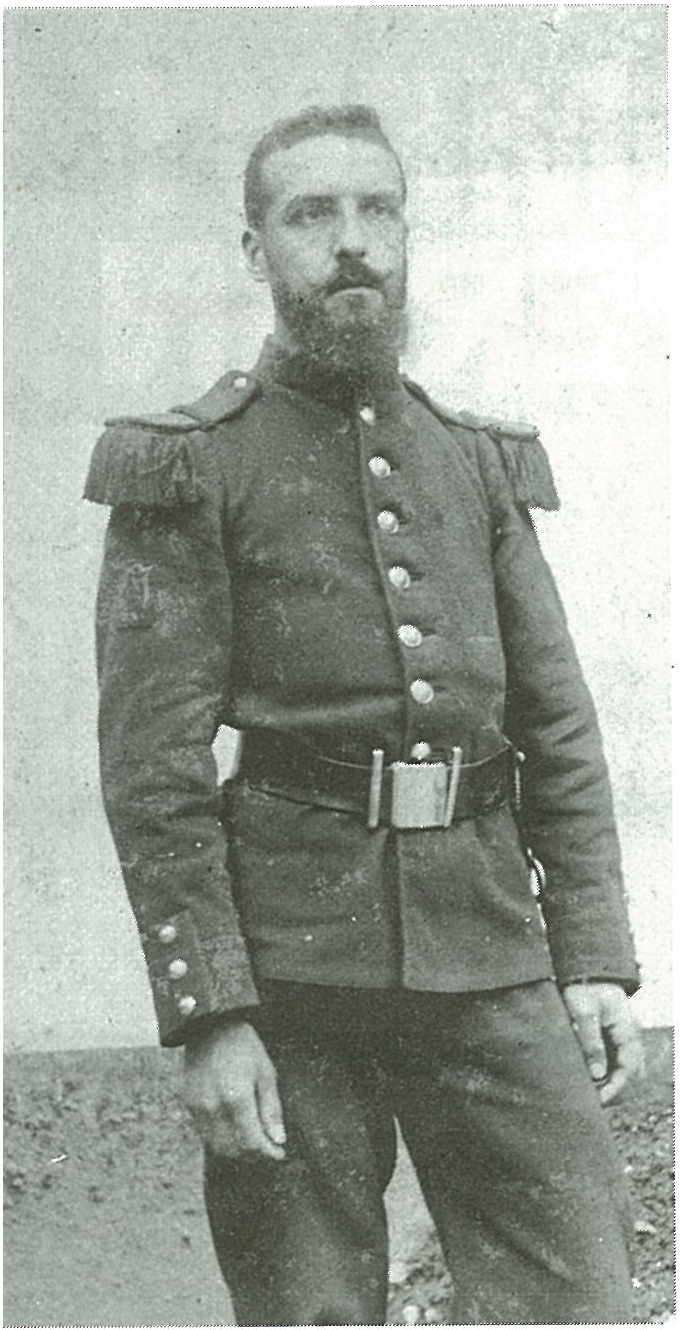
1897 in Toulouse
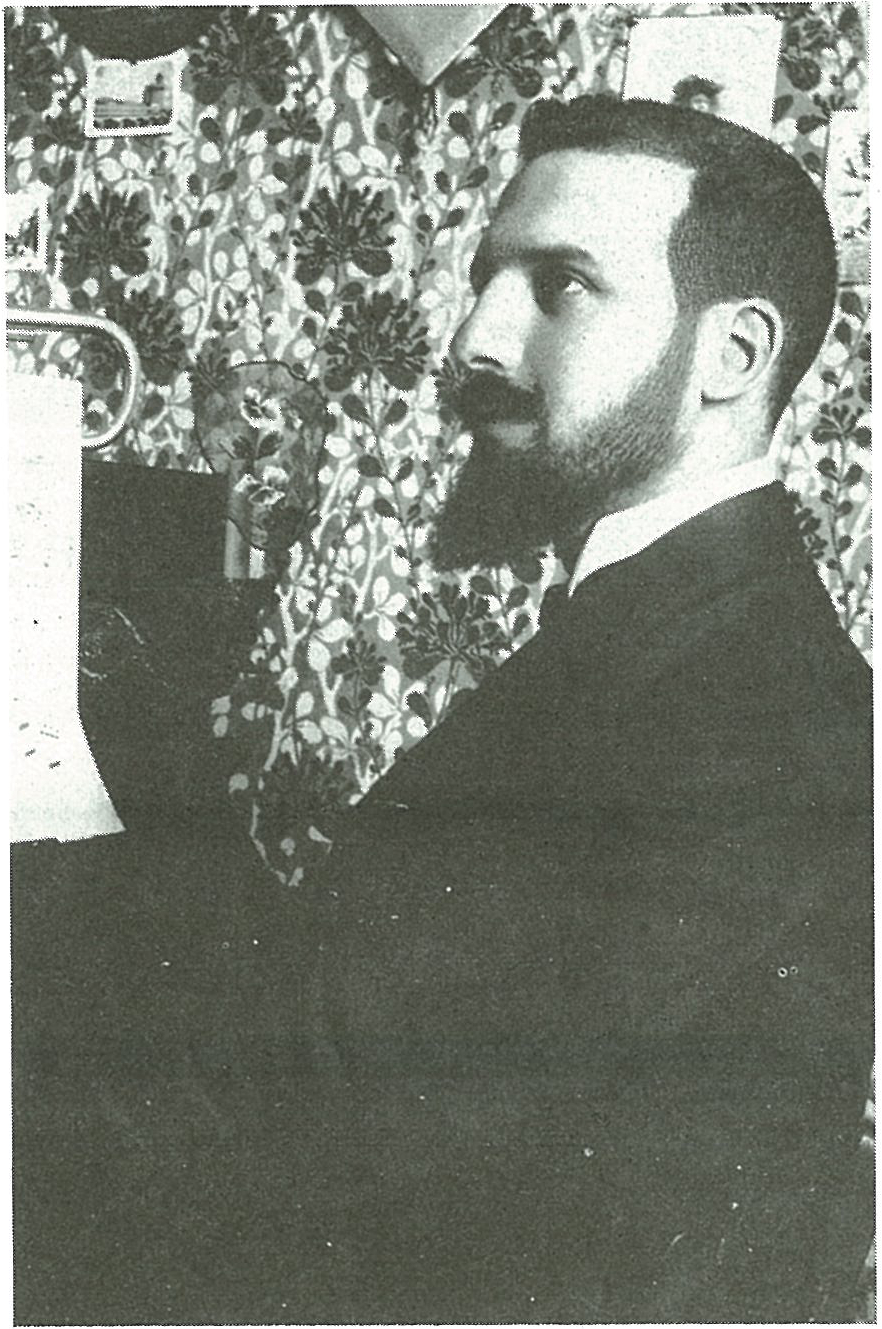
c. 1910 - Clément Perrin
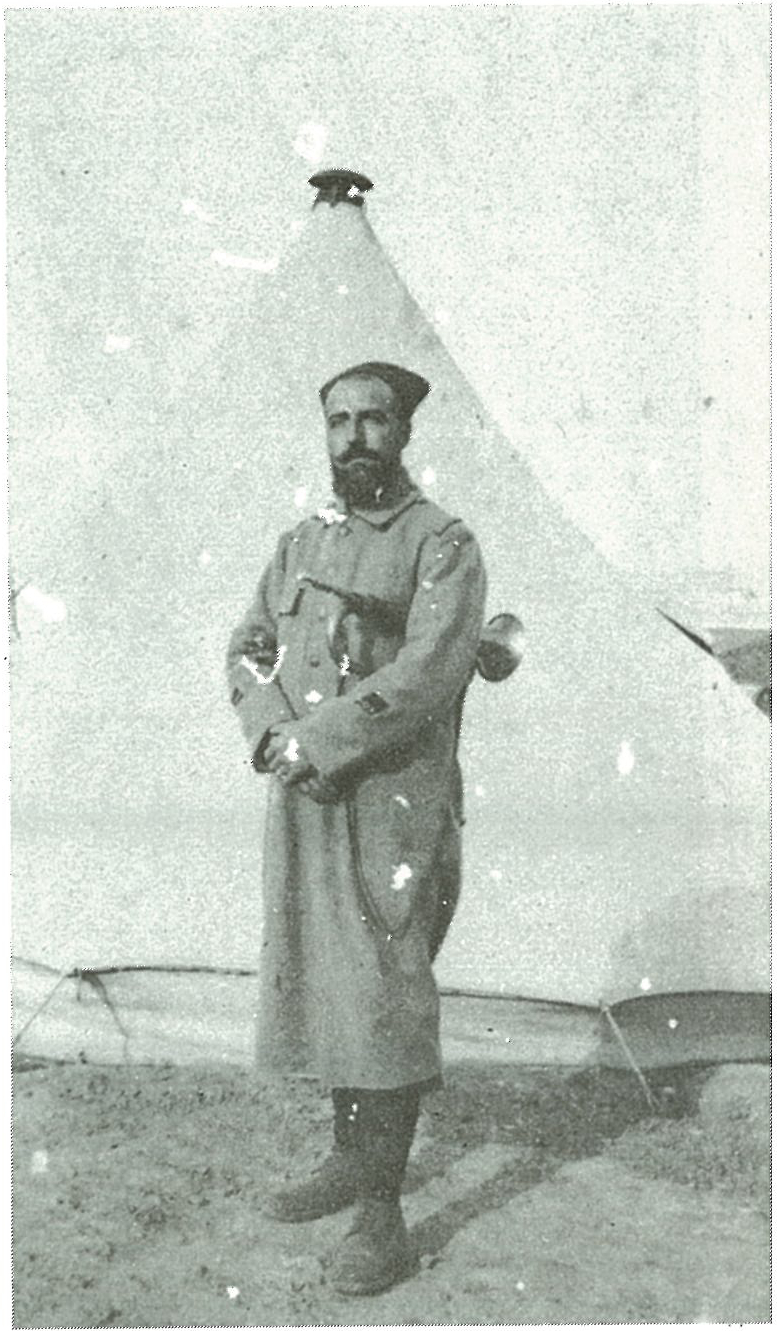
1917 - The bugler of Moudros
Brass Bulletin 46, II / 1984 pages 49–56
All content is protected by copyright © Brass Bulletin 1984–2026