Brass Bulletin 37, I / 1982 page 11–13 · 5 min. read

The Midwinter Horn

De Midwinterhoorn

The Midwinter Horn

The Midwinter Horn

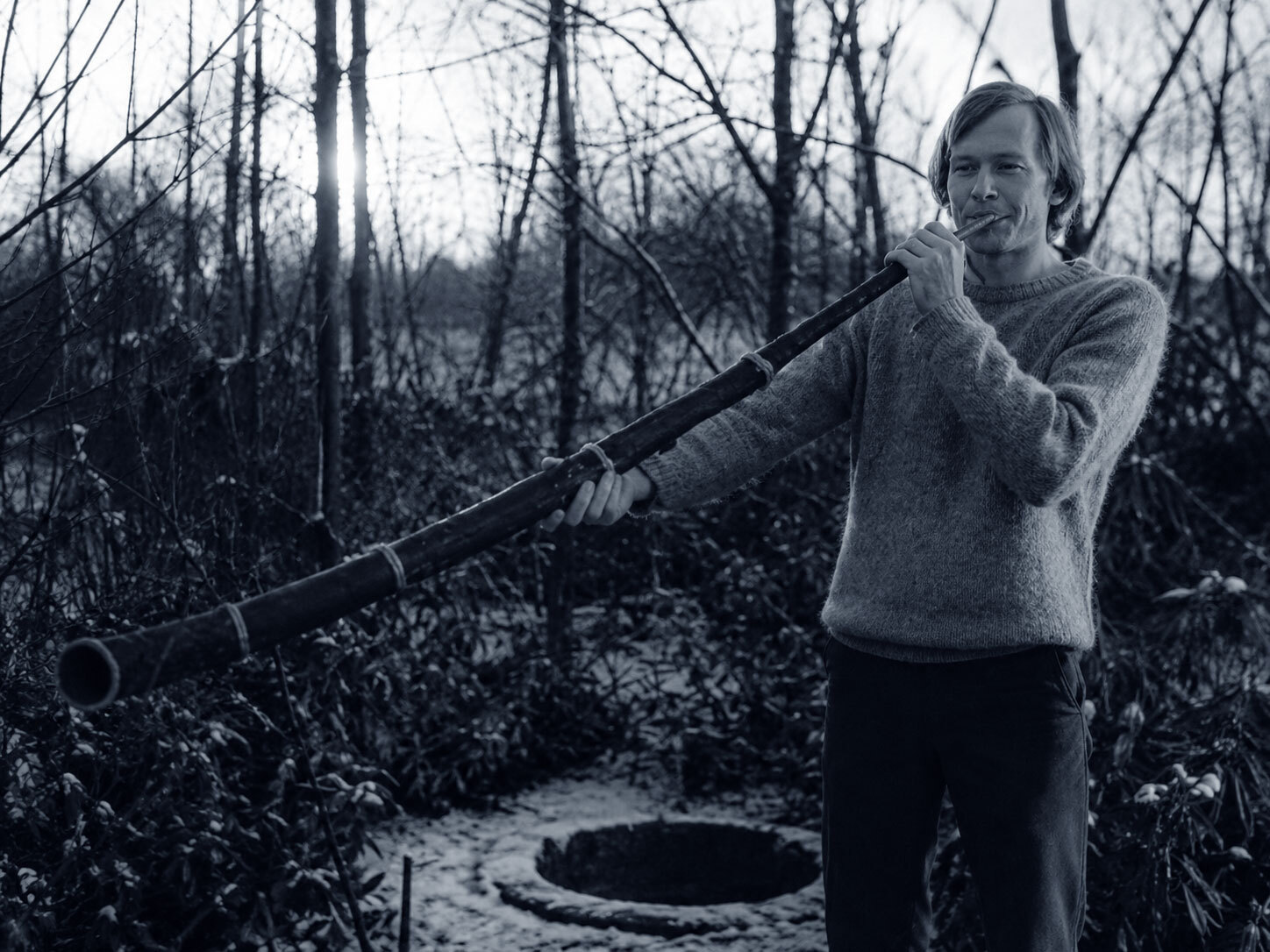
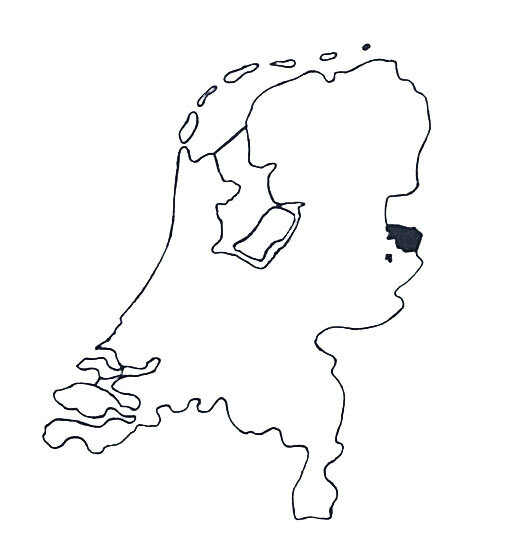
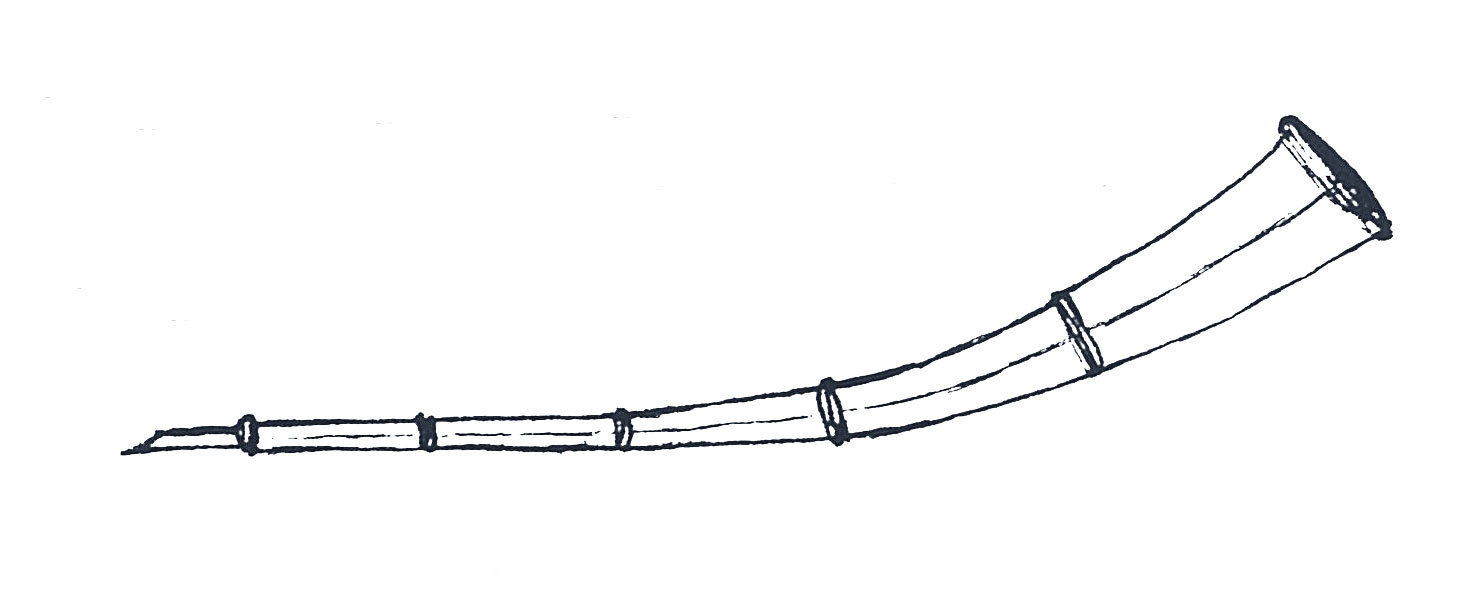
Midwinter-horn playing—on a slightly bowed 1–1½ metre long wooden trumpet (a miniature alphorn in other words)—is still actively maintained at Christmas time in Twente, an area in the extreme east of the Netherlands¹. Here (Ill. 1), largely isolated from the outside world until the beginning of the 20th century by the surrounding marshlands, this instrument has preserved its ancient, primitive form and its magical character very well, unlike the alphorn which has evolved greatly in the course of time².

The local farmers make the horns in autumn from small branches of alder, willow or birch. When the bark has been removed and the branch cut in half lengthwise, the halves are hollowed out with a clogmaker's ripping chisel and then fastened together again with willow twigs. A strip of reed is laid between the halves so that, when the horn is immersed in water for a time before being played, the reed swells and the instrument becomes airtight.

The region where the midwinter horn is still played
The region where the midwinter horn is still played

The Midwinter Horn

The Midwinter Horn

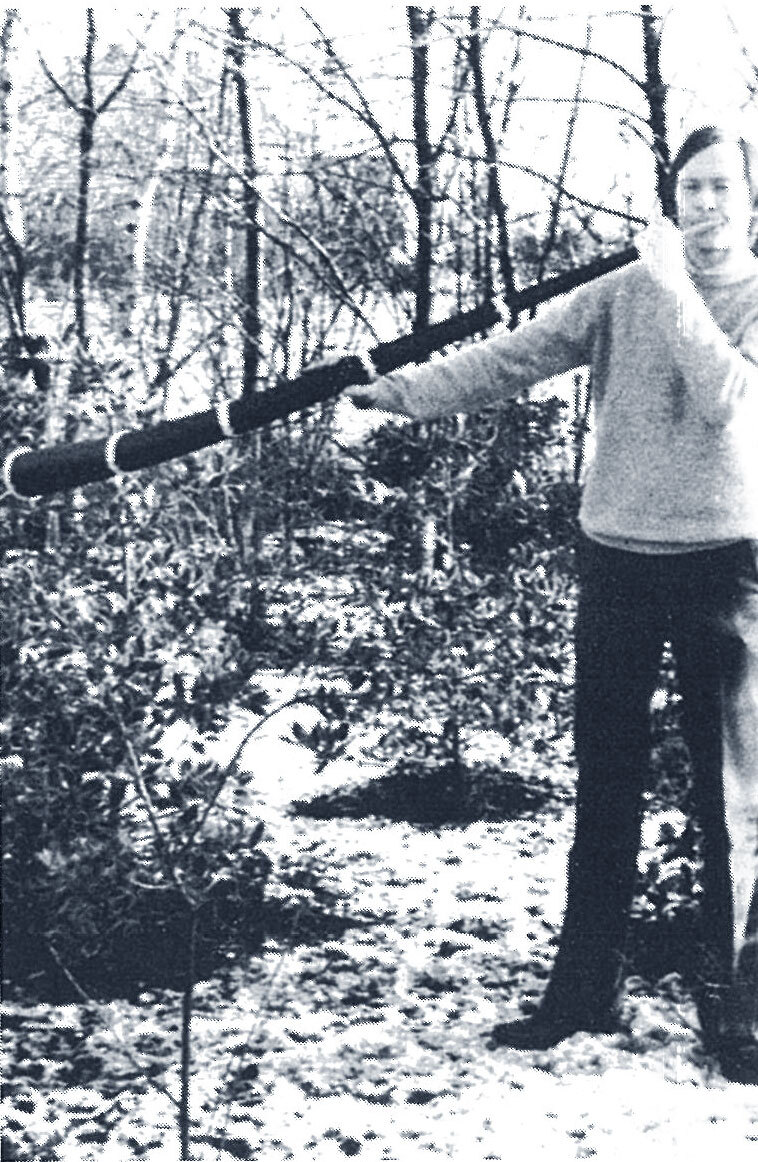
As a mouthpiece a piece of elder branch is used, cut off diagonally and with the pith removed, known as the happe ("mouthful"). The instrument is therefore not end-blown like normal horns but side-blown³ (Ill. 2 and photograph).
Brass Bulletin image

This archaic manner of blowing is not the only thing about the midwinter horn that is characteristic, however; the whole ancient playing tradition is characteristic of, and peculiar to, the instrument. It is usually played in the evening above a well, which functions as a resonator (no mountains here!) and alphorn-type "yodelling" is certainly possible (the range is from the 2nd to the 7th or 8th harmonic) but is forsworn by most players in favour of long, simple, melancholy notes (see example).

Brass Bulletin image

Furthermore it is only played from Advent Sunday until Twelfth Night. Outside the Christmas period playing is forbidden and the horn is supposed to be kept in the well⁴. Tradition holds that this playing represents the shepherds' announcement of the birth of Jesus Christ but everything indicates that it dates back to pre-Christian times. Beneath the veneer of Christianity in all probability lurks an ancient pagan magic ritual⁵: at the winter solstice (21st December) the horn—from time immemorial a male symbol of power and potency—fertilises the womb of mother Earth so that the fields may bring forth their fruits again next year.

This connection between horn playing and fertility is certainly not far-fetched. One only has to think for example of the use of horns in initiation rites among primitive African peoples, of the cornucopia (the horn of plenty, sumptuously laden with the fruits of the earth) or of the old Slav custom of beating the trees with a horn on Christmas Eve and saying, "I beat you with the horn—beat me with fruit"⁶.

A ceremony similar to that in Twente is to be found in the rosh-hashana chapter of the Talmud, which describes the orthodox Jewish custom of sounding the shofar over a well or a water-barrel⁷. Here too the symbolic link between male and female elements is unmistakable.

The Catholic farmers of Twente, blowing their wooden horns on winter evenings, are not aware of this connection. But it is immaterial whether you consider the playing of the midwinter horn to be the announcement of the infant Christ or a pagan magic ritual (both in any case symbolise new and eternal life!); for anyone who hears the magical sound of the midwinter horns coming towards him from all sides through the frosty silence of a winter's night will be deeply impressed by this mystical experience.

I myself have played the midwinter horn in the concert hall. In Christmas concerts, for example, I have played the shepherd's horn part in the Sinfonia pastorella of Leopold Mozart on a midwinter horn in G (about 1.55 m long). A performance of this work was given on 26th December 1981 as part of a Christmas concert in the Great Hall of the Amsterdam Concertgebouw.

Although there is no question of this being authentic midwinter-horn playing (Mozart's alphorn-like melodies and the use of an ordinary horn mouthpiece would rule this out), this pastoral symphony nonetheless fits well with the tradition of horn playing as the shepherds' ceremonial announcement of the birth of Jesus Christ.
Notes

¹ Apart from the Swiss Alps alphorn-type instruments are also found in the Carpathians, the Pyrenees, the Caucasus, in Scandinavia, Central Asia and Africa. See Musik in Geschichte und Gegenwart (Kassel, 1949 ff.), the entries Alpenmusik and Horninstrumente.

² Similar Advent music was also known, until the 19th century, on the other side of the Dutch-German border (district of Meppen). See E. Jans: Het midwinterhoornblazen (Enschede, 1977).

³ Animal horns are often so hard at the tip that primitive tools can only cut them off obliquely and this process was later carried over to the wooden imitations of the animal horns. Quoted from Sybil Marcuse: Musical Instruments (London, 1961) under Horn.

⁴ No doubt a hangover from the old taboo which forbade the contemplation of consecrated objects. Furthermore wells have become less common and the modern horns, often assembled with glue, are nowadays usually hung on the wall at home as a form of decoration. The tradition of playing the instrument only at Christmas time is, however, strictly maintained.

⁵ See W. Thijsse: De Midwinterhoorn en zijn funktie (in Mens en Melodie 12, 1979).

⁶ Quoted from MGG.

⁷ Quoted from C. Sachs: The History of Musical Instruments (New York, 1940), chapter II, 3, the shofar.

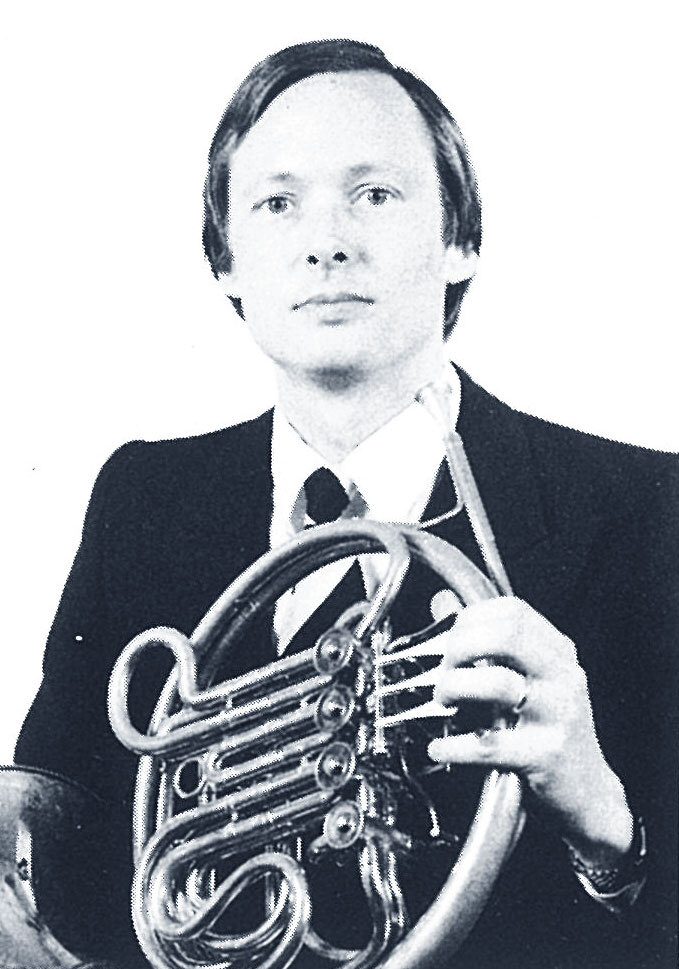
Herman Jeurissen

Herman Jeurissen

Biography

Herman Jeurissen was born on 27th December 1952 in Wijchen near Nijmegen in the Netherlands. He left secondary school in 1970 and went to study horn with Adriaan van Woudenberg at the Brabant Conservatoire in Tilburg. Later he also studied for a while with Michael Höltzel in Detmold.

After spells as 4th horn at the Concertgebouw and 1st horn at the Utrecht Symphony he was appointed solo horn at the Residence Orchestra in The Hague in 1978. That same year he received the Prix d'excellence, and the following year the silver garland of the Friends of the Amsterdam Concertgebouw.

He has appeared with various orchestras in Holland, West Germany, France and Austria and made several radio and television recordings as well as looking after the horn class at the Brabant Conservatoire.

In his free time he plays the alphorn and the midwinter horn (a Dutch miniature alphorn), arranges (his horn ensemble arrangements have been published by Marvin McCoy's Horn Library) and is involved in musicological studies which have enabled him to trace and reassemble fragments of Mozart horn concertos.

The results of his Mozart work have been published in the facsimile collection Das Horn bei Mozart (H. Pizka, Munich, 1980). He has made his own recordings of the Mozart horn concertos nos. 5 and 6 (K. 370b/371 and 494a) which he reconstructed (MDG 1039 and EMI Electrola ASD).

A record of chamber works by Franz and Richard Strauss, together with Cornelia Wulkopf (alto) and Klaus Schilde (piano), is now available.

All content is protected by copyright © Brass Bulletin 1982–2026

Share this article

Facebook LinkedIn
Loading…

Search the Brass Bulletin archive.