Interpretazione
50 articoli digitalizzati
Baumann, Hermann
Which Horn for which Music?
Article discussing the choice of horn according to repertoire, comparing instruments, sound ideals and stylistic requirements.
Brass Bulletin No 3 · 1972
Corno· Equipaggiamento· Repertorio· Strumenti storici· Suono
Mathez, Jean-Pierre
Snapshot: the American Brass Quintet in Europe
Report on the American Brass Quintet’s tour in Europe, highlighting performances, reception and the ensemble’s role in chamber brass music.
Brass Bulletin No 5 · 1973
Incontri· Repertorio· Interpretazione· Suono
Krueger, Harold E.
An American trumpet player's impressions of european brass performances
An American trumpet player reflects on European brass traditions, comparing education, amateur practice and professional performance across both continents.
Brass Bulletin No 5 · 1973
Società· Scuola americana· Pratica orchestrale
Mertens, Albert
The trombone in Belgium
Published in memory of its author, this article reflects on the trombone tradition in Belgium and his lasting contribution.
Brass Bulletin No 5 · 1973
Trombone· Storia· Tecnica· Equipaggiamento· Strumenti storici· Valvole
Janetzky, Kurt
Impossible?
Kurt Janetzky challenges the notion of the “impossible” in brass playing, arguing that technical limits evolve and that demanding repertoire—past or present—should never be dismissed as unplayable.
Brass Bulletin No 10 · 1975
Corno· Repertorio· Tecnica· Interpretazione· Idee
Perantoni, Daniel
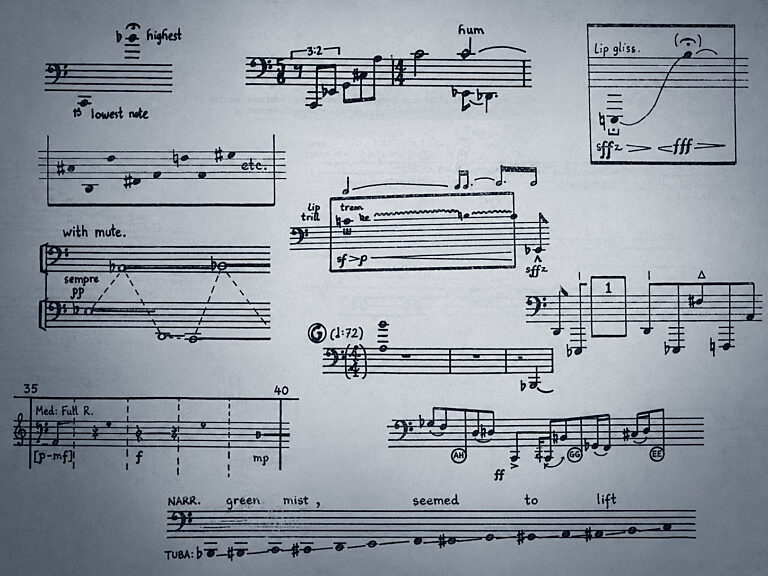
Contemporary systems and trends for the tuba
New music, new rules: Daniel Perantoni explores extended techniques, graphic notation and the evolving language of the tuba.
Brass Bulletin No 11 · 1975
Tuba· Tecnica· Repertorio· Interpretazione· Musica contemporanea
Krol, Bernhard
Why pretend to be Mozart?
The concerto’s cadenza: copy of style — or bold but true?
Should a cadenza imitate the past—or speak in today’s voice? Bernhard Krol questions the tradition of stylistic imitation and argues for cadenzas that bridge past and present with authenticity.
Brass Bulletin No 12 · 1975
Repertorio· Idee· Interpretazione
Douay, Jean
The trombone in Maurice Ravel's Bolero
How should Boléro’s trombone solo be played? After 100 performances, Jean Douay challenges conventions and argues for a more supple, controlled approach.
Brass Bulletin No 13 · 1976
Trombone· Repertorio· Tecnica· Interpretazione· Pratica orchestrale
Damm, Peter
Why pretend to be Mozart?
Reply to Bernhard Krol
Should a cadenza imitate Mozart? Peter Damm argues for stylistic fidelity without imitation—at the heart of a debate with Bernhard Krol.
Brass Bulletin No 14 · 1976
Repertorio· Interpretazione· Abbellimenti
Meissner, Marc
Ornamentation of baroque music for brass
Baroque ornamentation forgotten? Without it, performances become dull and repetitive. This article argues for a return to style, freedom, and creative interpretation.
Brass Bulletin No 17 · 1977
Repertorio· Abbellimenti· Interpretazione
Douay, Jean
The trombone in Maurice Ravel's Boléro
Boléro as ordeal: Jean Douay reveals stage fright, pressure, and the weight of the final solo—where one moment can elevate or undermine the entire orchestra.
Brass Bulletin No 19 · 1977
Trombone· Repertorio· Pratica orchestrale· Interpretazione
Bobo, Roger
Yes or no? Beware!
Do we or do we not play transcriptions?
“Transcriptions: yes or no? Beware.” Roger Bobo challenges tubists to rethink repertoire, taste, and tradition in a bold call for musical judgment and artistic freedom.
Brass Bulletin No 21 · 1978
Tuba· Repertorio· Interpretazione· Musica contemporanea
Damm, Peter
On the question of articulation in the horn concertos by W. A. Mozart
How should Mozart really sound? Peter Damm questions traditional editions and reveals how articulation—often missing—must be rebuilt through style, listening, and musical judgment.
Brass Bulletin No 22 · 1978
Corno· Repertorio· Tecnica· Articolazione· Interpretazione
Orvid, G. · Riaouzov, S.
Mikhail Innokentiévitch Tabakov (1877-1958)
Founder of the Soviet trumpet school
A towering figure of trumpet history: Tabakov shaped generations—including the legendary Timofei Dokchitzer—and laid the foundations of the Soviet trumpet school.
Brass Bulletin No 22 · 1978
Tromba· Storia· Insegnamento· Scuola russa· Suono
Waldeck, Lewis
Symphonic tuba playing
A warning from the orchestra: Lewis Waldeck challenges modern tuba playing—calling for a return from solo brilliance to the dark, blended power of true symphonic sound.
Brass Bulletin No 23 · 1978
Tuba· Tecnica· Repertorio· Suono· Interpretazione
Mathez, Jean-Pierre
Maurice André
Biography
Maurice André reflects on maturity—balancing performance, recordings and teaching, refining his approach to instruments and audience, and preparing for the limits of a virtuoso career.
Brass Bulletin No 26 · 1979
Tromba· Incontri· Esecuzione solistica· Approccio mentale
Stevens, Thomas
The Trumpet in the USA
Across competitions, teaching and equipment in the U.S., trumpet practice exposes clashing ideas of musicality, raising the question of shared standards beyond national styles
Brass Bulletin No 27 · 1979
Tromba· Società· Scuola americana· Interpretazione
Ree Wekre, Frøydis
The Leningrad School of Horn Playing
From St. Petersburg to the Soviet era, generations of horn players shaped a distinctive approach to sound, interpretation, and orchestral playing.
Brass Bulletin No 27 · 1979
Corno· Storia· Insegnamento· Scuola russa· Interpretazione
Mathez, Jean-Pierre
Barry Tuckwell
Interview
Between the London Symphony Orchestra, international solo tours and Mozart or Strauss concertos, Barry Tuckwell reflects on sound, risk and musical instinct.
Brass Bulletin No 27 · 1979
Corno· Incontri· Vita professionale· Esecuzione solistica· Interpretazione
Mathez, Jean-Pierre
Editorial
From cultural codes to personal sincerity, Jean-Pierre Mathez questions how musicians recognise truth across styles, traditions and musical languages.
Brass Bulletin No 28 · 1979
Società· Interpretazione· Sociologia
Runyan, William E.
The alto trombone and contemporary concepts of trombone timbre
Alto trombone timbre from Vienna to Brahms, orchestral balance, period practice, and why bright brass sounds gradually disappeared.
Brass Bulletin No 28 · 1979
Trombone· Repertorio· Equipaggiamento· Strumenti storici· Suono
Bobo, Roger
Dynamics in the 80's
From Reykjavik to the Hollywood Bowl, rising concert hall scale and amplified culture reshape orchestral sound, leaving acoustic limits exposed.
Brass Bulletin No 29 · 1980
Acustica· Società· Suono· Interpretazione
Ricquier, Michel
Relaxation and musical performance
Breath, fingers and muscular tension form a hidden technical chain in wind playing, as Michel Ricquier links virtuosity to bodily awareness.
Brass Bulletin No 29 · 1980
Salute· Insegnamento· Nervi· Respirazione
Stevens, Thomas
Editorial
So your trumpet plays in tune
Keyboard tuning, just intonation and string phrasing place brass players between conflicting pitch systems, as Thomas Stevens outlines practical compromises.
Brass Bulletin No 30 · 1980
Tromba· Acustica· Tecnica· Intonazione· Interpretazione
Ricquier, Michel
The use of the mind in instrumental performance
Relaxation, concentration and mental imagery reshape technical practice, linking self-confidence and instrumental control beyond physical training alone.
Brass Bulletin No 30 · 1980
Salute· Insegnamento· Nervi· Interpretazione
Janetzky, Kurt
300 Years of the Horn in Bohemia
An unsigned portrait from the Dresden court links the rise of Bohemian horn playing to the ceremonial world of Baroque hunting culture.
Brass Bulletin No 31 · 1980
Corno· Storia· Società· Strumenti storici· Interpretazione
Dokschidser, Timofey
Articulation or bowing on the trumpet
Trumpet articulation becomes a full performing language, from détaché and staccato to legato, glissando, dynamics and score interpretation.
Brass Bulletin No 31 · 1980
Tromba· Tecnica· Insegnamento· Articolazione· Lingua
Sauer, Ralf
Transcription fundamentals
Between Bach fugues and Mozart concertos, Ralph Sauer questions where brass transcription renews a work — and where it merely imitates.
Brass Bulletin No 31 · 1980
Repertorio· Interpretazione· Ensemble di ottoni
Mathez, Jean-Pierre
Editorial
Progress by Stages
Between technical routine and lived experience, musical growth emerges through setbacks, observation and the gradual shaping of an individual voice.
Brass Bulletin No 32 · 1980
Insegnamento· Salute· Nervi· Interpretazione
Leuba, Christopher
A study of musical intonation
Resultant tones, harmonic series ratios and chord spacing challenge equal temperament, linking acoustics and practical ensemble intonation.
Brass Bulletin No 32 · 1980
Acustica· Insegnamento· Intonazione· Suono
Agrell, Jeffrey
The first european horn symposium
A week in Trossingen brought leading horn players, Mozart debates, natural-horn controversies and lasting friendships at a landmark European gathering.
Brass Bulletin No 33 · 1981
Corno· Evento· Reportage· Interpretazione· Musica contemporanea
Bobo, Roger
Arnold Jacobs
Interview
Two tuba giants meet in 1979 Chicago, where Arnold Jacobs turns technique, sound, orchestral life and pedagogy into a lasting musical ethic.
Brass Bulletin No 33 · 1981
Tuba· Incontri· Insegnamento· Interpretazione· Suono
Ricquier, Michel
The subconscious, a useful friend
From yogic practices to auto-hypnosis, mental conditioning and visualisation are linked to performance, self-control, and the body's hidden responses.
Brass Bulletin No 33 · 1981
Salute· Insegnamento· Approccio mentale· Nervi
Leuba, Christopher
A study of musical intonation
From harmonic-series tuning to valve-slide adjustments on the horn, practical listening and resonance become more reliable guides than equal temperament alone.
Brass Bulletin No 33 · 1981
Acustica· Insegnamento· Intonazione· Suono
Mathez, Jean-Pierre
Editorial
Beyond technique and instruction, musical growth depends on trusted relationships, where friendship becomes both a measure of progress and a safeguard against isolation.
Brass Bulletin No 34 · 1981
Insegnamento· Società· Idee· Interpretazione
Leuba, Christopher
A study of musical intonation
From wind quintets to brass sections, balance, overtones and perception shape intonation in ways that often diverge from measurable frequency.
Brass Bulletin No 34 · 1981
Acustica· Insegnamento· Intonazione· Suono
Willener, Alfred
The Haydn Trumpet Concerto
As editions, instruments and traditions diverge, Haydn’s trumpet concerto becomes a lens on notation, style and the shifting meaning of performance.
Brass Bulletin No 35 · 1981
Tromba· Storia· Repertorio· Interpretazione· Tromba a chiavi
Hiller, Albert
The Trumpet in the Works of Jean-Philippe Rameau
From court entertainments to operatic dances, Rameau’s trumpet writing reveals uncommon technical demands and a broader palette of Baroque brass practice.
Brass Bulletin No 35 · 1981
Tromba· Storia· Repertorio· Strumenti storici· Interpretazione
Willener, Alfred
The Haydn Trumpet Concerto
André, Wobisch, Dokshitzer, Stringer and others reveal how tempo, phrasing, ornamentation and cadenzas reshape Haydn's trumpet concerto.
Brass Bulletin No 36 · 1981
Tromba· Storia· Repertorio· Interpretazione· Articolazione
Willener, Alfred
The Haydn Trumpet Concerto
Haydn’s trumpet concerto becomes a study of manuscript detail, performance choices, and the fragile ways listeners receive a familiar work.
Brass Bulletin No 37 · 1982
Tromba· Storia· Repertorio· Società· Interpretazione· Sociologia
Quinque, Rolf
ASA-Method, ASA-Technic
Virtuosity grows from disciplined work on scales, articulation and reading, arguing that consistent fundamentals matter more than chasing the upper register.
Brass Bulletin No 37 · 1982
Tromba· Tecnica· Insegnamento· Estensione· Approccio mentale
Mathez, Jean-Pierre
Editorial
As concert life shifts away from brass, the future of the instrument depends on artistic standards, thoughtful programming and the commitment of every performer.
Brass Bulletin No 38 · 1982
Vita professionale· Società· Interpretazione· Musica contemporanea
Poncet, Jacques
The hunting horn
Long-held beliefs about the French hunting horn are challenged as forgotten playing practices and Baroque traditions reshape its early history and repertoire.
Brass Bulletin No 39 · 1982
Corno· Storia· Repertorio· Scuola francese· Strumenti storici
Baechler, Christian
Nerves, Pills and Doping
Behind a debate once confined to musicians lies a wider shift in how performance anxiety, medication and professional responsibility began to be separated instead of confused.
Brass Bulletin No 40 · 1982
Salute· Nervi· Approccio mentale
Damm, Peter
Ornaments in 18th-century Horn Concertos?
Performance once depended as much on informed invention as on written notes, and early horn concertos still carry that forgotten freedom in plain sight.
Brass Bulletin No 42 · 1983
Corno· Repertorio· Storia· Abbellimenti· Interpretazione
Usov, Yuri
Sergey Nikolaevich Yeryomin (1903-1975)
The Distinguished Soviet Trumpeter and Teacher
Between Soviet military bands, the Bolshoi and the Moscow Conservatory, Yeryomin helped shape a trumpet tradition in which virtuosity remained a means, not an end.
Brass Bulletin No 42 · 1983
Tromba· Incontri· Insegnamento· Scuola russa· Pratica orchestrale
Damm, Peter
Ornaments in 18th-century Horn Concertos?
Essential ornaments
Natural horn technique left little room for excess: Peter Damm sets 18th-century ornamentation against the practical limits of range, style and notation.
Brass Bulletin No 43 · 1983
Corno· Repertorio· Storia· Abbellimenti· Interpretazione
Blümel, Christian · Radeke, Gerd
Conversation with Ludwig Güttler
Between Bach, historical instruments and modern virtuosity, Ludwig Güttler argues for a trumpet tradition shaped by declamation, research and a refusal of musical purism.
Brass Bulletin No 44 · 1983
Tromba· Incontri· Interpretazione
Mathez, Jean-Pierre
Editorial
Between disciplined practice and creative folly, musicianship emerges where scales and systems give way to imagination, instinct and the unsettling freedom to think.
Brass Bulletin No 45 · 1984
Insegnamento· Tecnica· Approccio mentale· Interpretazione
Damm, Peter
Ornaments in 18th-century Horn Concertos?
Changes and modifications of tempo
Tempo, dynamics and cadenzas expose how much an 18th-century horn concerto once depended on choices that modern notation and instruments can easily obscure.
Brass Bulletin No 45 · 1984
Corno· Storia· Repertorio· Abbellimenti· Interpretazione