Rendete Brass Bulletin disponibile nella vostra università, nel vostro conservatorio o nella vostra biblioteca Scoprite l’accesso istituzionale

13 min di lettura

Articulation or bowing on the trumpet
Parte 2 – Fine

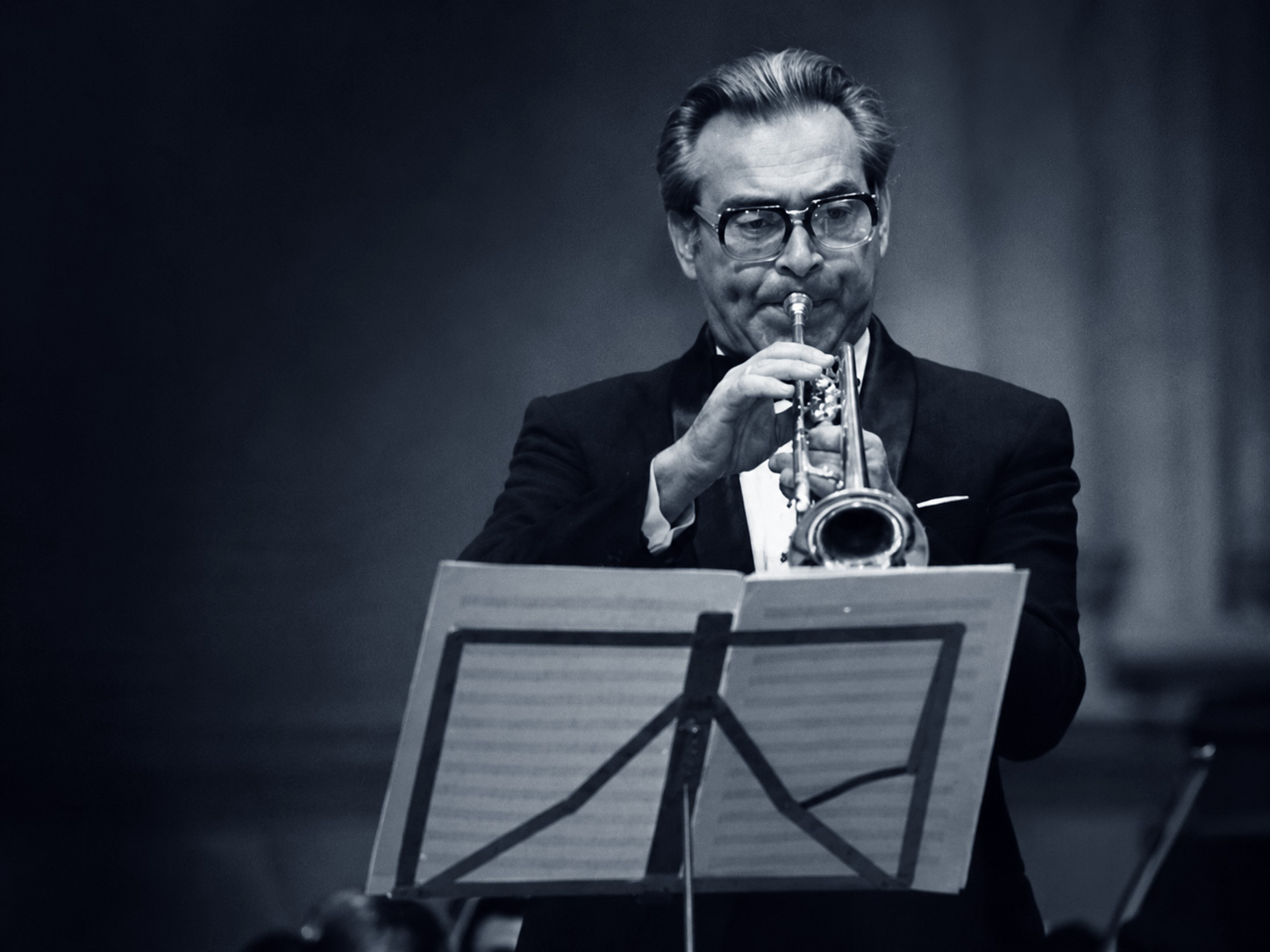
Di Timofey Dokschidser

Trumpet articulation becomes a full performing language, from détaché and staccato to legato, glissando, dynamics and score interpretation.
Articulation or bowing on the trumpet

Thus articulation is not just the beginning of the note but also a specific way of holding it, stopping it and in some cases joining it to other notes⁷. Each type of articulation has three sections — the beginning, the stationary part and the end. In a group of slurred articulations the ending of the note is replaced by the technique of joining notes. The quality of these techniques bears a direct relation to the player's schooling and culture.

In the course of describing types of articulation we shall also mention several of their constituent elements in order to see the distinguishing features of each more clearly.

The nomenclature of many types of articulation has been borrowed from string players and this terminology has become generally accepted. Of course the notational signs for articulation must also become generally accepted and we will have more to say about that. We shall consider types of articulation in two groups: with the tongue and without.

Articulation with the Tongue

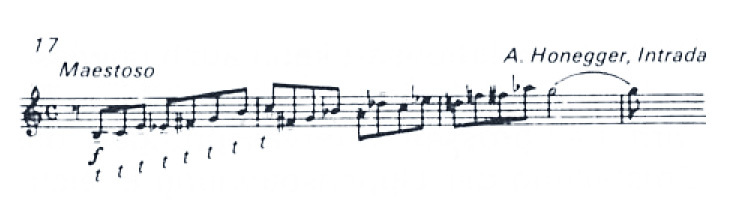
Détaché: In French the word détaché means "detached, separated". Détaché involves playing notes on the same dynamic level detached from one another by an attack; the sonority of the note is held level throughout and the ending is soft and rounded, without the tongue.

Détaché is indicated in notation by a line above or below the note but often there is no indication.
Brass Bulletin image

The word "separated" is not a totally accurate indication of how détaché sounds for this refers rather to the way it is played on string instruments, where each note is played with a separate movement of the bow upwards or downwards. The moment at which the bow direction is changed also determines the extent to which the notes are separated. For wind players the way the note is articulated with the normal attack predetermines the division of the overall sound, as does the change in bow direction for string players.

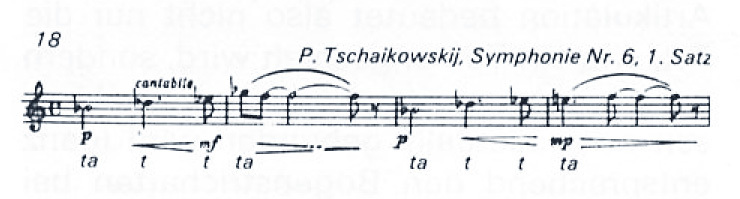
In détaché playing it is possible to reduce to a minimum the pauses separating one note from another and to achieve, when required, a cantabile, almost legato sound.
Brass Bulletin image

In trying to achieve a smoother sound, however, one must not change from the normal to the soft attack since the use of the soft attack is characteristic of a different articulation.

Détaché is not an accented articulation but its attack must be vigorous and definite — sooner accented than cautious and flabby.

Détaché is the most frequent type of articulation, it sounds well at any dynamic level and is suitable for use in all registers.

Marcato: The Italian word marcato means "emphasised, picked out, marked". The musical sense of this word is connected with dynamics and relates to the nature of the beginning of the note. Marcato involves an emphatic articulation of the note and so has entered common usage as a term for a type of articulation.

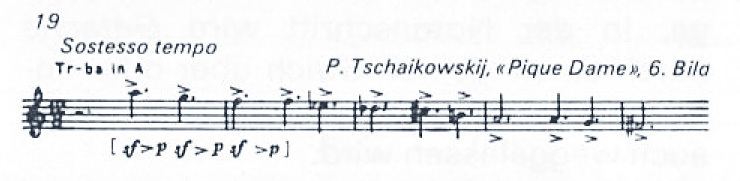
Marcato means playing accented notes separated from one another by an attack. An energetic accented beginning to the note, with subsequent weakening, is characteristic of this type of articulation. The weakening can be gradual, as in diminuendo, or quick, as in subito piano or sforzando. The ending of the note must be soft, rounded, even "spun out", without the tongue.

The marcato articulation uses the normal attack and is indicated in notation by a little "hairpin" like a diminuendo sign:
Brass Bulletin image

Shortening the note in marcato playing helps to overcome some technical difficulties more successfully. Thus when playing wide leaps the tension of the lip muscles can be altered more conveniently:

Continue reading

Accedi all’edizione digitale completa.

Brass Bulletin 31, III / 1980 pagine 35–54

Tutti i contenuti sono protetti dal diritto d’autore © Brass Bulletin 1980–2026

Condividi questo articolo

Facebook LinkedIn
Loading…

Domande e risposte

Come funziona l’edizione digitale

Che cosa comprende l’edizione digitale?

L’edizione digitale riunisce gli articoli già digitalizzati sotto forma di testi leggibili e ricercabili online — non semplicemente come scansioni o file PDF — insieme alle illustrazioni originali, alle note, agli autori, alle informazioni sul numero della rivista e alle traduzioni disponibili. I suggerimenti di articoli correlati comprendono attualmente solo questo materiale digitalizzato.

Gli articoli digitali sono identici agli originali?

Conserviamo il più fedelmente possibile il testo originale, la lingua, le illustrazioni, le didascalie, le note e il contesto editoriale. La presentazione viene adattata per una lettura confortevole online e gli evidenti errori di trascrizione o scansione possono essere corretti. Il contenuto e il carattere dell’articolo pubblicato rimangono invariati.

Quali lingue sono disponibili?

Brass Bulletin è stato pubblicato in inglese, francese e tedesco nel corso di tutta la sua storia. Le traduzioni italiane e spagnole sono state aggiunte a partire dal numero 60. Sui siti italiano e spagnolo, gli articoli dei numeri da 1 a 59 vengono quindi mostrati in inglese per impostazione predefinita.

Con quale frequenza vengono aggiunti nuovi articoli?

Nuovi articoli vengono aggiunti quasi ogni giorno, con circa un numero completo digitalizzato ogni settimana. Il ritmo può variare in base al lavoro di preparazione, elaborazione delle immagini e verifica editoriale necessario.

Perché non tutti gli articoli sono disponibili in formato digitale?

La collezione completa di Brass Bulletin comprende 1.246 articoli pubblicati tra il 1971 e il 2003. L’indice completo è già disponibile online e consente di scoprire tutti gli articoli della collezione, compresi quelli il cui testo integrale non è ancora stato digitalizzato.

La digitalizzazione è iniziata nel febbraio 2026. Ogni articolo viene accuratamente preparato per la lettura online, verificato e collegato al relativo numero, agli autori, agli argomenti e alle illustrazioni. Al ritmo attuale di digitalizzazione, la collezione completa dovrebbe essere disponibile online entro febbraio 2028.

Perché alcuni riferimenti citano articoli che non sono ancora disponibili?

I riferimenti presenti negli articoli originali vengono conservati anche quando il materiale a cui rimandano non è ancora stato digitalizzato. In questo modo si preserva l’integrità storica ed editoriale della rivista. Man mano che nuovi numeri vengono aggiunti all’edizione digitale, un numero crescente di questi riferimenti condurrà ad articoli leggibili online.

Posso suggerire un articolo o segnalare un errore di trascrizione?

Sì. Se desiderate che un determinato articolo venga digitalizzato, oppure se notate un possibile errore di trascrizione o un’informazione mancante, contattateci. I riscontri dei lettori ci aiutano a migliorare l’edizione digitale e a stabilire priorità utili all’interno dell’archivio.

Come posso sostenere Brass Bulletin?

Il vostro sostegno contribuisce a finanziare la preparazione, la verifica e la pubblicazione online dell’intera collezione.

Abbonati all’Edizione digitale

Preferite sostenerci senza abbonarvi?

Fate una donazione

Come procede la digitalizzazione?

Stiamo rendendo Brass Bulletin disponibile online gradualmente, articolo per articolo. Potete leggere gli articoli appena digitalizzati non appena sono pronti, anche prima che un intero numero sia completato.

Consultate il nostro calendario di digitalizzazione per scoprire le ultime aggiunte e le date di disponibilità stimate dei prossimi numeri. Le stime si basano sul nostro ritmo recente e possono cambiare.

Cerca in Brass Bulletin.