Explore institutional access →

Complete articles index

Browse Brass Bulletin articles published since 1971. Search by topic, subject, instrument, author, series or issue, with new material added as the digital edition grows.

Blowing as a body function Member
No. 34 • 1981 Digitized

Blowing as a body function

Breathing habits, posture and body mechanics converge in a practical view of tone production, where William F. Cramer questions prevailing assumptions.

By William F. Cramer

Technique Teaching Breathing Sound Articulation
No. 82 • 1993 Awaiting digitization

Editorial

By Jean-Pierre Mathez

No. 119 • 2002 Awaiting digitization

Part 5

A player’s first years

The opinion of an expert

By James Thompson

Teaching Technique
No. 60 • 1987 Awaiting digitization

VEB, Markneukirchen - A tour of the factory and workshops in pictures

Special GDR

By Jean-Pierre Mathez

Member
No. 12 • 1975 Digitized

Savoir de quelle note on parle

(only in French)

Can pitch be defined clearly without a shared reference? Ischer exposes confusion (octaves, partials/harmonics) and calls for an acoustic basis.

By Robert Ischer

Repertoire
No. 117 • 2002 Awaiting digitization

Walter Gleissle (1919-1961)

My father the trumpeter

By Helmut Gleissle

Encounters
No. 103 • 1998 Awaiting digitization

Stadl-Paura Tuba Festival 1998

By Jeremy Mathez

Report Event
No. 118 • 2002 Awaiting digitization

Spanish Brass “Luur Metalls”

Friendship, talent, and le feu sacré...

By Jean-Pierre Mathez

Encounters
No. 99 • 1997 Awaiting digitization

Schubertian Trombones

By J. Richard Raum

History
No. 68 • 1989 Awaiting digitization

Part 1

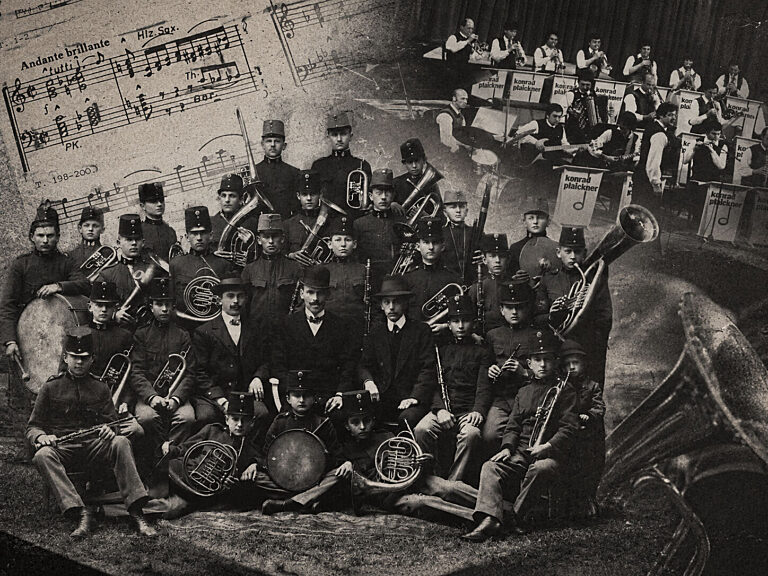
A brief survey of the historical evolution of our instruments

By Jean-Pierre Mathez
Report History
The development of the amateur wind-band repertoire in Central Europe since 1950 Member
No. 49 • 1985 Digitized

The development of the amateur wind-band repertoire in Central Europe since 1950

After 1950, Central Europe’s amateur wind bands became a testing ground where inherited traditions, modern composition, popular music and education collided.

By Wolfgang Suppan

Repertoire Society Sociology Contemporary Music
No. 99 • 1997 Awaiting digitization

Chet Baker and his Martin Trumpet

By Irving Bush

Encounters
No. 111 • 2000 Awaiting digitization

Part 2

On the trail of brasses in Europe

Madrid

By Jean-Pierre Mathez

Report
No. 114 • 2001 Awaiting digitization

Part 2

The Horn Concerti of W. A. Mozart

By Herman Jeurissen

History
No. 61 • 1988 Awaiting digitization

Part 1

The Alto Trombone

By Benny Sluchin

History Equipment
No. 113 • 2001 Awaiting digitization

Part 5

On mouthpieces...

The coupling of shank and leadpipe

By Toshi Kameyama

The trombone: changing times, changing slide positions Member
No. 11 • 1975 Digitized

The trombone: changing times, changing slide positions

Did trombonists always use seven positions? Heinrich Huber reveals how history, theory and early music reshaped the slide.

By Heinrich Huber

Technique History Historical instruments Intonation
The Trumpet in the USA Free
No. 43 • 1983 Digitized

Part 6

The Trumpet in the USA

Diverse makers

As trumpet makers rethink their standard instruments, Monette, Malone and Blackburn bring leadpipe design into a new dialogue between players and workshops.

By Thomas Stevens

Instrument Makers Equipment Intonation
No. 61 • 1988 Awaiting digitization

U.S.A. Profile

Bob Malone

By Thomas Stevens

Equipment Encounters
Arms, Hands, Fingers
No. 61 • 1988 Awaiting digitization

Brass Techniques Series • Part 8

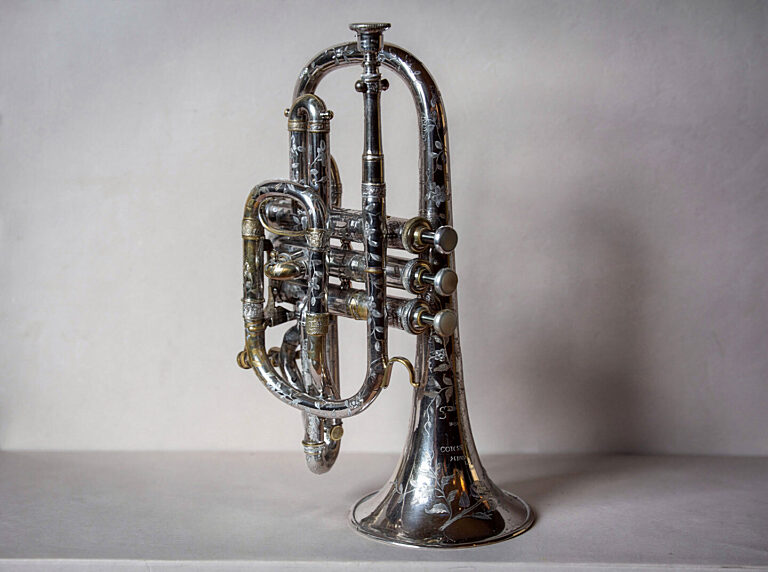
Arms, Hands, Fingers

By Jean-Pierre Mathez
Technique
The Remarkable Story Behind the Cover Free
No. 38 • 1982 Digitized

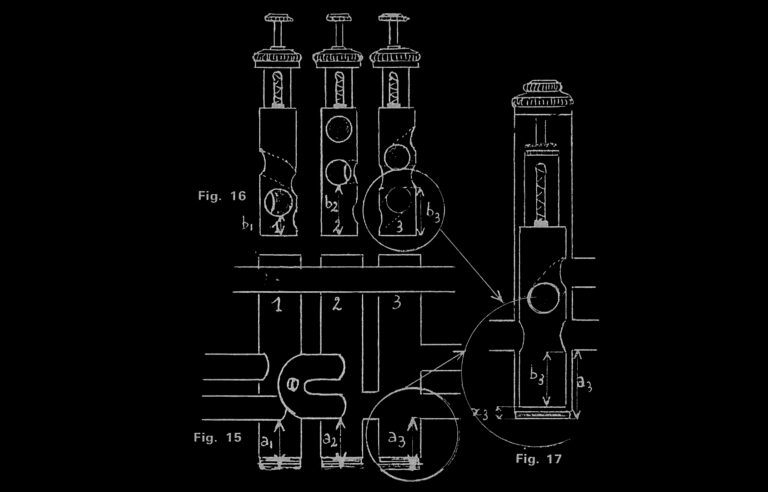
The Remarkable Story Behind the Cover

A war, a theft, and an unexpected recovery turned one nineteenth-century cornet into a witness to musical memory beyond its craftsmanship and sound.

By Jean-Michel Gauffriau
History Equipment Historical instruments
How to regulate the trumpet, applicable to all valve instruments Free
No. 23 • 1978 Digitized

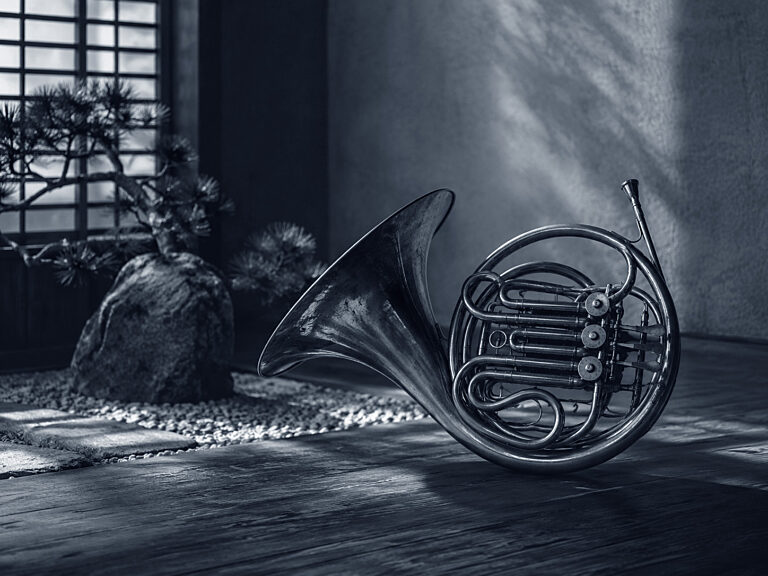
How to regulate the trumpet, applicable to all valve instruments

A hidden key to performance: Perinelli and Mouton reveal how precise valve regulation transforms response, intonation, and sound—down to a tenth of a millimetre.

By René Périnelli, J.-L. Mouton
Equipment Valves
Zen and the Art of Horn playing Member
No. 29 • 1980 Digitized

Part 4

Zen and the Art of Horn playing

From meditation to distance running, horn playing becomes a way of quieting mental noise, linking breath, concentration, and daily life.

By Jeffrey Agrell

Health Nerves Breathing Ideas
No. 73 • 1991 Awaiting digitization

Part 2

The Alto Trombone

In the 18th Century Sacred Chamber Music from the Abbeys of Göttweig and Melk, Austria

By J. Richard Raum

History Repertoire
Loading…

Questions & Answers

How the Digital Edition works

What does the Digital Edition include?

The Digital Edition brings together the articles already digitized as searchable online texts—not simply as scans or PDF files—along with their original illustrations, notes, authorship, issue information, and available translations. Related-article suggestions currently include only this digitized material.

Are the digital articles identical to the originals?

We preserve the original text, language, illustrations, captions, footnotes, and editorial context as faithfully as possible. The presentation is adapted for comfortable online reading, and obvious transcription or scanning errors may be corrected. The substance and character of the published article remain unchanged.

Which languages are available?

Brass Bulletin was published in English, French, and German throughout its history. Italian and Spanish translations were added from issue No. 60 onward.

On the Italian and Spanish sites, articles from issues 1–59 are therefore shown in English by default.

How often are new articles added?

New articles are added almost daily, with approximately one complete issue digitized each week. The pace may vary depending on the preparation, image work, and editorial checking required.

Why aren’t all articles available digitally?

The complete Brass Bulletin collection contains 1,246 articles published between 1971 and 2003. The full index is already available online, allowing readers to discover every article in the collection, including those whose complete text has not yet been digitized.

Digitization began in February 2026. Each article is carefully prepared for online reading, checked, and connected to its issue, authors, subjects, and illustrations. At the current pace of digitization, the complete collection is expected to be available online by February 2028.

Why do some references mention articles that are not available yet?

References in the original articles are preserved even when the material they point to has not yet been digitized. This keeps the historical and editorial record intact. As more issues are added to the Digital Edition, an increasing number of these references will lead to articles that can be read online.

Can I suggest an article or report a transcription error?

Yes. If there is an article you would particularly like to see digitized, or if you notice a possible transcription error or missing detail, please contact us. Reader feedback helps us improve the Digital Edition and prioritize useful connections within the archive.

How can I support Brass Bulletin?

Your support helps fund the preparation, verification, and online publication of the complete collection.

Subscribe to the Digital Edition

Prefer to support us without subscribing?

Make a donation

How is the digitization progressing?

We’re gradually making the Brass Bulletin available online, article by article. You can read newly digitized articles as soon as they’re ready, even before an entire issue is complete.

Visit our Digitization Roadmap to browse recent additions and see estimated availability for upcoming issues. These estimates follow our recent pace and may change.

Search Brass Bulletin.