6 min. read
Zen and the Art of Horn playing
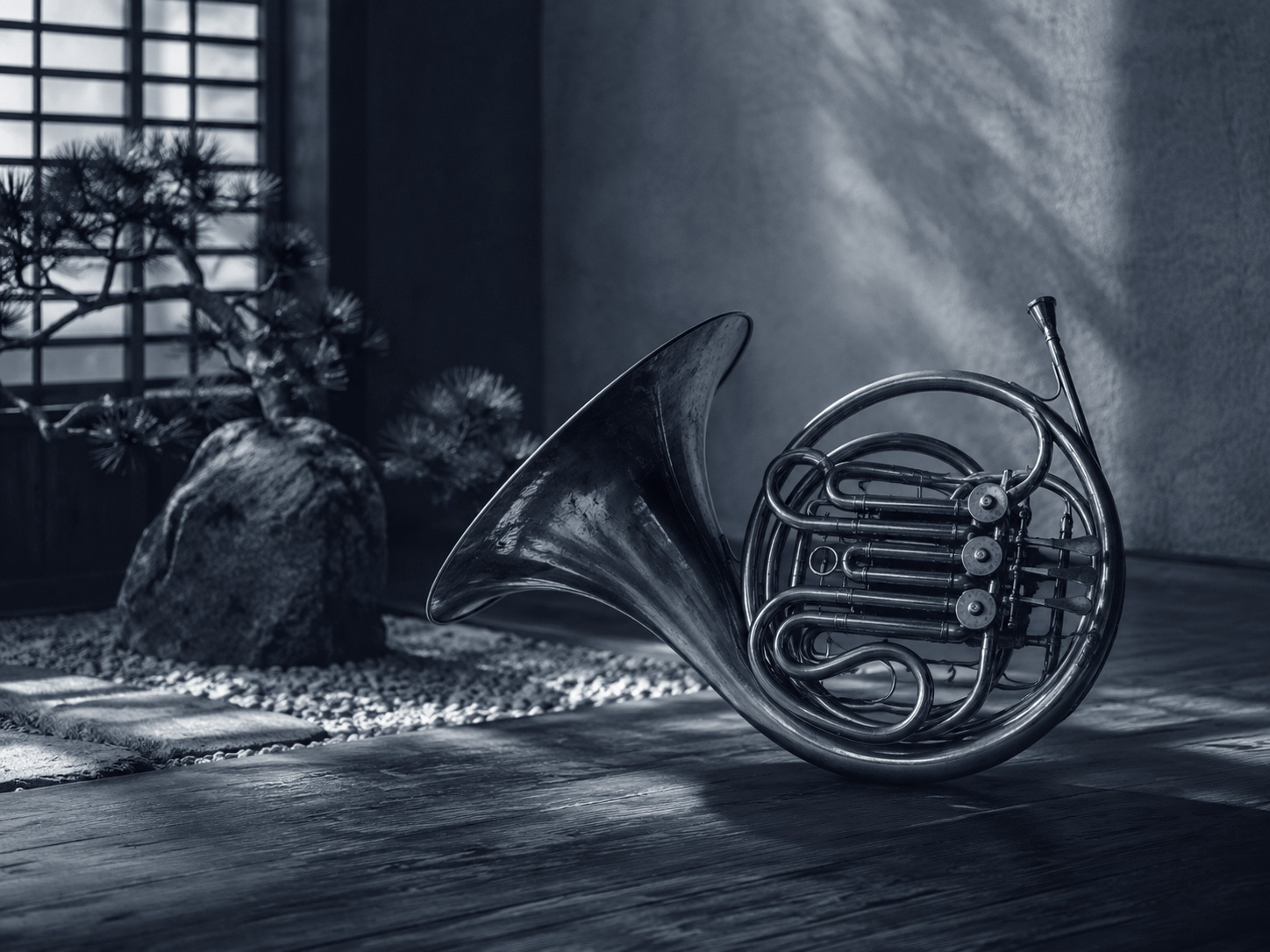
“Spiritual” is a word used by Zen masters to describe the state of one’s mind and attitude in performing any Zen art properly. In this state, the ordinary consciousness has ceased its verbalizing, analyzing, and criticizing and is still, with the result that the art can flow effortlessly and unhindered, directed by the deep non-verbal intelligence within one. It is, however, difficult for most people to control the mind so that it cannot interfere. The ordinary thinking mind is accustomed to staying busy with creating problems (e.g.: what if? what if?) and then trying to solve them. It is not content to become a mere observer — which for it is to cease existence, to die in a way. But the fact remains that in order for us to ever really master our instrument and to play truly musically, it is imperative that we learn to quiet this left brain hemisphere activity so that it plays its part in the proper mental state for musicmaking and does not revert to its old tricks: fears, impatience, worry, anxiety, tension, and distraction from what is going on in the moment. Following are some suggestions to help attain this goal:
Meditation
Regular practice of a meditation technique is an excellent (and age-old) way of developing concentration; i.e. the ability to control the tendency of the mind to constant flights from subject to subject, from out of the present to past and future. Meditation consists of concentrating awareness on a particular something, of dwelling upon it, and has nothing to do with any intellectual understanding of the object. There are many types of meditation, both active and passive, which use various symbols, images, words, sounds, or physical movements as focal points. Probably the most convenient form for most Westerners is Mantra meditation, which uses a word or syllable, such as shi-am, om, ah-ying, etc.¹
Brass Bulletin 29, I / 1980 pages 35–40
All content is protected by copyright © Brass Bulletin 1980–2026