Explore institutional access →

6 min. read

Roger Delmotte

A French Trumpet Player
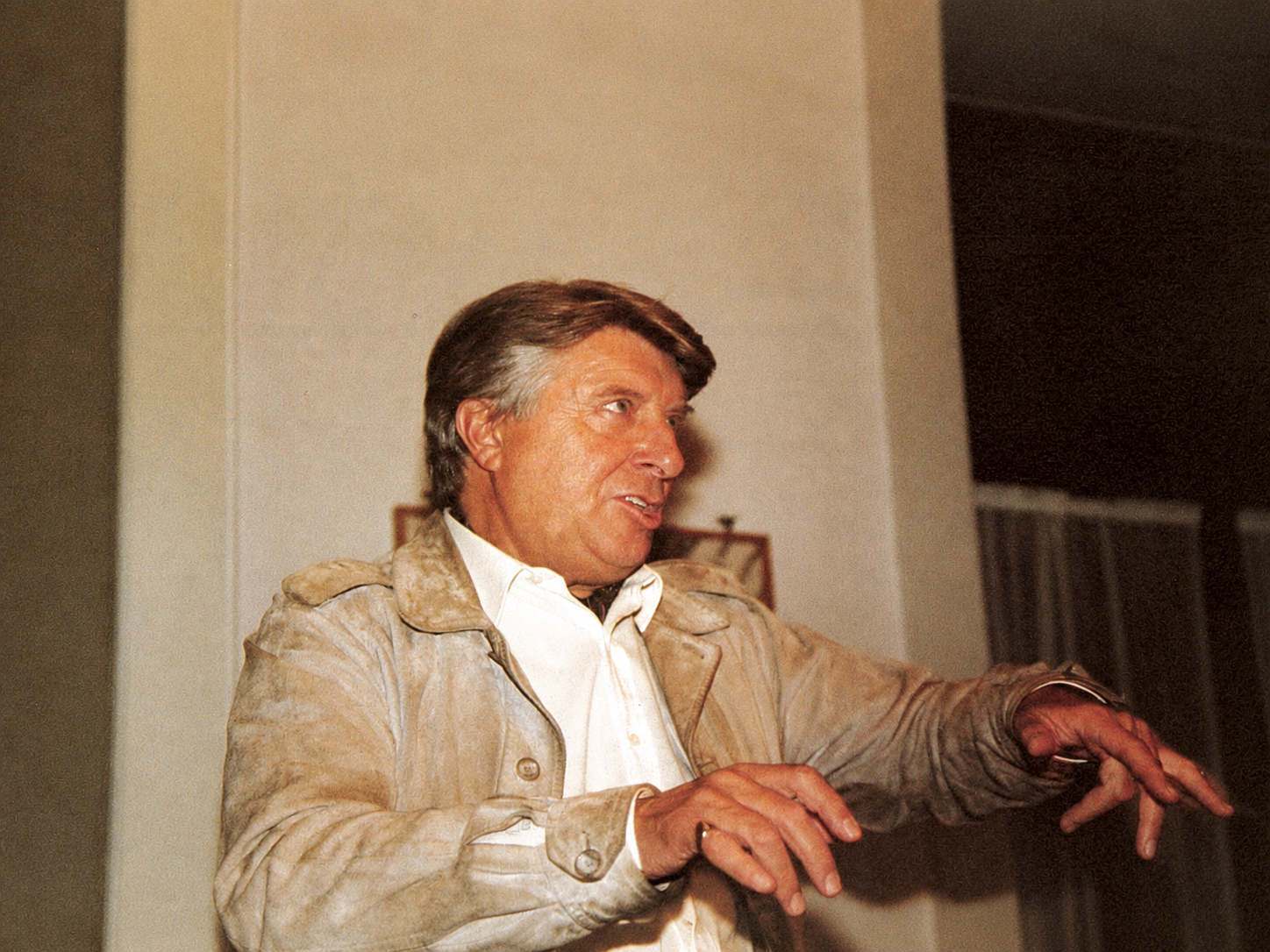
Roger Delmotte reflects on the French trumpet school, changes in orchestral sound and his work preparing young players for orchestral careers and competitions.
Roger Delmotte

Roger Delmotte

Roger Delmotte has a special place in the French trumpet world. Solo trumpet at the prestigious Paris Opéra for 35 years, he has throughout his career remained receptive to new ideas, curious about and interested in every evolutionary movement. This is, doubtless, the reason for his amazing mental and physical youthfulness.

Roger Delmotte was born in Roubaix, in the north of France, and started his musical education there, completing it later at the Paris Conservatoire (1st prize for trumpet in 1946). In 1950 he was the first trumpeter to win 1st prize at the Geneva International Musical Performance Competition. That same year he was appointed Professor of Trumpet at the Versailles Conservatoire, where he still teaches.

In 1951 he secured the much sought after job of 1st solo trumpet at the Paris Opéra orchestra. He played regularly as a soloist with the great Paris orchestras — the beginning of a fine solo career, in France and abroad, involving many international festivals. He has been dedicatee and first performer of many works written for trumpet: Schmitt, Jolivet, Delerue, Moeschinger, Barraud, O’Hana, Boudon, etc.
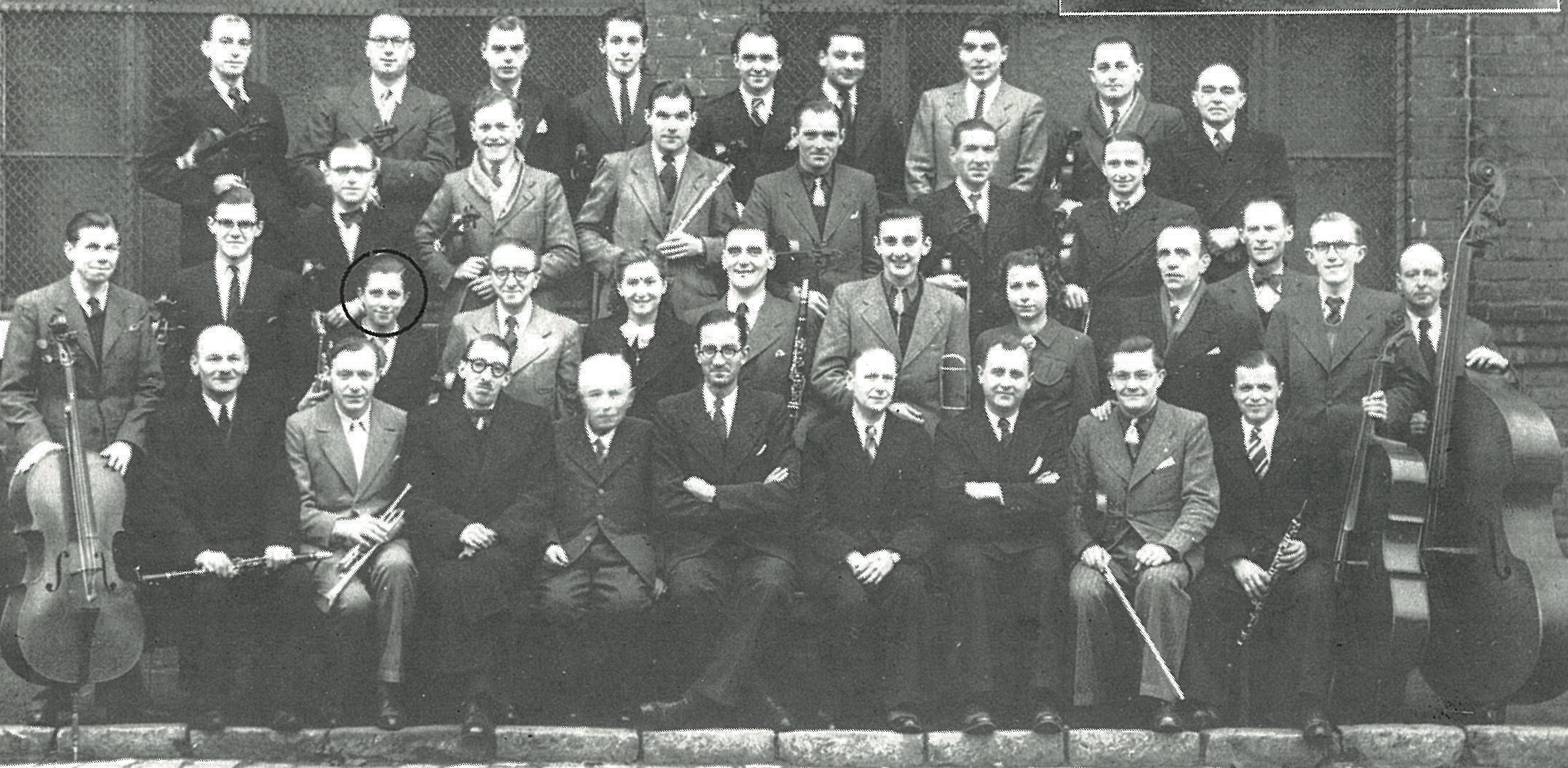
1943 «Symphonie du Favreuil», Roubaix (Orchestre de l’Usine Glorieux).

1943 «Symphonie du Favreuil», Roubaix (Orchestre de l’Usine Glorieux).

Nadia Boulanger summoned him to her ensemble of early and modern music. Together with the late Pierre Cochereau, organist at Notre Dame Cathedral in Paris, he devised the trumpet-and-organ formula which has since become so popular. In 1976 he founded his brass ensemble and toured Europe and South Africa.

He is an exceptional teacher (he has the secret of filling his pupils with excitement and of showing them how to put depth into a performance) and has, since retiring from the Opéra, devoted himself passionately to teaching (summer courses and seminars in Basle, Bienne, Nice, Sion, Salzburg, Tokyo etc. and, since 1986, advanced professional classes at the Lausanne Conservatoire in Switzerland).

Roger Delmotte is often invited to judge at international competitions. He is artistic adviser to the Toulon competition. The French government has dubbed him Chevalier of the Legion of Honour and Chevalier of the Order of Arts and Letters.

Interview

BRASS BULLETIN: When someone has had as full a career as you have, what should he pass on to his pupils, the ones at the Lausanne Conservatoire now, for example?

Roger Delmotte: With this instrument it’s much more important to work on an approach to the profession — to aim to be 1st trumpet in an orchestra, in other words — than to build your hopes on a few trumpet and organ or trumpet and orchestra concerts. You have to be realistic! How many trumpet soloists are there in the world? How many could earn their living from it? Precious few, let’s admit it! We should guide young players towards fitting into an orchestral trumpet section. And since — unfortunately — orchestral auditions are run the same way whether they want a 1st or a 4th, you have to prepare for them accordingly.

Continue reading

Access the full Digital Edition.

Brass Bulletin 59, III / 1987 pages 48–55

All content is protected by copyright © Brass Bulletin 1987–2026

Share this article

Facebook LinkedIn
Loading…

Questions & Answers

How the Digital Edition works

What does the Digital Edition include?

The Digital Edition brings together the articles already digitized as searchable online texts—not simply as scans or PDF files—along with their original illustrations, notes, authorship, issue information, and available translations. Related-article suggestions currently include only this digitized material.

Are the digital articles identical to the originals?

We preserve the original text, language, illustrations, captions, footnotes, and editorial context as faithfully as possible. The presentation is adapted for comfortable online reading, and obvious transcription or scanning errors may be corrected. The substance and character of the published article remain unchanged.

Which languages are available?

Brass Bulletin was published in English, French, and German throughout its history. Italian and Spanish translations were added from issue No. 60 onward.

On the Italian and Spanish sites, articles from issues 1–59 are therefore shown in English by default.

How often are new articles added?

New articles are added almost daily, with approximately one complete issue digitized each week. The pace may vary depending on the preparation, image work, and editorial checking required.

Why aren’t all articles available digitally?

The complete Brass Bulletin collection contains 1,246 articles published between 1971 and 2003. The full index is already available online, allowing readers to discover every article in the collection, including those whose complete text has not yet been digitized.

Digitization began in February 2026. Each article is carefully prepared for online reading, checked, and connected to its issue, authors, subjects, and illustrations. At the current pace of digitization, the complete collection is expected to be available online by February 2028.

Why do some references mention articles that are not available yet?

References in the original articles are preserved even when the material they point to has not yet been digitized. This keeps the historical and editorial record intact. As more issues are added to the Digital Edition, an increasing number of these references will lead to articles that can be read online.

Can I suggest an article or report a transcription error?

Yes. If there is an article you would particularly like to see digitized, or if you notice a possible transcription error or missing detail, please contact us. Reader feedback helps us improve the Digital Edition and prioritize useful connections within the archive.

How can I support Brass Bulletin?

Your support helps fund the preparation, verification, and online publication of the complete collection.

Subscribe to the Digital Edition

Prefer to support us without subscribing?

Make a donation

How is the digitization progressing?

We’re gradually making the Brass Bulletin available online, article by article. You can read newly digitized articles as soon as they’re ready, even before an entire issue is complete.

Visit our Digitization Roadmap to browse recent additions and see estimated availability for upcoming issues. These estimates follow our recent pace and may change.

Search Brass Bulletin.