6 min. read
This article is for subscribers.
Fats' Heirs
Clifford Brown, Freddie Hubbard, Wynton Marsalis
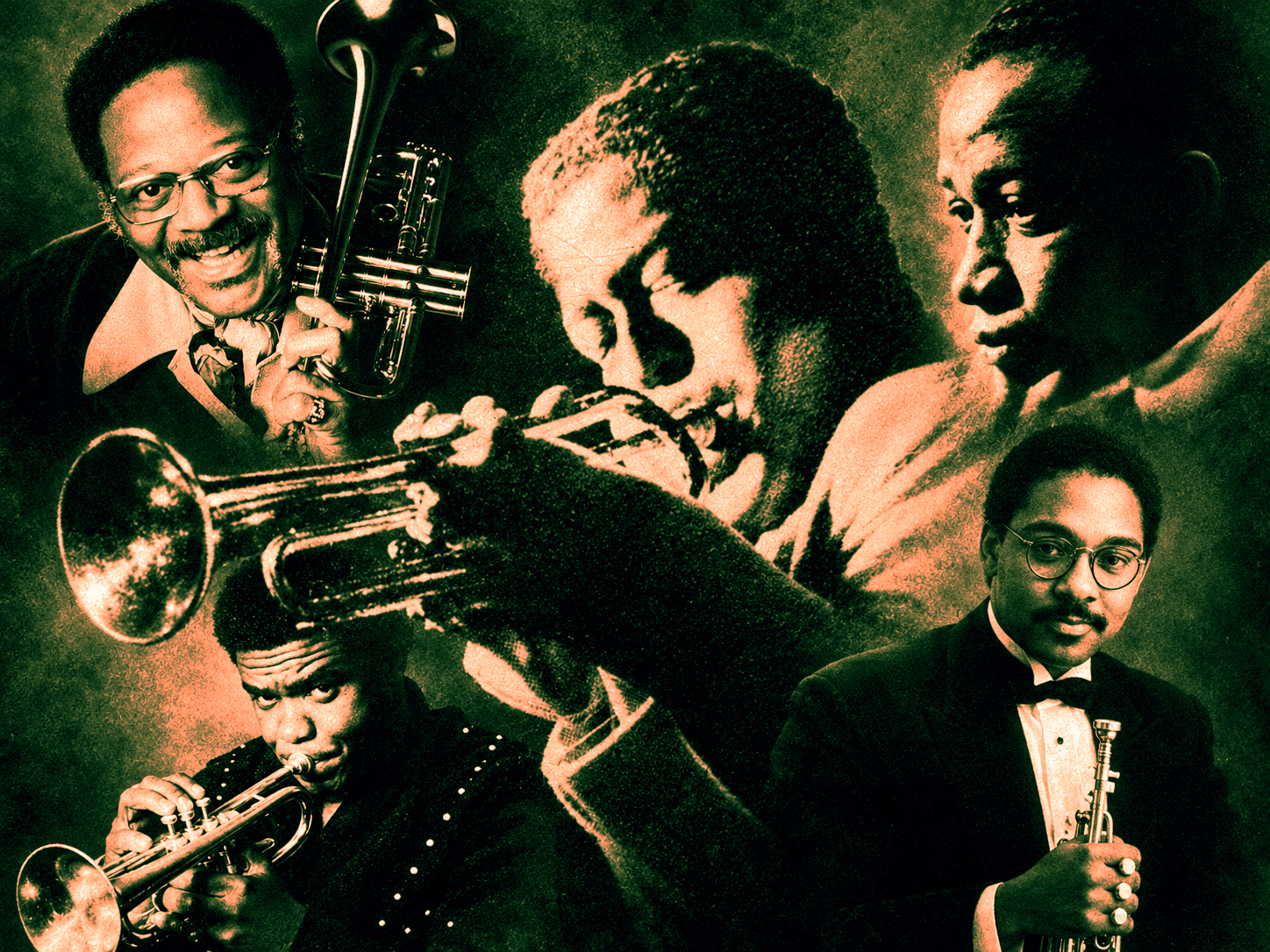
Prodigy - sound - agility
No-one will question the fact that Dizzy Gillespie was the father of that current of the jazz trumpet known as “modern”. But this innovator in the realms of agility and harmonic concepts neglected the importance of sound. This was Theodore “Fats” Navarro’s contribution: a full sound, like Roy Eldridge’s, adapted to the bop style. Thanks to a precocious artistic maturity his message was heard despite his death in 1950 at the age of 26. The torch was immediately picked up by Clifford Brown, who also died at 26 six years later. Two years later Booker Little came along, the sole inheritor of the genre to find fresh expression for this now “classical” language; he died at the age of 23, in 1961. In that year was born Wynton Marsalis, on whom all hopes now rest.
The features common to these four artists are their incredible maturity acquired in an early age, the excellence of their technique and the quality of their sound.
Fats Navarro
Fats Navarro, born in Key West, Florida, in 1923, was of Cuban, Chinese and Black American descent. He started with the saxophone; he is said originally to have admired his distant relative Charlie Shavers, a fabulous virtuoso, but we have no information on any serious trumpet training. R. Russell reports that in 1941, at the age of 17, already possessing an exceptional sound and technique, he was noticed when he deputised with Sol Albright.¹ After a spell with Snookum Russell (1942 - 1943) he played with Andy Kirk (1943 - 1945). That is where he worked alongside Howard McGhee, a disciple of Eldridge who is said to influenced Fats in the exploitation of his agility. According to R. Russell it was Dizzy himself who recommended Fats as his replacement in the Billy Eckstine band (1945 - 1946).
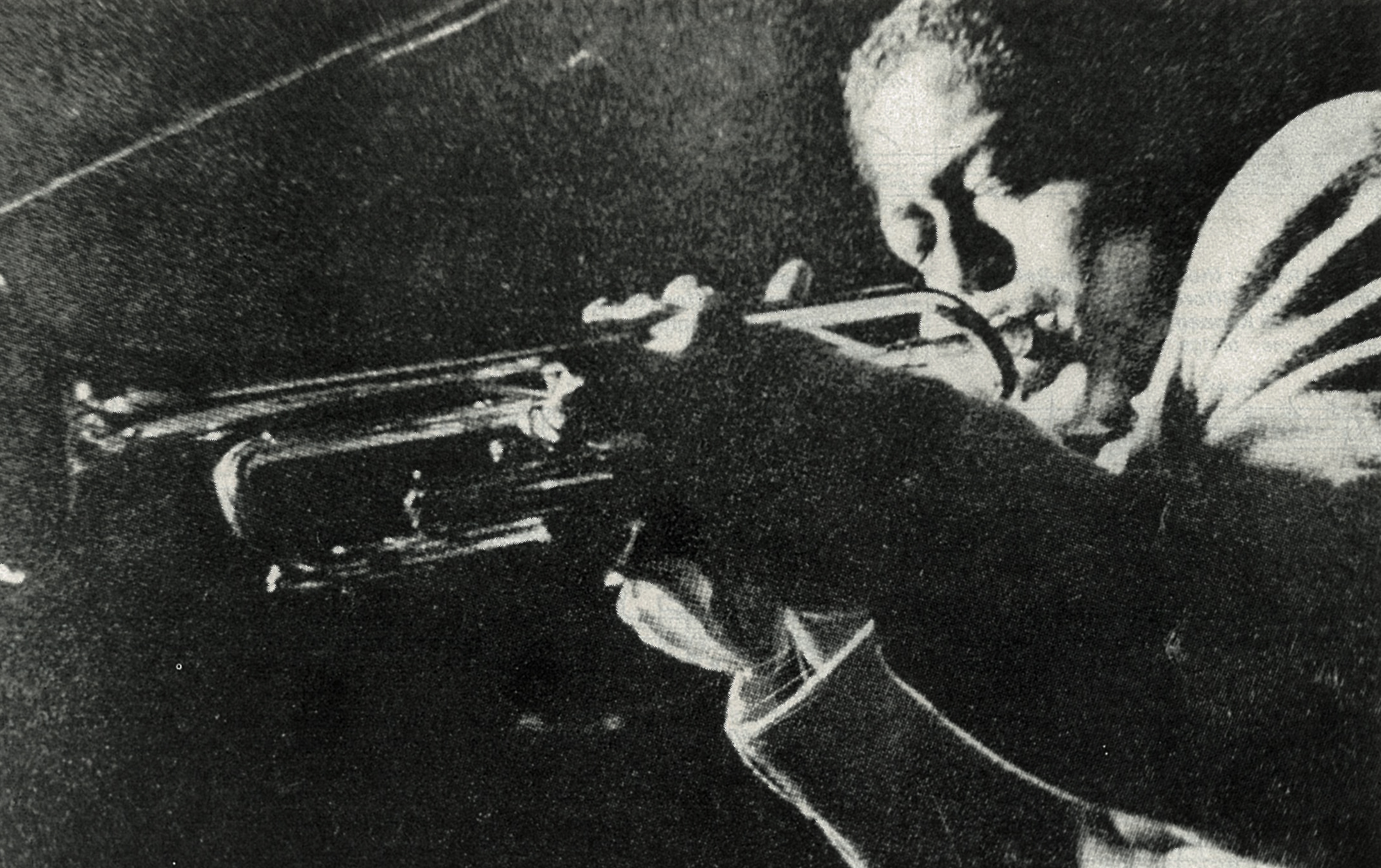
Fats Navarro (coll. M. Laplace)
Diz’s autobiography does not indicate a very high opinion of his young rival, however.² He later played for Lionel Hampton, Coleman Hawkins (Sonora records), Illinois Jacquet and Kenny Clarke (September 1936, a session supervised by Charles Delaunay). He contracted tuberculosis, which led to his dependence on drugs. In 1947 he did his first session under his own name (for Savoy). In November 1947 he played with Charlie Parker (WOR) and at the end of 1948 he worked at the Royal Roost with Tadd Dameron. He also recorded with Dameron (“Good Bait”, “The Squirrel”) and for Blue Note he recorded a meeting with his former colleague Howard McGhee (“Double Talk”). 1949 was Fats’ last working year. He recorded with the Metronome All-Stars (with Dizzy and Miles Davis! - RCA), Bud Powell (Blue Note) and Max Roach (in September, for Prestige). Six years (1943-1949) had been enough to establish a perfect style: great technique, good range, clean articulation, little vibrato, broad, warm sound.
Of average height, Fats weighed sixteen stone before he took ill; this, together with his high-pitched voice, resulted in the nickname “Fats” or “Fat Girl”. During the autumn of 1949 he began to lose weight and weighed only eight stone when he died in poverty in Bellevue hospital on 7th July 1950.
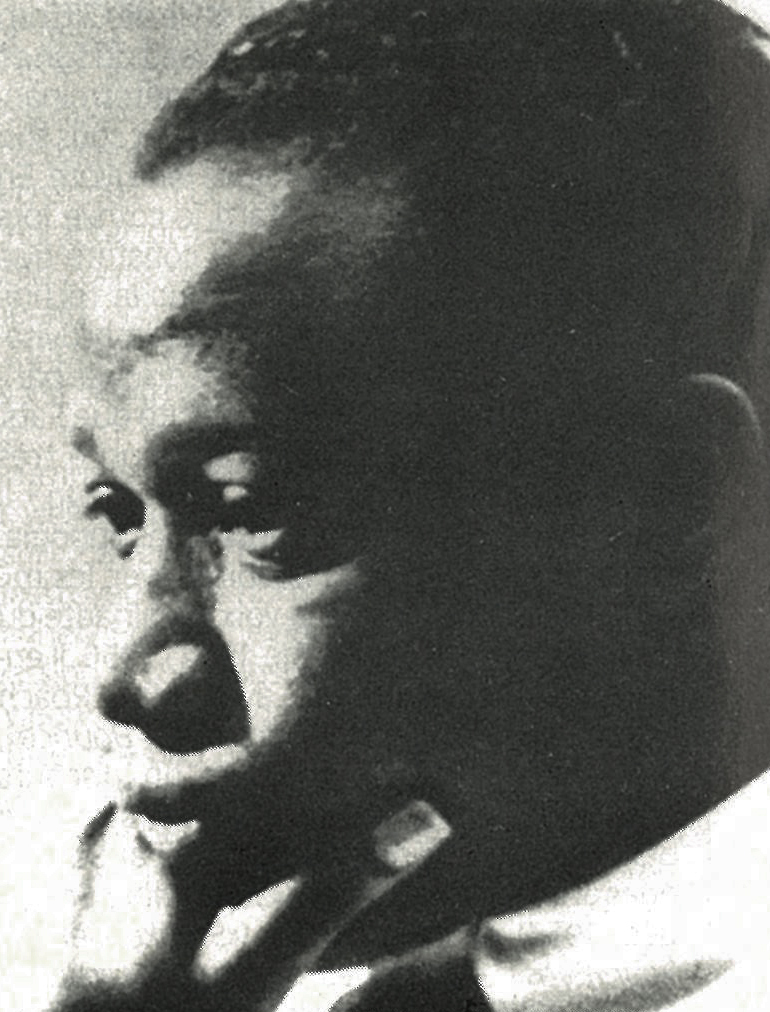
Clifford Brown (Coll. Michel Laplace)
Clifford Brown
Clifford Brown, born in Wilmington, Delaware, on 30th October 1930, was fifteen when his father gave him a trumpet; at that time bebop predominated in the USA.
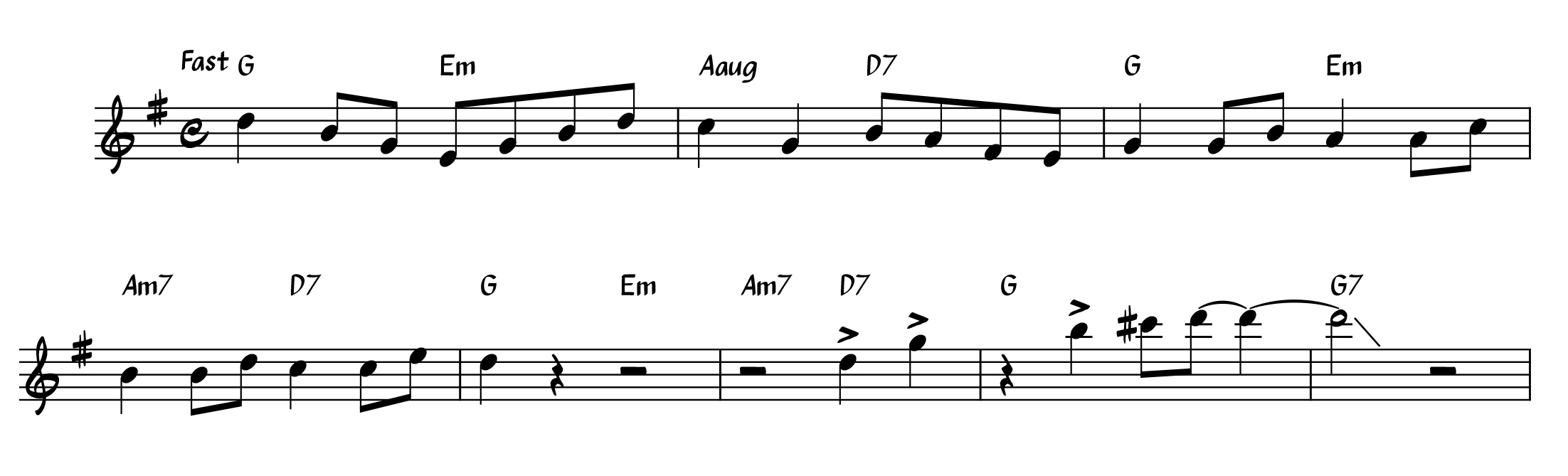
“Get Happy”: Clifford Brown’s chorus bar 25 to 32 (1953). transcr. Bill Kennedy
Clifford had the benefit of rigorous and original training from Robert Lowery in Wilmington and then Harry Andrews. This latter made him study the Arban tutor, applying to it the Prescott system (playing 16 or 32 bars in one breath, for example) and the non-pressure system. According to Andrews Clifford had a good mouthpiece position (1/3 - 2/3 and played the “Carnival of Venice” for a competition.³ His first inspiration was Fats Navarro.³ᵇ In 1952 he recorded his first solo (“Ida Red” for Chris Powell. In 1953 Clifford’s style was clearly established as far as sound and phrasing were concerned: he recorded some all-important sides with J.J.Johnson (“Get Happy”) and under his own name (“Easy Living”), all with Blue Note. In September 1953 Fred Gérard met him at a Vogue session in Paris; his observation was that, although “Brownie” was a beginner in technique, he was a quite exceptional improviser.
This article is for subscribers.
CHF 5.00 per month · Cancel auto-renewal anytime.
Enjoy unlimited access to all digitized Brass Bulletin articles.
Brass Bulletin 58, II / 1987 pages 42–48
All content is protected by copyright © Brass Bulletin 1987–2026