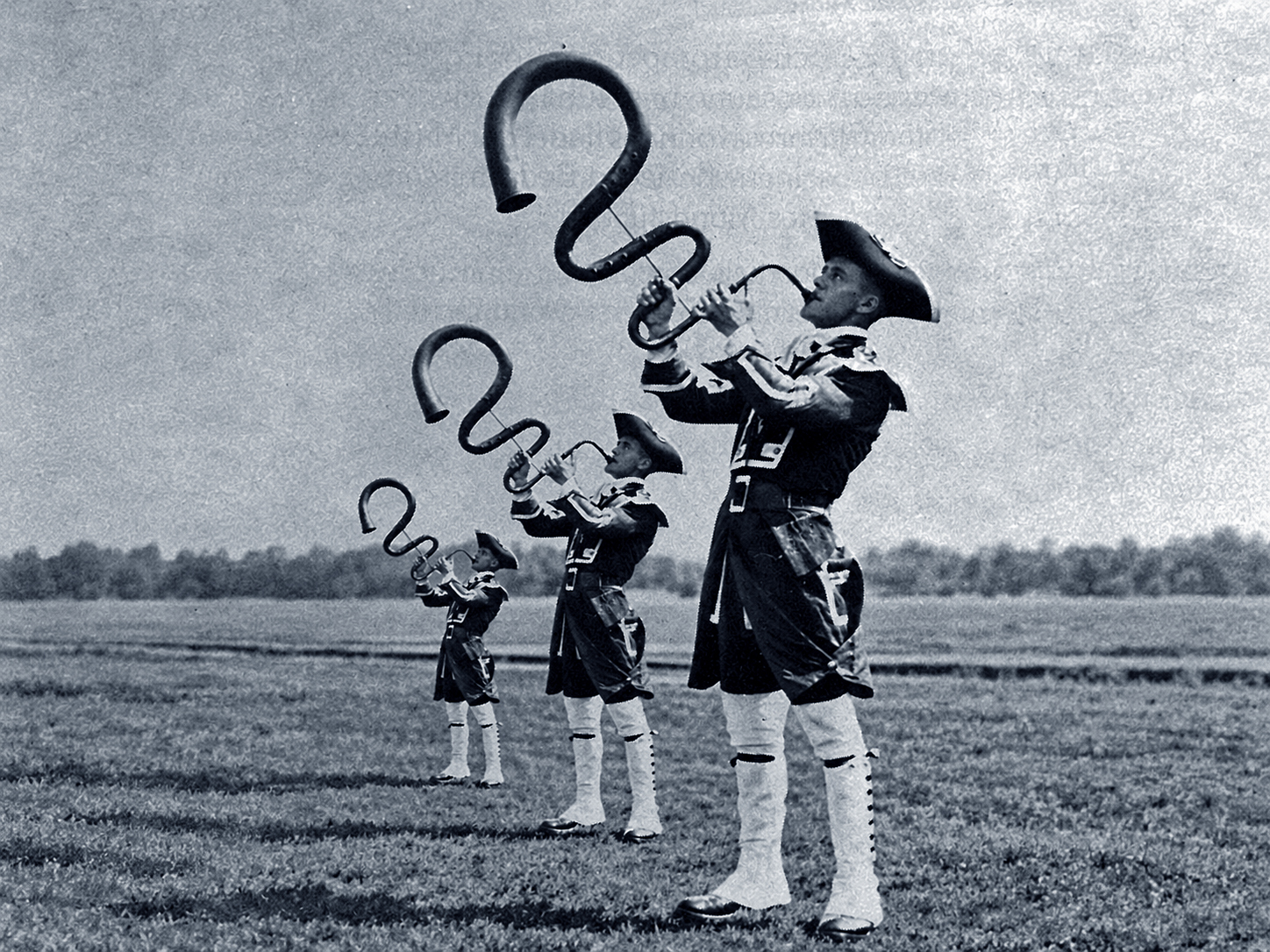
The serpent, officially invented in France in 1590 to support the voices of the Catholic church choir, is the eternal “black sheep” of musical instruments. Made of wood and covered with black leather, it is the predecessor of no contemporary musical instrument. Loved and cursed by musicians of the 17th, 18th and 19th centuries, the serpent became a symphonic and military band instrument as well as a church instrument. Handel, Haydn, Beethoven, Wagner and Mendelssohn composed for the serpent. And while Handel’s amusement upon first hearing the serpent led to the statement, “Aye, but that’s not the serpent that seduced Eve”, Hector Berlioz damned the instrument by saying:
The truly barbaric tone of this instrument would be much better suited for the bloody cult of the Druids than for that of the Catholic Church.
Berlioz would have altered this view if he had heard the August 8th “Amherst Suite” performance.
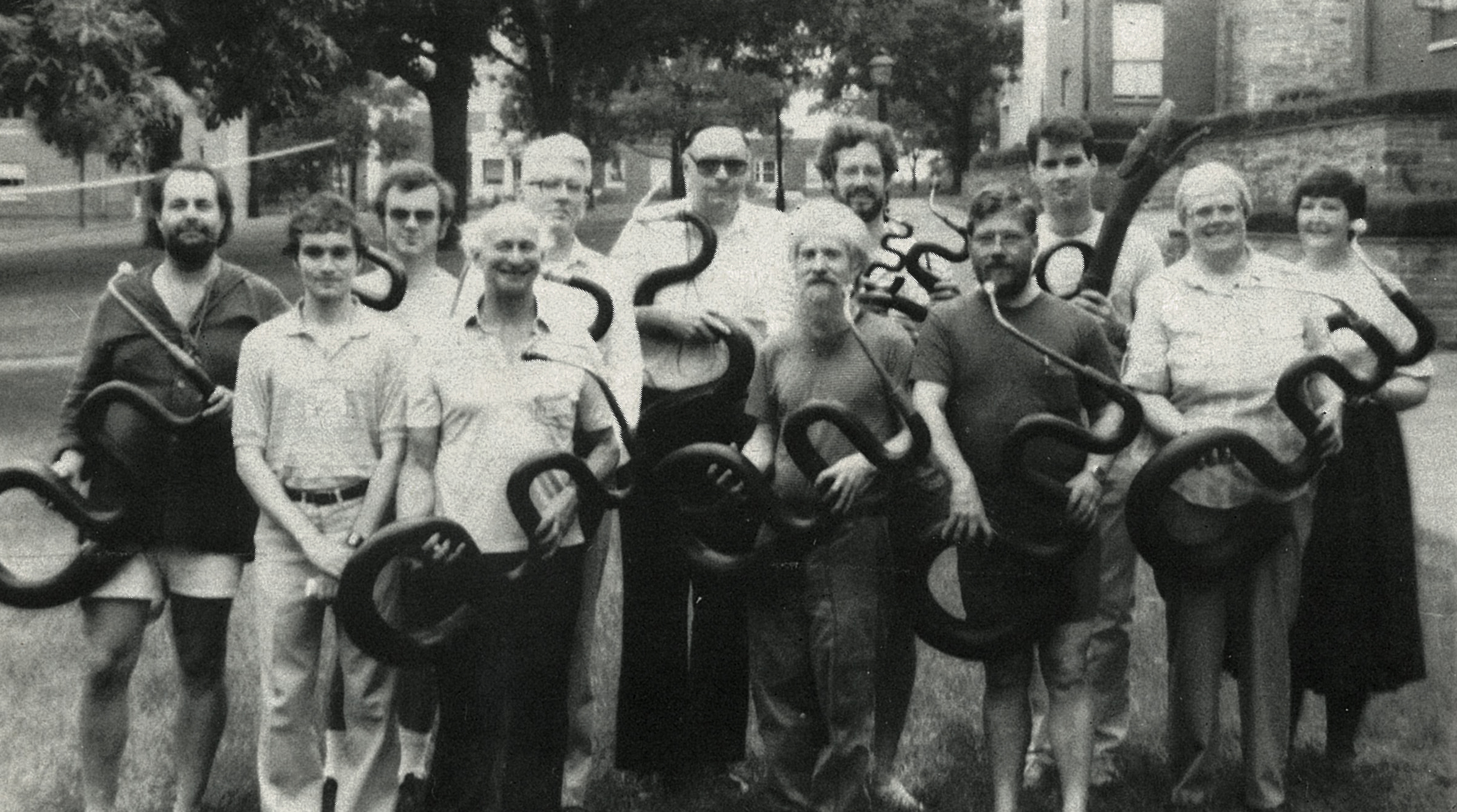
Members of United Serpents.
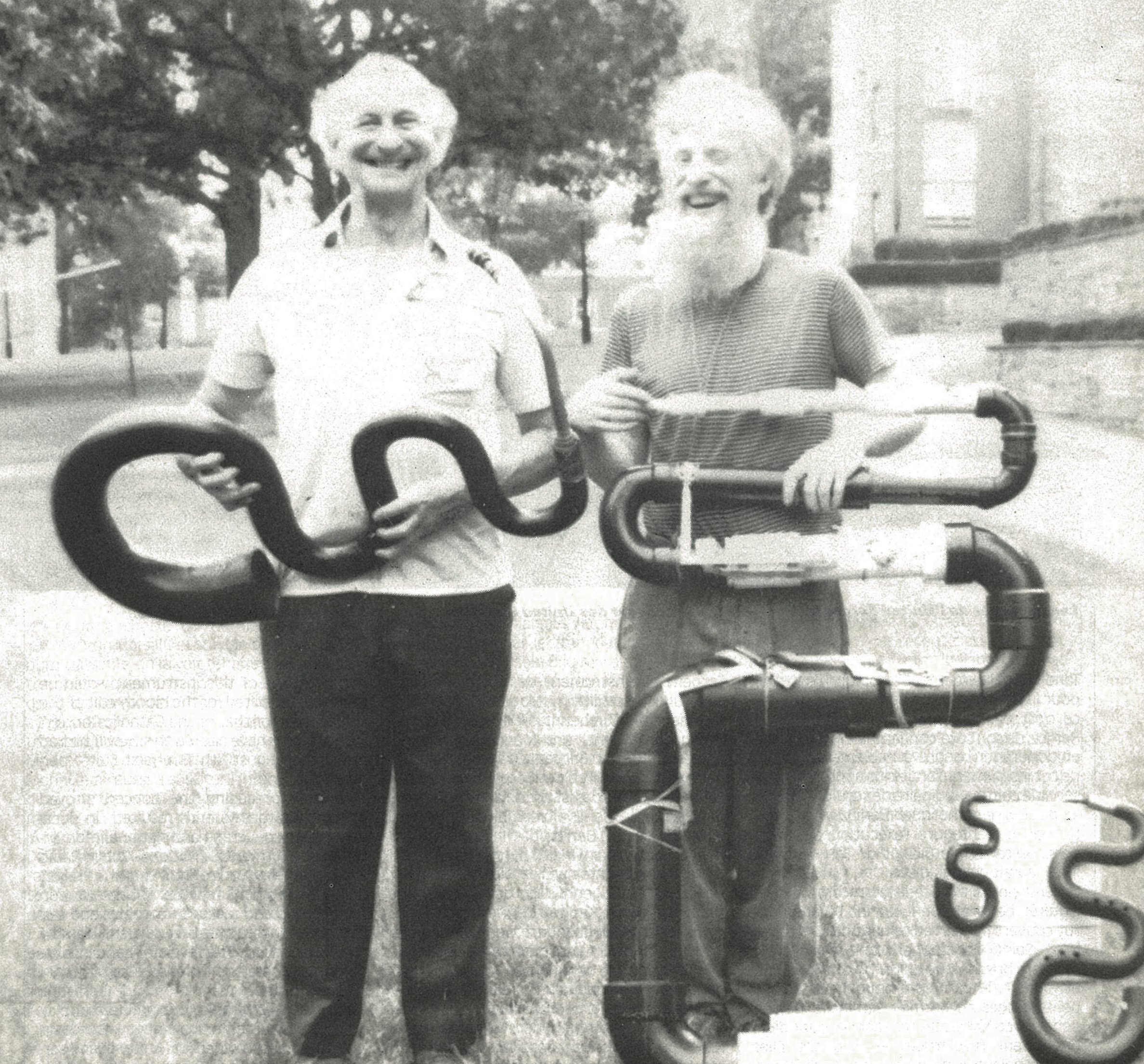
The week preceding the concert proved quite newsworthy and resulted in local newspaper coverage and national radio interviews by American National Public Radio and N.B.C. network. The English “Saint” Christopher Monk, member of the London Serpent Trio and maker of cornetts and serpents, conducted the first serpent class of the 20th century. The revelatory and inspirational daily sessions included instruction in serpent history, technique and literature. Participants were able to examine and play original instruments, including a Bandovin (c. 1810) serpent owned by Mr. Monk and serpents by B. Pretty and Tabard Lyon (early 19th century) on loan from the Kingman Collection, the Newark, NJ, Museum. In addition, two never-before-seen instruments were unveiled especially for the occasion — a quarter-size serpent, “the worm,” constructed by Mr. Monk, and “The American Anaconda,” constructed from plastic plumbing pipe by Steven Silverstein. At the concert, Doug Kirk, with the aid of the worm, played the highest notes ever heard on a serpent, and John Weber delighted the audience with a touching rendition of “Old Man River” on the American Anaconda.
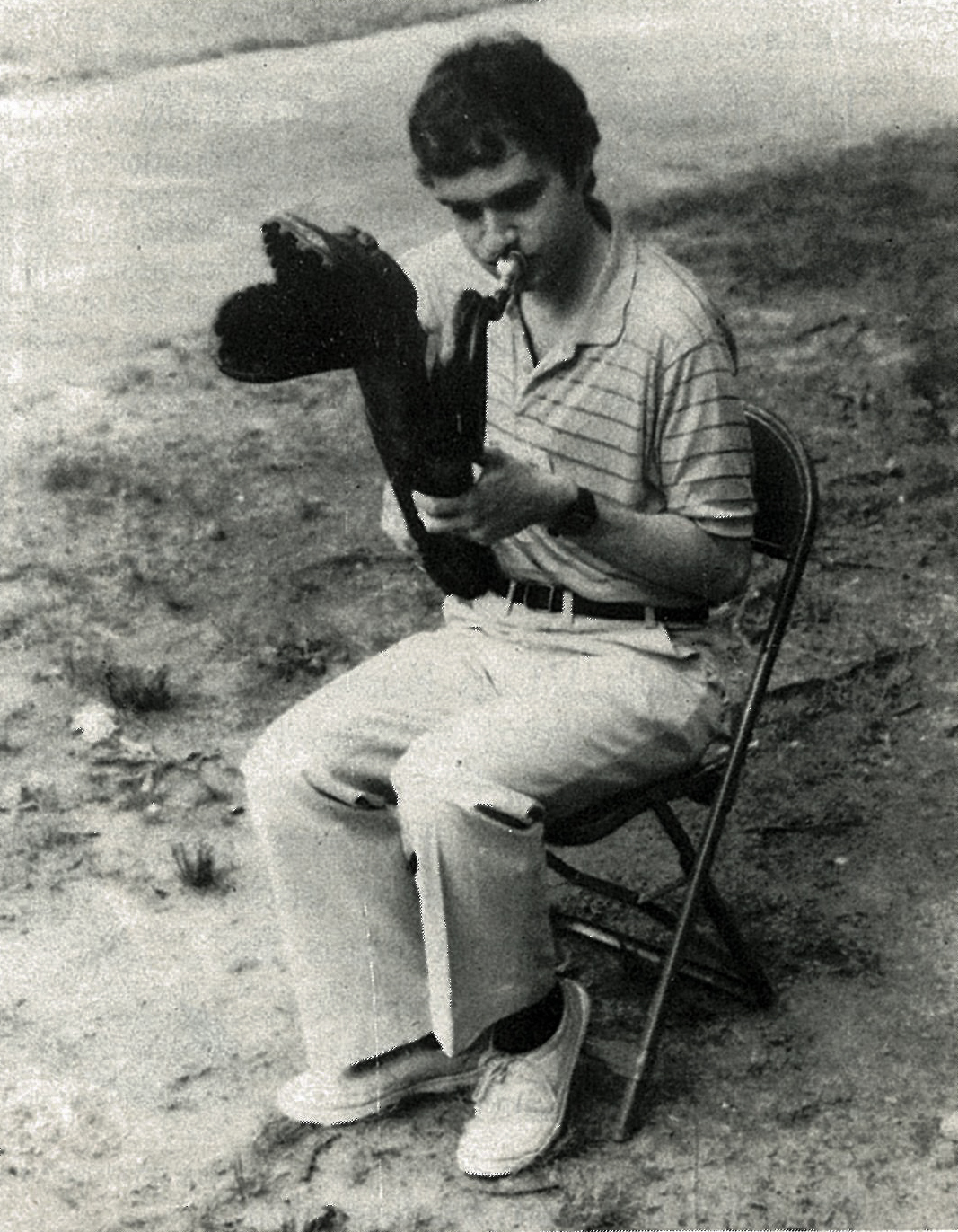
Composer Simon Proctor playing the Newark Museum’s Tabard Lyon upright serpent.
The event, coordinated by United Serpents and sponsored by Amherst Early Music, Inc., has already enjoyed great recognition within the international serpent world, and a similar Serpent Workshop in England has been scheduled for July, 1987. For more information about United Serpents, contact Craig Kridel; 927 Daly Street, D-5; Columbia, SC 29205, USA.