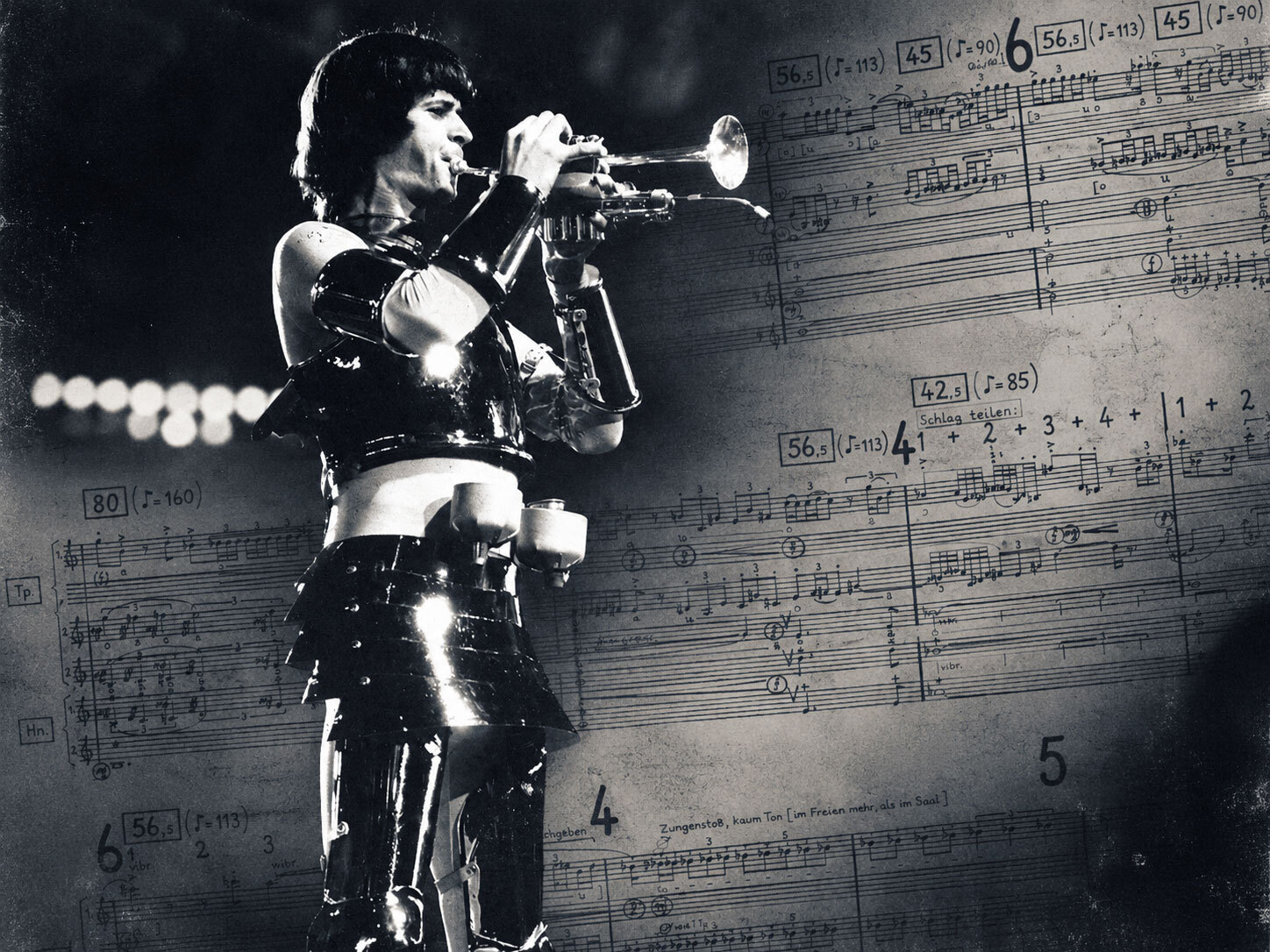
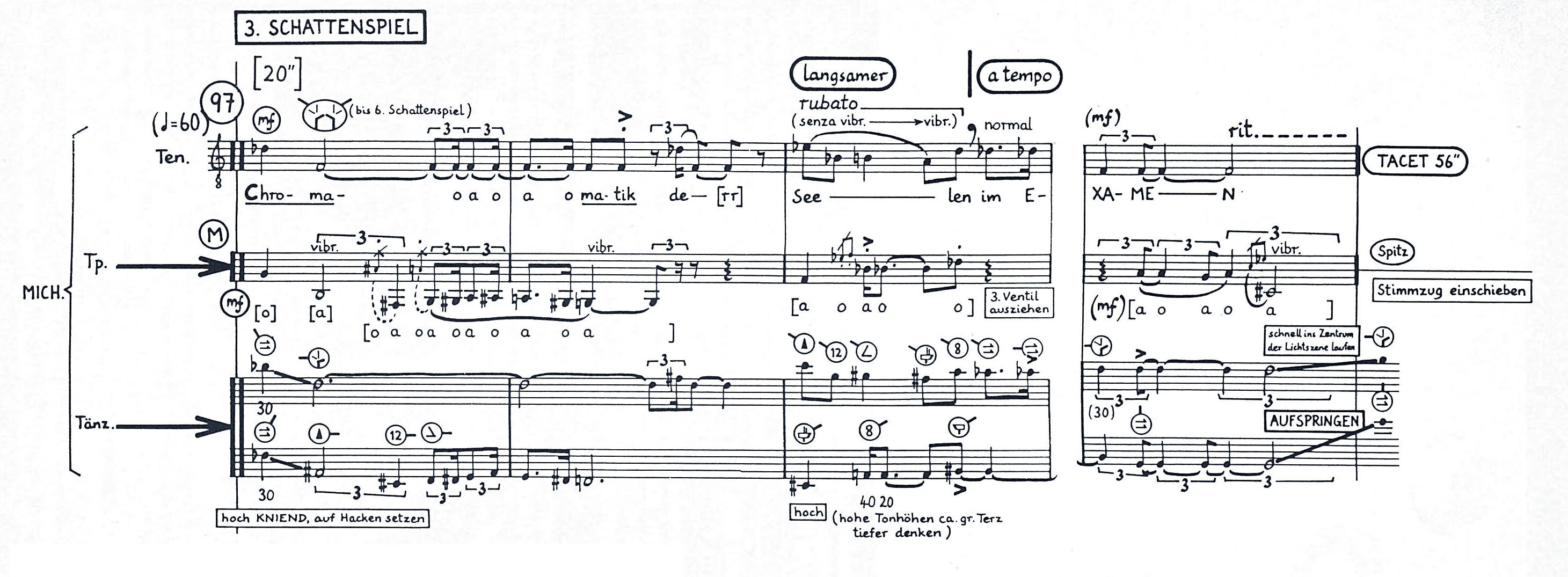
Mel-o-wah mute with vowels in the 3rd shadow game of “Vision”
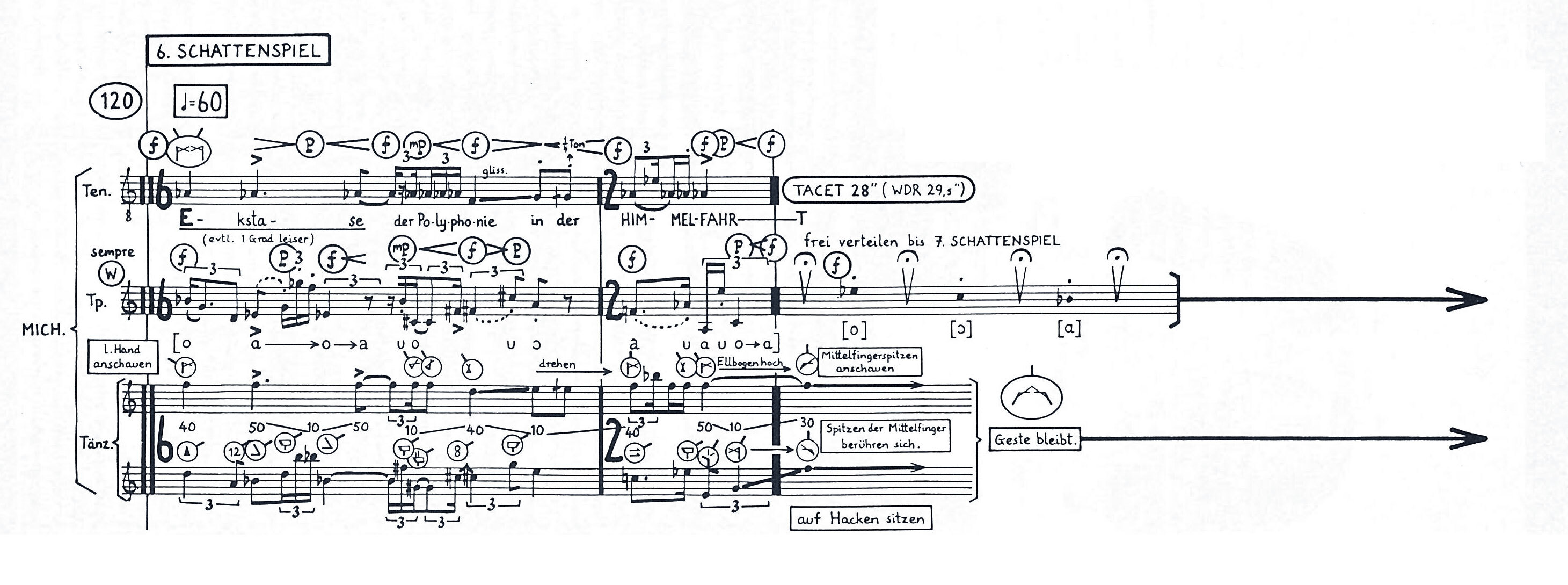
Wawa mute with vowels in the 6th shadow game of “Vision”
Mutes, vowels and their notation
The mutes most frequently used by Karlheinz Stockhausen in his trumpet works (with the markings he has selected for them) are:
Ⓗ = Harmon (without tube)
Ⓦ = wa-wa (with tube)
Ⓕ = whisper or whispa
Ⓒ = cup
Ⓜ = Mel-o-Wah
Ⓢ = straight
Ⓟ = plunger
The sign for "mute off" is ∅.
My own mutes are:
Ⓗ, Ⓦ, Ⓕ, Ⓜ and Ⓟ from the Stone-lined series (Humes & Berg, Chicago), Ⓒ from the firm EMO (of lightweight aluminium) and a plastic straight from EMO marked weicher Spitz ("soft point"); otherwise I use metal straight mutes from Stonelined or Leblanc (Alessi Vacchiano). I mention this not by way of publicity but because my father selected these mutes from a large number of types.
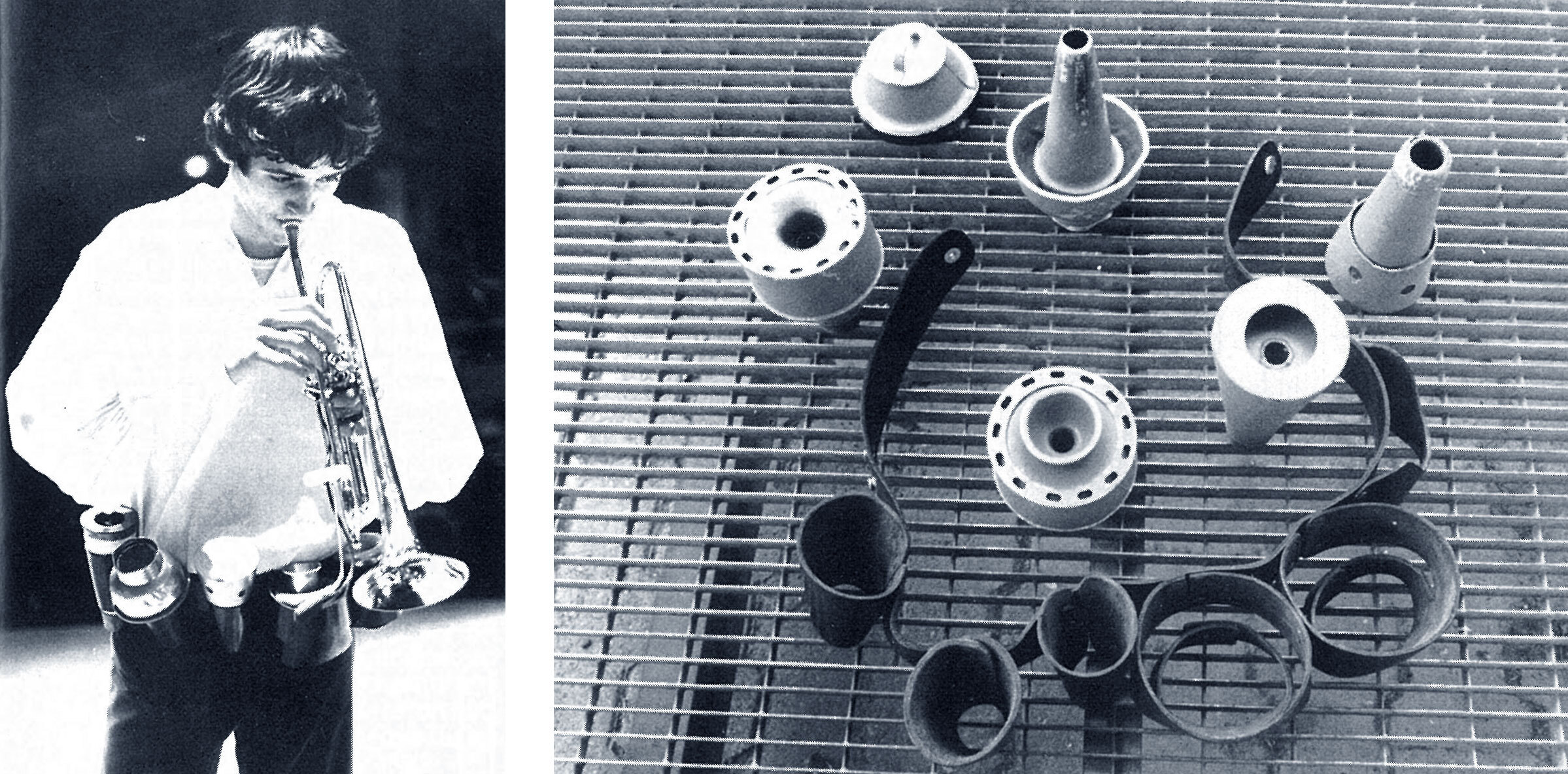
As you know, some of these mutes, when used appropriately, can produce various tone colours or vowel sounds. These are Ⓦ, Ⓜ, Ⓟ and to a small extent Ⓗ as well. For these mutes Karlheinz Stockhausen uses the following notation, which corresponds with the vowel symbols of the phonetic alphabet:
[a] = completely open
[a]
[ɔ]
[o]
[u]
[u] = completely closed with the hand
[u — a], [ɔ — o] etc. = gradual transition
[a u o] etc. = sudden change
In Ⓦ and Ⓗ the opening is usually closed with the fingers of the left hand (the middle three fingers). Often the slightest movement of a single finger is enough to produce a vowel change. This is especially true in the area [u — o]. So the player must listen very carefully to be sure how the vowel really sounds. Precise production of the various vowels soon becomes easy, indeed almost subconscious.
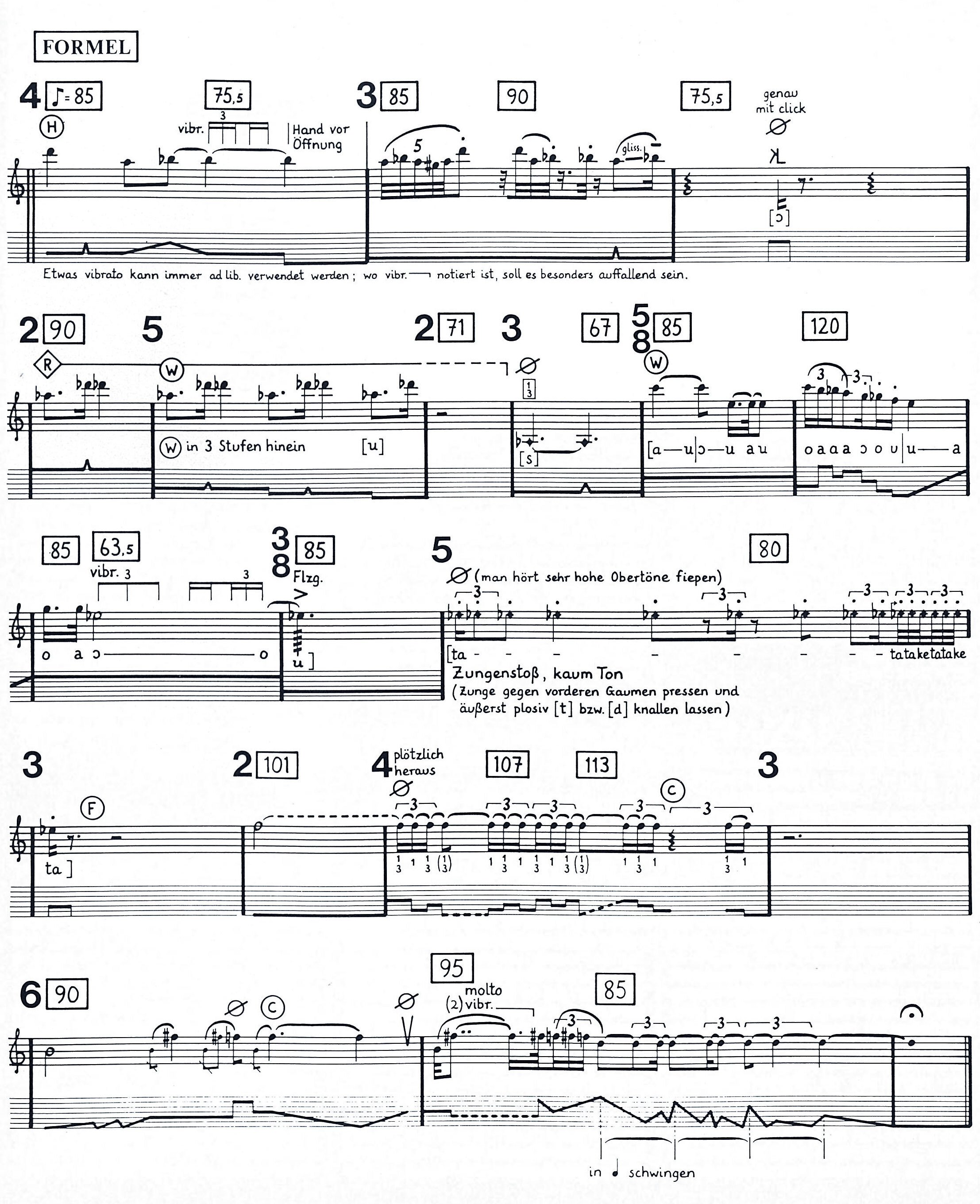
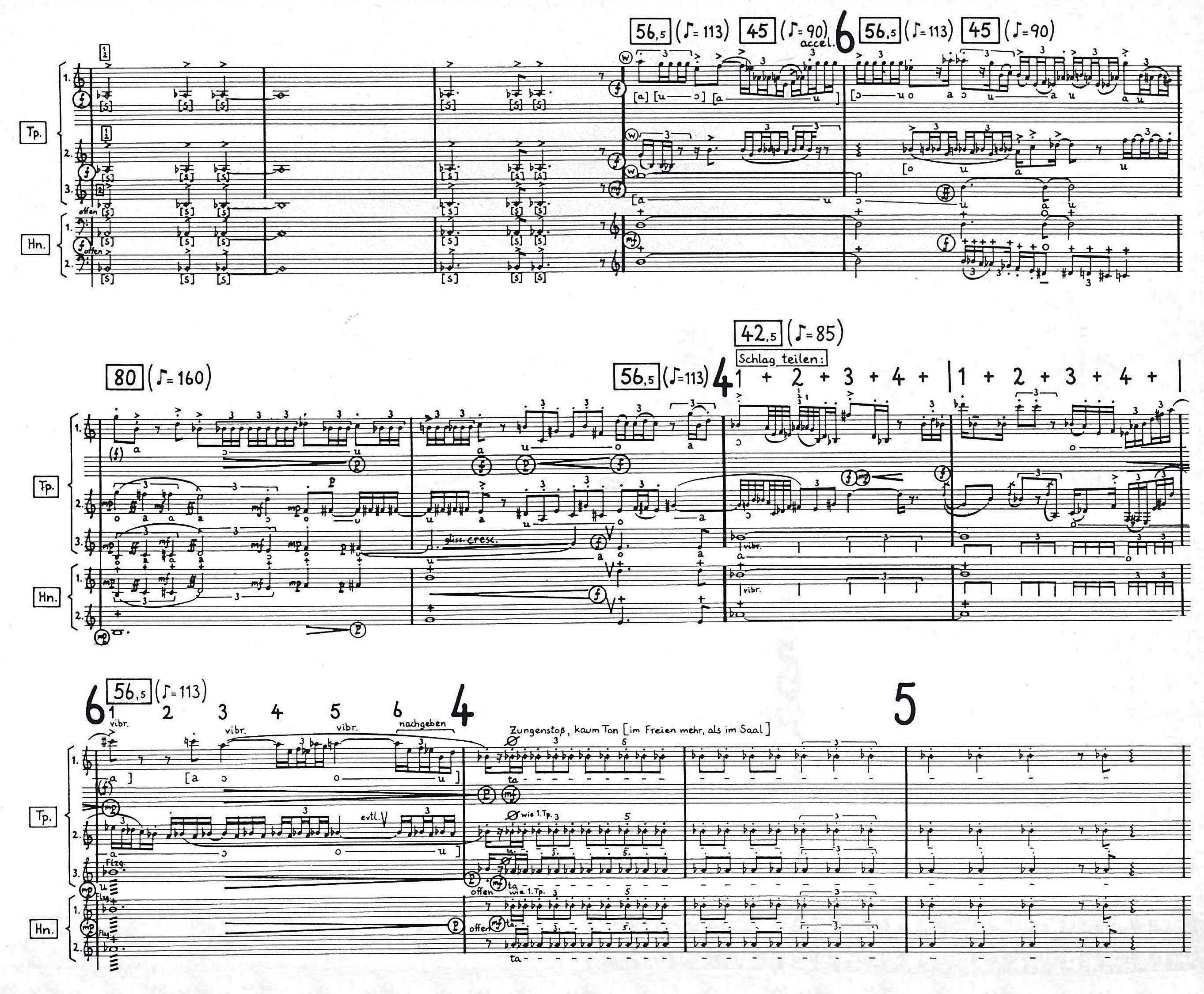
From “Eingang und Formel” for B solo trumpet
Unfortunately good mute technique is not possible with the "German" (i.e.: rotary-valve) trumpet because it has to be held with two hands and removed from the lips for insertion and removal of mutes. You do not have a hand free for vowel sounds.
I personally will be interested to see whether a standardised mute notation will become established in the future. It could be this one.
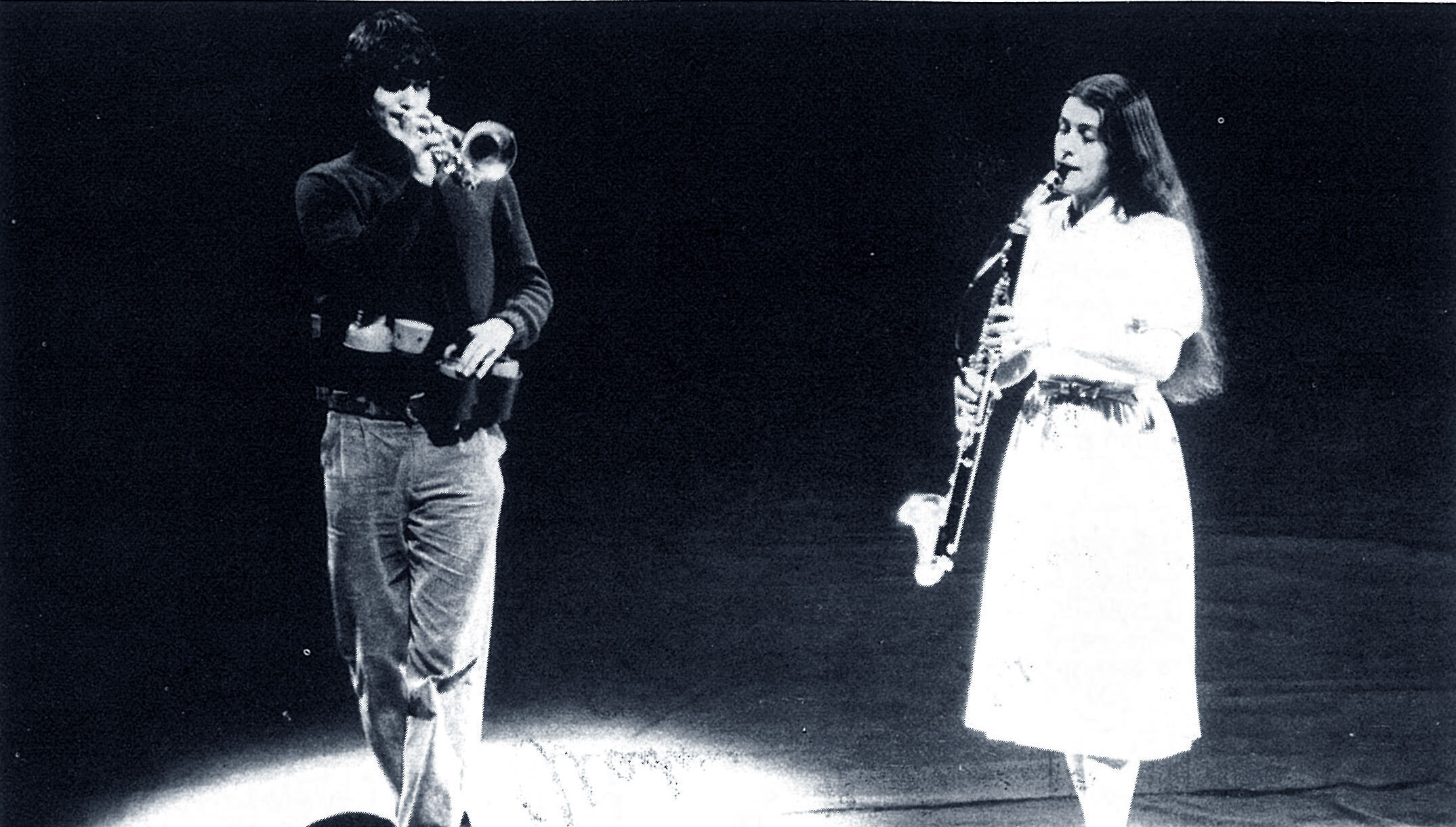
Duo: Markus Stockhausen, Suzanne Stephens (1981, Scala, Milano, «Mission + Himmelfahrt»)
Markus Stockhausen
Markus Stockhausen, the son of Karlheinz Stockhausen, was born in Cologne in 1957 into the up-to-the-minute world of modern music, the world with which he no doubt still feels most closely associated today. He could be described as an ambassador of his father's music; he had a part in the creation of many Stockhausen works — "Sirius", "Donnerstag" and "Samstag" from "Licht", "Michaels Reise um die Erde" and "Michaels Heimkehr" ("Michael's Return").
Stockhausen junior plays Stockhausen senior — and all over the world: in Washington, Aix-en-Provence, Tokyo, Hilversum, Houston (Texas), London, Donaueschingen, Amsterdam, Berlin and Milan.
As brilliant as he is musical, the young trumpeter soon reached the "frontiers". First it was jazz. In Germany and abroad he took part in renowned jazz festivals as a member of Key, Riot and the Rainer Brünninghaus Group; there was a big tour of Germany and in 1982 even one to South America.
But the classics were not short-changed either. While he was still at musical secondary school he was also a junior student at the Cologne College of Music and completed traditional training in trumpet and piano.
It seemed only natural that he should win the German Music Competition, complete his studies at the Karajan Academy in Berlin and be a member of the Junge Deutsche Philharmonie.
Would it be going too far to state that Markus Stockhausen could cope with any musical task required of him? His answer will be unequivocal, whether with the Haydn trumpet concerto, a free improvisation for trumpet solo, a work of his father's or a jazz rhythm.
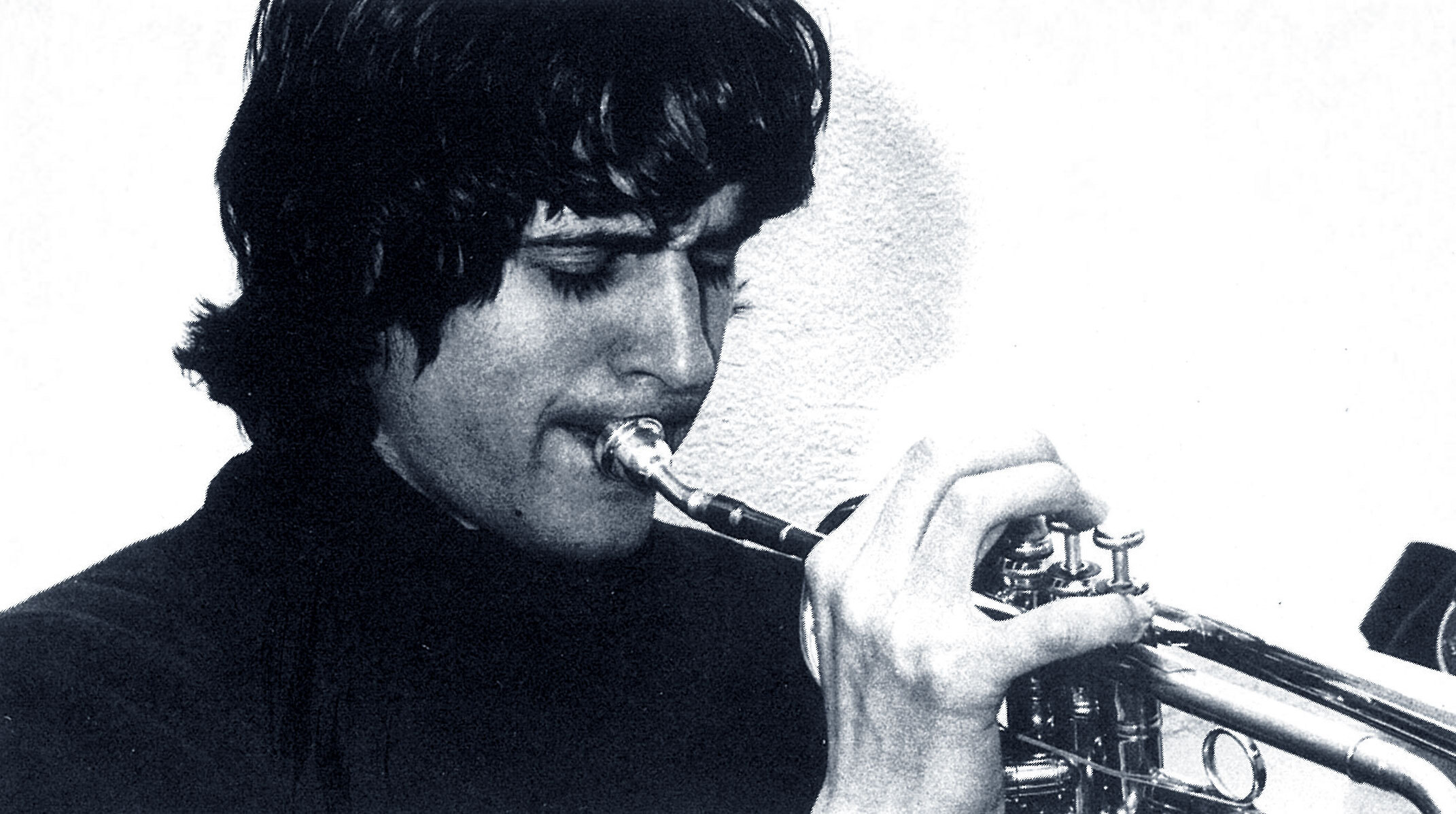
Markus Stockhausen