8 min. read
This article is for subscribers.
Sophrology and Music
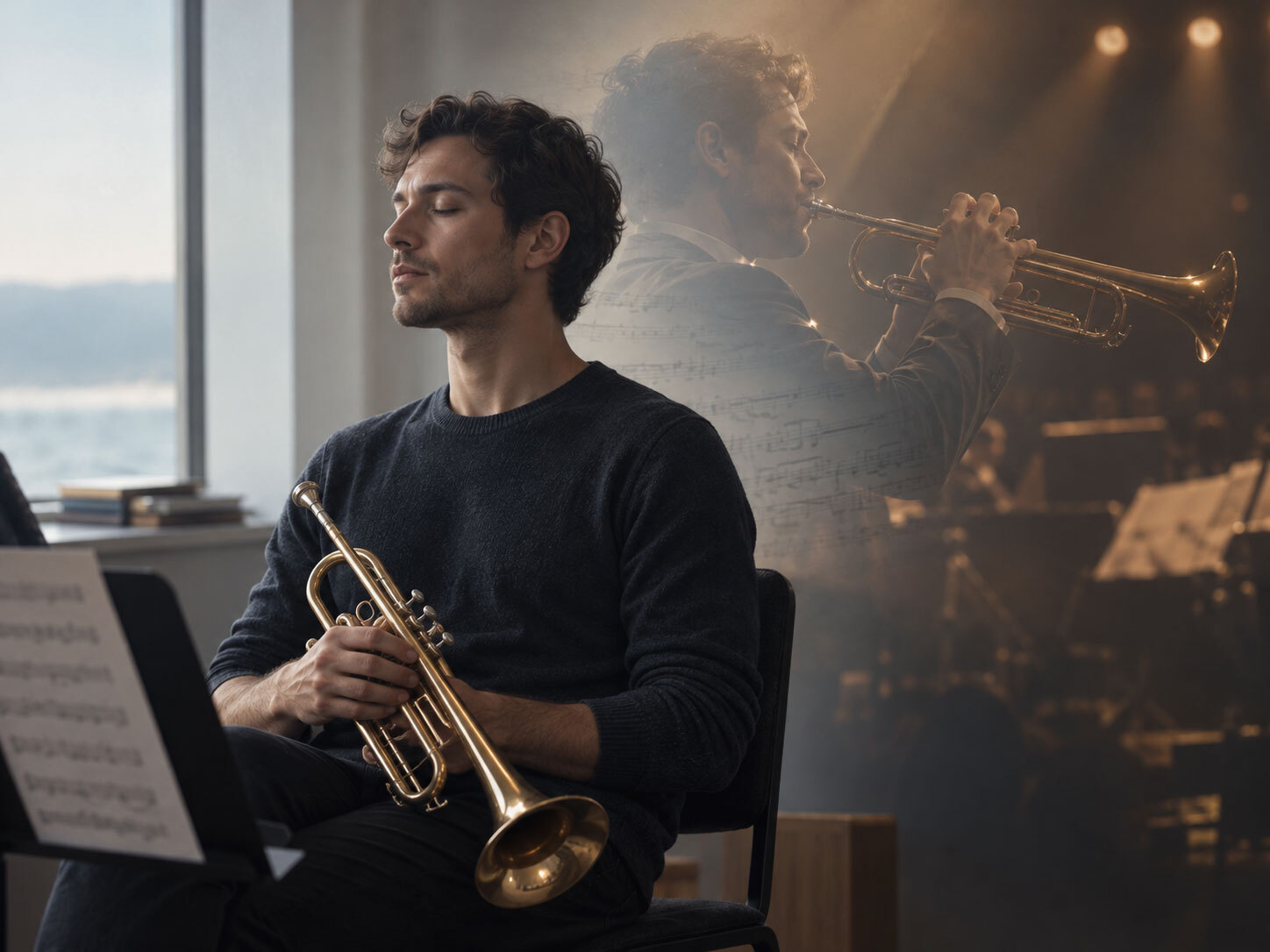
A school of physical and emotional self-control. An excellent means of programming oneself. The freedom of well-being.
The psychologist Dr. Alfonso Caycedo laid the foundations of the school of sophrology in Spain in 1960. After spending a long time in the Far East, where he was able to study the techniques of yoga, Buddhism and Zen, he returned to Europe and perfected the techniques of his school, resolutely turning his back on the hypnotic techniques which had inspired him at the beginning. This volte-face prompted the withdrawal of some of the early pupils of the school of sophrology and there are still some places in Europe where the hypno-sophrology of the early years persists. It seems that these are slowly dying out. Caycedo dissociated himself from the practice of hypnotism primarily because of the dependence on the hypno-sophrologist which this implies, for he was aiming above all to make man independent, to encourage him to take control. The techniques which he has developed since then are thus liberating, creative and positivist.
What is sophrology?
The word "sophrology" comes from the Greek roots sos (whole, intact), phren (consciousness) and logos (study); thus we are dealing with the study of consciousness as a whole. For centuries the western world has been in the habit of separating intellect, feeling and body, finally rejecting the body as an obscene vulgarity (the body is flesh) and dismissing feeling as a ridiculous and puerile manifestation (fanatical Cartesianism).
Intellect - feeling - body
When the three parameters, intellect, feeling and body, are reunited harmoniously, the result is balanced, positive interaction. At that moment the subject takes control: He becomes capable of objectivity in perceiving events and of relativisation in their interpretation and in their impact on his own existence. His training will also have had a parallel indirect influence on his potential creative capacities. We shall see how the school of sophrology can make a substantial contribution to our art if we study its three steps.
Step 1
Control of the body
The goal of step 1 is control of the body and it is a prerequisite for the other steps. We have to rediscover our body in an enjoyable way. While generally we are aware only of the painful parts of our body, step 1 of Caycedo's dynamic relaxation allows us to savour our body's well-being while it is in good health. It also favours the relaxation of a body under constant tension and its control in the interests of greater efficiency. An example: at this moment you are frowning slightly and furrowing your brow as you read this articles: this tension is quite unnecessary to understand the text but often used unconsciously. Similar contractions are to be found in people playing brass instruments, especially among elementary pupils: shoulders raised, platysma tensed, furrowed brow, arms tense etc. as well as hypertonia in the facial muscles. Sophrology allows the muscles we use to be employed not only effectively but also with the correct degree of muscle tone. This results in a substantial saving of energy and a pleasure in self-control which is not inconsiderable for pupils easily discouraged by the difficulty of thinking of so many things and coordinating so many different movements (holding the instrument, breathing, tonguing, facial muscles, fingering etc.). Now these actions organise themselves, in harmony.
This article is for subscribers.
CHF 5.00 per month · Cancel auto-renewal anytime.
Enjoy unlimited access to all digitized Brass Bulletin articles.
Brass Bulletin 54, II / 1986 pages 29–36
All content is protected by copyright © Brass Bulletin 1986–2026