9 min. read
Advices from an expert brass clinician: Robert Pichaureau, Paris
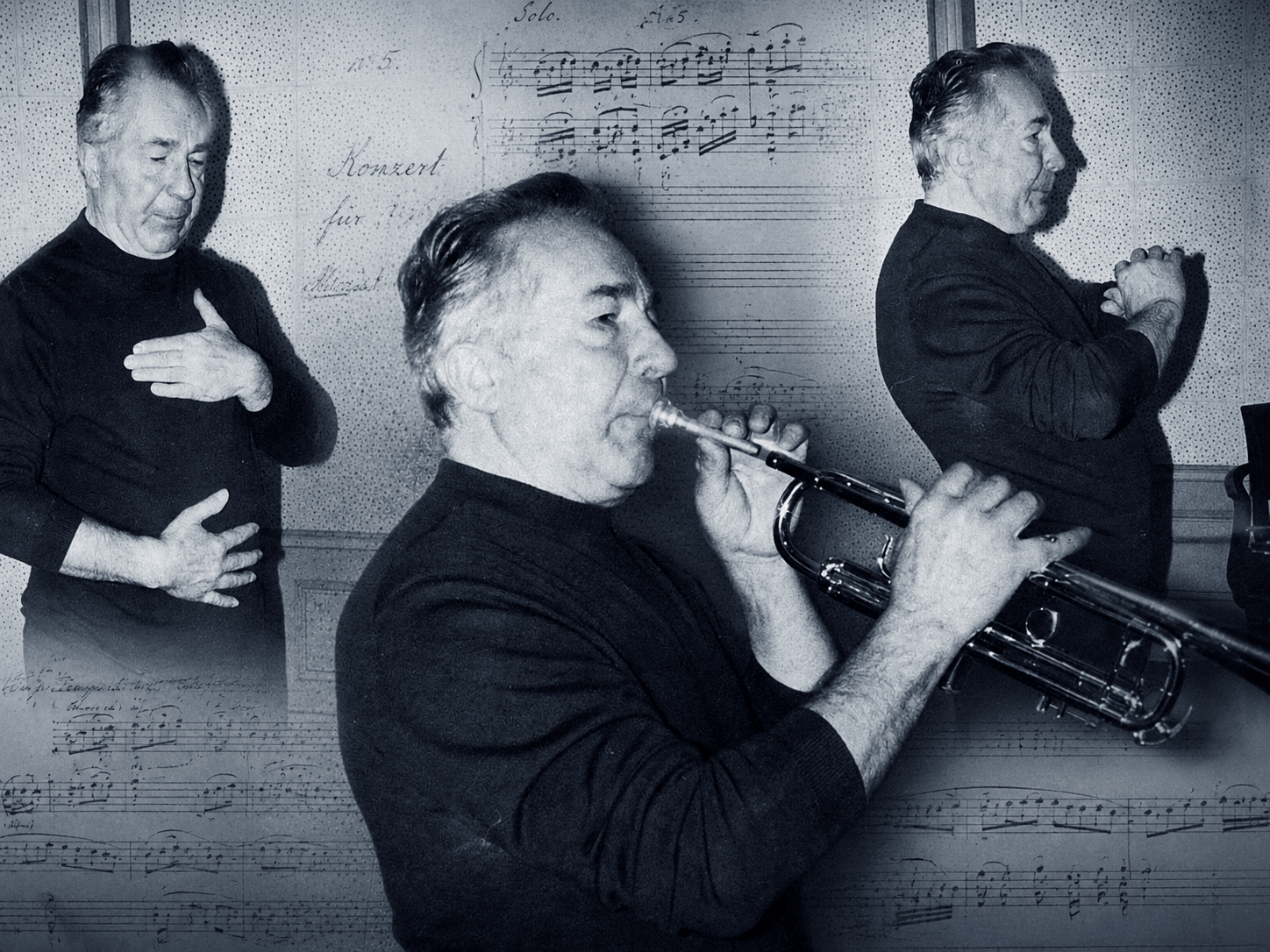
Robert Pichaureau
Much may be said for and against a student writing about his master. As a student, I can only relate about my own experience and about the observations made during the master's lessons. Also, it seems contradictory to want to reproduce teachings that aim at readjustments of a highly individualized nature. But apart from that, it is to be considered that every clinician has his own pedagogical system, his own technique, his own philosophy, and if he is averse to talking about them, at least a pupil can do so¹. To make communication a little easier, I shall quote passages from well-known handbooks.
Where exactly does the mastery of the clinician surpass the knowledge of soloists who do not dedicate themselves to teaching? 1) He knows and can describe each detail of the different processes as part of the functioning as a whole. 2) He knows the tricks that make pupils discover for themselves how to transmit mental understanding of the process to the body. 3) He will recognize immediately the pupil's weak points and knows how to stimulate progress.
I. The mask
Too much is always being said about the instrument, the mouthpiece, the lips, the tongue, the throat — and not enough about the root of all playing: "the place where the blowing process unrolls". Of course, as has been emphasized by many specialists, everything is of importance. The physical and musical success of sound production depends on a synthesis. But this synthesis cannot be acquired by a mechanical procedure, adding up the elements. The great despair of so many brass players (even advanced ones) shows that there really is a big problem somewhere. According to Pichaureau, one has concentrated too much on the "top part", i.e. on what happens near and around the instrument. We should go back and turn our attention and our conscious efforts to the source, away from the zone of the head. Of course, every now and then also that part should be examined, but as a rule it should be like a mask that one puts on, all ready and just in the right position: instrument, embouchure, arched tongue anchored behind the lower teeth (see Colin) and position of the head. Don't will to do it, just do it. Then forget about it.
What I shall call Pichaureau's first advice is therefore: take the attention off the top part.
Second advice: direct your attention upon the origin of your breath and its starting point.
Third advice: never allow your consciousness to stray from the well-placed origin of your breath.
Let me try to sketch Pichaureau's way of getting this across to his pupils.
Brass Bulletin 18, II / 1977 pages 19–25
All content is protected by copyright © Brass Bulletin 1977–2026