Ofrezca Brass Bulletin en su universidad, conservatorio o biblioteca Descubra el acceso institucional

1 min de lectura

Emile Joseph Trognée (1868-1942)

Discovery of unpublished trumpet studies

Emile Joseph Trognée (1868-1942)

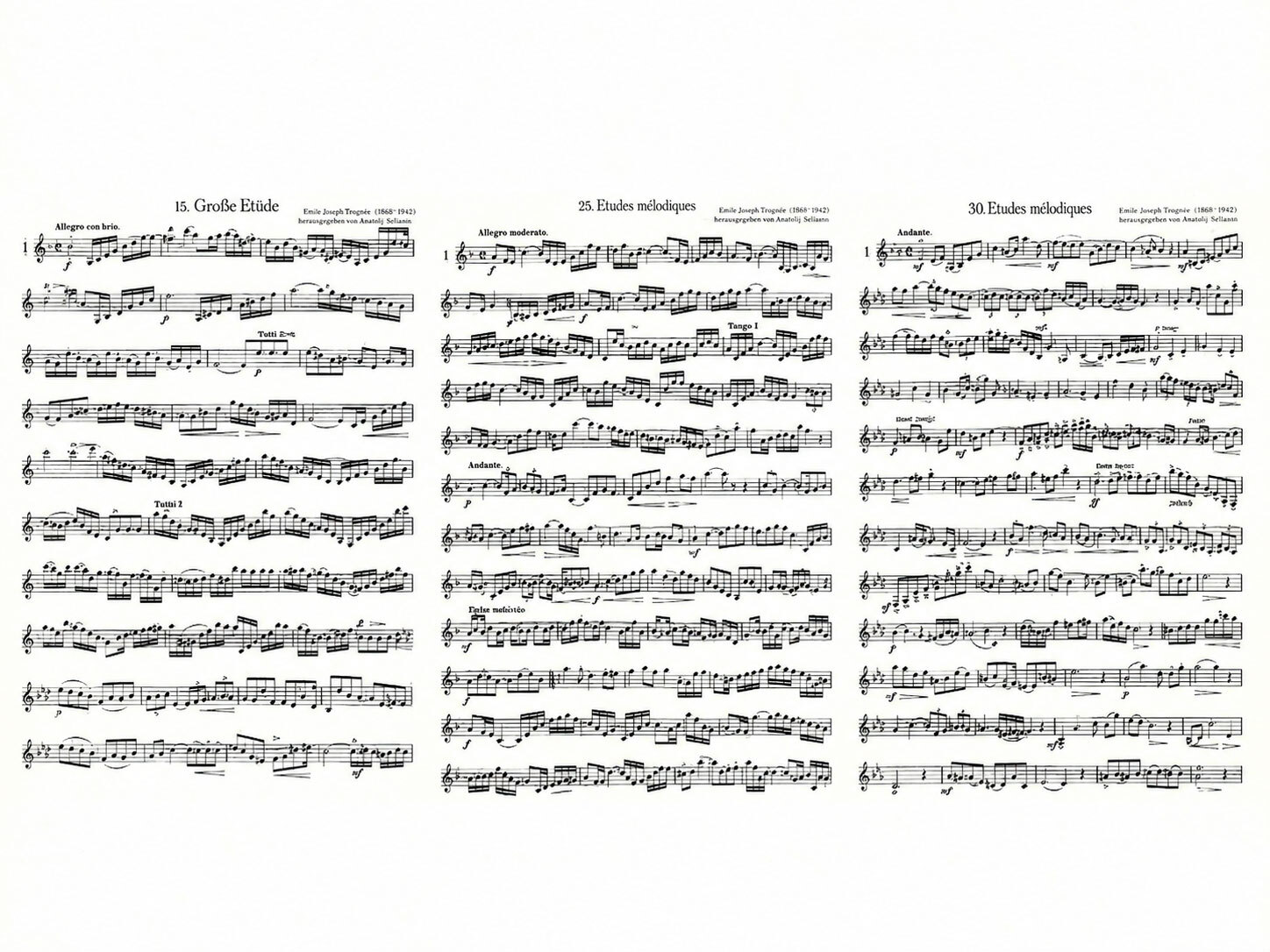
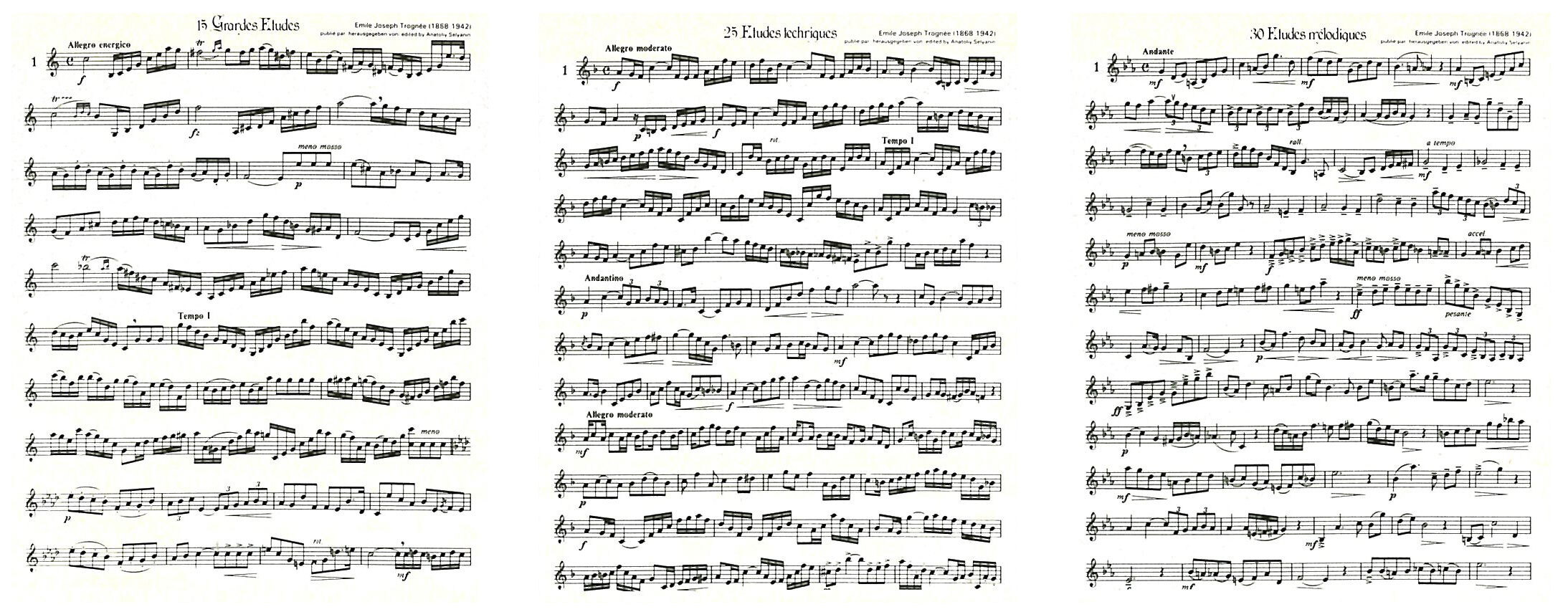
Thanks to Anatoliy Selyanin Editions BIM is publishing three volumes of previously unpublished studies for trumpet or cornet by the Belgian virtuoso Emile Joseph Trognée.

In view of their importance special care has been taken with the presentation and engraving of these studies, so characteristic of the style of the first half of this century. Written by a master hand, they are particularly useful for studying articulation and phrasing. They are not excessively difficult and will afford the student real pleasure. Trognée occupies an esteemed place among the great names of the famous Belgian trumpet and cornet school, in the lineage of Duhem, Charlier and others. His move to Leningrad and his important position at the opera prevented his fame from spreading further in Europe. Now it is time to bring his name out of oblivion; the publication of these three volumes will redress the balance. Here is some biographical information on Trognée taken from Anatoliy Selyanin’s preface.

Emile Joseph Trognée was born in Tirimon, in Belgium, on 4th July 1868. He studied trumpet at the Brussels Conservatoire. After winning a European competition in 1902, he became solo trumpet and cornet at the Mariinskiy opera theatre in St. Petersburg (the theatre is now the Kirov and the city is now Leningrad). He spent the rest of his life in Russia, working at the Mariinskiy for 25 years.

Trognée was an outstanding musician. A well known Soviet conductor, Karl Eliashberg, wrote:

Trognée had a unique feeling of ensemble; his playing was remarkable for accurate dynamics and for an infallible sensitivity towards the meaning and character of the musical phrase. His sound was never forced but always bright, powerful and even in all registers. He was also a great master of very soft sound production (without using the tongue). He was noted for his performances of Wagner’s “Ring of the Nibelungen”, “Rienzi” and “Lohengrin” and of operas by Tchaikovsky and Verdi

Brass Bulletin image

Trognée was recognised by both performers and composers. He advised Rimsky-Korsakov to make some changes in the trumpet parts of his opera “The Legend of the Invisible City of Kitezh” (the well known difficult trumpet phrase in the symphonic picture “The Battle at Kerzhenets”). He taught at the Baltic Fleet music school from 1911 to 1917 and at the Leningrad “Rimsky-Korsakov” special music school from 1928 to 1941.

He wrote several works for trumpet and cornet. His “Fantasia-Caprice”, which appeared in Tabakov’s “Elementary Progressive Trumpet Tutor”, published in Moscow in 1946, was especially popular for many years. His “Studies for Trumpet”, published in Leningrad by the state publisher Triton in 1932 and dedicated to Tabakov, are also well known. The studies presented in this edition were written at various times but not published during Trognée’s lifetime. After his death in Leningrad in 1942 they were preserved by the Soviet trumpeter, composer and teacher Sergey Bolotin.

Brass Bulletin 51, III / 1985 páginas 68–69

Todo el contenido está protegido por derechos de autor © Brass Bulletin 1985–2026

Compartir este artículo

Facebook LinkedIn
Cargando…

Preguntas y respuestas

Cómo funciona la edición digital

¿Qué incluye la edición digital?

La edición digital reúne los artículos ya digitalizados como textos legibles y consultables en línea —no simplemente como escaneos o archivos PDF— junto con sus ilustraciones originales, notas, autoría, información del número y traducciones disponibles. Las sugerencias de artículos relacionados incluyen actualmente solo este material digitalizado.

¿Los artículos digitales son idénticos a los originales?

Conservamos con la mayor fidelidad posible el texto original, el idioma, las ilustraciones, los pies de imagen, las notas y el contexto editorial. La presentación se adapta para facilitar la lectura en línea y pueden corregirse errores evidentes de transcripción o escaneado. El contenido y el carácter del artículo publicado permanecen inalterados.

¿Qué idiomas están disponibles?

Brass Bulletin se publicó en inglés, francés y alemán a lo largo de toda su historia. Las traducciones al italiano y al español se añadieron a partir del número 60. Por este motivo, en los sitios italiano y español los artículos de los números 1 a 59 se muestran en inglés de forma predeterminada.

¿Con qué frecuencia se añaden nuevos artículos?

Se añaden nuevos artículos casi a diario, con aproximadamente un número completo digitalizado cada semana. El ritmo puede variar según el trabajo de preparación, tratamiento de imágenes y revisión editorial necesario.

¿Por qué no están disponibles todos los artículos en formato digital?

La colección completa de Brass Bulletin contiene 1.246 artículos publicados entre 1971 y 2003. El índice completo ya está disponible en línea y permite descubrir todos los artículos de la colección, incluidos aquellos cuyo texto íntegro todavía no ha sido digitalizado.

La digitalización comenzó en febrero de 2026. Cada artículo se prepara cuidadosamente para la lectura en línea, se revisa y se vincula con su número, sus autores, sus temas y sus ilustraciones. Al ritmo actual de digitalización, se prevé que la colección completa esté disponible en línea en febrero de 2028.

¿Por qué algunas referencias mencionan artículos que todavía no están disponibles?

Las referencias de los artículos originales se conservan aunque el material al que remiten aún no haya sido digitalizado. De este modo se mantiene intacto el contexto histórico y editorial. A medida que se incorporen más números a la edición digital, un número creciente de estas referencias conducirá a artículos que podrán leerse en línea.

¿Puedo sugerir un artículo o informar de un error de transcripción?

Sí. Si hay algún artículo que le gustaría especialmente ver digitalizado, o si detecta un posible error de transcripción o algún dato que falta, póngase en contacto con nosotros. Los comentarios de los lectores nos ayudan a mejorar la edición digital y a establecer prioridades útiles dentro del archivo.

¿Cómo puedo apoyar a Brass Bulletin?

Su apoyo ayuda a financiar la preparación, verificación y publicación en línea de la colección completa.

Suscríbase a la Edición Digital

¿Prefiere apoyarnos sin suscribirse?

Haga una donación

¿Cómo avanza la digitalización?

Estamos poniendo Brass Bulletin a disposición de los lectores en línea, artículo por artículo. Pueden leer los artículos recién digitalizados en cuanto estén listos, incluso antes de que se complete un número entero.

Consulten nuestro calendario de digitalización para descubrir las últimas novedades y las fechas estimadas de disponibilidad de los próximos números. Estas estimaciones se basan en nuestro ritmo reciente y pueden cambiar.

Busca en Brass Bulletin.