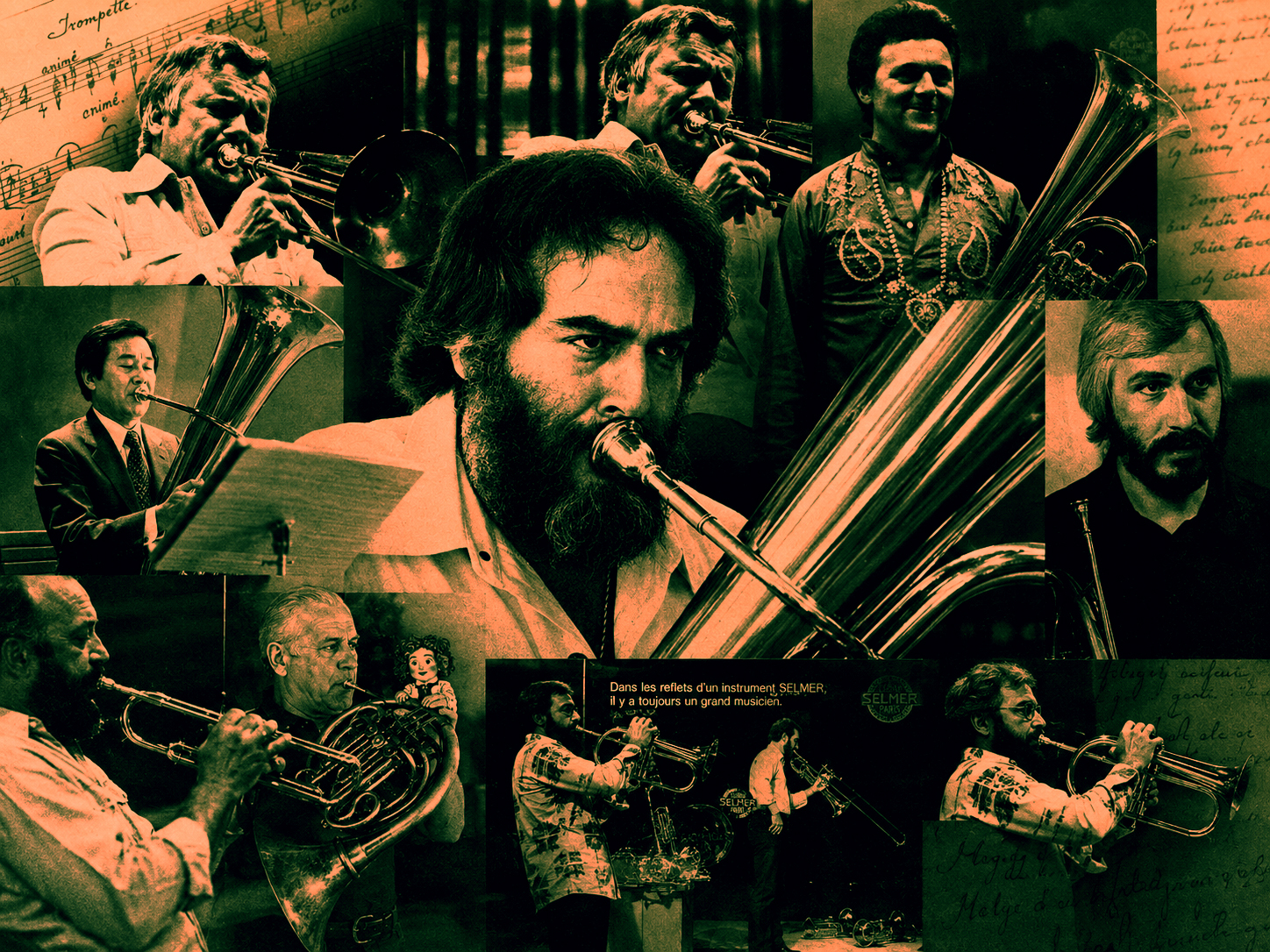
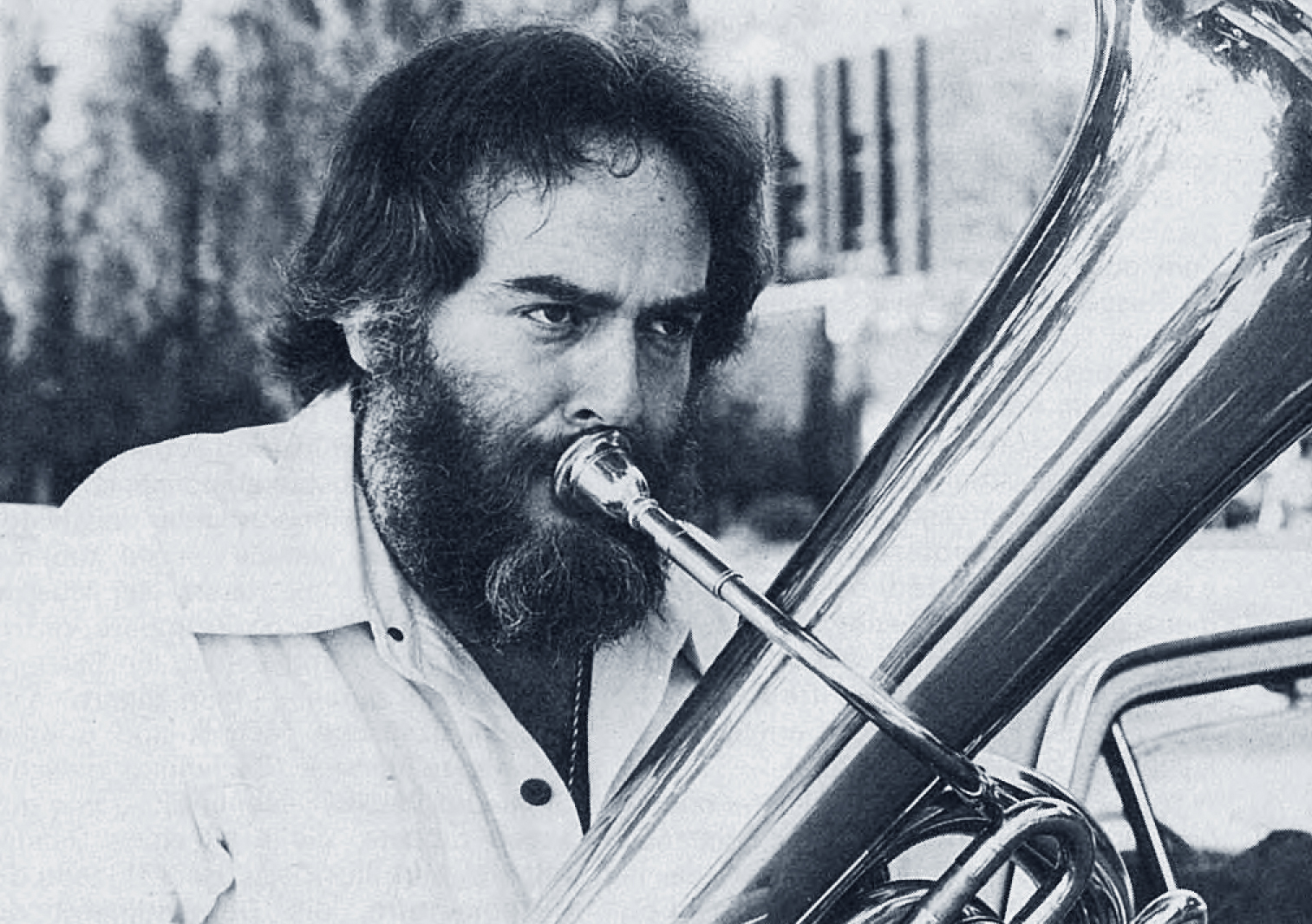
And now we are in a Church. No organ for once, but a scholarly American trumpeter — D. Smithers; many German and Italian words in his American, many ancient mouthpieces, a natural trumpet with holes. I mark in passing two small sharp comments. The first on a method of "new techniques for the trumpet" which starts by a notoriously too difficult exercise; one refers to the others even if they are not there, even if one does not utter the name. And one plays the coiled trumpet, which one says is more authentic than the straight one (played by E. Tarr). Just to say who is the nearest to nature, in such absolute manner that it is at least historical. I find that by the way rather exciting: there is a research, an anti mass culture.
And here is the second remark: I have progressed during these past years, tells us D. Smithers, I shall soon no longer play the high trumpet, tomorrow you may hear my last performance on this instrument. And click! (Tells us Mr. André, you had not foreseen the hunting tromba).
In a room at the Montreux Palace, K. Hovaldt is talking about the Scandinavian trumpet. He who has played in duet with Maurice André talks about the different styles and gives a pleasant demonstration of all his trumpets (in high B flat/A, in E flat, in D, in C, in B flat, in low F, in low C and even in wood). When he has had to play a lot of high trumpets, he explains, he relaxes in playing the low trumpets. I think of André of whom one says he is soon playing only the high trumpet. I hear of it after this meeting. Mr. André, says someone, does not practice pedal notes. If telepathy works Mr. André must have nightmares at this moment: if this Hovaldt plays all trumpets at once, as do by the way those of the group Forefront who are present at this Congress, he will have to put himself playing them all, and even the hunting tromba and the low C flugelhorn.
Indeed those Forefront, lead trumpets, half jazz, half contemporary, are again something else. They improvise, they have a very well worked out togetherness and — my word... — they even play the Selmer high trumpet ... with inflexions worthy of the jazzman Clark Terry! I drew up a provisional conclusion. One can leave behind and abandon the high trumpet for the ancient high trumpet, better still: for the pure and natural tromba; one can drown it by integrating it to the full range of trumpets, which neutralizes it at one end of the register. I did not know yet that it could be considered negligible.
That is what Mr. Dokschitzer demonstrated. He spoke Russian and had to go through a personal translator. Sybilline sentence: in URSS the high trumpet is not very well known... "I have then transposed the piece of music by Albinoni that Maurice André plays and which I am going to play on the normal B flat trumpet". And he started his recital by that. Nota Bene: the first piece sets the tone, like the first degree of the scale in the tonal system; and he chose for his first piece this Albinoni that Maurice André plays. A musician with a maestoso stage presence; a well structured, passionate interpretation with a display of colours spreading from the red dark blues of the lower notes up to the yellow light greens of the higher pitch, a game with the mass of sound from the very heavy to the very light, crescendi on one note or on several notes and all that with such an extensive range that one is hardly accustomed to. The Russian played other "easy" pieces and the following day he went as far as to musically transfigure one of Arban's well known etudes.
I told myself that if they wanted to, the Russians could also become high notes gymnasts, a nation which has taken part in the ascension towards the moon. The musician who represented the Russian trumpet style had made up his mind to so dominate by what I hesitate, confronted with him, to call musical technique and stage sense (relationship between the playing, silence and suspense) that one is led to want to discuss force of mind. Beside that Mr. Thibaud courageously demonstrated the virtuosity and the enduring quality of the French trumpet or indeed of French music: he did this more or less happily once and a second time. The Jolivet piece which he played at the Gala, Mr. André has also played, forcing once again an inevitable comparison. It is possible, I told myself, that Thibaud, who plays so aggressively, goes in the direction so often wished for by the music critic Th. W. Adorno: the music of an ugly world cannot be legitimately pleasant. Does Thibaud's performance reflect French reality with its struggles, its anxieties, its rat race? Does the soft tone and relaxed intense concentration of someone like the meridional Californian trumpeter Th. Stevens reflect the real Californian, including aggression enclosed in controlled logical rigour and a cat like agility? I am sorry to have missed Hickman and one or two other soloists. Few on the whole have really let themselves go as Thibaud rightly remarked later.
In brief here are two steps forward in my reflexion: some, like Maurice André, were present though absent; others incite us to wonder what the aims are: does one play as one is, or how one would like to be, does this music reflect the reality that exists or does it suggest a reality that ought to be?
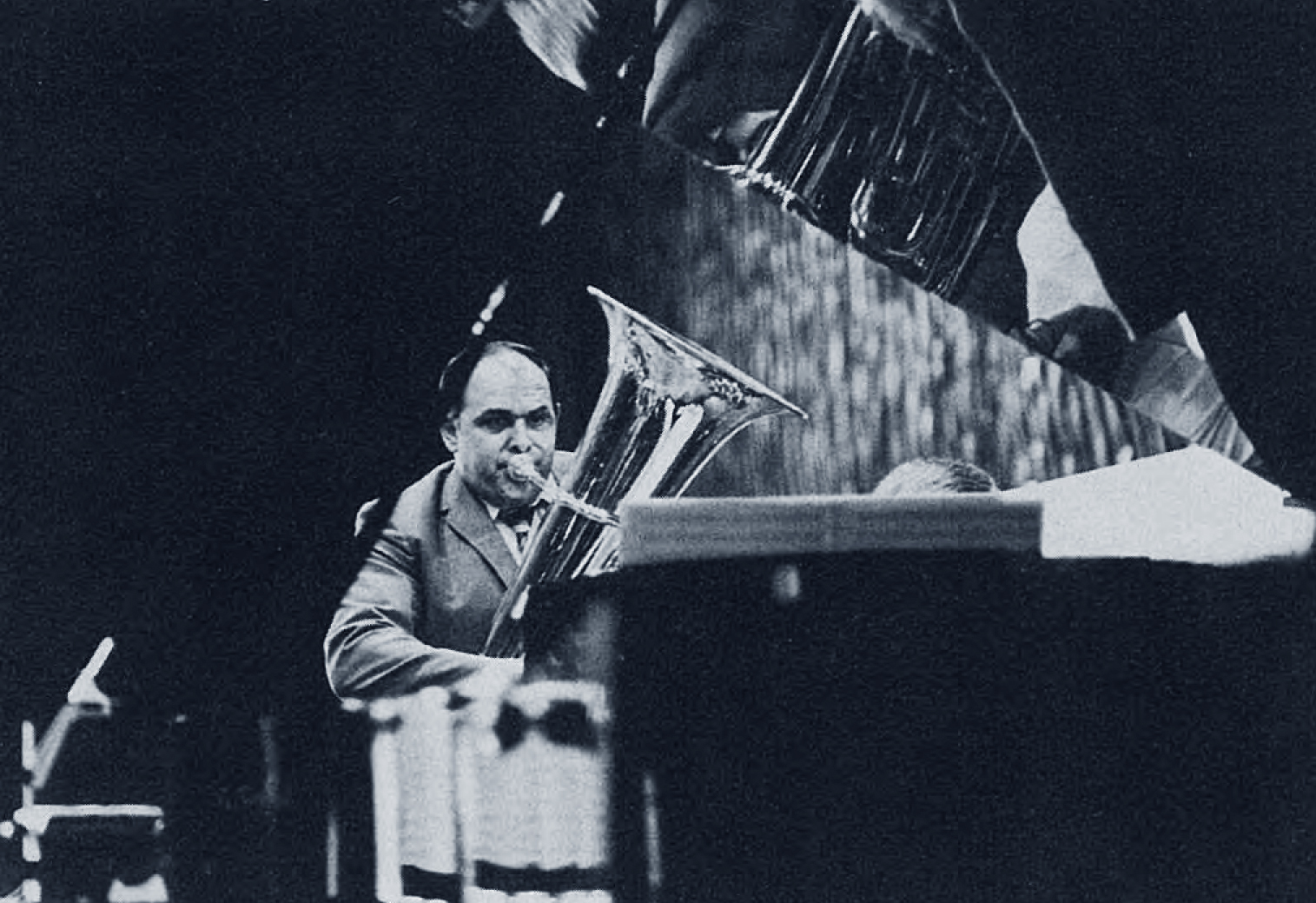
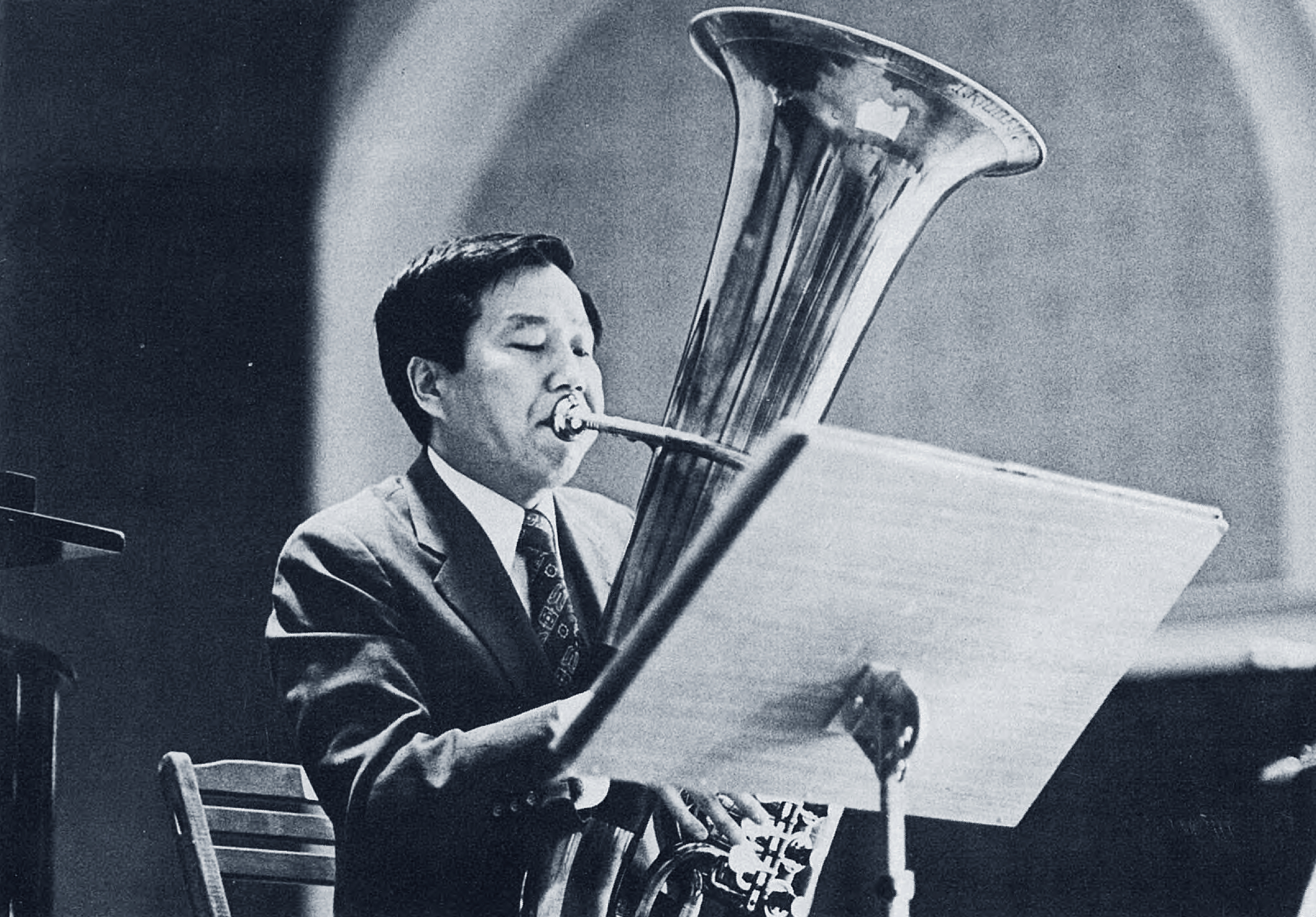
And tubas, trombones and horns? We do have our preferences: I am siding with the trumpeter... It seems to me that a tuba is a fat trumpet standing up, a trombone is a funny trumpet with a slide, and the horn I understand even less; are the other participants in these different brotherhoods of brass less prejudiced than I? Let us hope so...
For me the backbone of this Congress, its hidden dimension — the most present were the absent — can be best illustrated by the last concerts, especially the Final Gala. This Gala was like one of those funerals related by the history of jazz... Didn't he ramble? One remembers that at the burial services the black Americans cried and moaned on the way to the cemetery while playing a terribly sad music. Once the so much mourned person was buried there came the rejoicing, dance, alcohol and an aggressively gay music; life takes the lead again, one must assume it, etc. What an extraordinary dose of funeral music in the first part of this Gala! And then numbers by musical clowns, relaxed jazz, jokes, etc., finally half way between studio jazz and contemporary music this work of synthesis by the group Forefront.
What has one buried? the pleasure of brotherhood; the restoring side of the Congress. Brotherhood is to meet again colleagues, and sometimes friends; brothers who know all the problems of mouthpiece, intonation, reading, repertoire, teaching etc. I do not know if we talked very much about money but I noticed how many musicians played music that could be found on a record which was on sale in Montreux — how rare were the new pieces, world premieres. Brothers in brass... and the other types of musicians? Should one not come to talk about those other absent-presents to understand the meaning of this burial of refound brotherhood?
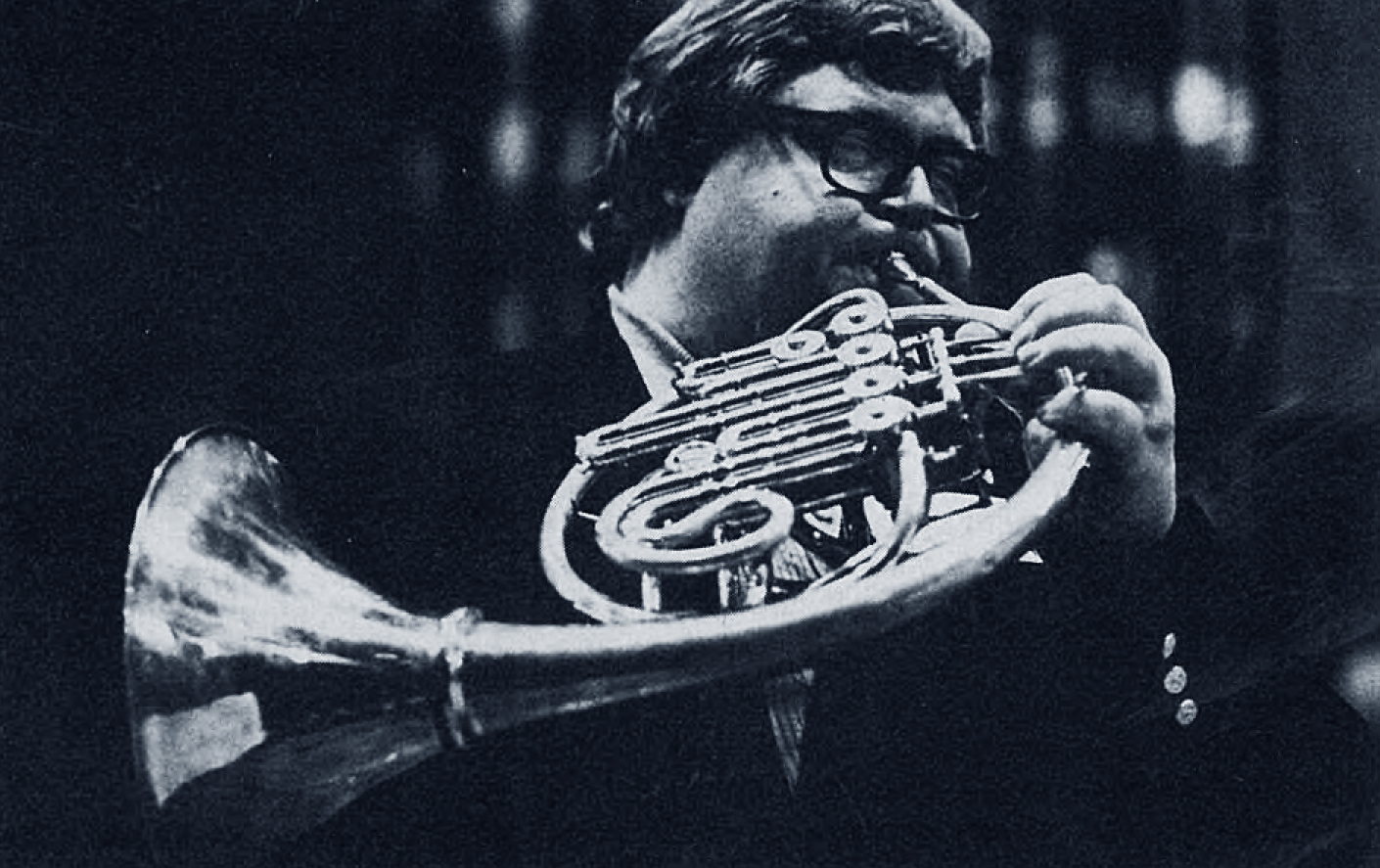
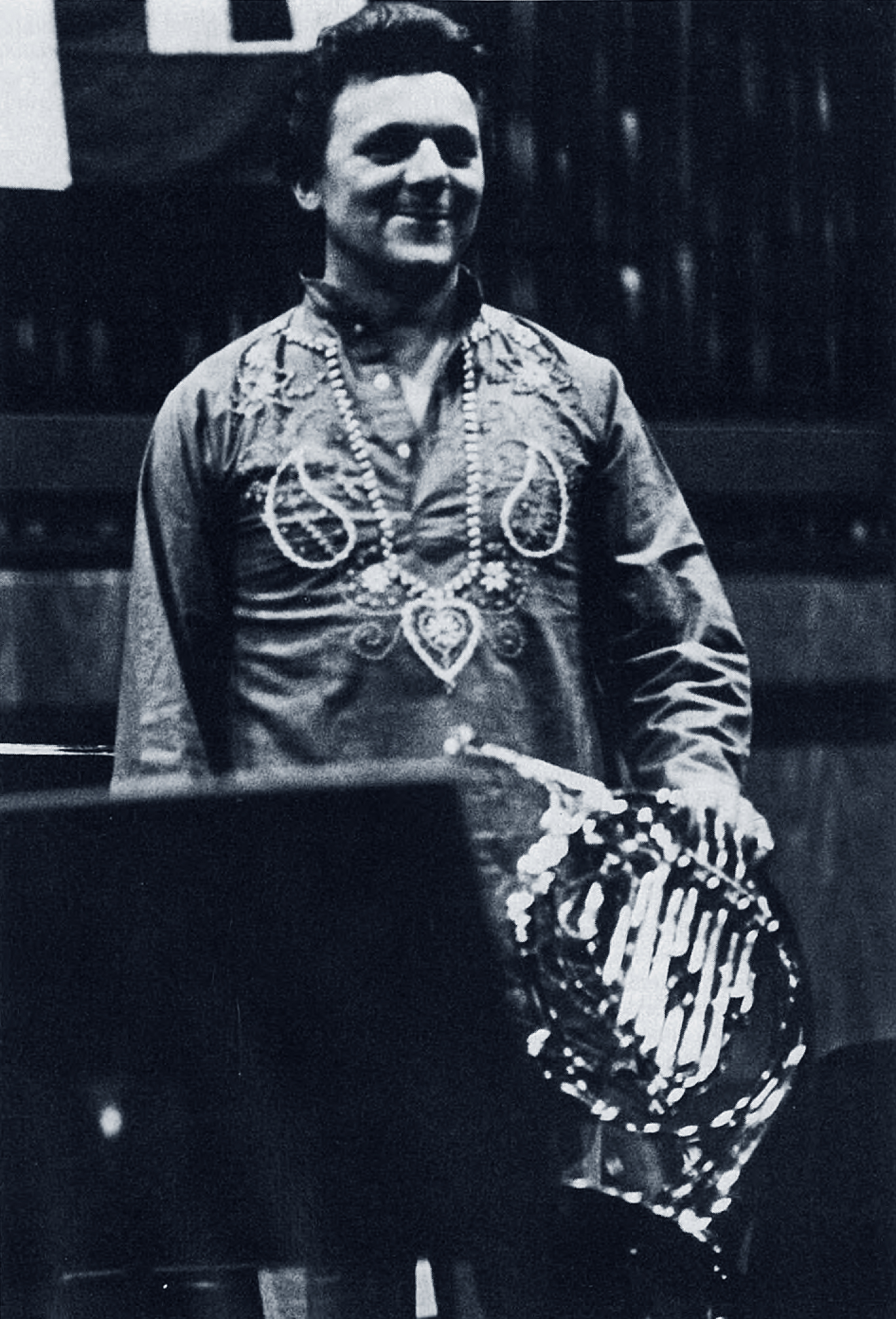
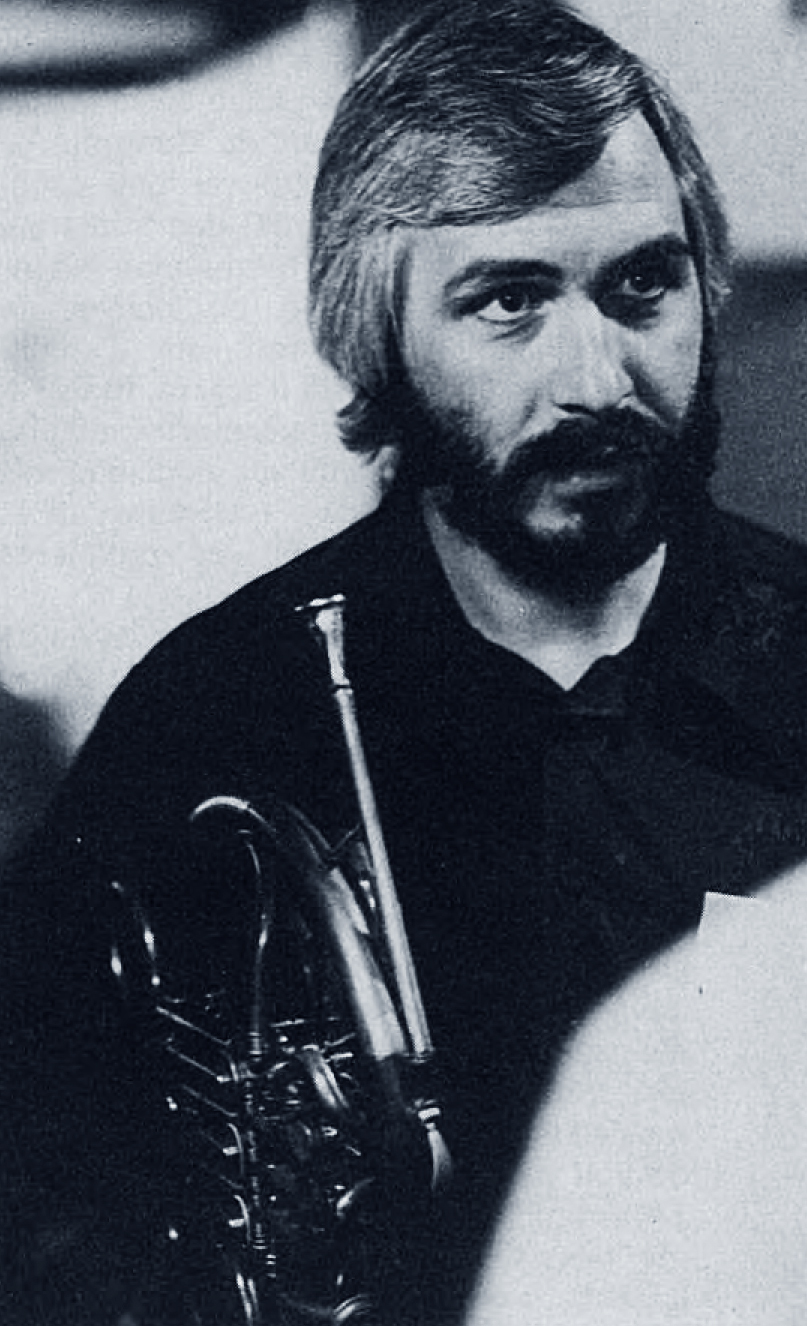
When one suddenly finds oneself in front of one of these great meetings of brass players, about fifty trumpets or trombones or horns or before quartets, quintets or octets, all brass... who cannot imagine the good it does in reference to all those non-brass musicians one is compelled to see all the rest of the time? In hearing those horn ensembles I was thinking about the following: these players who normally only ever represent a section of a symphonic orchestra, a minority, mainly bit players, sometimes soloists, often accompanists find themselves suddenly in a completely contrary situation. There they are among themselves, nothing but horns! Naturally in these groups some voices are more important than others but they take it in turns among themselves, but they are all horn players. The opportunities to put themselves forward are more numerous and the competition is more equal between musicians playing the same instrument. One accompanies horns, one is accompanied by horns; horns sometimes form a section which makes an echo as it is so frequently their role in the normal orchestras but take note: here they echo another section of horns and this echoing is taken in turn. The musical pieces quickly give a chance to other horns. On top of it all the conductor is a well known horn player. He thus shows as an instrumental horn player that one can reach the conductor's rostrum, sometimes in the role of an arranger or even of a composer.
Same thing for the trombones with this advantage, it seems to me, that the differentiation of voices in intensity, timbre etc. is perhaps easier here and that at the end of it all the ensemble playing is sometimes more diversely coloured, more structured and that there is less tendency to blur the sound.
I have been able to be present at a few significant happenings. The Globokar trombone solo (Sequenza, by Berio) contains sounds of the modern world; he practises the singing while playing; and during a sudden pause of the trombone, this cry: Why? Why this music? Why yours? Why this all brass Congress? This presentation seems to have received replies of which those that can be read, I believe, in the performances of Phil Wilson who also sings in his glissandi, as does R. Bobo into his tuba. Here is one of Phil Wilson's sketches in the style of musical clowning: he tells musically the history of jazz through using a few of Ellington's pieces caricaturized in virtuosity with jokes that recall pop art painting; Wilson shows the bone structure of the well (too well) known pieces, he plays with them, enclosing them in a humoristic performance, leaving out sometimes an expected note etc. And above all, he shows that, through time, they are always the same pieces. He makes circles around the same thing in a way which becomes more and more complex and perilous, letting through what is paraphrased, what one can refer to and remains unchanged. Why all that? The reply seems to me to be: it is better to laugh (underlying our position of interpreters who depend on the creators and business); it is the acceptance of the inevitable; the role of the interpreter, even in jazz, is to gain a certain margin of liberty, a little distance, to play the game of competition between interpreters, which reconstructs perhaps a balance.
Through happenings of this kind, one is led to ask profound questions. There have been other questions. Globokar (in Exchanges) has played in front of and with a microphone — the only non-jazz musician to do so — as if he wanted to be better heard. What he did appeared to me to be highly significant for the congressiste, breathe in / breathe out avidly, keep changing the mouthpiece, try the most diverse sounds possible, groan, hit on the instrument and finally get up like a Scotsman who squeezes in his arms a bagpipe, or perhaps like this famous flautist from a well known children's tale: a flautist who attracted all the rats from the town of Hamelin to lead them to drown in the sea... Who is one supposed to go and drown here? Facing this demonstration of technical musical and even philosophical possibilities of the musician the performance of another trombonist (Neil Humfeld) demonstrated on the contrary — in reply to Globokar... — the limitations of the instrument! After the grandeur of the man-subject who rebels, who stretches out the possibilities there is the misery of the man-object, submitted to the notably technical hazards, but not only those.
Humfeld started by announcing that he was going to give a demonstration of all the possibilities that the trombone offers. He was accompanied by a pianist. He explained that he was going to play Cole Porter's Night and Day, but that unfortunately he was handicapped, his trombone having been damaged in the aeroplane. Then he started the piece, showing that he was so inhibited all the time by technical problems that at the end he only managed to play one and the same note: C, C, C. Night and Day, this was really the night after the day.
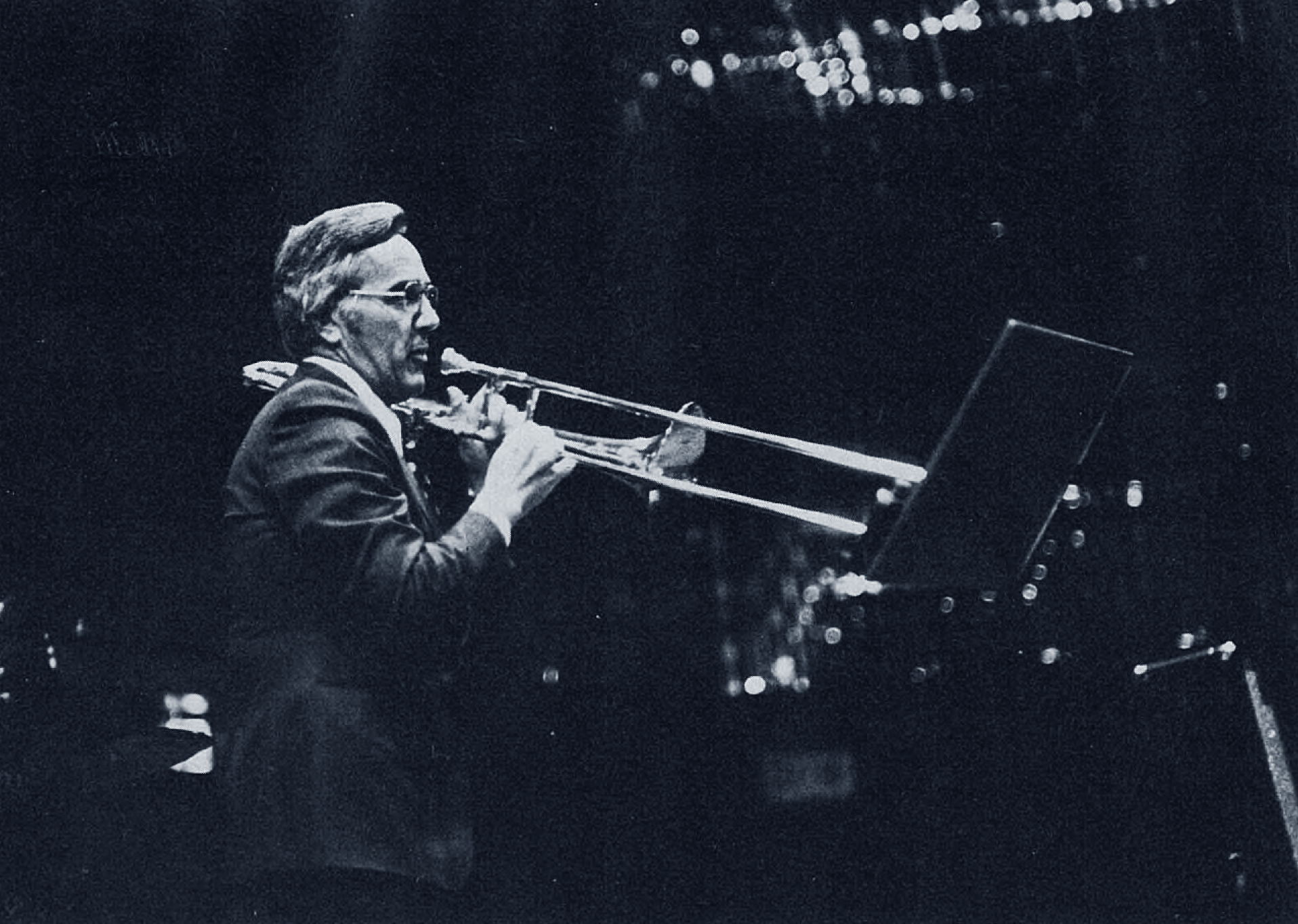
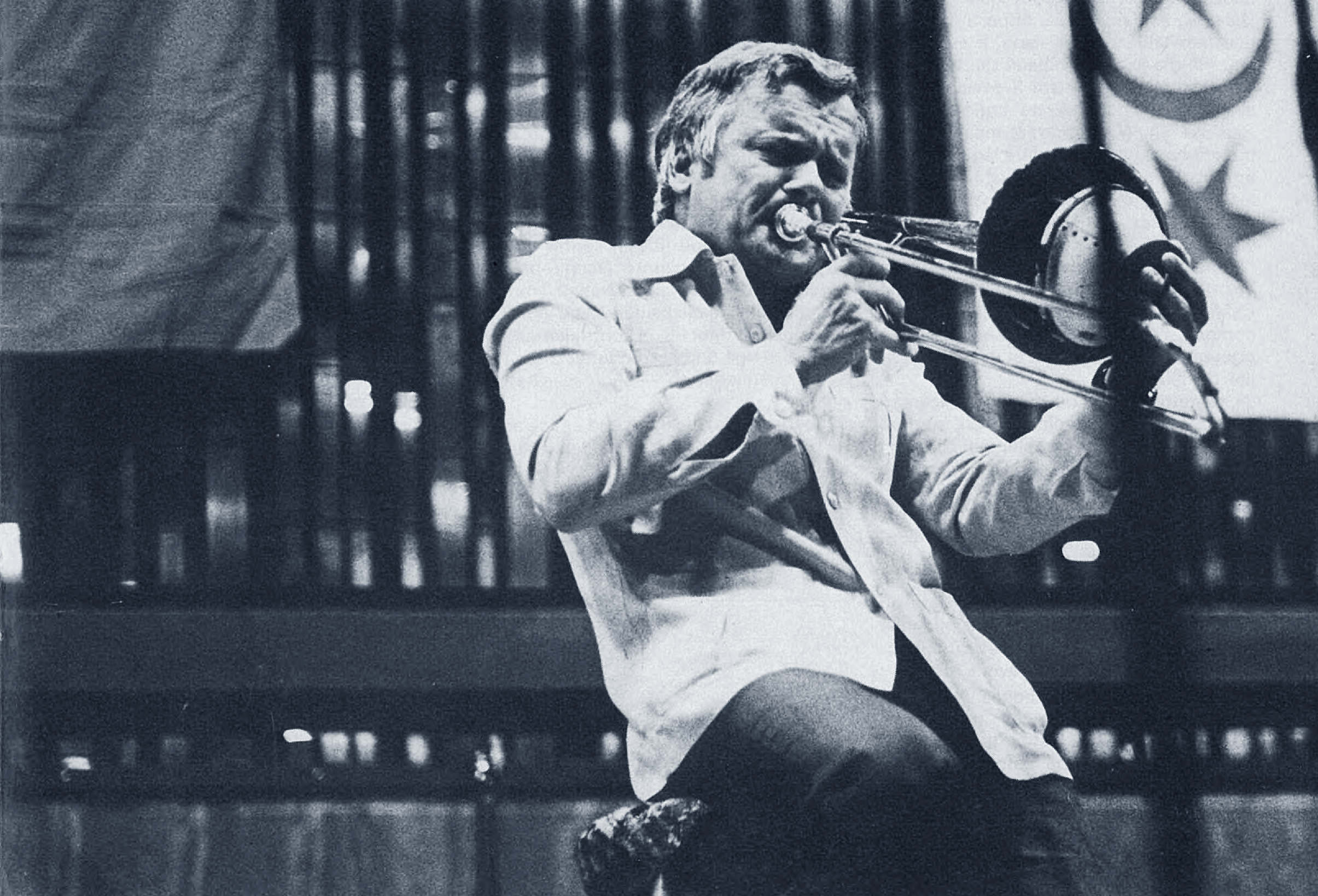
Did this gathering of brass consist of putting forward the glorious aspects of the brass player? Was it for once a self-glorification (triumphant fanfares)? All things considered a lot happened around the trombone! When Slide Hampton climbed on the stage at the Gala, he did so alone. The only black jazz musician, he went to remind this audience to which so many white Americans had played earlier, that his absent brothers were going to be present thanks to him. He strung together pieces, passing from a theme of Charlie Parker to other classics, notably Body and Soul. He did it with his full and mellow tone, with his very personal slide action, very powerful attacks but without hardness and at certain moments with circular breathing as to defy everybody: I breathe out without even stopping to breathe in. Perpetuum mobile of the wind player, the possibility to keep a sound going continuously... This reminds me of the problem posed by Renold Schilke; in order to produce the sound must the air pass through the instrument... No, it is enough to set it in motion, to make it vibrate.
Do sounds produced by the congressiste need to go out towards the world? A friend told me, it is incest all that...! Rather a ghetto, obviously. The media were hardly present. There were few new projects to better not only the present position of brass instruments but that of music and the environment in which we live, but I am not really meaning to draw conclusions; we are rather at the stage of asking questions.
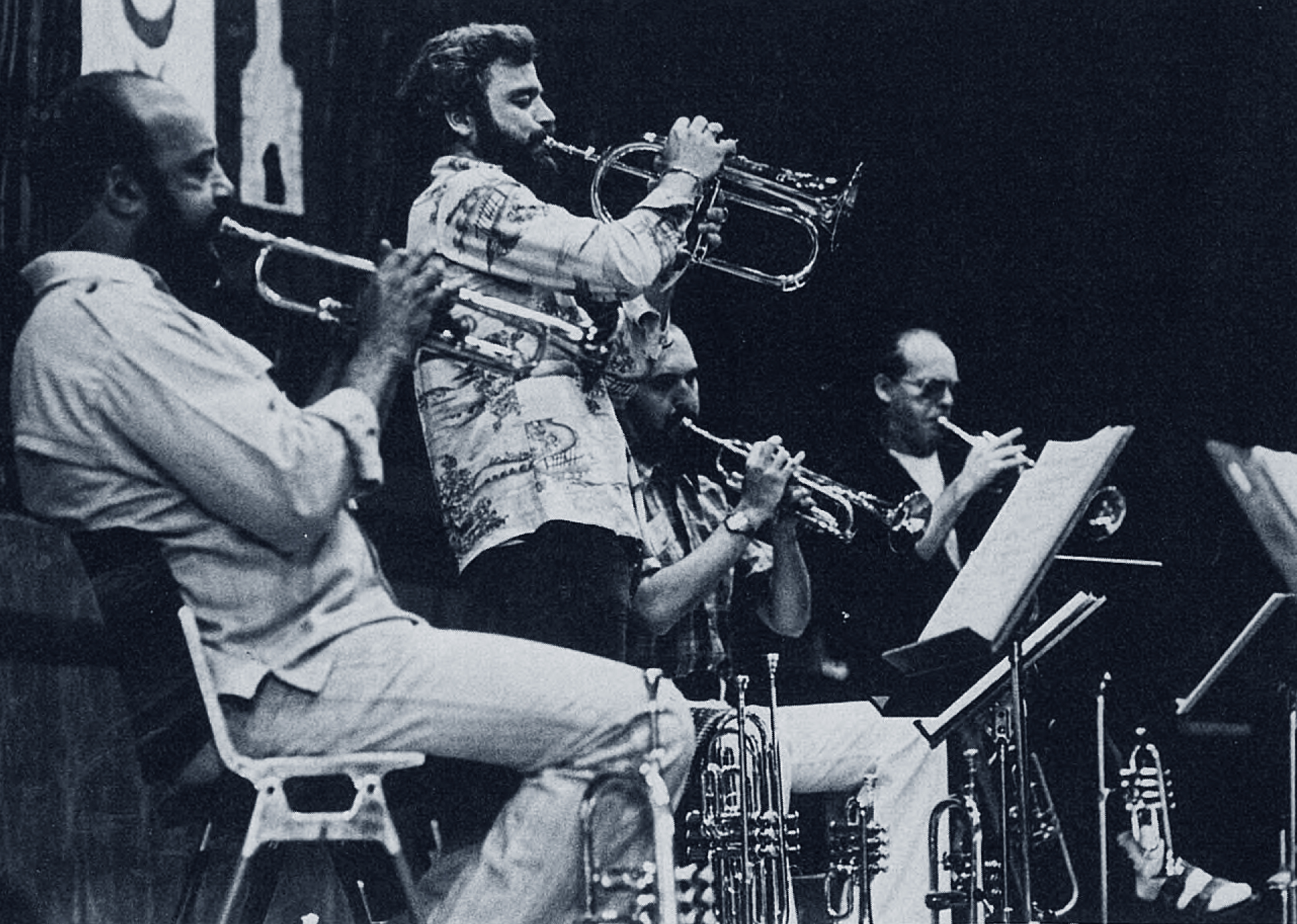
The most moving one was perhaps suggested by Rich Matteson. He who, on a number of occasions, has shown a far from ordinary physical and intellectual power on the tuba, on the euphonium and on the valve trombone which he plays in a rich manner, in his bop improvisations which are always extremely well balanced and structured — this musician outlined the possibility of a wreck. In his Gala sketch he spoke through his trombone with the microphone very near to the bell, he spoke like a radio operator's voice coming from a submarine not far from the San Francisco coast line. He played isolated notes, like signals from a boat. He noticed that the water was mounting inside the submarine each time that the boat blew its alarm signal into the air. The water continued to mount despite his more and more desperate exhortations: close it up there! He saw the water going up even further and — glug glug — it was the wreck.
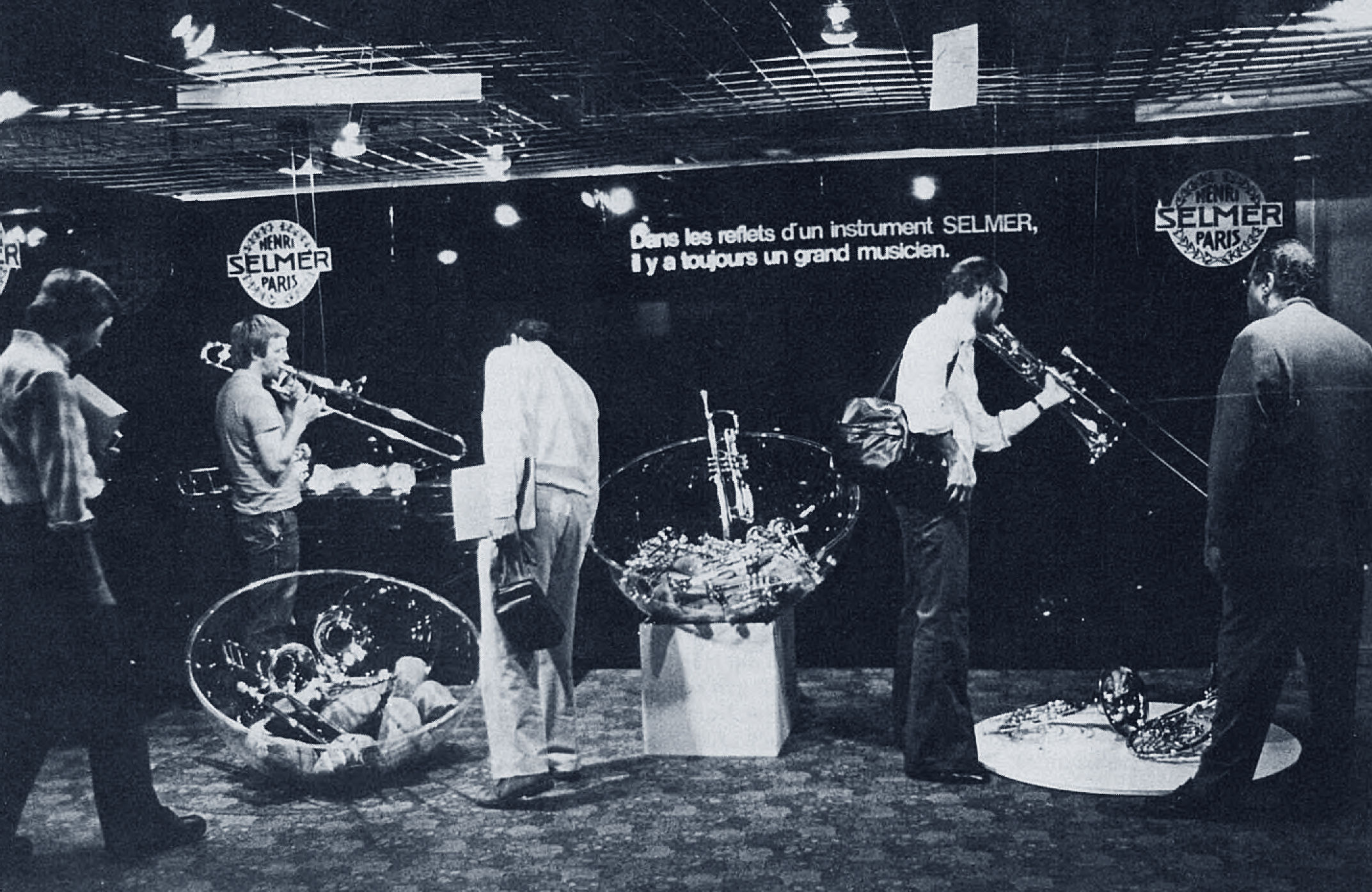
It was perhaps the wreck which is in any case going to be ours towards the end of our life; the more you blow, the nearer you get to death.
I am ending this general survey of the situation. Another happening replied to Globokar. The accompanist drummer of the group Forefront presented a piece of great intensity. Incongruous, is it not, that an accompanist should show himself in the middle of a brass ghetto! Getting up from his stool the drummer came forward a few steps, like someone who is going to angrily eat his drum. He walked a bit, unsteady, he lifted his head, dazed, and threw out a word: WHERE? In complement of the WHY in the Sequenza by Berio, thrown out by Globokar the night before.
Why? Where? If I had been able to produce another sketch I would have inserted the word WHO? Who must meet, with whom, in front of whom?