Brass Bulletin is now also available in Italian and Spanish.

4 min. read

On the Sackbut or Harmonic Trumpet

From Pierre Trichet’s Traité des Instruments de Musique (c. 1640)
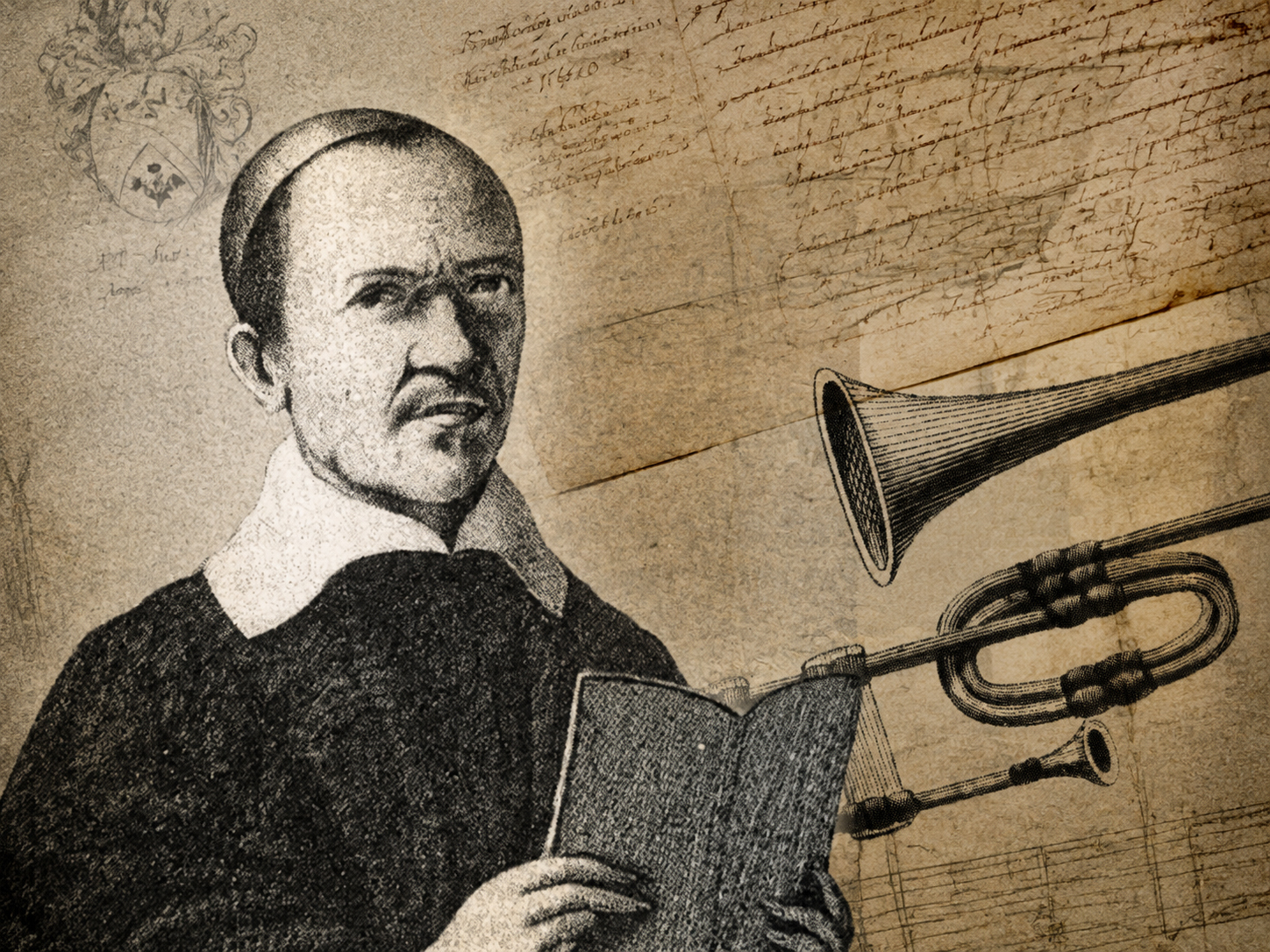
A seventeenth-century description of the sackbut captures its moving slide, chromatic freedom and bass role at a moment when the instrument was still being defined.
On the Sackbut or Harmonic Trumpet

The publisher Minkoff in Geneva has produced a very large number of reprints of historical works of great value, access to which had previously been available only to scholars familiar with archive and library searches.

Apart from the better known musical works on brass instruments, Minkoff republished in 1978 the “Traité des Instruments de Musique” (“Treatise on musical instruments”) written around 1640 by Pierre Trichet which had been published in 1957 with an introduction and notes by François Lesure (212 pages, in French).

This treatise, as Mr. Lesure explains superbly in his introduction, has been in the library at the abbey of Sainte-Geneviève since 1753. [...] It has remained hitherto little used by musicologists and almost ignored by organologists. The manuscript, running to 151 folios, is autographed.

The work, contemporary with and complementary to that of Mersenne¹, supplies much new information on the brass and related instruments of the time and on the use which was made of them then.

Lesure says: Reading his “Treatise”, we have a picture of Trichet as the opposite of the pedantic humanist. He has no illusions about “the extent of his ability” (the preface) or the “capacity” of his mind (a letter to Mersenne). Between Mersenne and Trichet is the gulf which separates the great encyclopaedist in cahoots with the whole world of learning from the honest provincial scholar to whom many discoveries remain unknown. Sometimes, however, his basic good sense makes his evidence more useful to the historian than that of Mersenne.

For brass and the related instruments we would like to point out chapters 12 (“On the cornett and serpent”), 13 (“On hunting horns and other similar instruments”), 16 (“On the lituus” [which Trichet calls in French tornebout]), 17 (“On trumpets”) and 18 (“On the sackbut or harmonic trumpet”). We thought it would be interesting to reproduce these various chapters in forthcoming issues of BRASS BULLETIN, starting here with the sackbut. jpm

Continue reading

Access the full Digital Edition.

Brass Bulletin 45, I / 1984 pages 10–12

All content is protected by copyright © Brass Bulletin 1984–2026

Share this article

Facebook LinkedIn
Loading…

Questions & Answers

How the Digital Edition works

What does the Digital Edition include?

The Digital Edition brings together the articles already digitized as searchable online texts—not simply as scans or PDF files—along with their original illustrations, notes, authorship, issue information, and available translations. Related-article suggestions currently include only this digitized material.

Are the digital articles identical to the originals?

We preserve the original text, language, illustrations, captions, footnotes, and editorial context as faithfully as possible. The presentation is adapted for comfortable online reading, and obvious transcription or scanning errors may be corrected. The substance and character of the published article remain unchanged.

Which languages are available?

Brass Bulletin was published in English, French, and German throughout its history. Italian and Spanish translations were added from issue No. 60 onward.

On the Italian and Spanish sites, articles from issues 1–59 are therefore shown in English by default.

How often are new articles added?

New articles are added almost daily, with approximately one complete issue digitized each week. The pace may vary depending on the preparation, image work, and editorial checking required.

Why aren’t all articles available digitally?

The complete Brass Bulletin collection contains 1,246 articles published between 1971 and 2003. The full index is already available online, allowing readers to discover every article in the collection, including those whose complete text has not yet been digitized.

Digitization began in February 2026. Each article is carefully prepared for online reading, checked, and connected to its issue, authors, subjects, and illustrations. At the current pace of digitization, the complete collection is expected to be available online by February 2028.

Why do some references mention articles that are not available yet?

References in the original articles are preserved even when the material they point to has not yet been digitized. This keeps the historical and editorial record intact. As more issues are added to the Digital Edition, an increasing number of these references will lead to articles that can be read online.

Can I suggest an article or report a transcription error?

Yes. If there is an article you would particularly like to see digitized, or if you notice a possible transcription error or missing detail, please contact us. Reader feedback helps us improve the Digital Edition and prioritize useful connections within the archive.

How can I support Brass Bulletin?

Your support helps fund the preparation, verification, and online publication of the complete collection.

Subscribe to the Digital Edition

Prefer to support us without subscribing?

Make a donation

Search Brass Bulletin.