6 min. read
The Measurement of Mouthpiece Pressure
By P. Kenny , John Davies
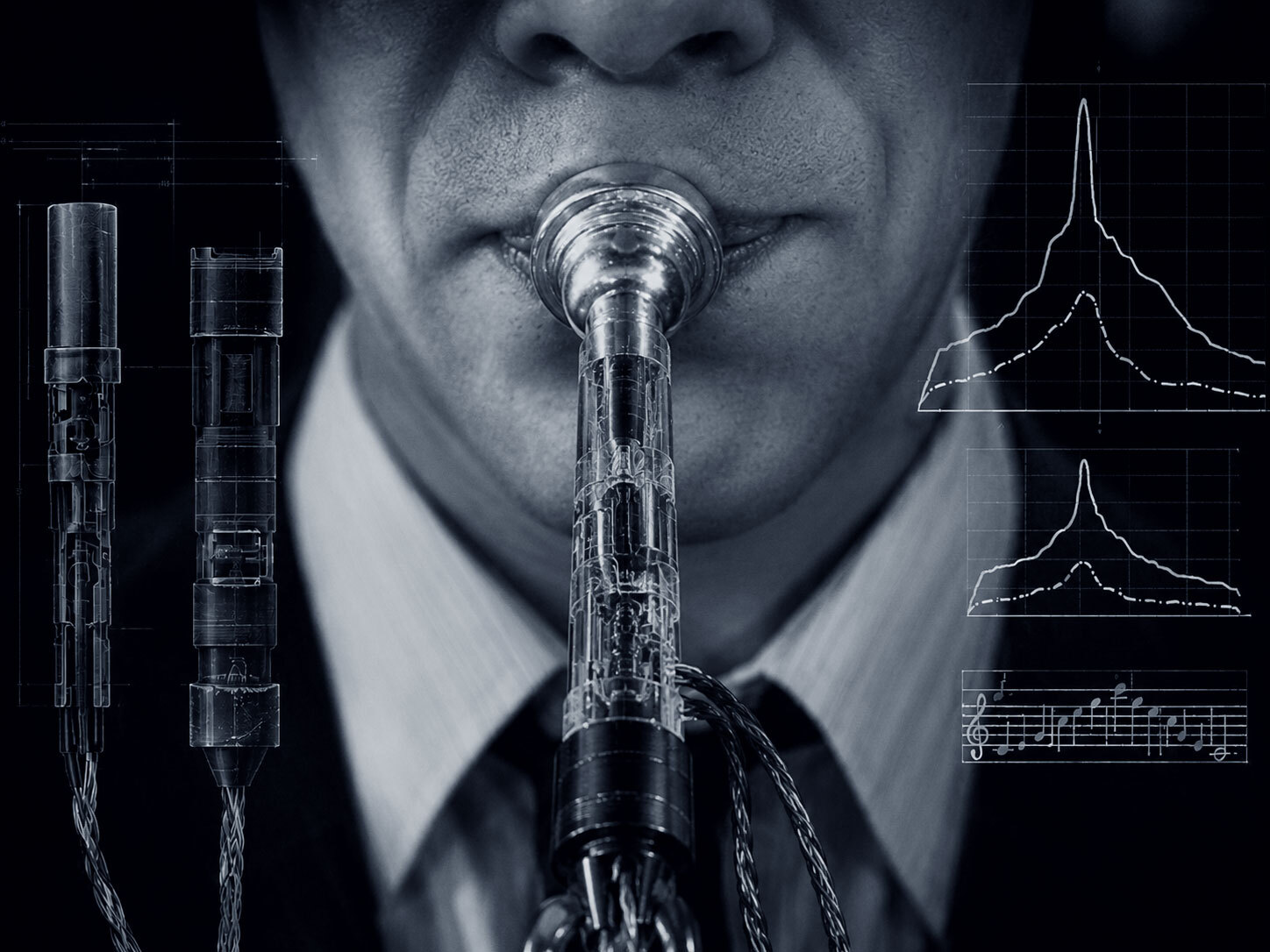
There is a growing interest now in a more systematic approach to the teaching of brass instruments, based on a thorough and rigorous analysis of the physical and psychological factors involved, rather than upon the subjective impressions and ad hoc theorising of the individual players. Without a more objective basis, the variety of individual beliefs and assertions cannot be evaluated.
It is the purpose of the present research to investigate the role of mouthpiece pressure in trumpet playing, to point out some common misconceptions about the problem, and thus perhaps to help to reduce in this area one of the more arbitrary elements of brass teaching.
The first attempt to measure mouthpiece pressure accurately was by Henderson in 1942. He made kymograph records of mouthpiece pressure from specially designed apparatus. This equipment was crude however, and only three players were used in the experiment which makes it difficult to draw general conclusions.¹
In 1965 Weast and Hake² measured mouthpiece pressure using a simple weight scale mounted with felt padded rods which fitted into the bell of the trumpet, which is held in the flat palm of the player. Single notes were played and accompanying pressure readings taken. Thirty players were used here, although the equipment again was fairly crude. Weast and Hake's findings were largely confirmed in a replication of the above procedure by White in 1972.³
The present experiments differ from the previous studies in a number of important ways. Considerable time was given to the development of a less obtrusive measurement technique, making use of developments in electronics and bioengineering, which permit finer and more accurate degrees of measurement. Previous work made use of cumbersome mechanical devices which, apart from being less able to resolve small pressure variations, also make fundamental and unusual alterations to the task being investigated.
For example, in the Weast and Hake study mentioned above, the instrument had to be held in a highly unusual manner during the experiment; in addition the pressure at the mouthpiece is highly variable depending on the direction and the axis of the pull. In other experiments using spring mouthpiece extensions, the mouthpiece itself actually yields as pressure is increased, an event which is likely to interfere with playing to a considerable extent.
Brass Bulletin 37, I / 1982 pages 50–54
All content is protected by copyright © Brass Bulletin 1982–2026