17 min. read
Anton Hansen (1877-1947)
Father of trombone playing in Scandinavia
By Per Gade
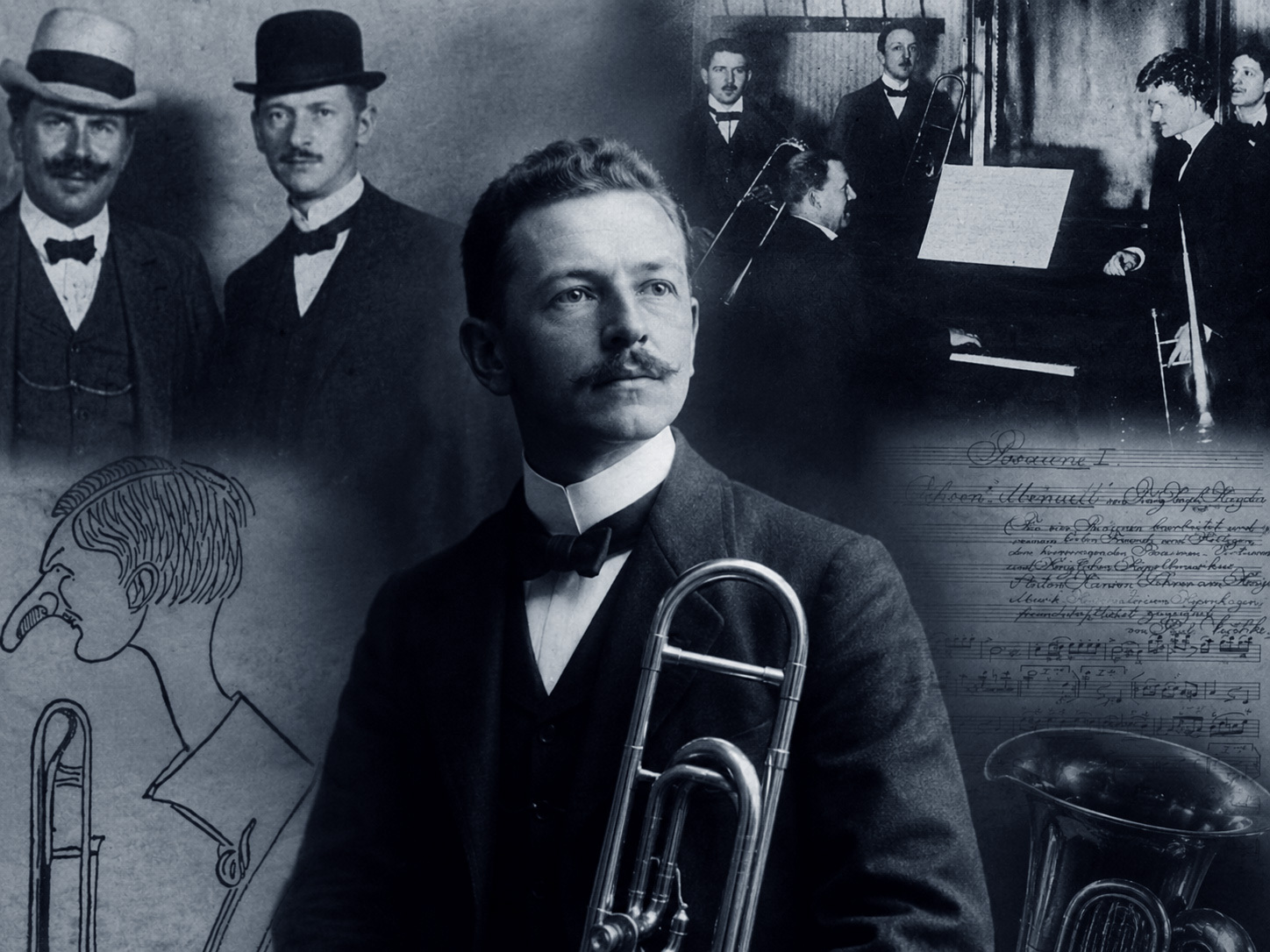
In Part I (Brass Bulletin no. 27) we heard about Anton Hansen's childhood and youth in Copenhagen and about the musical impulses which contributed to his development. Anton Hansen played a crucial part in the development of trombone playing in Denmark and founded a school which is the basis of the present-day tradition. After he had been taken on by the Royal Theatre Orchestra, he received the distinction of a grant as Denmark's first brass player on the basis of his musical and instrumental achievements. The grant involved studying abroad. Part I ended here with Hansen's departure for Berlin where he was to study with the famous trombone virtuoso Paul Weschke.
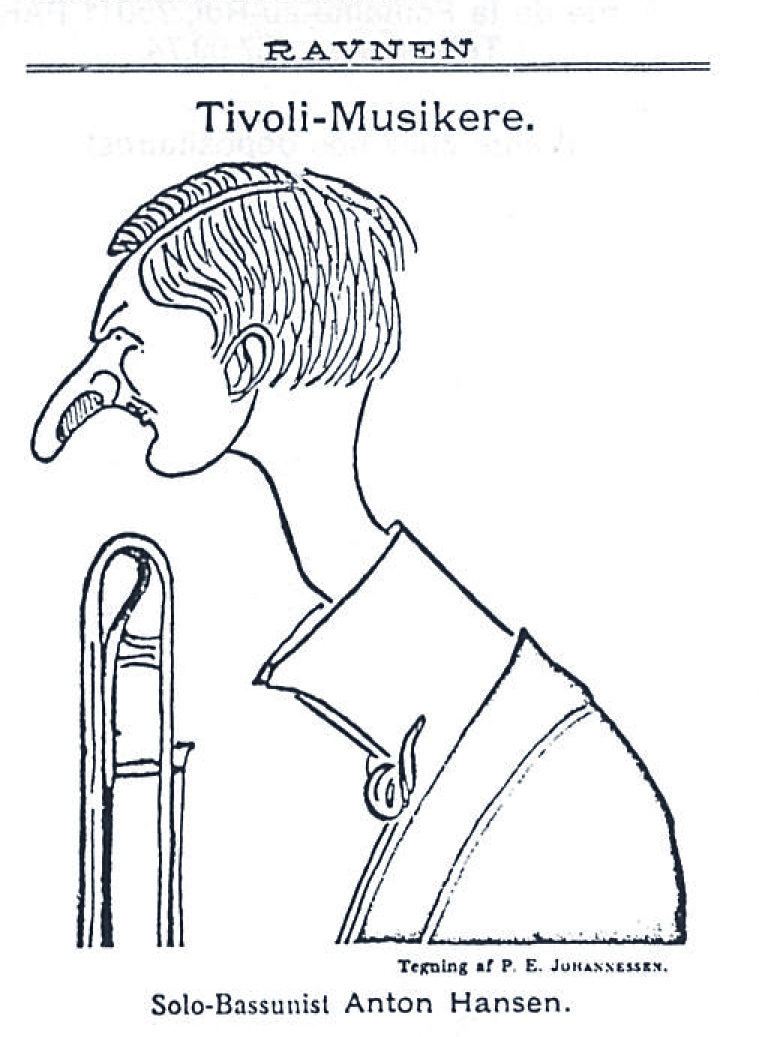
Solo-trombonist Anton Hansen (Ravnen, 16 July 1914).
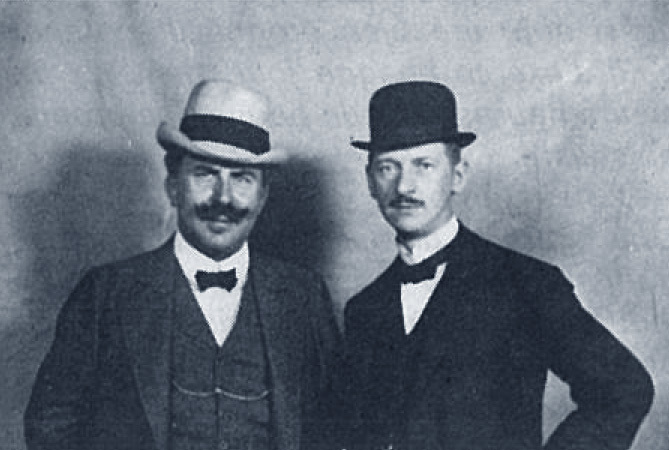
Paul Weschke, Anton Hansen, Berlin 1911.
After Anton Hansen had been met at the station in Berlin by Paul Weschke, he and his wife were driven to 100 Pestalozzistrasse in Charlottenburg, where they were to stay. The following day Hansen had his first lesson with Weschke. He wrote in one of his diaries:
19th September 1911
I spent two hours with Paul Weschke in the Royal Academy. He has an excellent embouchure, in high and low registers, but he explained that one day without practising was enough to weaken it.
To begin with we played long notes together. He always started with long notes before the actual practice. Then I played Klughardt's "Romance" alone (unaccompanied, as he did not play the piano). Then I asked him to play Ferdinand David's Concerto to my piano accompaniment. He played it splendidly, showing great strength and endurance; the trills were superb but the legato was not good. His technique in the cantabile passages is quite wrong, for he slurs with the jaw instead of with the tongue.
When he asked me for my views, I told him honestly what I thought of his performance. I added that in the Royal Orchestra we had a great artist, the trumpeter Thorvald Hansen, who was my ideal and I said that, if he could combine his fantastic technique with Thorvald Hansen's blowing technique, his playing would be perfect. I gave him my opinion and to his credit I must say that he was surprisingly interested. When we had finished the concerto, I ventured to ask him to play some of the studies which I was not able to play myself and told him of the doubts I had about my abilities as a trombonist.
I had thought that scales played fast, but legato, could sound the same as on a valve trombone; but it was soon clear that Weschke, while he could play scales fast, could not play them legato in the true sense of the word, and I was relieved of a worry which had burdened me for years. During the ensuing discussion on the imperfections of the slide trombone he said, amongst other things, "You must remember that every instrument has its own characteristics. Things can be played easily on the piano that are unplayable on the harp, and vice versa, and a child of eight can play a passage on the piano that is impossible on the trombone."
I challenged him to play some of the difficult trombone passages in "Cavalleria Rusticana". This he would not do, however, explaining that they were unplayable, from a strictly artistic point of view.
Brass Bulletin 28, IV / 1979 pages 13–28
All content is protected by copyright © Brass Bulletin 1979–2026