13 min. read
Maurice André
Biography
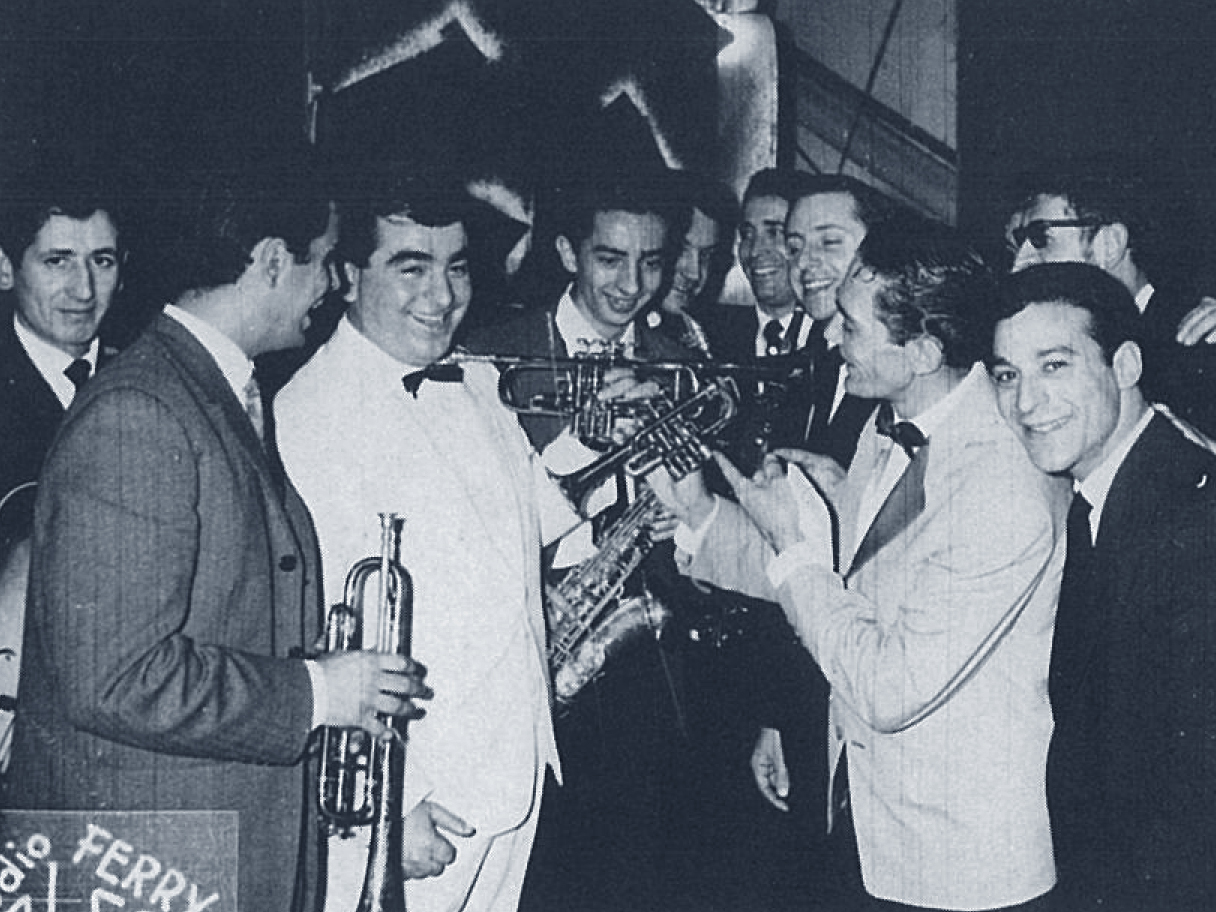
1962 (January), Ball at Saint-Ambroise
Remarks collected on the 18th August 1978 and drawn up by Jean-Pierre Mathez.
J.-P. M.: What did you work on with M. Sabarich at the Conservatoire?
M. A.: Obviously the great Arban studies and then practice was done on things the teacher thought useful for each pupil. There were scales according to Balay [method], the "Transcendental Studies" of Charlier, those of Chavanne, finally all the classical repertoire. Now that I am myself teacher at the Conservatoire I continue to use these good old studies whilst combining contemporary studies in the programme by Marcel Bitsch, Charles Chaynes, Henri Tomasi, Raymond Sabarich, etc.
J.-P. M.: Which was your set piece for cornet?
M. A.: Oh dear I had fallen to a dirty trick: the "Variations on a Theme by Scarlatti" by Marcel Bitsch. In the following year for trumpet it was "Introduction, Trénes, et Danses" by Desenclos. I think at that time it was the teacher who influenced the composers by showing them the degree of difficulty. Nowadays this contact between teachers and composers no longer exists. They write what they want, and then we still have to play it...
J.-P. M.: How were the relationships with the other students? How many of you were there?
M. A.: There were 12 at the time. Six cornets and six trumpets. Today that too has changed. There are four cornets and 8 trumpets. The relationship between us was very good but with this instrument you didn't give yourself any present. When you think at the time there was Bernard Jeannoutot, a marvellous trumpet player, there was Marcel Lagorce, Gérard Roussel of Lille, Albert Calvayrac, Jean Pirot and others too. They were solid rivals!
In the continuation, Maurice André speaks about his first engagements, the beginnings of his solo career, and the approach to sound and practice that shaped his playing.
Brass Bulletin 25, I / 1979 pages 27–39
All content is protected by copyright © Brass Bulletin 1979–2026