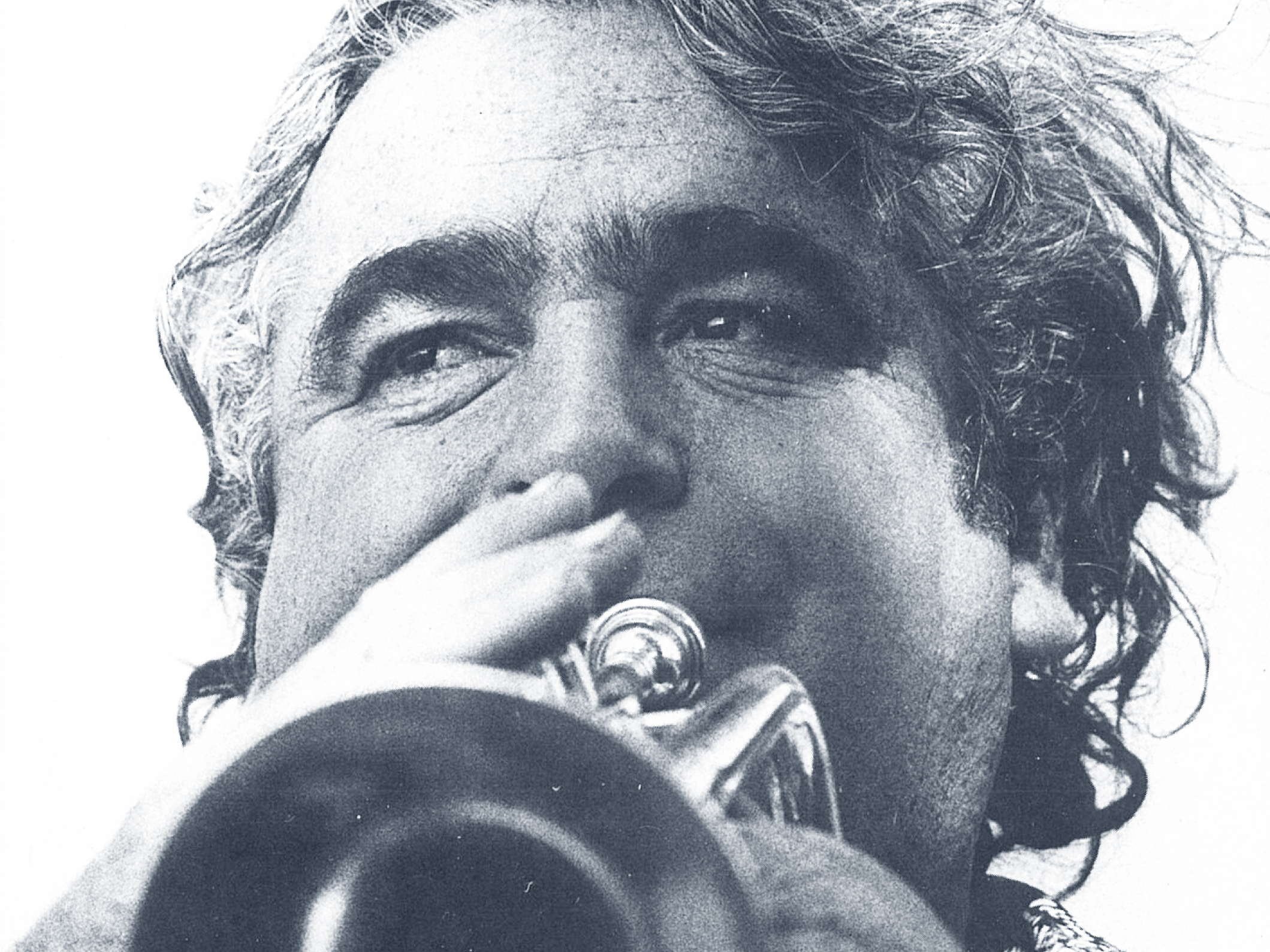
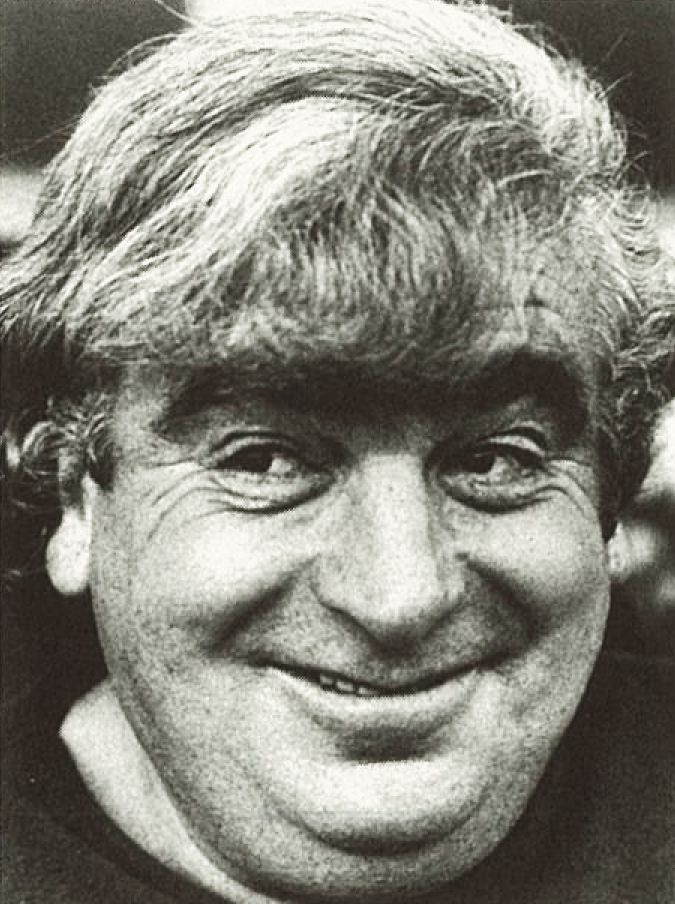
J.-P. M.: Can you remember your very first contact with the trumpet?
M. A.: Well now, dad, as I have told you Jean-Pierre, played at popular dances. He played in all the small villages of the neighbourhood and one day he came back with an old valve cornet which a family of wine-growers had given him who had organised this little ball in the south, in Le Gars. Dad came back with this cornet. A cornet which wasn't worth much, but it was my first weapon. When I had this cornet, I pounced on it, quite naturally, because I had been swotting the solfeggio for a year, or even two. Two years before I had an instrument. This was my first love for the instrument. This old cornet. I have unfortunately not kept it, and I was wrong, because it is from things like that which you can't be parted.
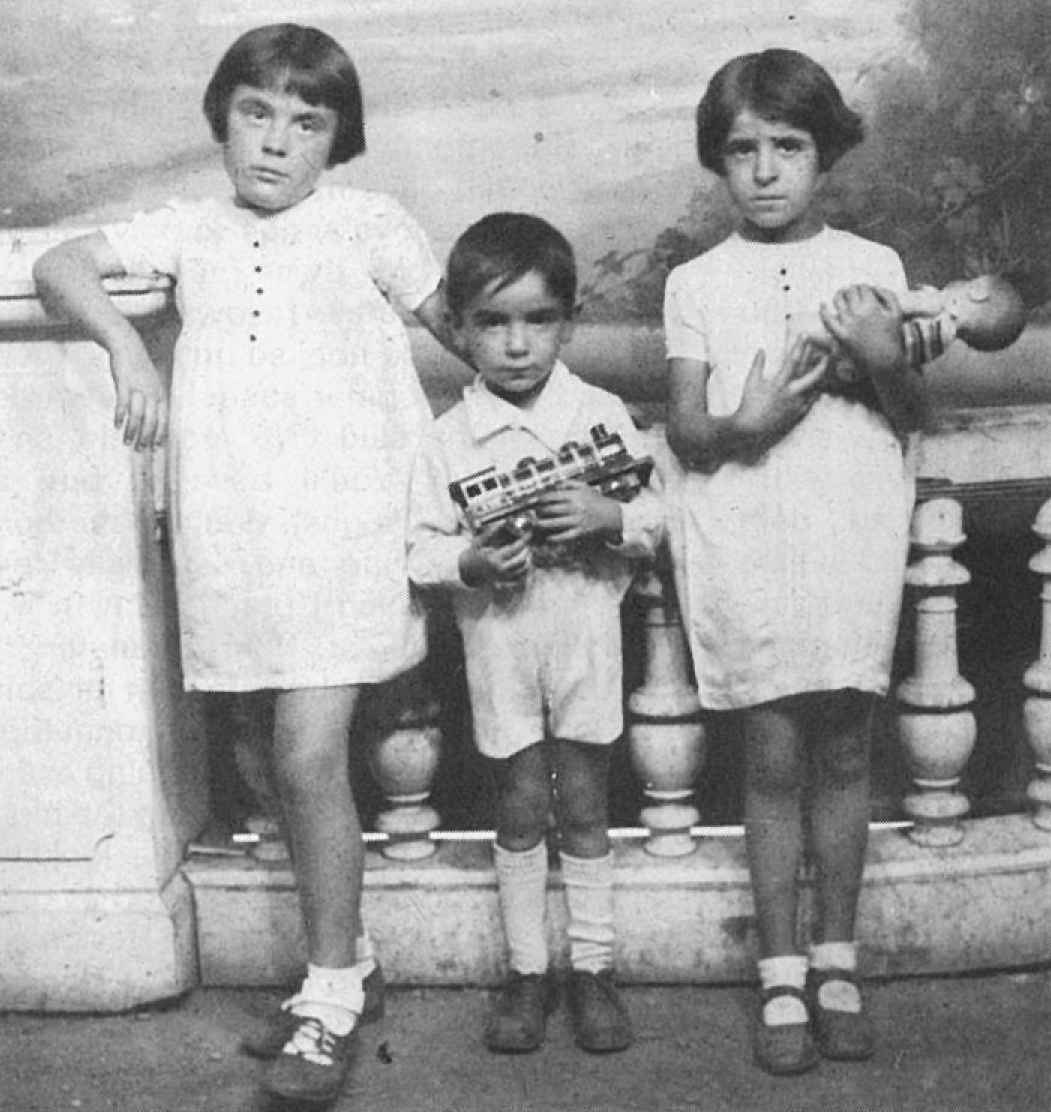
Georgette, Maurice et Simone André, August 24 1937
J.-P. M.: Did your father make you practice any particular things?
M. A.: Oh Lord no! Dad was a very good trumpet player, but he hadn't studied the academic trumpet. He just played by ear. He played with the faults one finds amongst amateurs but he had the splendid idea of sending me to study with a friend of his. Monsieur Barthélémy, second prizewinner in Paris who, having studied at the Paris Conservatoire, but not thinking himself good enough to stay in the capital, had left for the provinces. Barthélémy said:
In this job you can only count yourself happy if you have really reached the top of the ladder. If you are in the middle (like him, if not a little lower) then you have to adjust your sense of ambition.
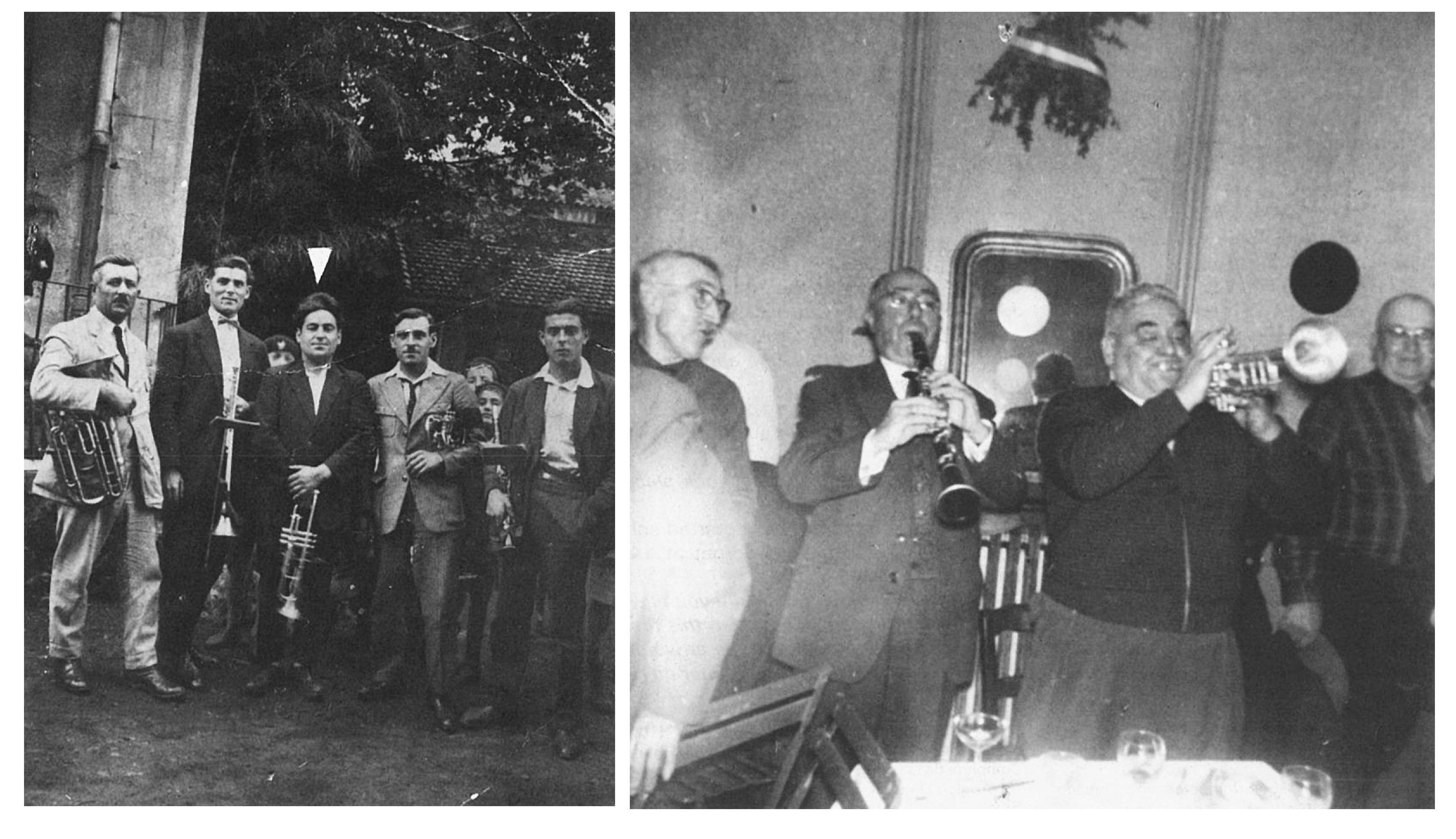
Father with friends
J.-P. M.: But M. Barthélémy had worked with Merri Franquin in Paris?
M. A.: Yes of course, he was a pupil of M. Franquin. Well now, you realize that he is an old man already, he would be almost a hundred. M. Barthélémy made me practice in a marvellous way. That was my second piece of good luck (because you know, one always has a good or bad star in life, as for me I can confess...). Up to the age of 18 fate could have made me a cow-keeper or a miner or God knows what else but from the time I discovered music with my trumpet at that time, my good star has really risen (and is still following me [laughs]).
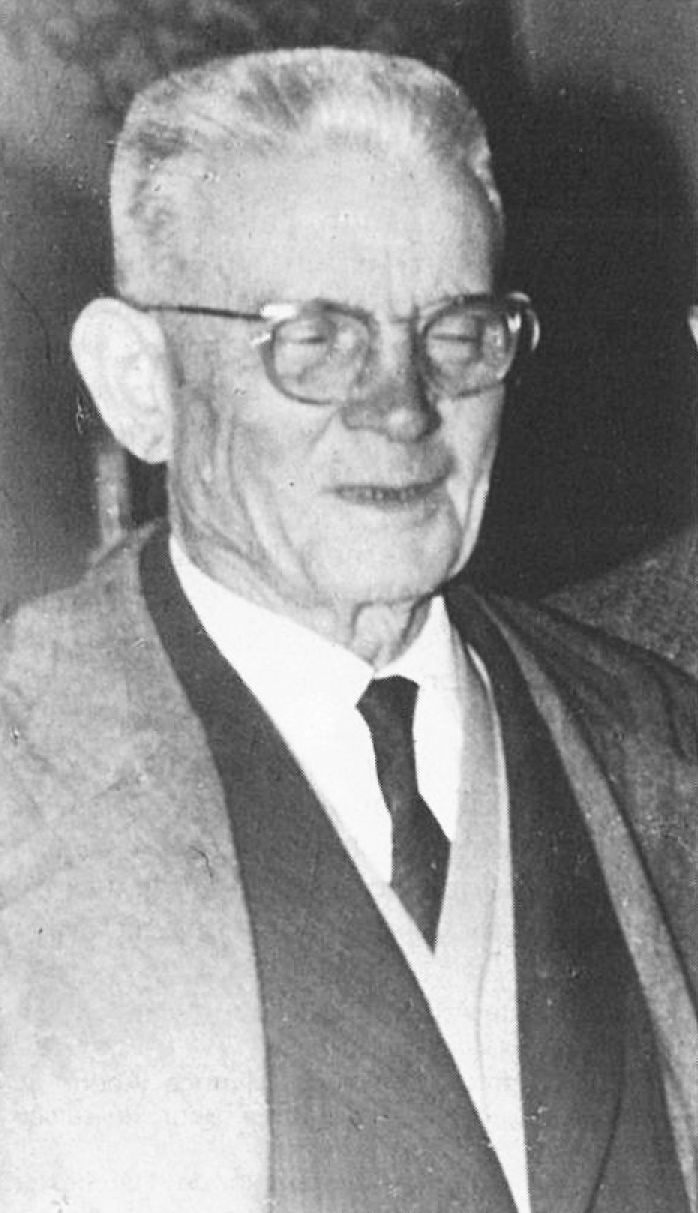
M. Barthélémy
J.-P. M.: Can you remember what you played right at the beginning, what you had in your exercise book at the time?
M. A.: Sure! I started with little songs [laughs] I remember... to give me the love of music Dad gave me Lily Lily Bye Bye and other little love songs to play... after 5 days I could play these melodies (they were quarter notes followed by half notes). He got me hooked onto this, then he taught me popular songs. Afterwards M. Barthélémy said
No, no! this isn't being serious! You'll have to buy a proper method [laughs].
Well the method was Arban*. Arban and especially the great method which I practised with M. Barthélémy, that of Merri Franquin**. Yes, the method... the question of soft and loud attacks, all kinds of tonguing. He stuffed me full of these tonguing exercises, pianissimo without forcing the high register or the low. You know, looking back I look on Franquin's method as one of the best. I knew it by heart! Besides, I always work in the same way. I see... it's a funny thing (... because there are some people who I shall talk about in due course) there are people who are very impressed by the little circus side of the trumpet. As for me, I admit that I am more impressed by Franquin's tricks and I notice that all the serious advice given by great trumpet players like Lagorce [he is replacing M. A. at the Paris Conservatory for the 78/79 season] and Herseth*** who I have talked to at length, had great respect for Franquin's method and this way of tonguing the notes, which all the same remains the most difficult, Jean-Pierre! I see, I see the note, the sonority, the attack.
* Jean-Baptiste Arban (1825–1899)
** Merri Franquin (1848–1934), Professor at the Paris Conservatory from 1894–1925, “Méthode Complète de la trompette moderne”
*** Adolph Herseth, solo trumpet with the Chicago Symphony Orchestra.
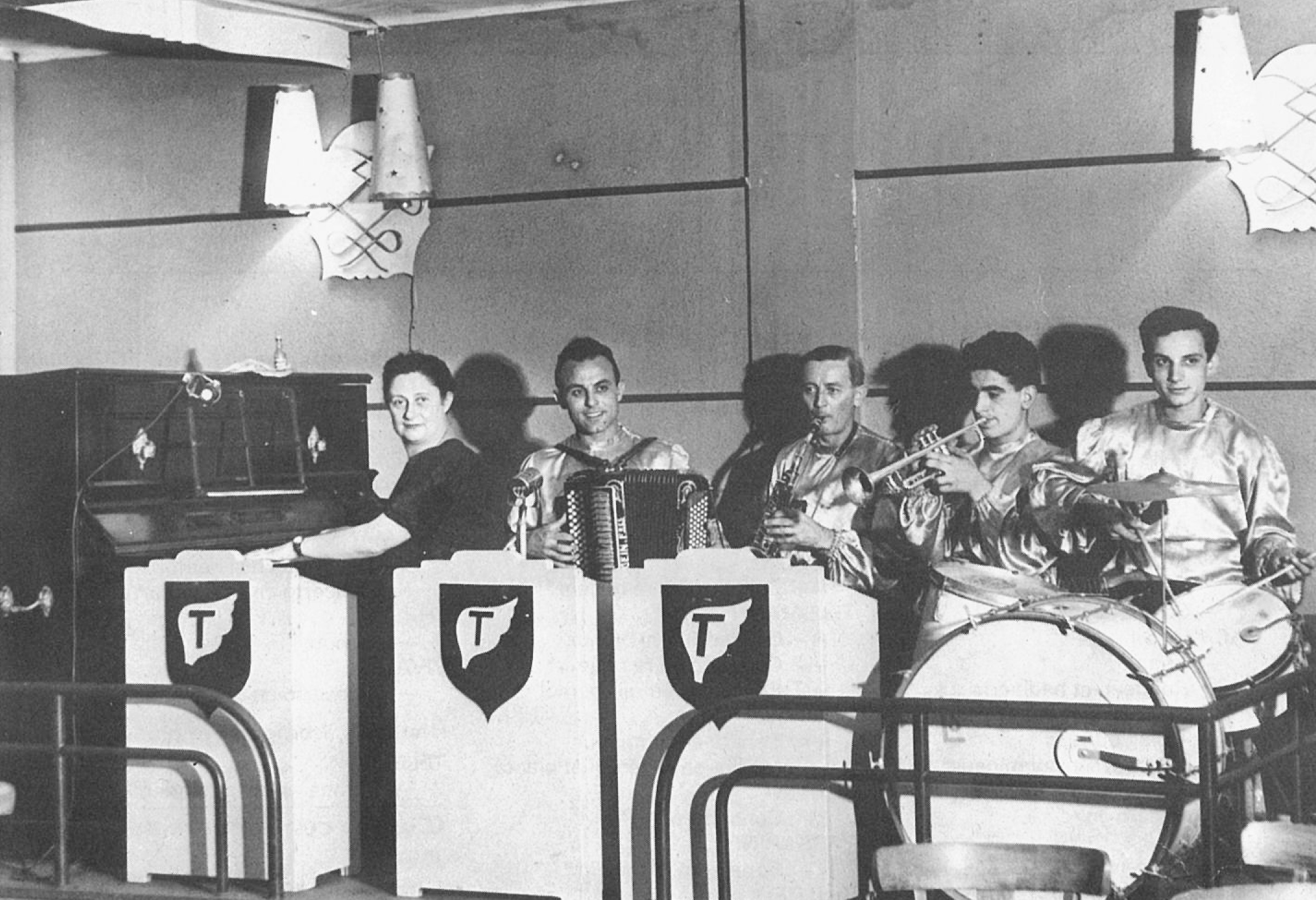
Dance Band
J.-P. M.: Well let's go back, how many years did it take from the first contact with this old cornet and the approach of the joy of playing?
M. A.: Oh that went pretty quickly, about 4 years and then I entered the conservatory in Paris.
J.-P. M.: So the first contact took place at 12?
M. A.: Wait a moment, no, I started sol-fa at about 12, I had my cornet at 14, and at 18 I was in Paris.
J.-P. M.: Well, which music did you play, apart from little songs, between this first contact with the cornet and the arrival in Paris, which we will talk about later on?
M. A.: Indisputably, the discovery of great music was brought on by my contact with the municipal band in Alès, the mine band and the band in Salindres. I even played in 4 or 5 bands in the whole area. Dad and M. Barthélémy wanted me to play as much music as possible. I went to the rehearsals on a bike [laughs] in the evening, after work in the mine. It was love of music that made me do all that. Dad was just the same, he played in popular dance evenings, but adored classical music. Since he heard classical music on the radio, which was a rare thing at that time in France, silence reigned in the house. It was sacred!
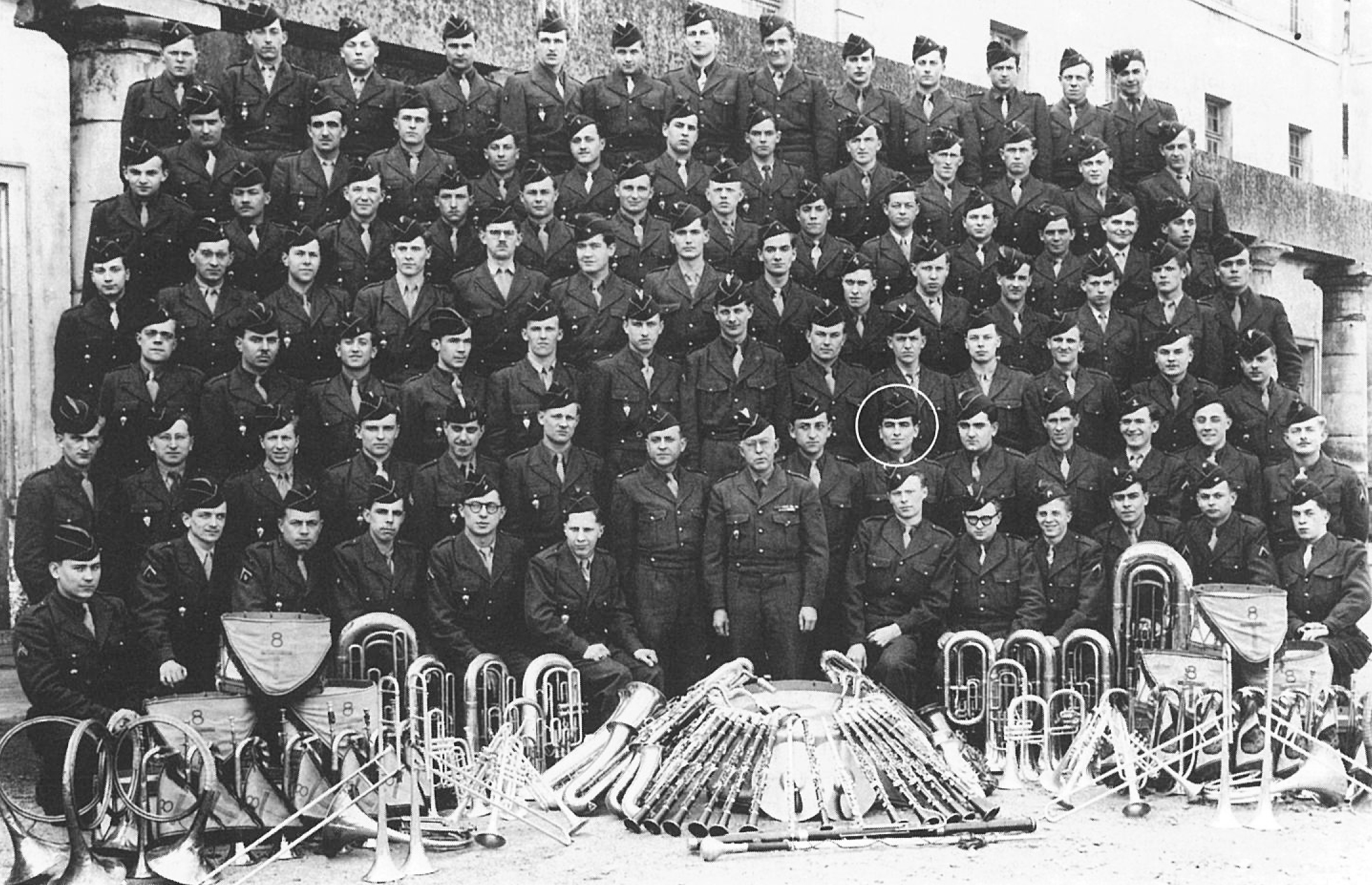
8e Régiment de transmission
J.-P. M.: Can you remember your first public solo performance?
M. A.: [laughs] Hell, yes! My first solo was in Faust, the famous cornet solo. How I remember that solo! There were always little solos in the band programmes, but this was a real eye-opener! Even professionals have to stick to it to play it well [laughs]. In short, that was my first solo. Then there was more and more. I was asked to play the difficult passages on the flugelhorn, to unravel trumpet passages etc. It did me good to jump from flugelhorn to cornet or to the trumpet.
J.-P. M.: When did they think of sending you to Paris?
M. A.: After 4 years, M. Barthélémy said to my father:
– You know, Maurice has a great gift for the trumpet.
My father didn't take it all that seriously and replied:
– Well sure, he plays well.
– Yes, but haven't you listened to the way he plays those scales?
– That, yes, I hear how he plays them quickly going up, but just as quickly coming down.
But for dad that it stopped there — destination navy band. For me as well. I must admit that up to this time, my ambitions hadn't been particularly well marked. I still didn't see what the future would bring. M. Barthélémy however kept on:
But you know, Maurice, he is gifted! you must take your son out of the mine because sometime soon he is going to get stuck in the mine and that would be a shame for a young trumpet player like that.
One day the brother of M. Barthélémy who was musical director in Molières of the mine band had us sent the enlisting forms for the military bands in the area around Paris. I soon found myself in Mont-Valérien with the 8th regiment on its way through, with the risk of being sent to Indochina, where the war was causing havoc! It was a risk I was taking, but dad said:
Oh, you know, Indochina is sometimes less dangerous than the mine
[laughs], and I left. Then in Paris I entered the conservatory in the first year in the class of Raymond Sabarich.
This was chance! Dad, M. Barthélémy and Sabarich, my 3 rocket carriers!
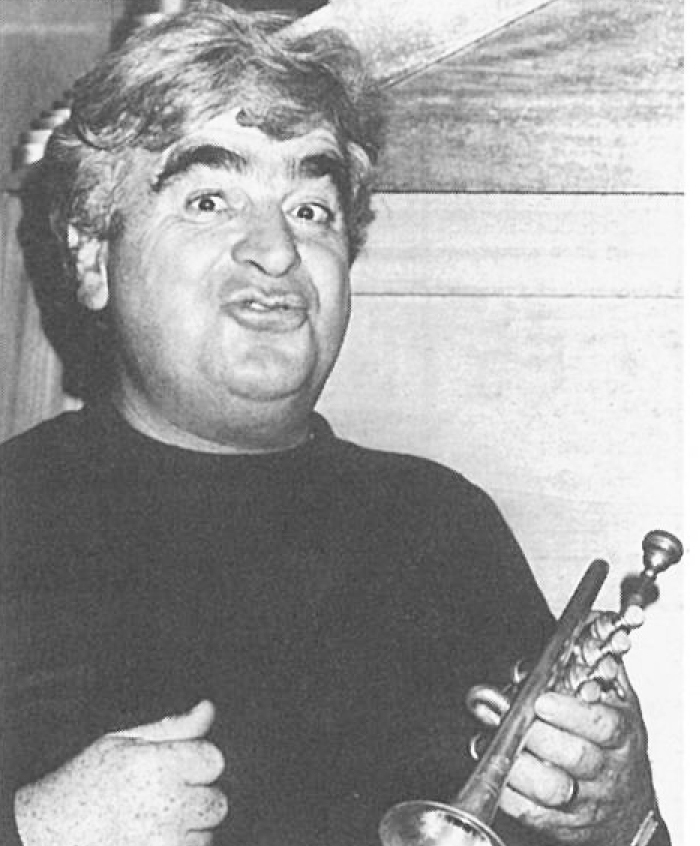
J.-P. M.: How old were you at this time?
M. A.: I was 18. Besides you couldn't be enlisted earlier. I could have been enlisted earlier, because according to M. Barthélémy I could have received my prize at 16. But I didn't know all these things, therefore I got my prize of honour for the cornet in the 1st year at 18. When I returned to the country (I cry to think of it still), M. Barthélémy said to my father:
You see, I told you that this little guy was gifted [laughs] because coming back with a first prize with 6 months of work in Paris is all the same not an easy thing to accomplish, is it?
This discussion between the two southerners was very funny.
J.-P. M.: It was a prize for cornet?
M. A.: For valve cornet. M. Sabarich wanted me to study the cornet first. The following year I received my prize for trumpet, also in the first year with M. Sabarich.
J.-P. M.: Tell me a few details of your arrival in Paris. Was it easy?
M. A.: Oh no! Paris was even terrible for me. I arrived without any money, son of a miner, I always ate at the barracks, I studied in the barracks too. I made a copy of all the concertos, because for dad that meant days of work in the mine to pay for my music. So I copied everything. I locked myself up in the barracks, even on Sundays. I made use of this to go and see the chief cooks, and suggested that I should do the cooking instead of them so that they could go out and look at the girls... so with my pal, Pierre Gautier who was from Bordeaux and a trombone player we did the cooking together [laughs] and got down to it for the whole week [laughs].
No, I must confess that the two years spent with the regiment in Paris wasn't a funny matter.
There was one thing I must add: 3 months after my arrival in Paris, a good lad from the south and all that, Sabarich gave me a real piece of his mind. He had felt straight away that I was gifted, as is said, and so he loaded me with work... and I didn't deliver the goods as he wished. After 3 months he threw abuse at me and chucked me out of the class. Before his death — poor man — Sabarich always said:
It's when Maurice André woke up.
How a good scolding does one good occasionally!
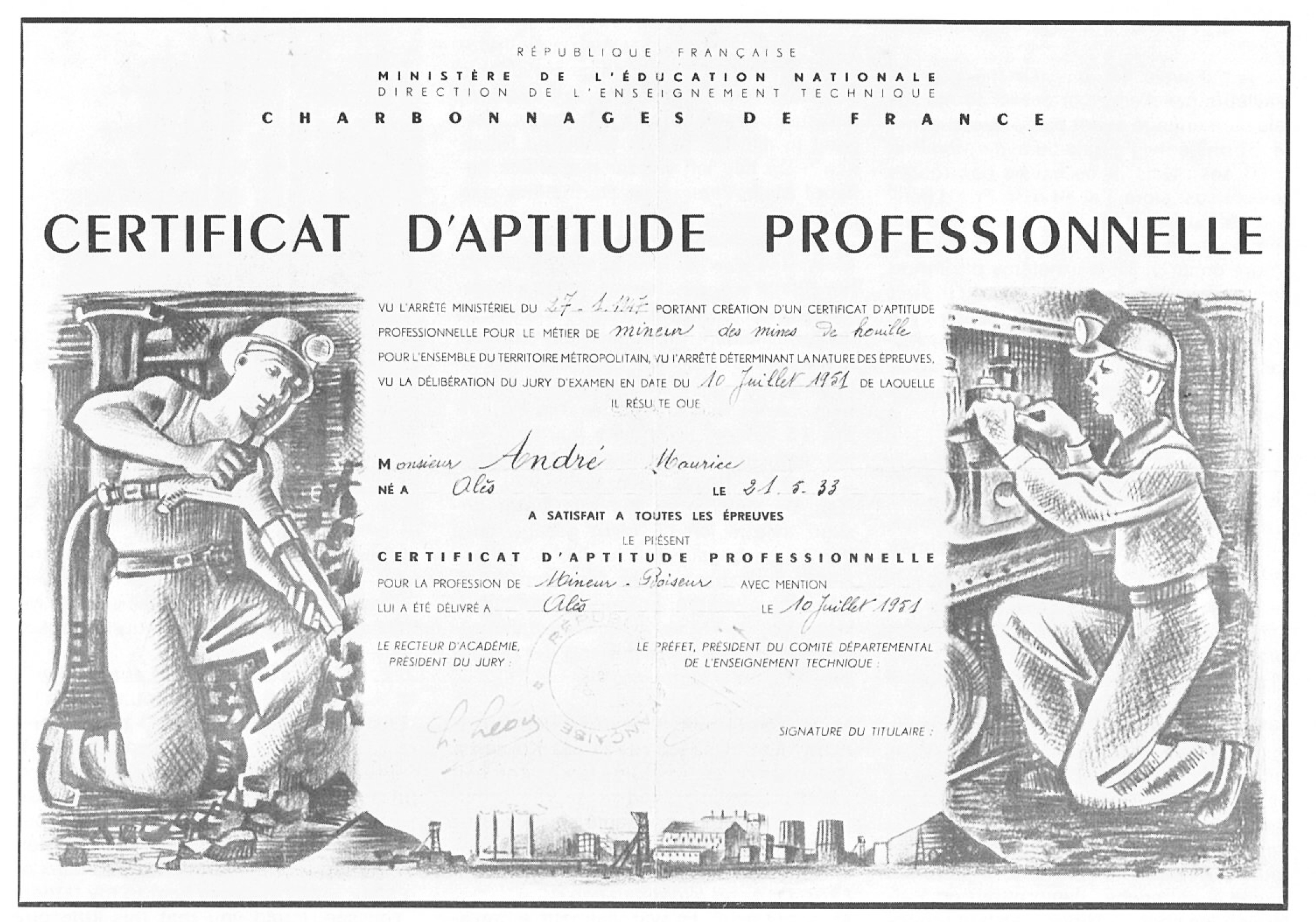
Underground Workers diploma
J.-P. M.: Which material did you work on with Sabarich? Did he make you change your instrument or mouthpiece?
M. A.: Sabarich in fact made me change my instrument. I had arrived with an Aubertin trumpet which M. Barthélémy had me buy. When I arrived in Paris I changed all the equipment.
J.-P. M.: Trumpet in Bb?
M. A.: No, the little C.
J.-P. M.: Ah, the famous Aubertin?
M. A.: Sure, the famous one. It was famous, you see, because it was a fantastic instrument. Sabarich had me play on a Selmer, for the whole period of study.
J.-P. M.: And the mouthpiece?
M. A.: I played on a "Foveau" mouthpiece, a Couesnon nr. 3. It had the form of a little bell. I liked this mouthpiece very much. But since I played in the orchestra, I changed my mouthpiece all the same. To have something easier with a wider rim, I chose a Bach 1 1/2 C. Besides I still always play on the same one.
J.-P. M.: Exactly the same?
M. A.: Oh yes, I'm fidelity itself as far as that is concerned [laughs]. Yes because it is very dangerous to change one's mouthpiece.
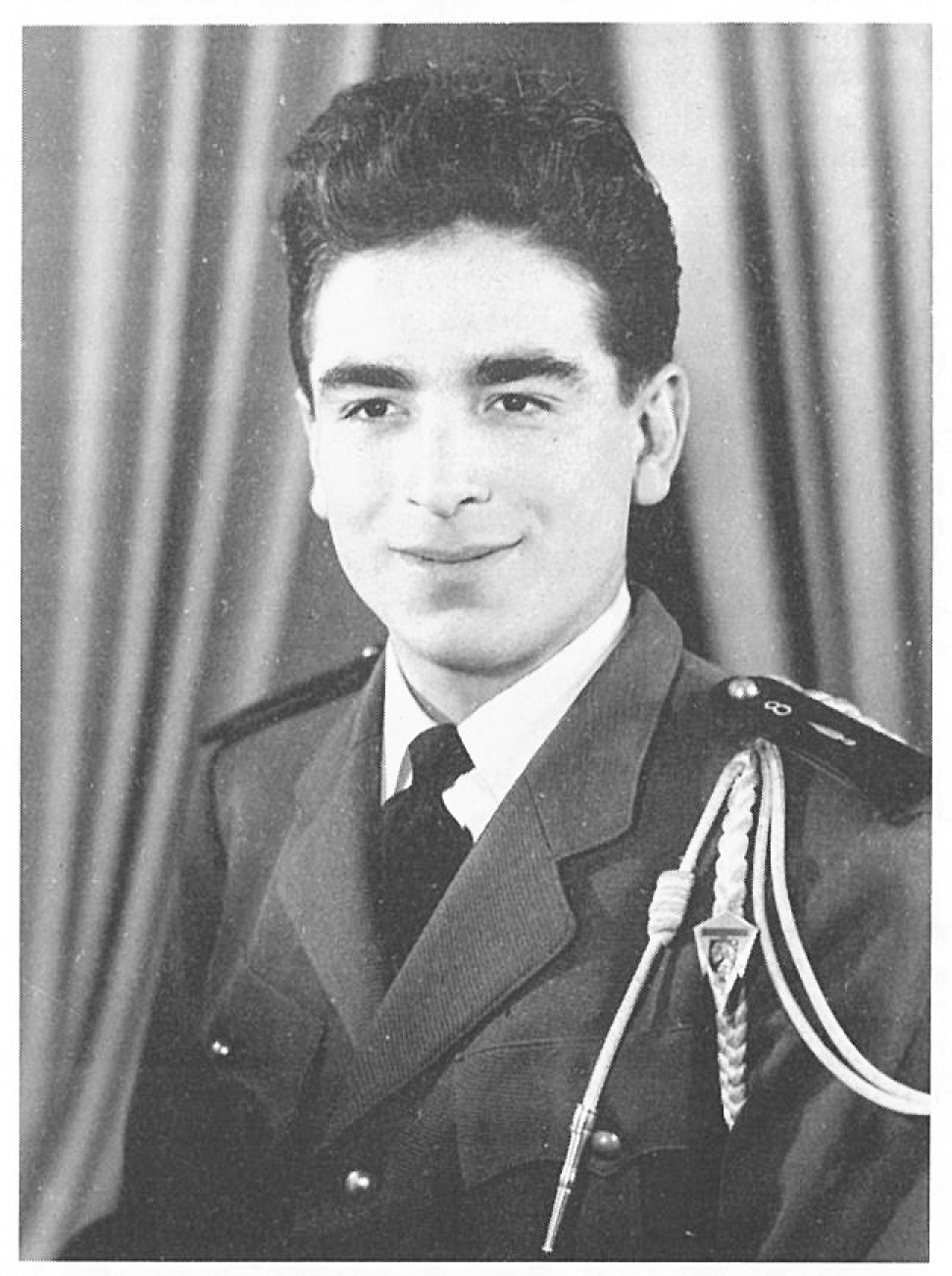
Maurice André. 18 years
J.-P. M.: It is known that you flattened out the rim of this mouthpiece yourself.
M. A.: Yes, I like flat rims for my mouthpieces. Besides I can now talk about a brand new mouthpiece I am having produced at Selmer's. It's slightly wider on the upper part of the rim. You know, I have put students to rights who were playing on the mucous membrane — with pretty good results. Instead of having them change their playing position, which often causes a catastrophe, we have widened the rim which is placed on the upper lip, so that it rests better on the lips and puts them more at ease. And I think that many trumpet players will feel better with this mouthpiece.
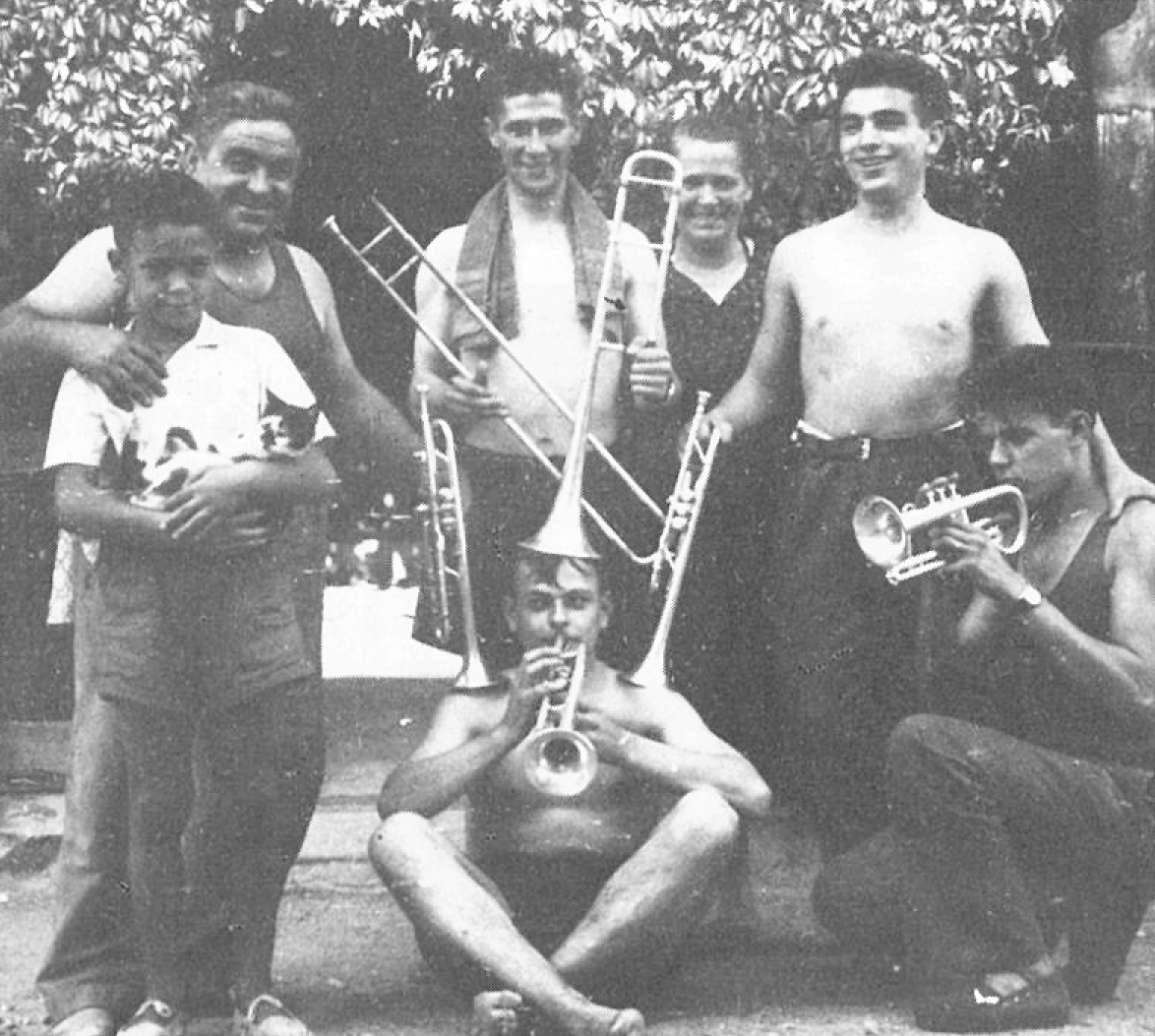
Maurice André: on leave
J.-P. M.: How did the idea of flattening the rim come to you?
M. A.: It came quite easily. We often look for useless complications! I told myself: it's a bit of metal which you put against your lips — neither more nor less. The sharper the rim, the more it cuts into the flesh [laughs]. Therefore the wider the rim, the easier it will be on the lips. But watch out! If it is too wide, then flexibility will suffer. You must give it the right amount! I told myself: the upper lip is the ground on which the house has to be built, i.e. the foundations, since the upper jaw doesn't move. Therefore if it is wider on the upper lip, that wouldn't matter, but the lower part shouldn't be too wide so that the lower lip keeps its flexibility. Finally we got hold of a great trick of simply brasing one rim wider and flatter on the part which is placed on the upper lip. Isn't it stupid! [laughs]?
J.-P. M.: What did you work on with M. Sabarich at the Conservatoire?
The reply to this question and to many others will follow in BRASS BULLETIN 25, in February 1979.
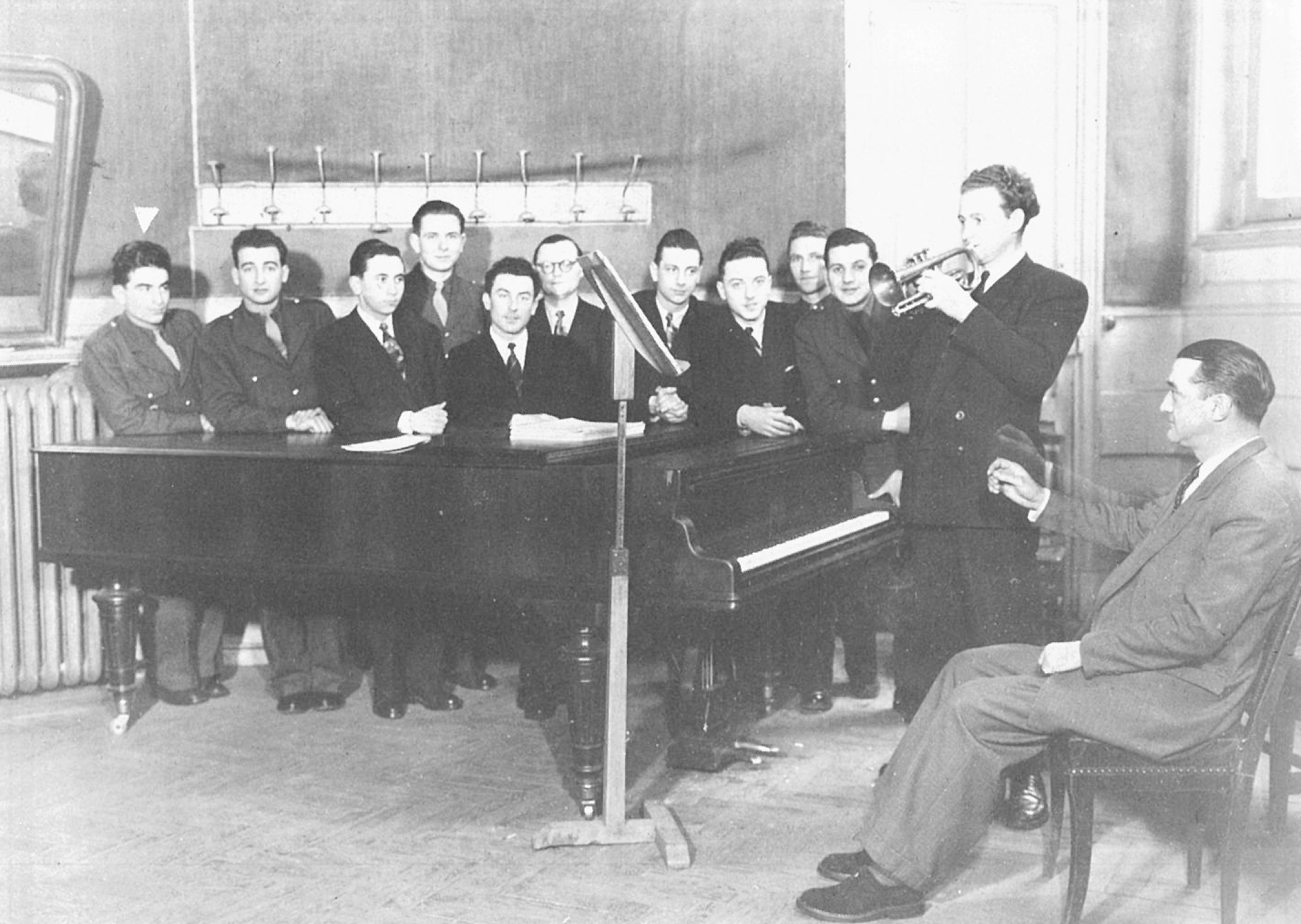
Class with professor Raymond Sabarich