Explore institutional access Explore institutional access

2 min. read

Jean-Baptiste Arban (1825-1889) Biography

His First Twenty Years

Jean-Baptiste Arban (1825-1889) Biography

— What is your name and the place and date of your birth please?
— Joseph Jean-Baptiste Laurent Arban. I was born in Lyon, February 28, 1825. I wish to enter the trumpet class...

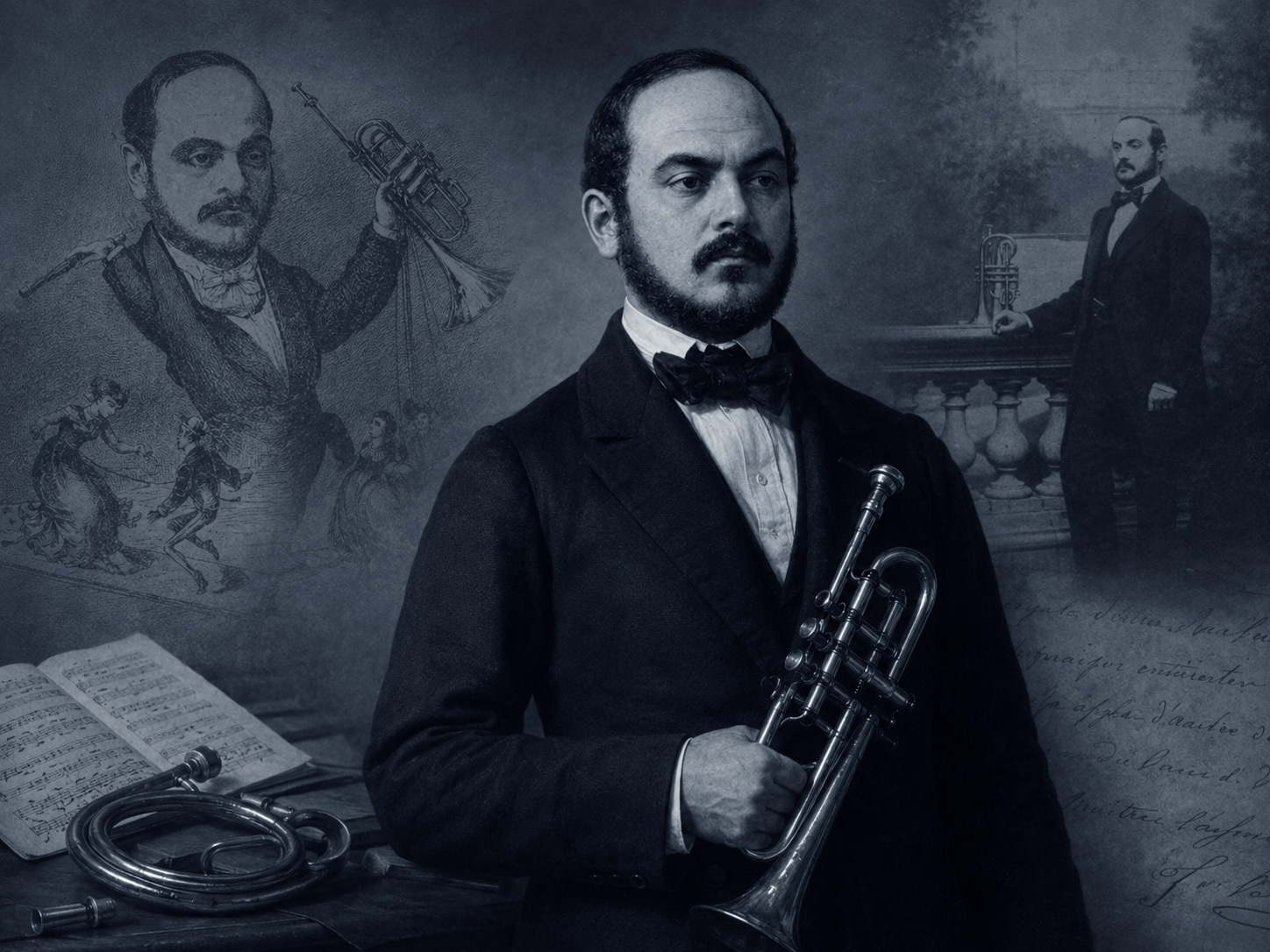
Arban was 16 years and 7 months old when he presented himself at the Paris Conservatoire on September 29, 1841. He is accepted in Professor Dauverné's trumpet class. No doubt he already played his instrument skilfully at that moment, because not even a year later (June 4, 1842) he is granted a leave of 6 months to put himself at the disposition of Monseigneur le Prince de Joinville, who graciously admitted him to his artistical escort during voyages ». Arban will always take care of his good relations with nobility and political authorities. Just about a year later (June 14, 1843) the Conservatoire states that « a leave is granted to Messrs. Mottin and Arban, pupils of Mr. Dauverné's trumpet class, from June 22 until October 1st ». The composer Daniel Auber, who at that period had been director of the Conservatoire for about a year, notes on his list of examinations on Thursday June 22: (Arban) « il ira bien ». There were seven trumpet pupils, of whom Arban was the youngest.

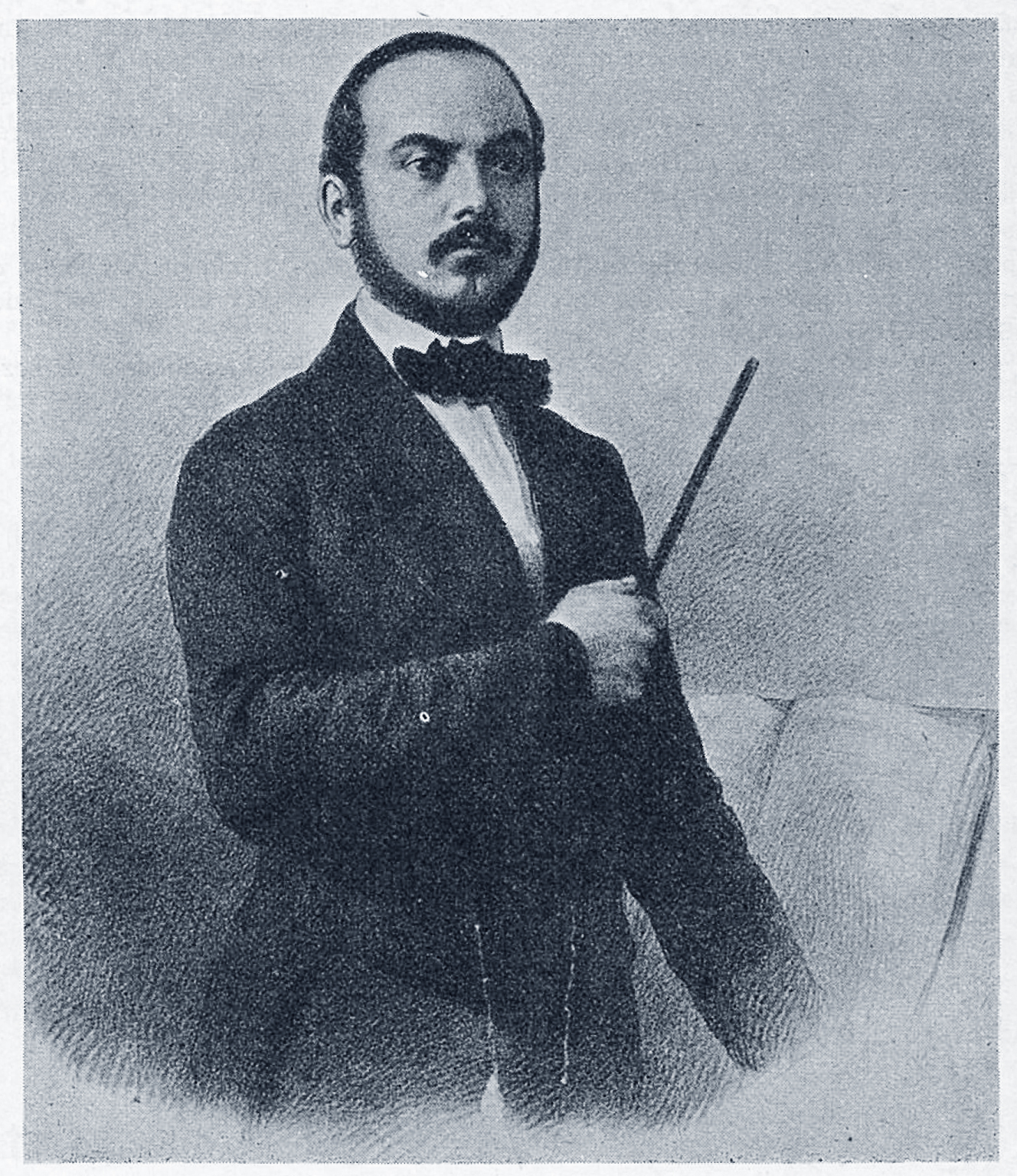
Joseph Jean-Baptiste Laurent Arban. The oldest portrait of the famous cornet virtuoso (and conductor!) at the age of abo...
Joseph Jean-Baptiste Laurent Arban. The oldest portrait of the famous cornet virtuoso (and conductor!) at the age of about 30

Right after his voyage (to London?) Arban begins to prepare himself for the annual trumpet contest, but when auditions start November 16, 1843, he is absent. Auber, who keeps punctilious control, notes in his book that Arban was ill on that day. Arban must have felt quite sure of himself, because next year, in spite of the oncoming examinations, he asks for and is granted another leave on April 20 till July 1st, 1844, to go to London. So again he is absent during the auditions of the 1st semester on June 14, 1844. Yet he is allowed to take part in the contest, owing to an excellent report from his teacher Mr. Dauverné: « Arban: this pupil is doing very well and can be admitted to this year's contest. The director granted him permission to leave for London for business purposes until July 1st ».

On Tuesday December 9, 1844 nineteen year old Arban ascends the Conservatoire platform to present his programme, in particular a composition called « Solo », written by Dauverné expressly for the contest.

This first performance secured him — apparently according to custom — the 2nd prize (first being 24 year old Jean-Jacques Edmond Dubois). These annual trumpet competitions, initiated in 1835, have continued till the present day.

So Arban goes on with his Dauverné lessons: two hours every Monday, Wednesday and Friday. In spite of his eagerness (Arban is very ambitious!), he asks and obtains leave again to go to London (March 27 – July 1st, 1845), which does not prevent him from acquiring the first prize at the contest right afterwards! (second: J. H. L. Cerclier, who succeeded Dauverné as a trumpet teacher after his death in 1869). The only three competitors admitted to the contest were Arban, Cerclier and « Luigini (Etranger) » (sic). The competition piece was again the « Solo » by Dauverné.

N. B. — Reference to documents as well as personal acknowledgments will be found at the end of this series of articles, that will bring to light many fascinating, unpublished documents. I shall however be very grateful for more indications and informations by our readers. Please contact me on the subject as soon as possible at Brass Bulletin address. Thank you! J.-P. M.

Brass Bulletin 9, III / 1974 pages 11–14

All content is protected by copyright © Brass Bulletin 1974–2026

Share this article

Facebook LinkedIn
Loading…

Questions & Answers

How the Digital Edition works

What does the Digital Edition include?

The Digital Edition brings together the articles already digitized as searchable online texts—not simply as scans or PDF files—along with their original illustrations, notes, authorship, issue information, and available translations. Related-article suggestions currently include only this digitized material.

Are the digital articles identical to the originals?

We preserve the original text, language, illustrations, captions, footnotes, and editorial context as faithfully as possible. The presentation is adapted for comfortable online reading, and obvious transcription or scanning errors may be corrected. The substance and character of the published article remain unchanged.

Which languages are available?

Brass Bulletin was published in English, French, and German throughout its history. Italian and Spanish translations were added from issue No. 60 onward.

On the Italian and Spanish sites, articles from issues 1–59 are therefore shown in English by default.

How often are new articles added?

New articles are added almost daily, with approximately one complete issue digitized each week. The pace may vary depending on the preparation, image work, and editorial checking required.

Why aren’t all articles available digitally?

The complete Brass Bulletin collection contains 1,246 articles published between 1971 and 2003. The full index is already available online, allowing readers to discover every article in the collection, including those whose complete text has not yet been digitized.

Digitization began in February 2026. Each article is carefully prepared for online reading, checked, and connected to its issue, authors, subjects, and illustrations. At the current pace of digitization, the complete collection is expected to be available online by February 2028.

Why do some references mention articles that are not available yet?

References in the original articles are preserved even when the material they point to has not yet been digitized. This keeps the historical and editorial record intact. As more issues are added to the Digital Edition, an increasing number of these references will lead to articles that can be read online.

Can I suggest an article or report a transcription error?

Yes. If there is an article you would particularly like to see digitized, or if you notice a possible transcription error or missing detail, please contact us. Reader feedback helps us improve the Digital Edition and prioritize useful connections within the archive.

How can I support Brass Bulletin?

Your support helps fund the preparation, verification, and online publication of the complete collection.

Subscribe to the Digital Edition

Prefer to support us without subscribing?

Make a donation

Search Brass Bulletin.