Discoveries for brass players, once a month. Join our free newsletter →

Horn

All articles related to Horn
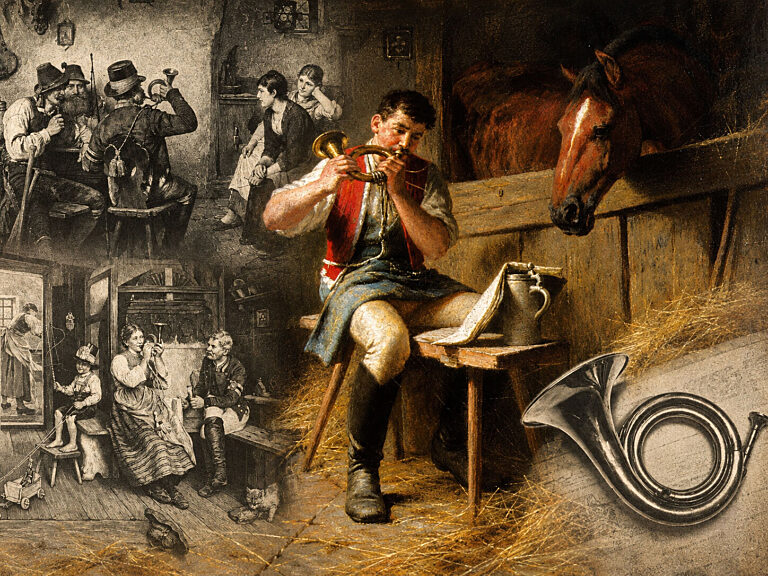
The posthorn of the 19th-century Royal Post Office in the service of folk music
No. 50 • 1985 Digitized

The posthorn of the 19th-century Royal Post Office in the service of folk music

Once a tool of postal signalling, the posthorn became part of Bavaria’s popular musical life, caught between official regulation, practical invention and folk tradition.

By Albert Hiller

History Equipment Historical instruments
No. 76 • 1991 Awaiting digitization

Engelbert Schmid

The magic touch

By Jean-Pierre Mathez

Equipment
No. 104 • 1998 Awaiting digitization

Part 1

Valencia: the natural horn

By Josep Antoni Alberola I Verdu
History
A modern corno da caccia Free
No. 46 • 1984 Digitized

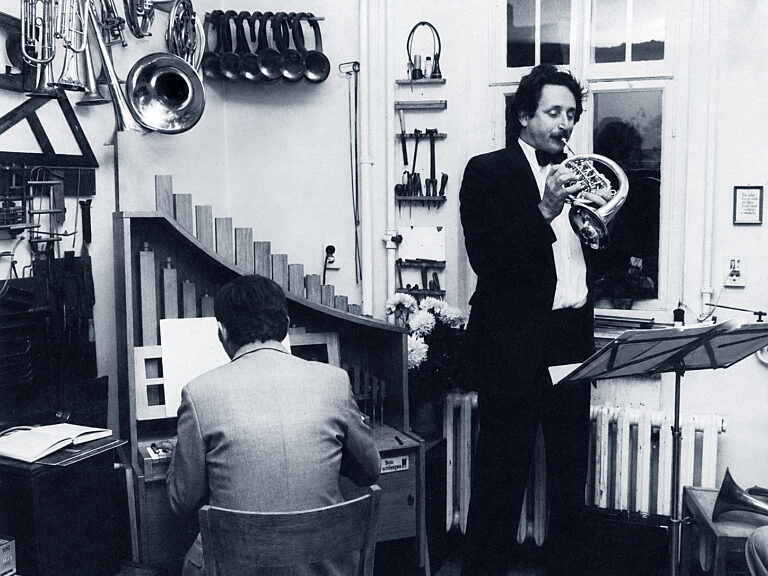
A modern corno da caccia

Bach’s highest horn parts expose a divide between historical sound and modern technique, prompting Friedbert Syhre and Ludwig Güttler to rethink the instrument itself.

By Werner Wolf
Equipment Instrument Makers Historical instruments Instrument making Valves
Vitaly Bujanowsky Free
No. 35 • 1981 Digitized

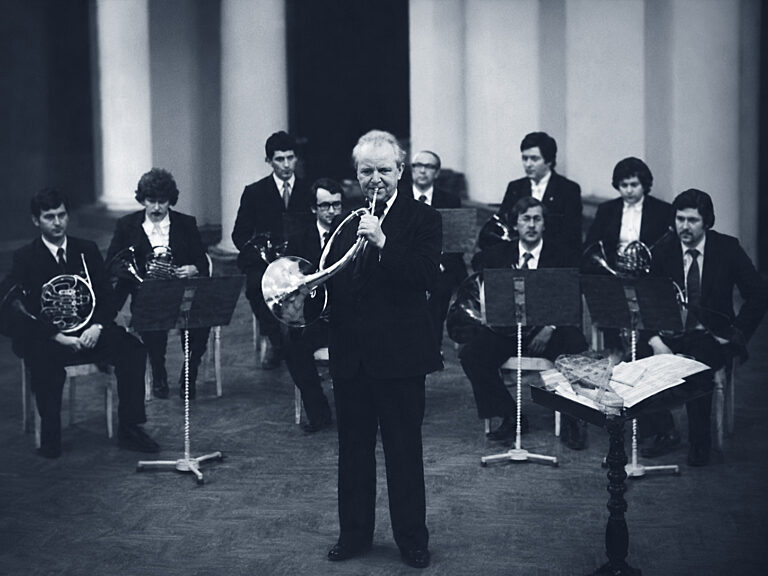
Vitaly Bujanowsky

The world's Golden Horn

Called one of the Soviet school’s finest performers by Shostakovich, Vitaliy Buyanovskiy shaped horn playing through performance, teaching and composition.

By Anatoly Barantsev

Encounters Professional life Russian school Orchestral playing Solo playing
No. 108 • 1999 Awaiting digitization

ARD Munich 1999

Horn Competition

By Brass Bulletin

Competition
Oscillatory Mechanism of the Glotis in Horn Playing
No. 41 • 1983 Digitized

Oscillatory Mechanism of the Glotis in Horn Playing

A horn note may begin before it is heard, as subtle vocal-fold oscillations appear to prepare the airflow that the lips will ultimately shape.

By Philippe-Henri Dejonker, Francis Orval, R. Miller, R. Sneppe
Technique Research Breathing Articulation Sound
My contacts with the United States
No. 17 • 1977 Digitized

Part 2

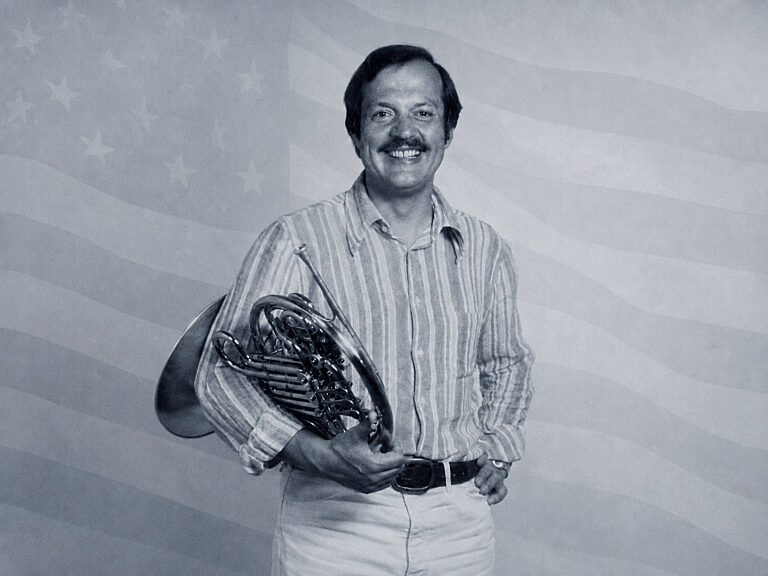
My contacts with the United States

About horns and how to play them

Double horn, descant, natural horn — which path? This article explores American vs German approaches and what it means to train a complete horn player.

By Michael Höltzel

Report Professional life American school German school Sociology
My new developed descant double horn Free
No. 13 • 1976 Digitized

My new developed descant double horn

Why does the ideal horn not exist? Theo Westhof designs a new descant double horn to solve tuning and tone issues—without compromise.

By Theo Westhof
Equipment Instrument making Valves Intonation
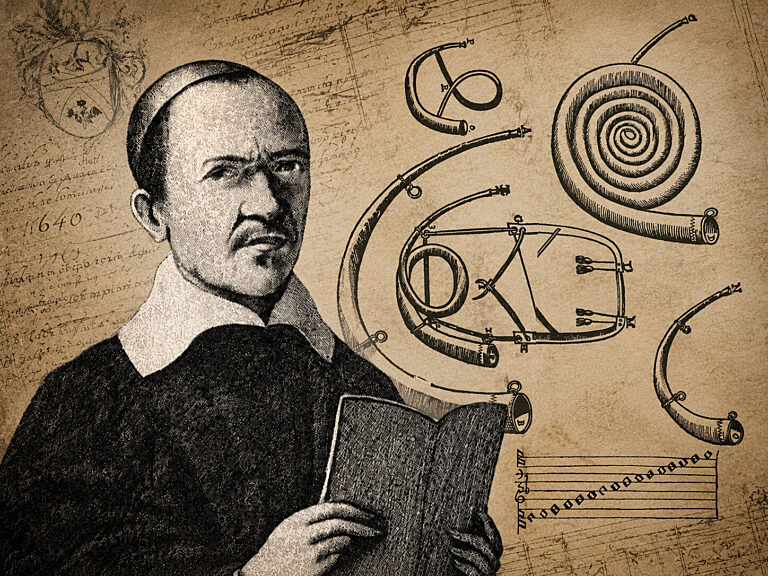
On hunting horns and other similar instruments
No. 47 • 1984 Digitized

On hunting horns and other similar instruments

From Pierre Trichet’s Traité des Instruments de Musique (c. 1640)

Hunting horns, buccinae and cornets blur into one another as Trichet links ancient signals, shepherds, hunters and myth to the instruments of his own age.

By Pierre Trichet
History Equipment Historical instruments
The first european horn symposium Free
No. 33 • 1981 Digitized

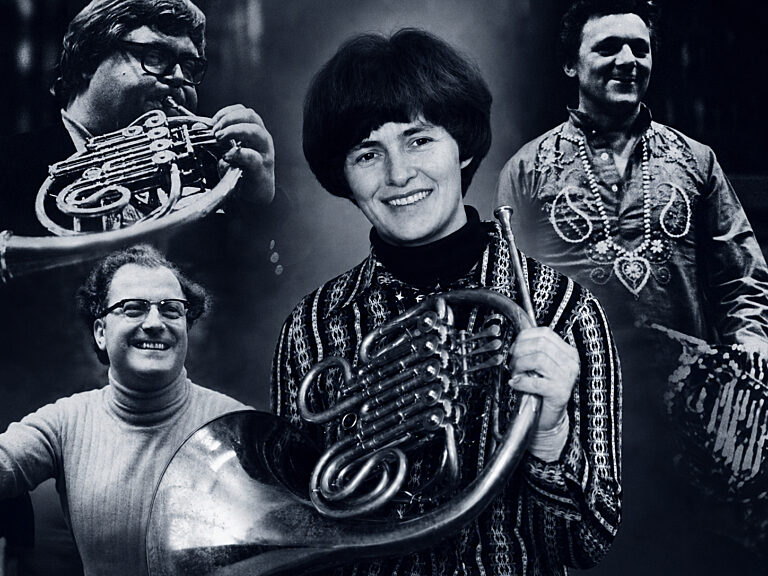
The first european horn symposium

A week in Trossingen brought leading horn players, Mozart debates, natural-horn controversies and lasting friendships at a landmark European gathering.

By Jeffrey Agrell
Event Report Interpretation Contemporary Music Brass Ensemble
Zen and the Art of Horn playing
No. 29 • 1980 Digitized

Part 4

Zen and the Art of Horn playing

From meditation to distance running, horn playing becomes a way of quieting mental noise, linking breath, concentration, and daily life.

By Jeffrey Agrell
Health Nerves Breathing Ideas
Instrument Makers in USA
No. 52 • 1985 Digitized

Part 4

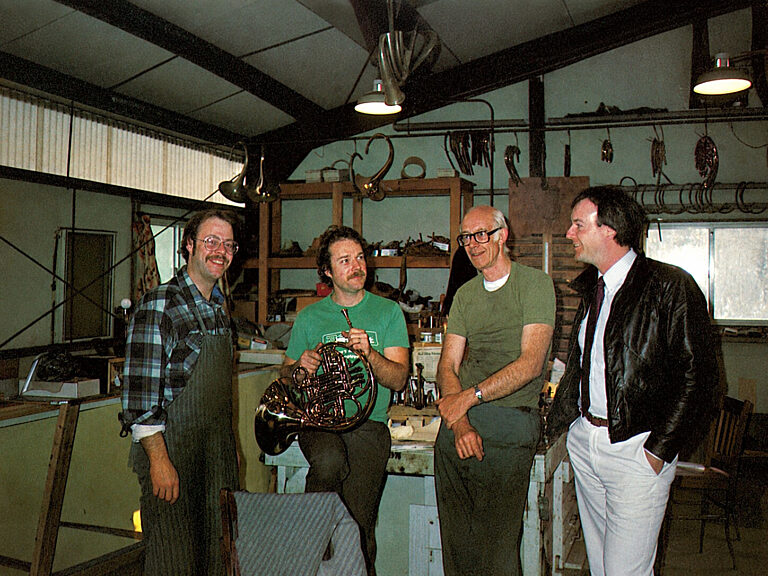
Instrument Makers in USA

Lawson Horns

Walter Lawson built horns by testing alloys, valves and leadpipes with unusual precision, while keeping craftsmanship, musicians and acoustics closely connected.

By Stephan Suter

Equipment Instrument Makers Instrument making
No. 119 • 2002 Awaiting digitization

Investing in musical excellence - Hornclass international 2001

By Zdenek Divoky
Report
The F/Bb horn with whole-tone ascending 3rd valve
No. 11 • 1975 Digitized

The F/Bb horn with whole-tone ascending 3rd valve

A different horn, a different approach: Francis Orval explores how an ascending 3rd valve reshapes technique, intonation and response.

By Francis Orval

Technique Equipment Valves Intonation
Loading…

Questions & Answers

How the Digital Edition works

What does the Digital Edition include?

The Digital Edition brings together the articles already digitized as searchable online texts—not simply as scans or PDF files—along with their original illustrations, notes, authorship, issue information, and available translations. Related-article suggestions currently include only this digitized material.

Are the digital articles identical to the originals?

We preserve the original text, language, illustrations, captions, footnotes, and editorial context as faithfully as possible. The presentation is adapted for comfortable online reading, and obvious transcription or scanning errors may be corrected. The substance and character of the published article remain unchanged.

Which languages are available?

Brass Bulletin was published in English, French, and German throughout its history. Italian and Spanish translations were added from issue No. 60 onward.

On the Italian and Spanish sites, articles from issues 1–59 are therefore shown in English by default.

How often are new articles added?

New articles are added almost daily, with approximately one complete issue digitized each week. The pace may vary depending on the preparation, image work, and editorial checking required.

Why aren’t all articles available digitally?

The complete Brass Bulletin collection contains 1,246 articles published between 1971 and 2003. The full index is already available online, allowing readers to discover every article in the collection, including those whose complete text has not yet been digitized.

Digitization began in February 2026. Each article is carefully prepared for online reading, checked, and connected to its issue, authors, subjects, and illustrations. At the current pace of digitization, the complete collection is expected to be available online by February 2028.

Why do some references mention articles that are not available yet?

References in the original articles are preserved even when the material they point to has not yet been digitized. This keeps the historical and editorial record intact. As more issues are added to the Digital Edition, an increasing number of these references will lead to articles that can be read online.

Can I suggest an article or report a transcription error?

Yes. If there is an article you would particularly like to see digitized, or if you notice a possible transcription error or missing detail, please contact us. Reader feedback helps us improve the Digital Edition and prioritize useful connections within the archive.

How can I support Brass Bulletin?

Your support helps fund the preparation, verification, and online publication of the complete collection.

Subscribe to the Digital Edition

Prefer to support us without subscribing?

Make a donation

How is the digitization progressing?

We’re gradually making the Brass Bulletin available online, article by article. You can read newly digitized articles as soon as they’re ready, even before an entire issue is complete.

Visit our Digitization Roadmap to browse recent additions and see estimated availability for upcoming issues. These estimates follow our recent pace and may change.

Search Brass Bulletin.