10 min. read
My contacts with the United States
About horns and how to play them
Part II: About horns and how to play them...
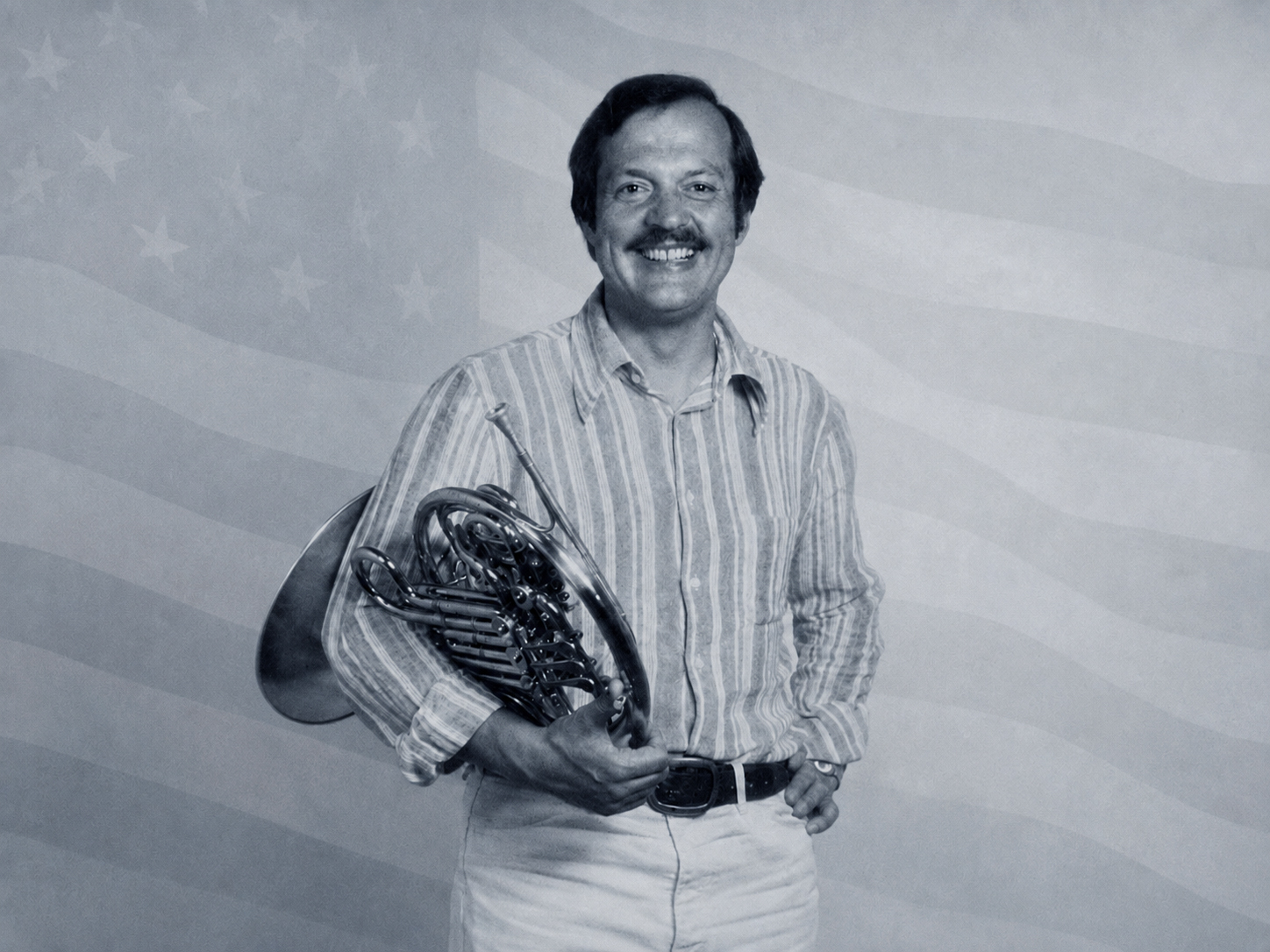
If I speak of the “American way of blowing the horn”, many a horn player will think it an undue exaggeration: those from the East Coast have quite a different way of blowing from those in the West! In a way that is true, but only in a way, because the difference of blowing is comparable with the difference of dialects of one and the same language. Being a foreigner, it was just as difficult for me to distinguish between the various dialects of the American language as it was to distinguish between the various “dialects of American horn playing”.
Philip Farkas’ opinion is that the American style is nothing but the continuation of the good old German school, which was brought over by famous emigrants like Bruno Jaenicke and Anton Horner. Their innumerable pupils established themselves in different parts of the US, continuing their own personal development but, on the whole, remaining true to their master’s instruction. Their main tonal model was the sound of the old Kruspe and Schmidt horns. Then there is Carl Geyer — also an emigrant — who for seventy years made the loveliest horns in Chicago and whose instruments, together with those of Kruspe and Schmidt, are much sought after and highly valued.
As a rule — with few exceptions — all American hornists blow a double horn. And on that double horn almost each one of them plays the F horn as far as g'' (sounding c'') and only from then on the B♭ horn. This technique is used with such consistency that, when playing semiquavers in the middle register, the thumb becomes the main actor, which sometimes impairs the elegance of tone. But, generally speaking, the system makes it possible to obtain a high degree of well-balanced homogeneity of tone.
I highly esteem the Americans’ faithfulness to the double horn, and I do wish that some of the solo hornists (even the low ones!) in our German orchestras would get cured of their high-F-horn neurosis and — at least in the romantic symphonies that live off the large-horn tone — would blow a “real” horn⁴. On the other hand, I would advise the Americans to stop using the double horn for the entire horn literature. Bach’s 1st Brandenburg concerto and similar high parts of Baroque music will always sound too heavy and too clumsy on a Conn, Holton or King, even if all superfluous slides and valve covers are removed (not to speak of the risks one takes). Such parts ought to be blown on a descant horn; therefore, that horn should also be part of the American hornist’s instrumental outfit.
Brass Bulletin 17, I / 1977 pages 15–25
All content is protected by copyright © Brass Bulletin 1977–2026