Ofrezca Brass Bulletin en su universidad, conservatorio o biblioteca Descubra el acceso institucional

3 min de lectura

Trombone workshops

Trombone workshops

This past year I have visited and participated in many “trombone workshops”. These workshops are becoming more and more common these days: most of them are sporadic events following the International Trombone Workshop idea. This original workshop has been held annually in Nashville, Tennessee, since 1971 and the International Trombone Association was in fact a by-product of the first one.

The idea of instrumentalists getting together is probably most characteristic of brass players. The reasons for this phenomenon are varied, I am sure, and could supply material for a long research project which I would like to leave for another occasion. The fact is that the will to get together and exchange knowledge has led to the organisation of these special events.

In what follows I would like to describe in detail some workshops I attended this past year.

In Nashville, one tries to invite many players from all different areas of music (symphonic, jazz, commercial recordings, solo, etc.) and from different schools of playing. In this way, the workshop becomes a meeting and of interest not only to those coming to listen but also to those coming to play (and talk). In Nashville one could say there was almost too much:

  • Two different master classes daily. Here one has an hour where the invited player expounds his approach to playing. He can do it in any of the following ways: a recital, a lecture, answering questions or in teaching (the conventional “master class” notion). These sessions, held by small groups, permit an initial contact which could be further developed.
  • Special sessions. Lectures (with or without music) in bigger groups on various subjects: historical, acoustic, teaching, repertoire, etc.
  • Concerts. These could have a variety of styles and idioms from classical to avant-garde, jazz or free improvisation.

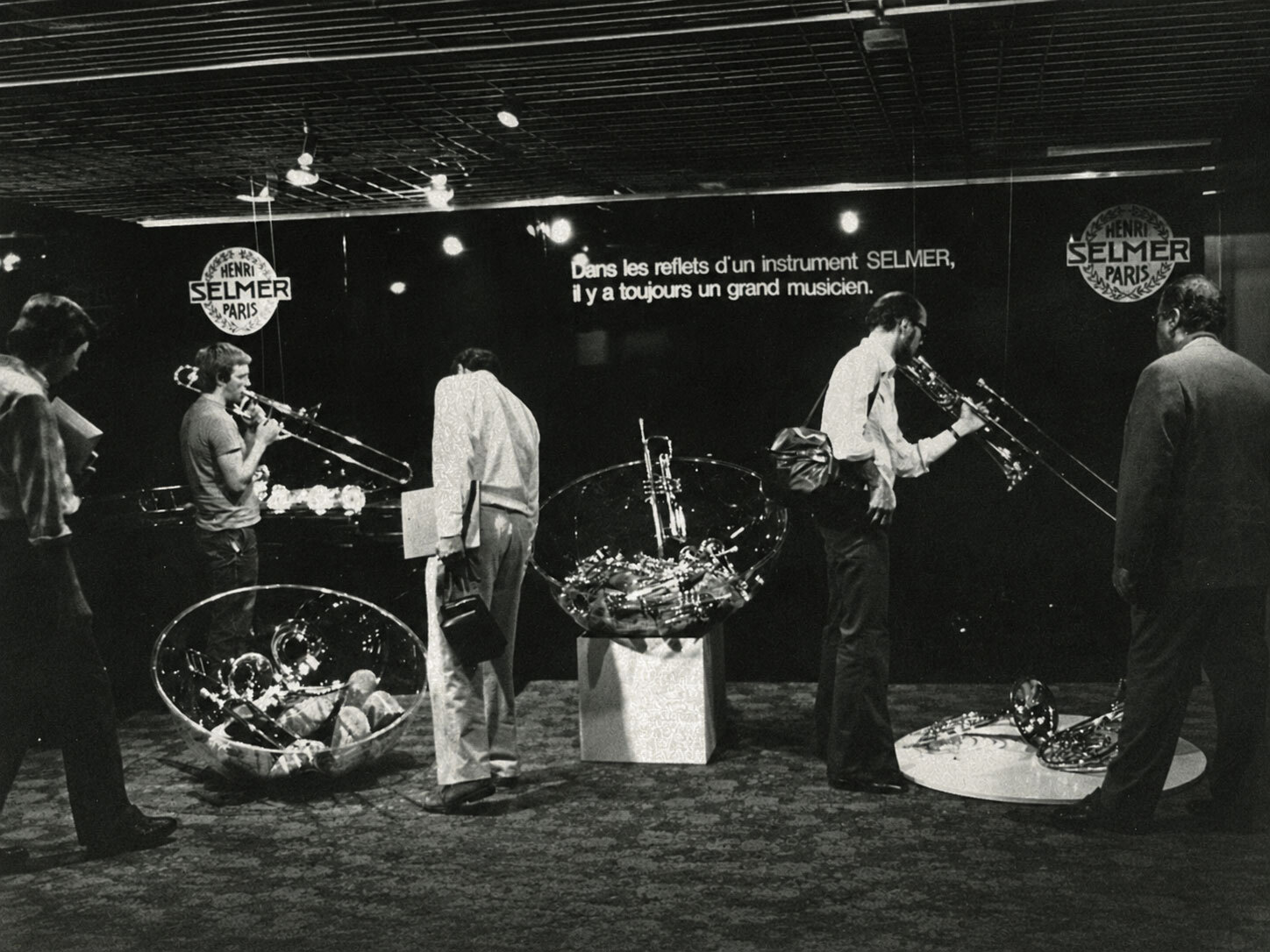
All these sessions follow one another so fast that there is no time to stop and think for a moment. Fortunately, they are recorded professionally¹ and available immediately afterwards. This is of interest to the participants as well as to people who were prevented from coming to the workshop. There are also peripheral activities such as chamber music, private lessons with a “star” you never dreamed of meeting, visiting the instrumental exhibition with its new products or expounding your own ideas of playing to other people.

The main problem of course is organisation. Finding a venue for all the events, for practice rooms, for sleeping and eating accommodation and a good efficient team to support all the crazy problems that are bound to occur. The artistic programme is not easy either: finding the right personalities with a reasonable mixture of old and new. This is valid for the concerts too. As far as finance is concerned, teachers in Nashville usually have only their expenses covered. This creates a good feeling all round; people come because they find it a privilege to participate and benefit personally.

Credit should go to Tom Everett, the workshop coordinator, for its success but one must not forget the contribution of the excellent team and the willing participants.

In October 1984 the first Danish workshop took place near Copenhagen at the initiative of Carsten Svanberg. It was similar to the American pattern but in smaller proportions: two days long, with a few teachers. Nevertheless, the quality of this workshop was extremely high.

One should bear in mind that these two workshops were geared to a professional audience. Therefore it would seem preferable to have a suburban setting where the participants are 100% available for all activities.

The “International Trombone and Tuba Week” which was held in Metz in June was different as far as this aspect is concerned. The site is a regional capital in eastern France known for its musical activities. All the events were held in the city and were therefore available to the general public. The musical programme was highly interesting, more concert-oriented (perhaps often too long), but the anticipated audience did not materialise. Publicity appeared too late and people outside France didn’t know of such an important event till a short time before.

The workshop was again a one-man initiative. Gilles Senon, the local trombone teacher, took advantage of the fact that this was “European Music Year” and therefore financial assistance from the Council of Europe was available to realize a personal dream.

Artistically, the programme was superb and it was possible to find internationally known teachers. Unfortunately there were not enough participants for such a big event, the local audience wasn’t sufficiently enthusiastic and even the focus of some teachers was surprisingly financially oriented... Regrettably so, since these workshops are important from the human and personal aspect as well as the musical one.

The common denominator between all these workshops was the consistently high quality and vast artistic programmes which made them unquestionably beneficial to all participants.

Notes

¹ Audio Village, Box 291, Bloomington IN 47402, USA.

Brass Bulletin 52, IV / 1985 páginas 67–69

Todo el contenido está protegido por derechos de autor © Brass Bulletin 1985–2026

Compartir este artículo

Facebook LinkedIn
Cargando…

Preguntas y respuestas

Cómo funciona la edición digital

¿Qué incluye la edición digital?

La edición digital reúne los artículos ya digitalizados como textos legibles y consultables en línea —no simplemente como escaneos o archivos PDF— junto con sus ilustraciones originales, notas, autoría, información del número y traducciones disponibles. Las sugerencias de artículos relacionados incluyen actualmente solo este material digitalizado.

¿Los artículos digitales son idénticos a los originales?

Conservamos con la mayor fidelidad posible el texto original, el idioma, las ilustraciones, los pies de imagen, las notas y el contexto editorial. La presentación se adapta para facilitar la lectura en línea y pueden corregirse errores evidentes de transcripción o escaneado. El contenido y el carácter del artículo publicado permanecen inalterados.

¿Qué idiomas están disponibles?

Brass Bulletin se publicó en inglés, francés y alemán a lo largo de toda su historia. Las traducciones al italiano y al español se añadieron a partir del número 60. Por este motivo, en los sitios italiano y español los artículos de los números 1 a 59 se muestran en inglés de forma predeterminada.

¿Con qué frecuencia se añaden nuevos artículos?

Se añaden nuevos artículos casi a diario, con aproximadamente un número completo digitalizado cada semana. El ritmo puede variar según el trabajo de preparación, tratamiento de imágenes y revisión editorial necesario.

¿Por qué no están disponibles todos los artículos en formato digital?

La colección completa de Brass Bulletin contiene 1.246 artículos publicados entre 1971 y 2003. El índice completo ya está disponible en línea y permite descubrir todos los artículos de la colección, incluidos aquellos cuyo texto íntegro todavía no ha sido digitalizado.

La digitalización comenzó en febrero de 2026. Cada artículo se prepara cuidadosamente para la lectura en línea, se revisa y se vincula con su número, sus autores, sus temas y sus ilustraciones. Al ritmo actual de digitalización, se prevé que la colección completa esté disponible en línea en febrero de 2028.

¿Por qué algunas referencias mencionan artículos que todavía no están disponibles?

Las referencias de los artículos originales se conservan aunque el material al que remiten aún no haya sido digitalizado. De este modo se mantiene intacto el contexto histórico y editorial. A medida que se incorporen más números a la edición digital, un número creciente de estas referencias conducirá a artículos que podrán leerse en línea.

¿Puedo sugerir un artículo o informar de un error de transcripción?

Sí. Si hay algún artículo que le gustaría especialmente ver digitalizado, o si detecta un posible error de transcripción o algún dato que falta, póngase en contacto con nosotros. Los comentarios de los lectores nos ayudan a mejorar la edición digital y a establecer prioridades útiles dentro del archivo.

¿Cómo puedo apoyar a Brass Bulletin?

Su apoyo ayuda a financiar la preparación, verificación y publicación en línea de la colección completa.

Suscríbase a la Edición Digital

¿Prefiere apoyarnos sin suscribirse?

Haga una donación

¿Cómo avanza la digitalización?

Estamos poniendo Brass Bulletin a disposición de los lectores en línea, artículo por artículo. Pueden leer los artículos recién digitalizados en cuanto estén listos, incluso antes de que se complete un número entero.

Consulten nuestro calendario de digitalización para descubrir las últimas novedades y las fechas estimadas de disponibilidad de los próximos números. Estas estimaciones se basan en nuestro ritmo reciente y pueden cambiar.

Busca en Brass Bulletin.