Ofrezca Brass Bulletin en su universidad, conservatorio o biblioteca Descubra el acceso institucional

3 min de lectura

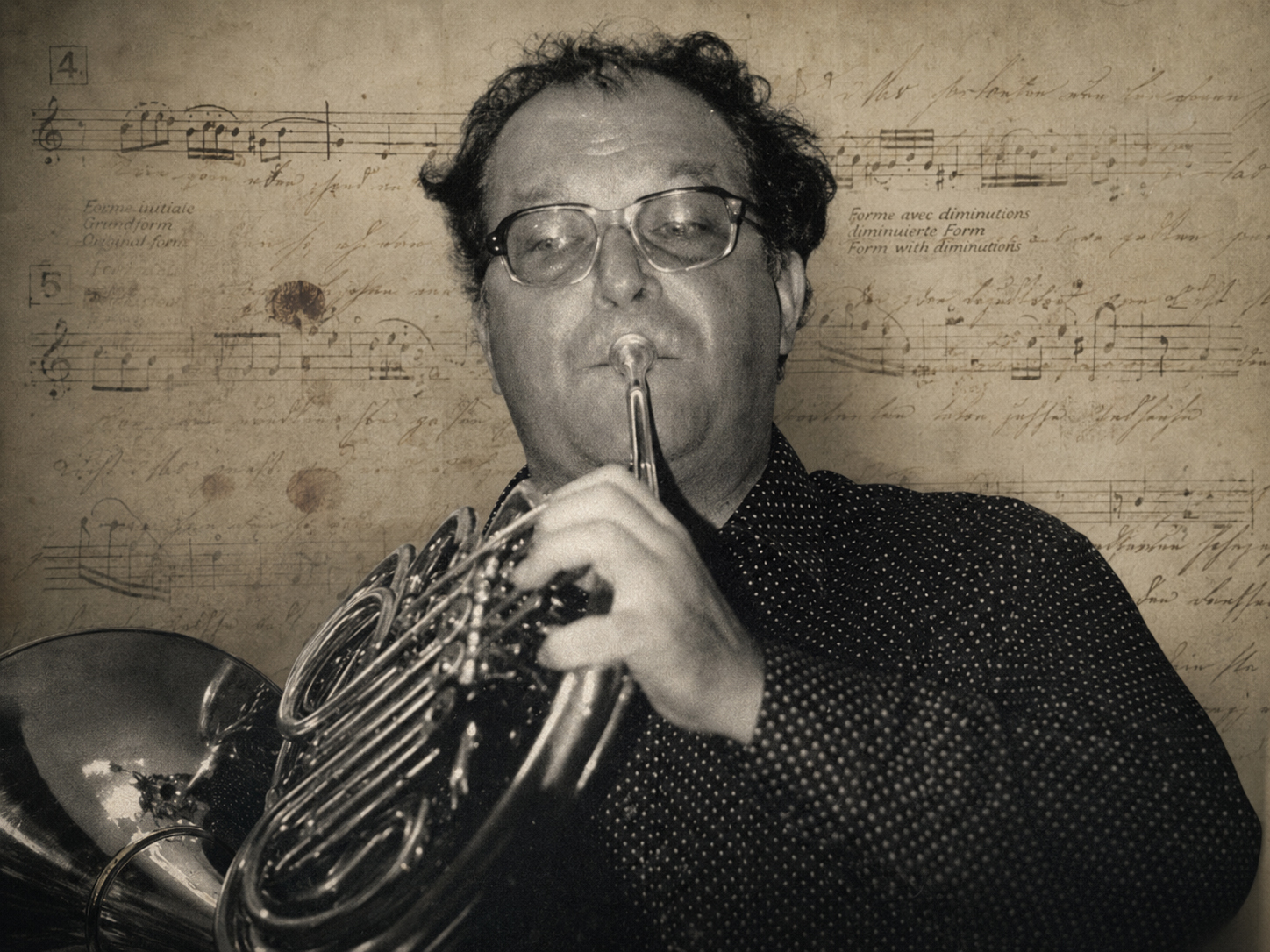
Ornaments in 18th-century Horn Concertos?

Parte 1

Por Peter Damm

Performance once depended as much on informed invention as on written notes, and early horn concertos still carry that forgotten freedom in plain sight.
Ornaments in 18th-century Horn Concertos?

This question, although perhaps slightly provocative, is not unreasonable. Too little is known about the subject.

The ignorance of a music critic who, in a performance of the concerto by Peter Johann Fick, expected more "virtuoso decoration" (which had actually been played, stylistically closely adapted to the piece and to the technical capabilities of the Baroque horn); and the question, directed at a student, "Where do the trills and so on come from which aren't in the music?" — these things were the reason for a lecture, with demonstration on a natural horn, given at the Eighth Scientific Work Conference in 1980 in Blankenburg, in the Harz mountains (East Germany).

The problems of performance and interpretation of 18th-century music are frequently discussed at symposiums and conferences. The fact that the horn has never been at the centre of such discussions is because it found its way into art music relatively late, at a time when keyboard, woodwind and string instruments held the field. Similarly, there were high-quality textbooks for these instruments whereas J.E. Altenburg's Experimental Introduction to the [...] Art of the Trumpeter appeared quite late as a brass instrument textbook of the time, based on other teaching works. Most of the very detailed textbooks are described as "experimental". They make no claim to completeness for the subject is inexhaustible. It was my intention to give some stimulus to discussion of the material, and hints on the much more basic sources.

Whereas present-day musicians are accustomed to transforming the printed notes conscientiously, without additions or alterations, into music, this detailed fixing of music did not exist until the 18th century. It was only after the middle of the 18th century that composers began to an increasing extent to specify the interpretation of their works by giving precise performance instructions. Until then the text had served as a framework or skeleton which the musician could fill out in an individual and creative way thanks to his comprehensive knowledge of performance possibilities. Such performing practice is a kind of improvisation. The art of ornamenting a piece of music shows a musician's skill and ability. Aids to ornamentation are the so-called "essential ornaments" and "deliberate divisions" («wesentliche Manieren» and «Willkürliche Veränderungen»). In his Essay on the true art of keyboard playing, C.P.E. Bach says of ornaments, "They link the notes together; they bring them alive [...] give them [...] weight and emphasis [...] make them pleasant; [...] a mediocre composition can be improved by their use."¹

Being able to ornament a word satisfactorily requires, in addition to great technical skill on the instrument, comprehensive theoretical knowledge: things which to some extent can be taught, and learned. Plenty of imagination and a thorough knowledge of style are also necessary, however, for the latter largely determines when and where ornaments can be used.

"Trying to decorate a work with ornaments and variations before one has learned to play in time and in tune is like trying to paint before one has mastered the principles of draughtmanship."²

Eighteenth-century students found valuable advice on the "art of ornamentation" in the textbooks of Johann Joachim Quantz, Carl Philipp Emanuel Bach and Leopold Mozart, to mention the most influential.

Continue reading

Accede a la edición digital completa.

Brass Bulletin 42, II / 1983 páginas 12–15

Todo el contenido está protegido por derechos de autor © Brass Bulletin 1983–2026

Compartir este artículo

Facebook LinkedIn
Cargando…

Preguntas y respuestas

Cómo funciona la edición digital

¿Qué incluye la edición digital?

La edición digital reúne los artículos ya digitalizados como textos legibles y consultables en línea —no simplemente como escaneos o archivos PDF— junto con sus ilustraciones originales, notas, autoría, información del número y traducciones disponibles. Las sugerencias de artículos relacionados incluyen actualmente solo este material digitalizado.

¿Los artículos digitales son idénticos a los originales?

Conservamos con la mayor fidelidad posible el texto original, el idioma, las ilustraciones, los pies de imagen, las notas y el contexto editorial. La presentación se adapta para facilitar la lectura en línea y pueden corregirse errores evidentes de transcripción o escaneado. El contenido y el carácter del artículo publicado permanecen inalterados.

¿Qué idiomas están disponibles?

Brass Bulletin se publicó en inglés, francés y alemán a lo largo de toda su historia. Las traducciones al italiano y al español se añadieron a partir del número 60. Por este motivo, en los sitios italiano y español los artículos de los números 1 a 59 se muestran en inglés de forma predeterminada.

¿Con qué frecuencia se añaden nuevos artículos?

Se añaden nuevos artículos casi a diario, con aproximadamente un número completo digitalizado cada semana. El ritmo puede variar según el trabajo de preparación, tratamiento de imágenes y revisión editorial necesario.

¿Por qué no están disponibles todos los artículos en formato digital?

La colección completa de Brass Bulletin contiene 1.246 artículos publicados entre 1971 y 2003. El índice completo ya está disponible en línea y permite descubrir todos los artículos de la colección, incluidos aquellos cuyo texto íntegro todavía no ha sido digitalizado.

La digitalización comenzó en febrero de 2026. Cada artículo se prepara cuidadosamente para la lectura en línea, se revisa y se vincula con su número, sus autores, sus temas y sus ilustraciones. Al ritmo actual de digitalización, se prevé que la colección completa esté disponible en línea en febrero de 2028.

¿Por qué algunas referencias mencionan artículos que todavía no están disponibles?

Las referencias de los artículos originales se conservan aunque el material al que remiten aún no haya sido digitalizado. De este modo se mantiene intacto el contexto histórico y editorial. A medida que se incorporen más números a la edición digital, un número creciente de estas referencias conducirá a artículos que podrán leerse en línea.

¿Puedo sugerir un artículo o informar de un error de transcripción?

Sí. Si hay algún artículo que le gustaría especialmente ver digitalizado, o si detecta un posible error de transcripción o algún dato que falta, póngase en contacto con nosotros. Los comentarios de los lectores nos ayudan a mejorar la edición digital y a establecer prioridades útiles dentro del archivo.

¿Cómo puedo apoyar a Brass Bulletin?

Su apoyo ayuda a financiar la preparación, verificación y publicación en línea de la colección completa.

Suscríbase a la Edición Digital

¿Prefiere apoyarnos sin suscribirse?

Haga una donación

¿Cómo avanza la digitalización?

Estamos poniendo Brass Bulletin a disposición de los lectores en línea, artículo por artículo. Pueden leer los artículos recién digitalizados en cuanto estén listos, incluso antes de que se complete un número entero.

Consulten nuestro calendario de digitalización para descubrir las últimas novedades y las fechas estimadas de disponibilidad de los próximos números. Estas estimaciones se basan en nuestro ritmo reciente y pueden cambiar.

Busca en Brass Bulletin.