Explore institutional access →

3 min. read

The 1986 I.T.G. Conference

A personal view

The 1986 I.T.G. Conference

Any international gathering of three hundred trumpeters cannot but be successful. It should also be an opportunity to advance the art.

The 1986 ITG Conference was held in the architecturally uninspiring Guildhall School of Music and Drama in London. The ITG, despite its name, is essentially an American organisation and the chance given by holding a conference in Europe of widening the membership base to become truly international was not unfortunately taken.

The most important aspect of any such conference must be music, and we should not lose sight of the fact that the trumpet is no more than a tool to achieve music. Conference events in which music and musicianship were the theme were, unfortunately too few.

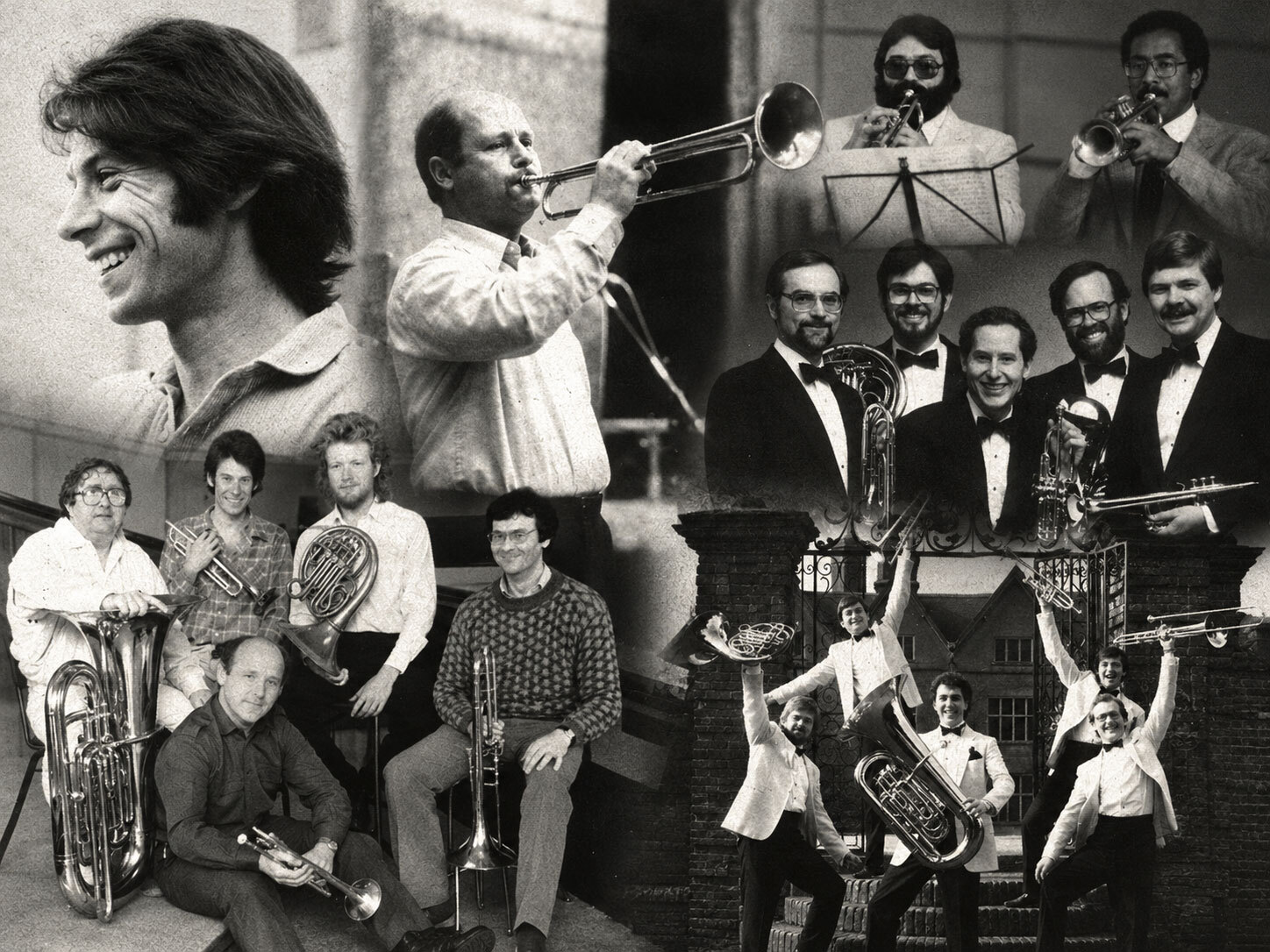
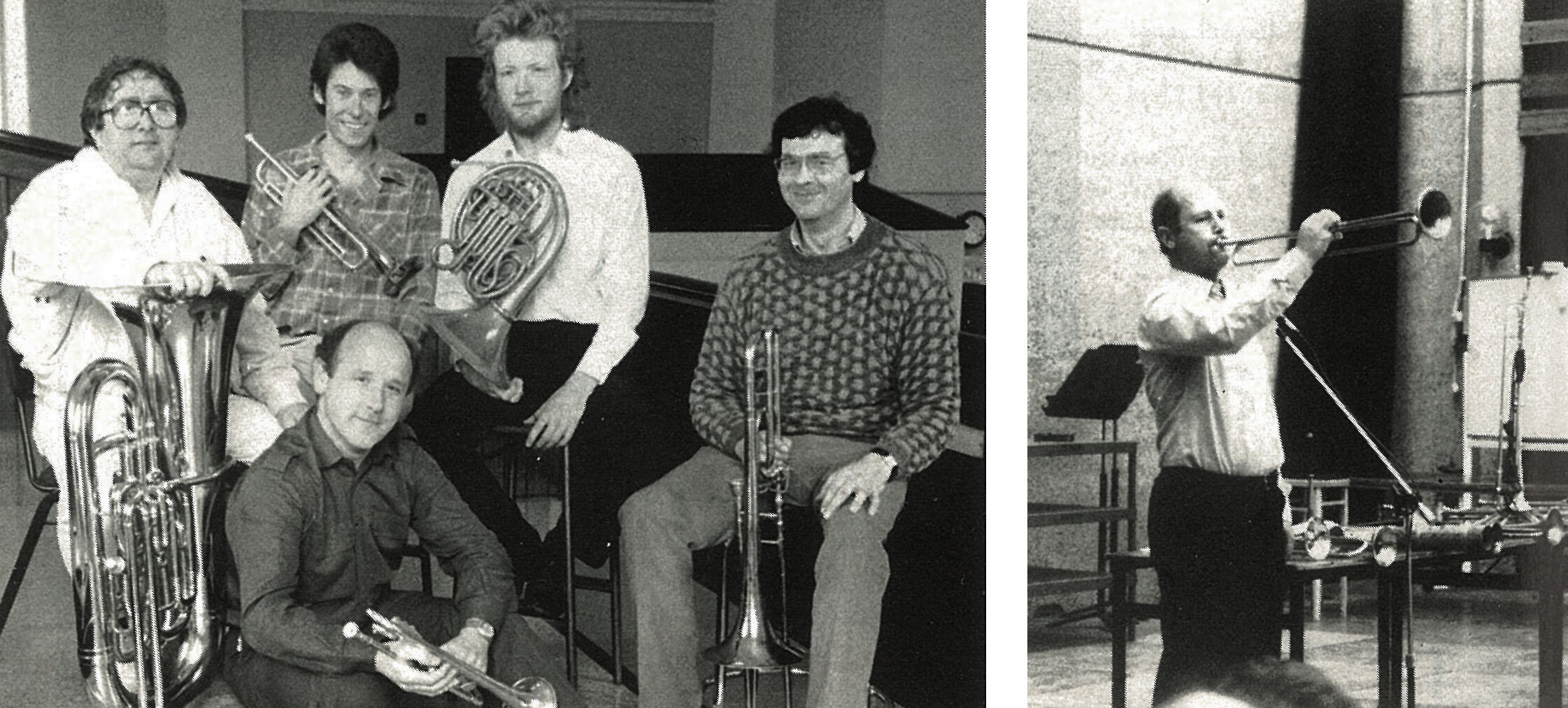
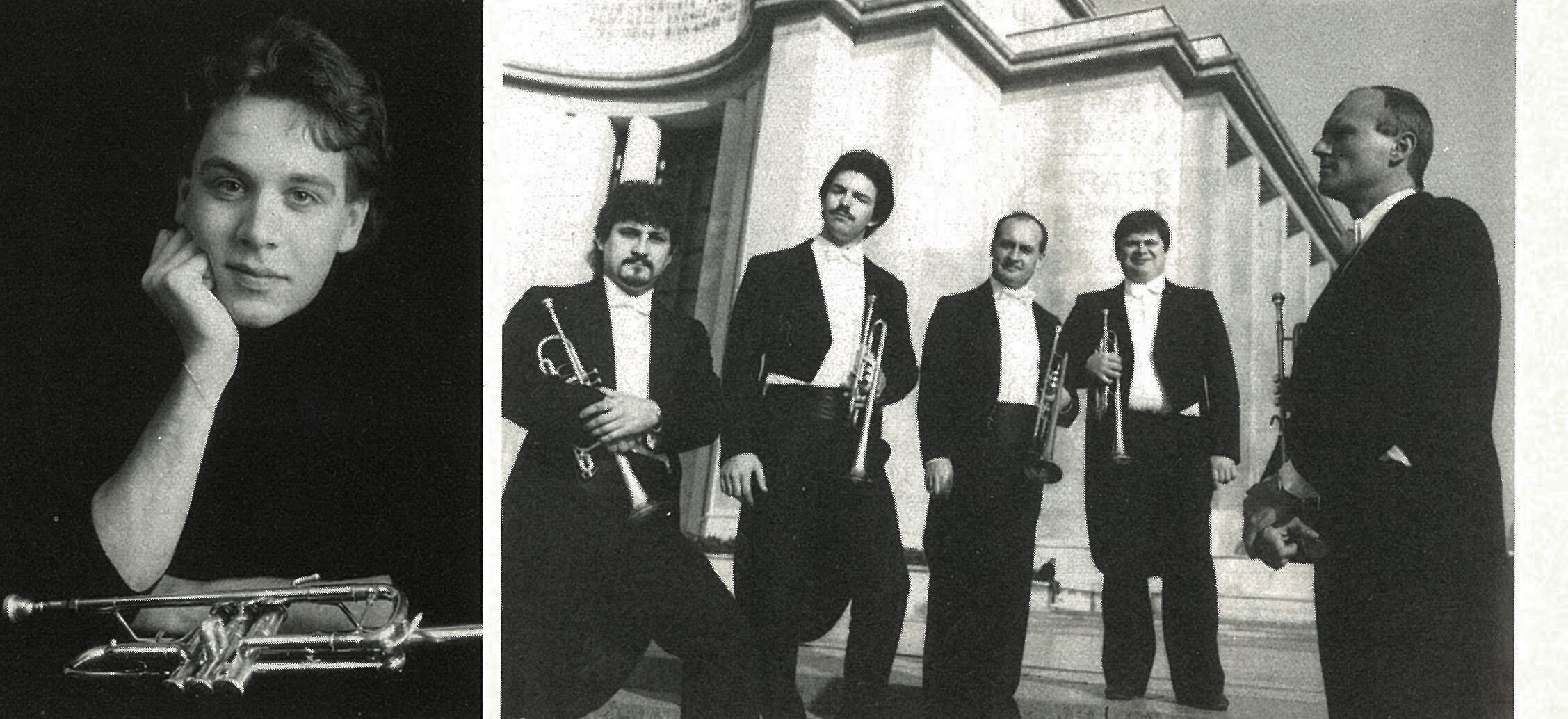
Equale Brass – Crispian Steele-Perkins

Equale Brass – Crispian Steele-Perkins

Gaeton Berton, Professor of Trumpet at Tours Conservatoire, demonstrated the deep musical tradition of the French school in a recital which included Enesco’s “Legende” and works by Bozza, Ibert and Hubeau. Musicianship and interpretation were profound, and he suppressed any technical difficulties in a recital which was stylish and assured and showed the fruits of thought and experience.

Hakan Hardenberger delivered a dazzling performance of twentieth century music and managed what so few can do with this music, which is to make it interesting to listen to. His recent successes at Toulon, Geneva, Paris and Munich are richly deserved.

London Ophicleide Ensemble – Gaetan Berton

London Ophicleide Ensemble – Gaetan Berton

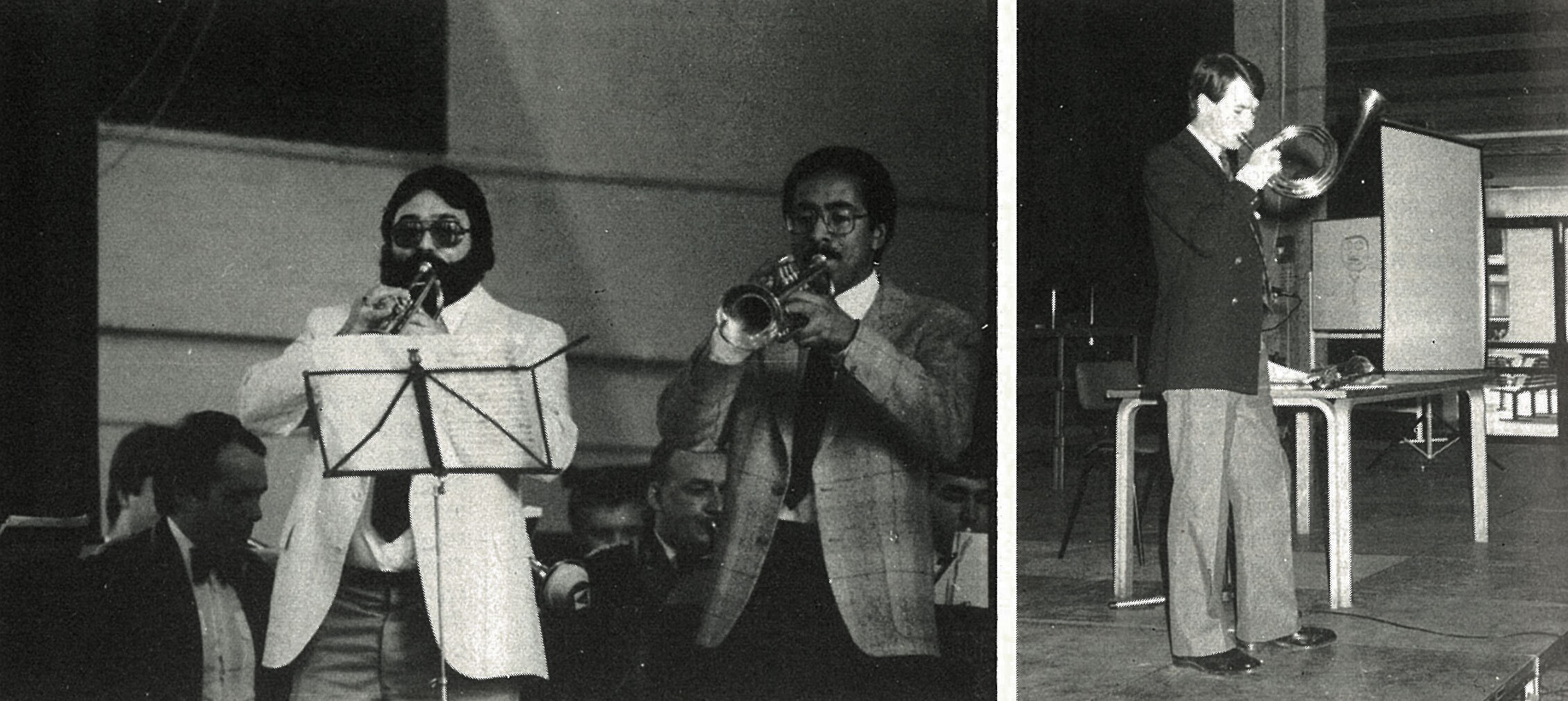
Vincent DiMartino and Manny Laureano at Black Dyke Mills Band Concert – Graham Nicholson
Vincent DiMartino and Manny Laureano at Black Dyke Mills Band Concert – Graham Nicholson

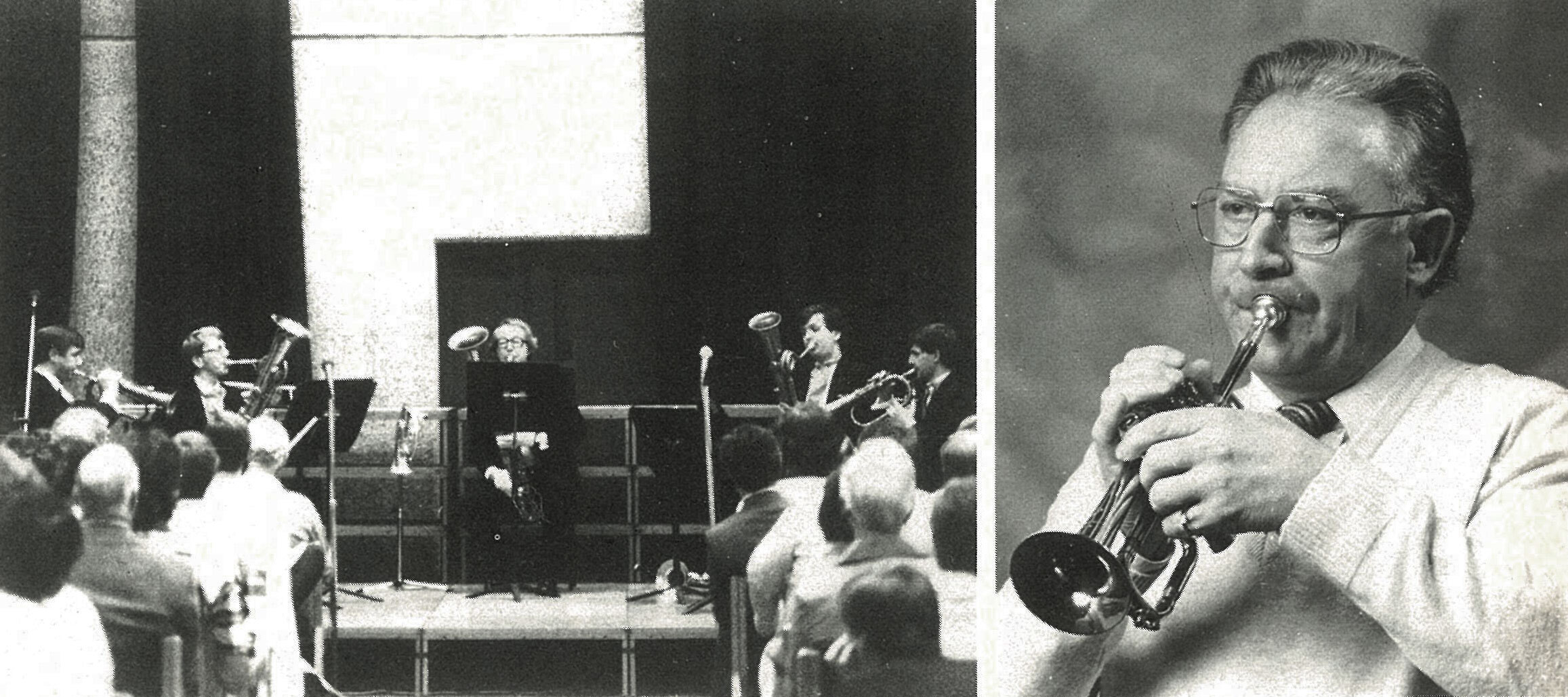
Hakan Hardenberger – Paris Trumpet Quintet

Hakan Hardenberger – Paris Trumpet Quintet

John Wallace, principal trumpet of London’s premier orchestra, the Philharmonia, was to most delegates the star of the conference. He appeared in many guises — as third trumpet in the mock orchestral trial competition, as leader of the magnificent Wallace Collection of trumpeters, as leader of the Equale Brass and in a solo recital of electronic music. His presence gave distinction and humour to each and it was his flexibility and sheer virtuosity which endeared him to all.

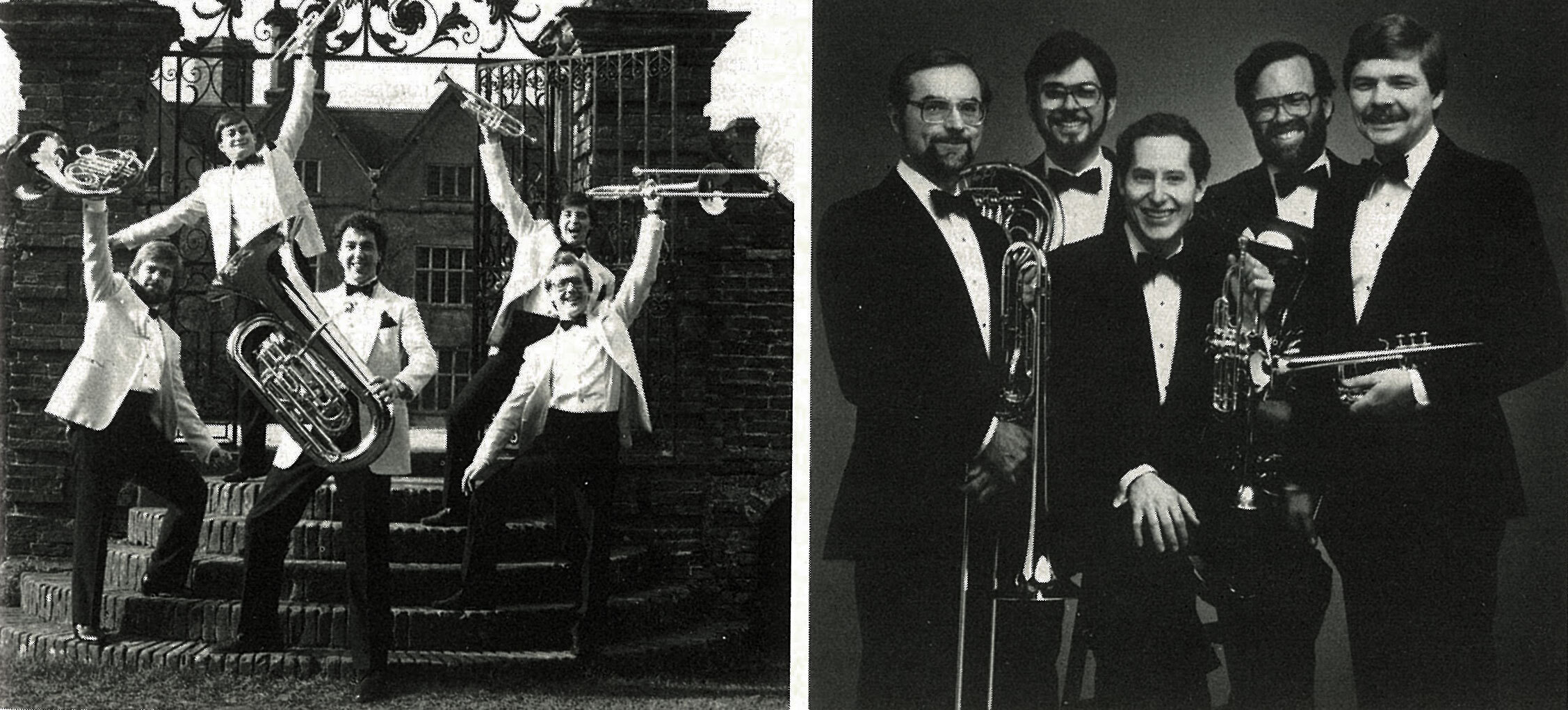
There were a number of ensembles at the conference and the best conclusion to be drawn is that ensembles, more so than players, cannot be compared. As a brass quintet, the Equale Brass demonstrated the greatest sense of ensemble while the Paris Trumpet Quintet were able to present with great conviction a scintillating and demanding programme. More popular ensemble performances came from the Chicago Brass Quintet and the Fine Arts Brass Ensemble, both of which seem to have learned from Canadian Brass that entertainment can be as appreciated as performance.
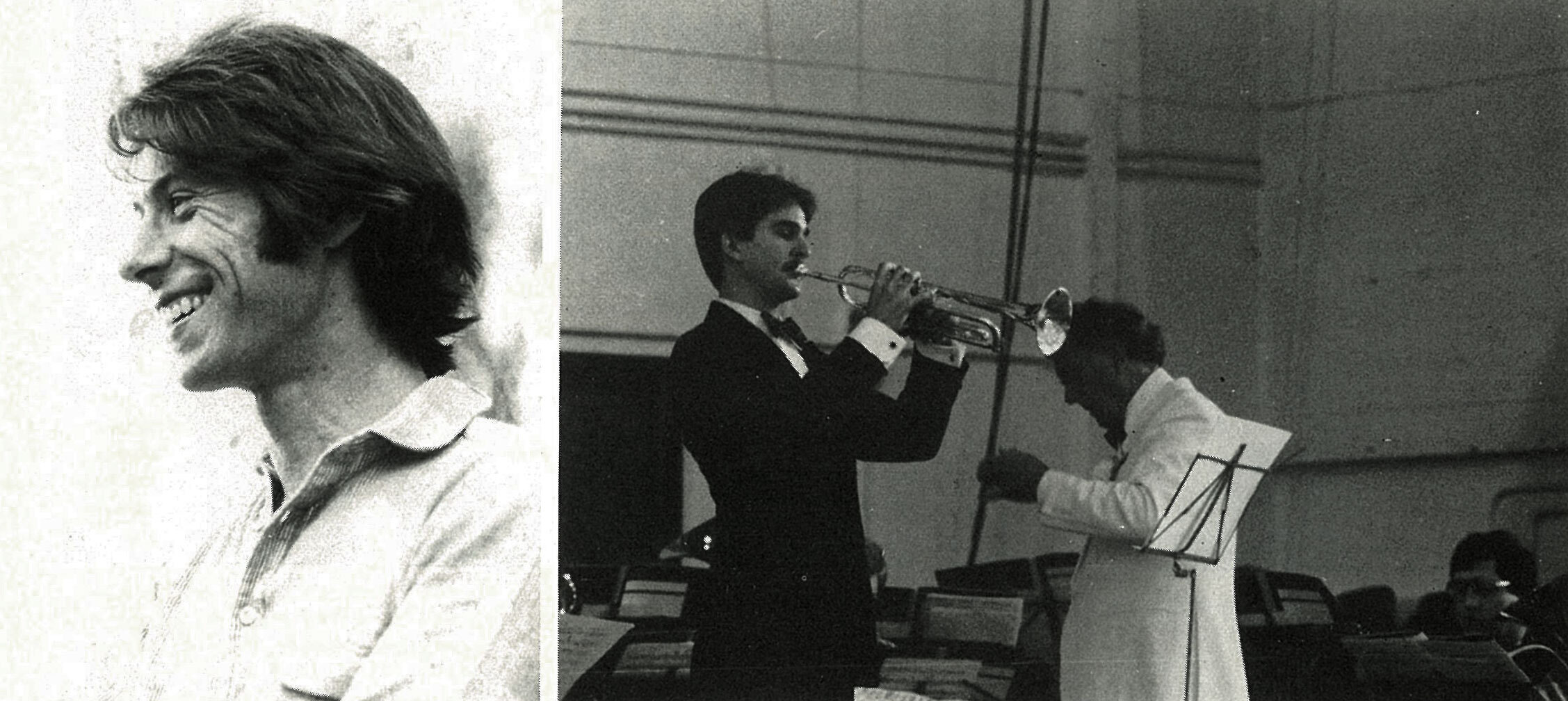
John Wallace – Gavin S. Wells, U.S.A. winner of 1986 ITG Solo Competition
John Wallace – Gavin S. Wells, U.S.A. winner of 1986 ITG Solo Competition

Fine Arts Brass Quintet – Chicago Brass Quintet

Fine Arts Brass Quintet – Chicago Brass Quintet

The student competitions were slightly disappointing, revealing a standard which was adequate but uninspiring. Three competitions were held — a mock orchestral trial, jazz improvisation, and a solo competition.

Most of the trumpet makers were present, but there were no bargains! The assembly under one roof of so many manufacturers did however provide a unique opportunity for comparison, and especially to test new instruments. Some makers still adopt the naive and curious technique of selling a trumpet by claiming that it is similar to one used by a celebrity. It is fortunately no longer true that the best trumpets are the most expensive, and it is clear that competition is forcing the standard to be raised. Of particular interest as new instruments were the A & R trumpets, the Richard Smith trumpets, and the Pro-Brass baroque trumpet, designed by Crispian Steele-Perkins.

The absence of famous names was at first an irritation, but on reflection probably contributed to a more balanced and interesting week. One criticism which must be recorded is that there seems to be more interest in quantity than in quality. What can the value be of a fifty-trumpet arrangement of the “Dies Irae” from Verdi’s “Requiem”, and is it not far more elevating to listen to Gaeton Berton’s Enesco, or Hardenberger’s Henze? The habit of many trumpeters to avoid thoughtful musical discussion is one which of course occurs everywhere, and in this sense the conference was an accurate reflection of the state of the art of trumpeters, and their interests.
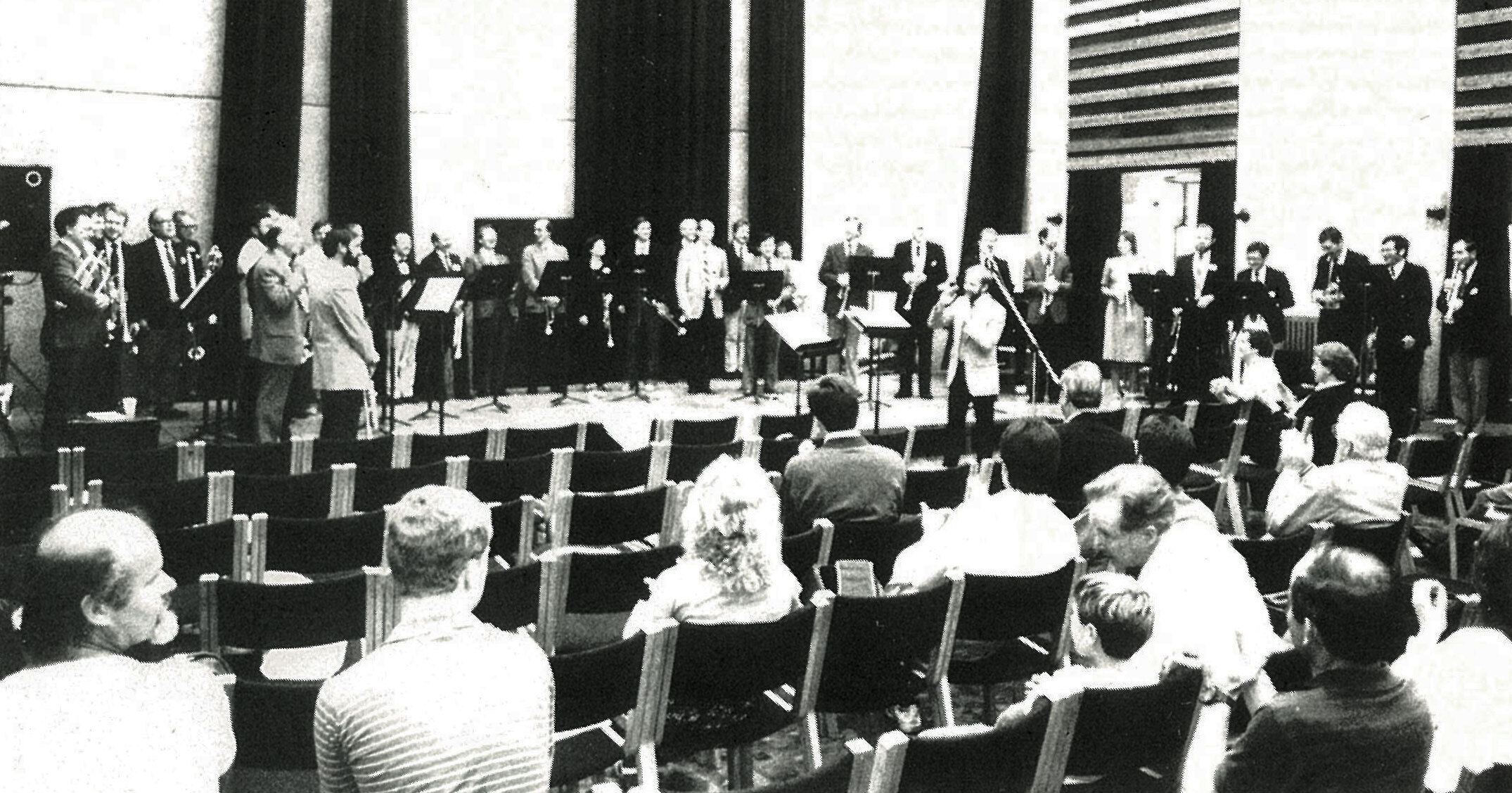
Festival of Trumpets

Festival of Trumpets

Brass Bulletin 56, IV / 1986 pages 34–38

All content is protected by copyright © Brass Bulletin 1986–2026

Share this article

Facebook LinkedIn
Loading…

Questions & Answers

How the Digital Edition works

What does the Digital Edition include?

The Digital Edition brings together the articles already digitized as searchable online texts—not simply as scans or PDF files—along with their original illustrations, notes, authorship, issue information, and available translations. Related-article suggestions currently include only this digitized material.

Are the digital articles identical to the originals?

We preserve the original text, language, illustrations, captions, footnotes, and editorial context as faithfully as possible. The presentation is adapted for comfortable online reading, and obvious transcription or scanning errors may be corrected. The substance and character of the published article remain unchanged.

Which languages are available?

Brass Bulletin was published in English, French, and German throughout its history. Italian and Spanish translations were added from issue No. 60 onward.

On the Italian and Spanish sites, articles from issues 1–59 are therefore shown in English by default.

How often are new articles added?

New articles are added almost daily, with approximately one complete issue digitized each week. The pace may vary depending on the preparation, image work, and editorial checking required.

Why aren’t all articles available digitally?

The complete Brass Bulletin collection contains 1,246 articles published between 1971 and 2003. The full index is already available online, allowing readers to discover every article in the collection, including those whose complete text has not yet been digitized.

Digitization began in February 2026. Each article is carefully prepared for online reading, checked, and connected to its issue, authors, subjects, and illustrations. At the current pace of digitization, the complete collection is expected to be available online by February 2028.

Why do some references mention articles that are not available yet?

References in the original articles are preserved even when the material they point to has not yet been digitized. This keeps the historical and editorial record intact. As more issues are added to the Digital Edition, an increasing number of these references will lead to articles that can be read online.

Can I suggest an article or report a transcription error?

Yes. If there is an article you would particularly like to see digitized, or if you notice a possible transcription error or missing detail, please contact us. Reader feedback helps us improve the Digital Edition and prioritize useful connections within the archive.

How can I support Brass Bulletin?

Your support helps fund the preparation, verification, and online publication of the complete collection.

Subscribe to the Digital Edition

Prefer to support us without subscribing?

Make a donation

How is the digitization progressing?

We’re gradually making the Brass Bulletin available online, article by article. You can read newly digitized articles as soon as they’re ready, even before an entire issue is complete.

Visit our Digitization Roadmap to browse recent additions and see estimated availability for upcoming issues. These estimates follow our recent pace and may change.

Search Brass Bulletin.