Ofrezca Brass Bulletin en su universidad, conservatorio o biblioteca Descubra el acceso institucional

3 min de lectura

ITG Conference 1986, London

a personal view

ITG Conference 1986, London

Any international gathering of three hundred trumpeters cannot but be successful. It should also be an opportunity to advance the art.

The 1986 ITG Conference was held in the architecturally uninspiring Guildhall School of Music and Drama in London. The ITG, despite its name, is essentially an American organisation and the chance given by holding a conference in Europe of widening the membership base to become truly international was not unfortunately taken.

The most important aspect of any such conference must be music, and we should not lose sight of the fact that the trumpet is no more than a tool to achieve music. Conference events in which music and musicianship were the theme were, unfortunately too few.

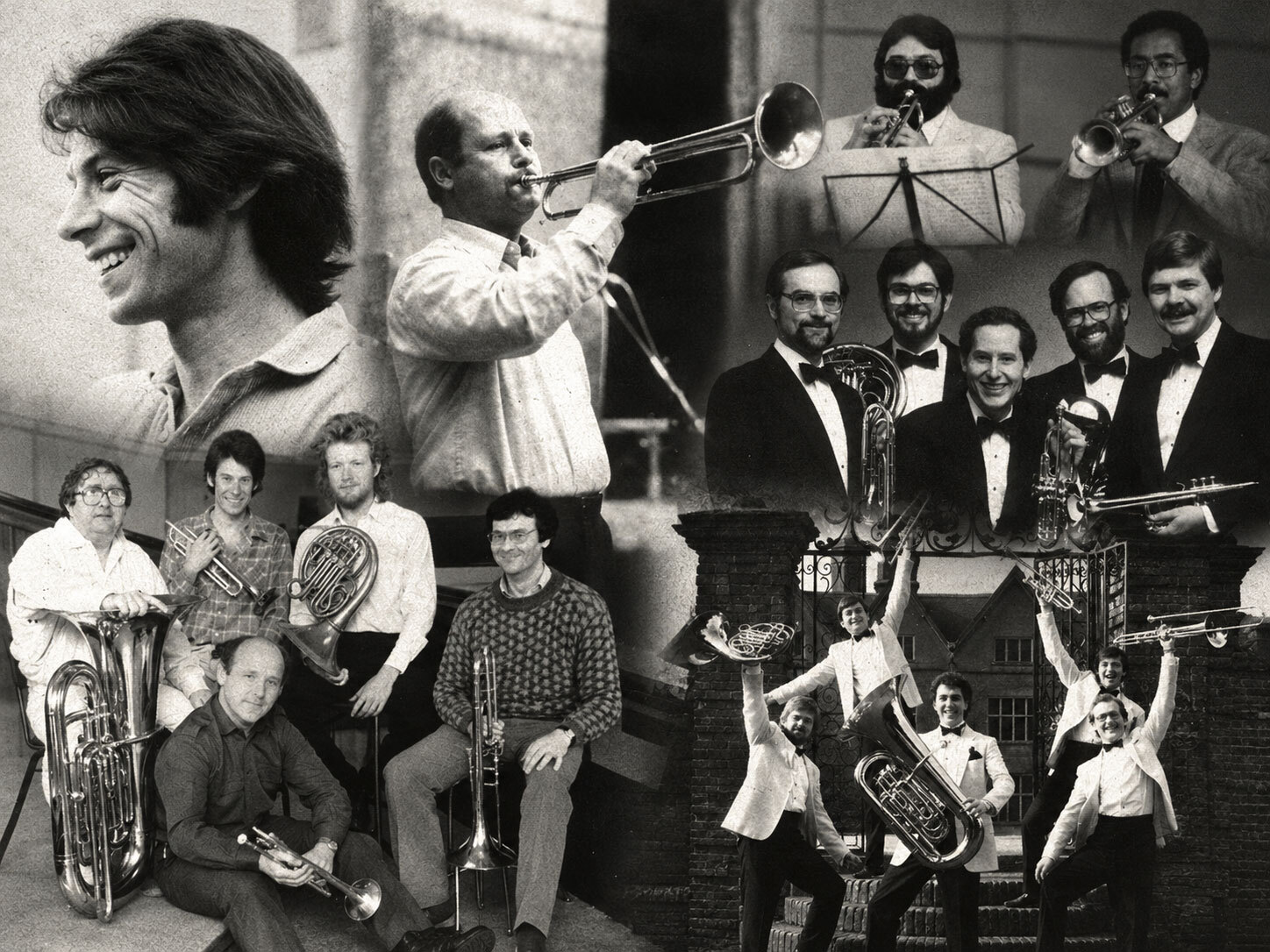
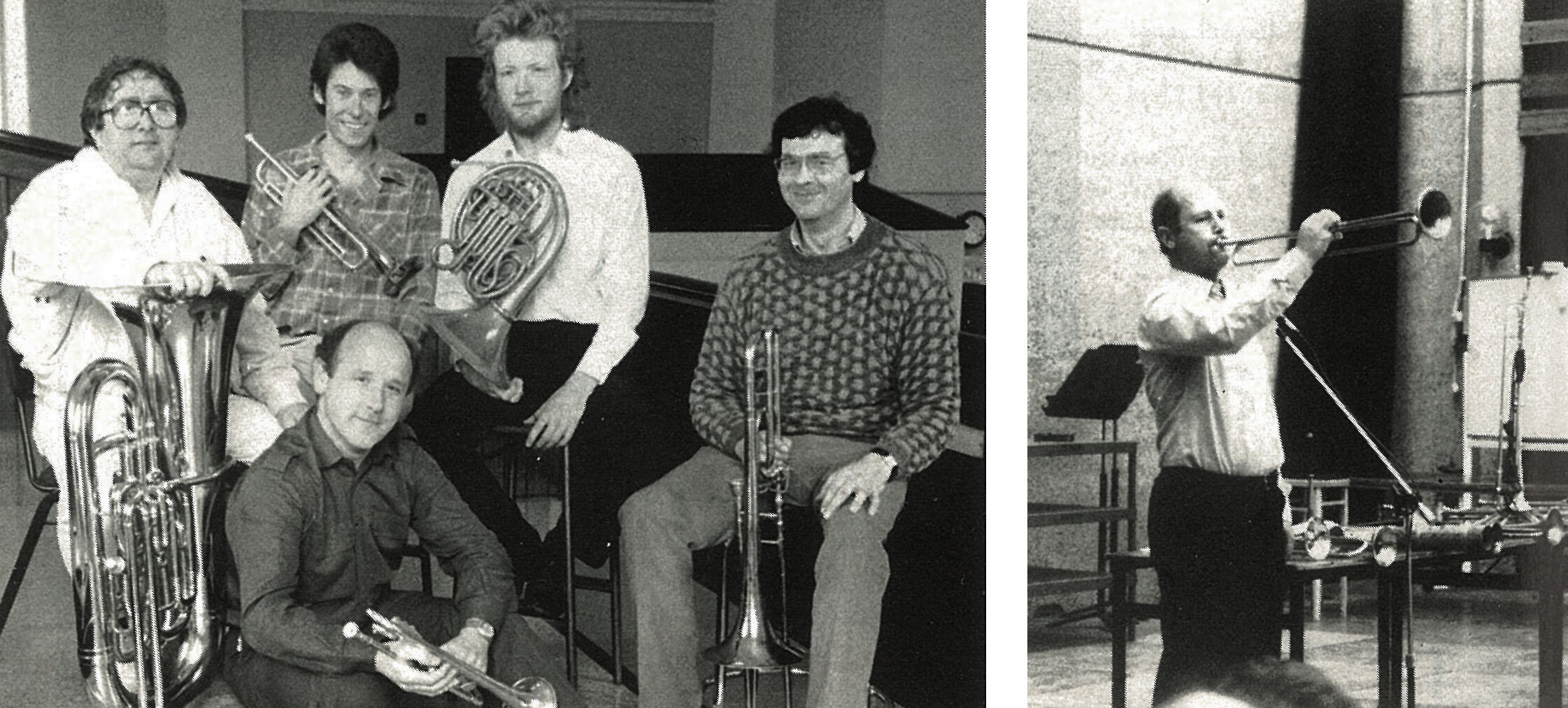
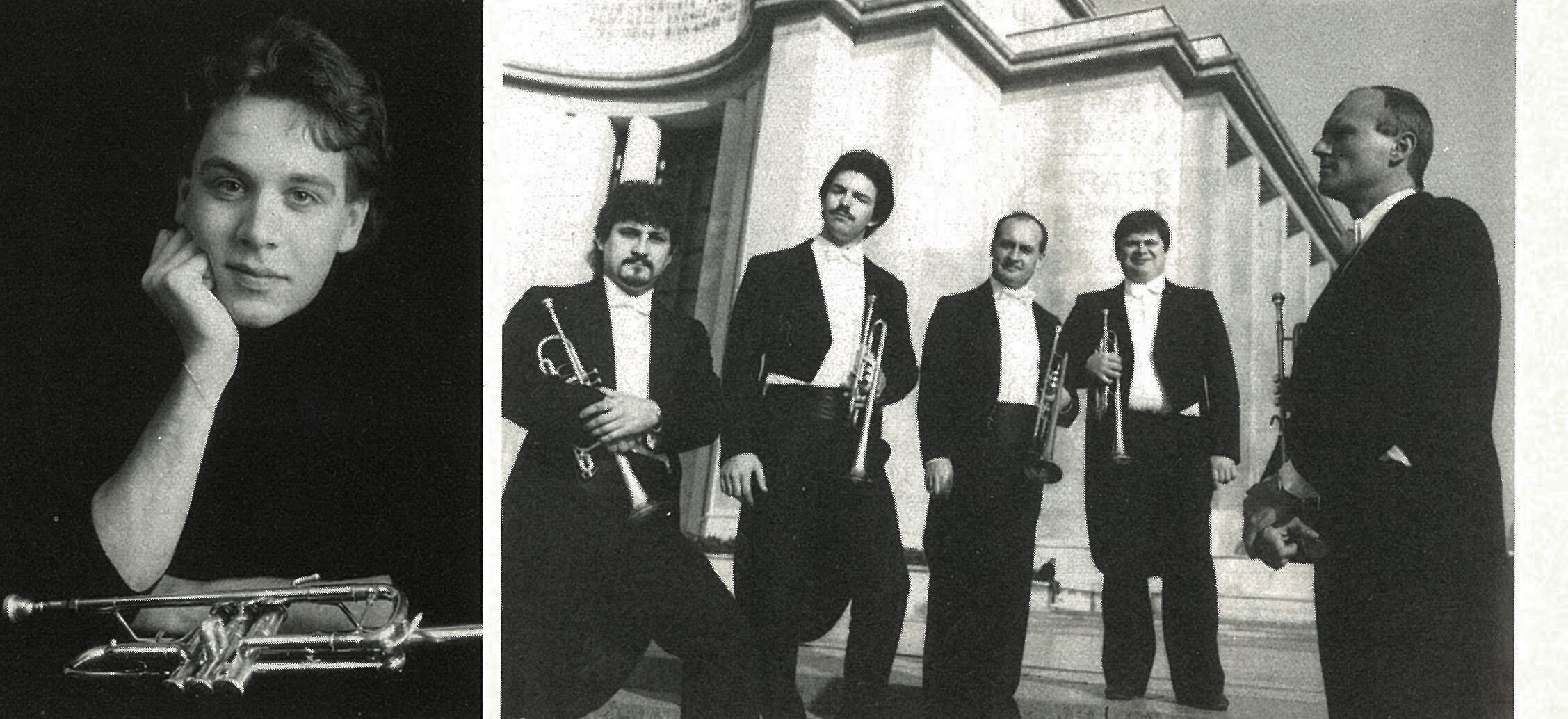
Equale Brass – Crispian Steele-Perkins

Equale Brass – Crispian Steele-Perkins

Gaeton Berton, Professor of Trumpet at Tours Conservatoire, demonstrated the deep musical tradition of the French school in a recital which included Enesco’s “Legende” and works by Bozza, Ibert and Hubeau. Musicianship and interpretation were profound, and he suppressed any technical difficulties in a recital which was stylish and assured and showed the fruits of thought and experience.

Hakan Hardenberger delivered a dazzling performance of twentieth century music and managed what so few can do with this music, which is to make it interesting to listen to. His recent successes at Toulon, Geneva, Paris and Munich are richly deserved.

London Ophicleide Ensemble – Gaetan Berton

London Ophicleide Ensemble – Gaetan Berton

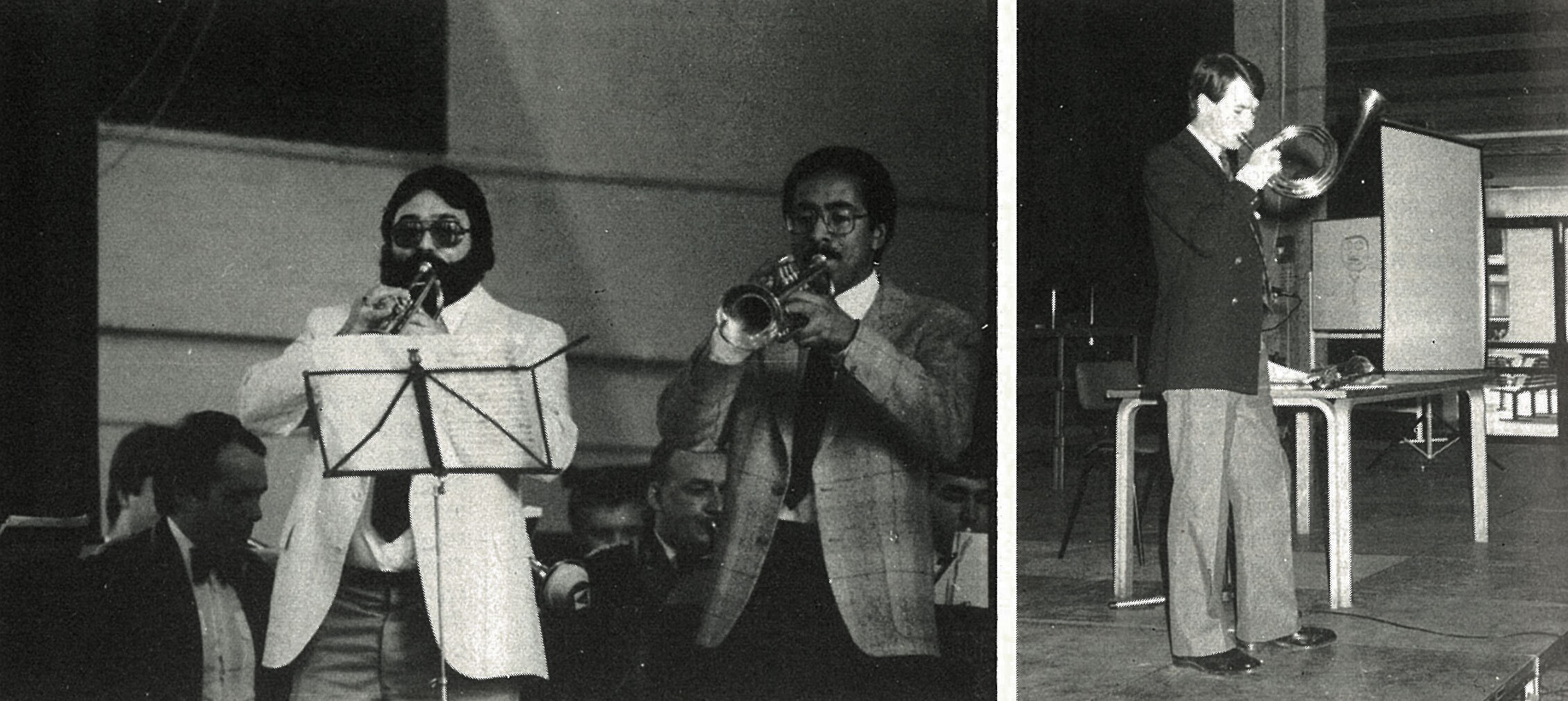
Vincent DiMartino and Manny Laureano at Black Dyke Mills Band Concert – Graham Nicholson
Vincent DiMartino and Manny Laureano at Black Dyke Mills Band Concert – Graham Nicholson

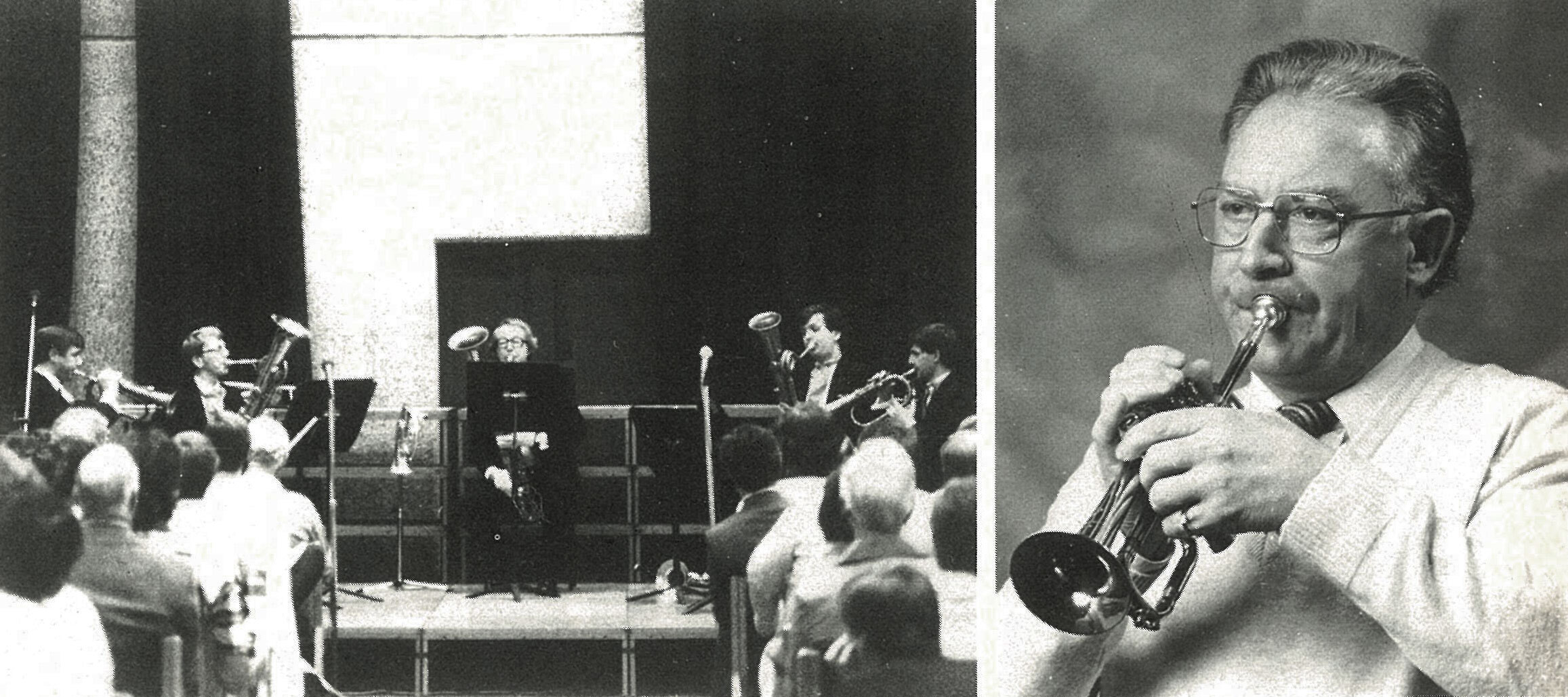
Hakan Hardenberger – Paris Trumpet Quintet

Hakan Hardenberger – Paris Trumpet Quintet

John Wallace, principal trumpet of London’s premier orchestra, the Philharmonia, was to most delegates the star of the conference. He appeared in many guises — as third trumpet in the mock orchestral trial competition, as leader of the magnificent Wallace Collection of trumpeters, as leader of the Equale Brass and in a solo recital of electronic music. His presence gave distinction and humour to each and it was his flexibility and sheer virtuosity which endeared him to all.

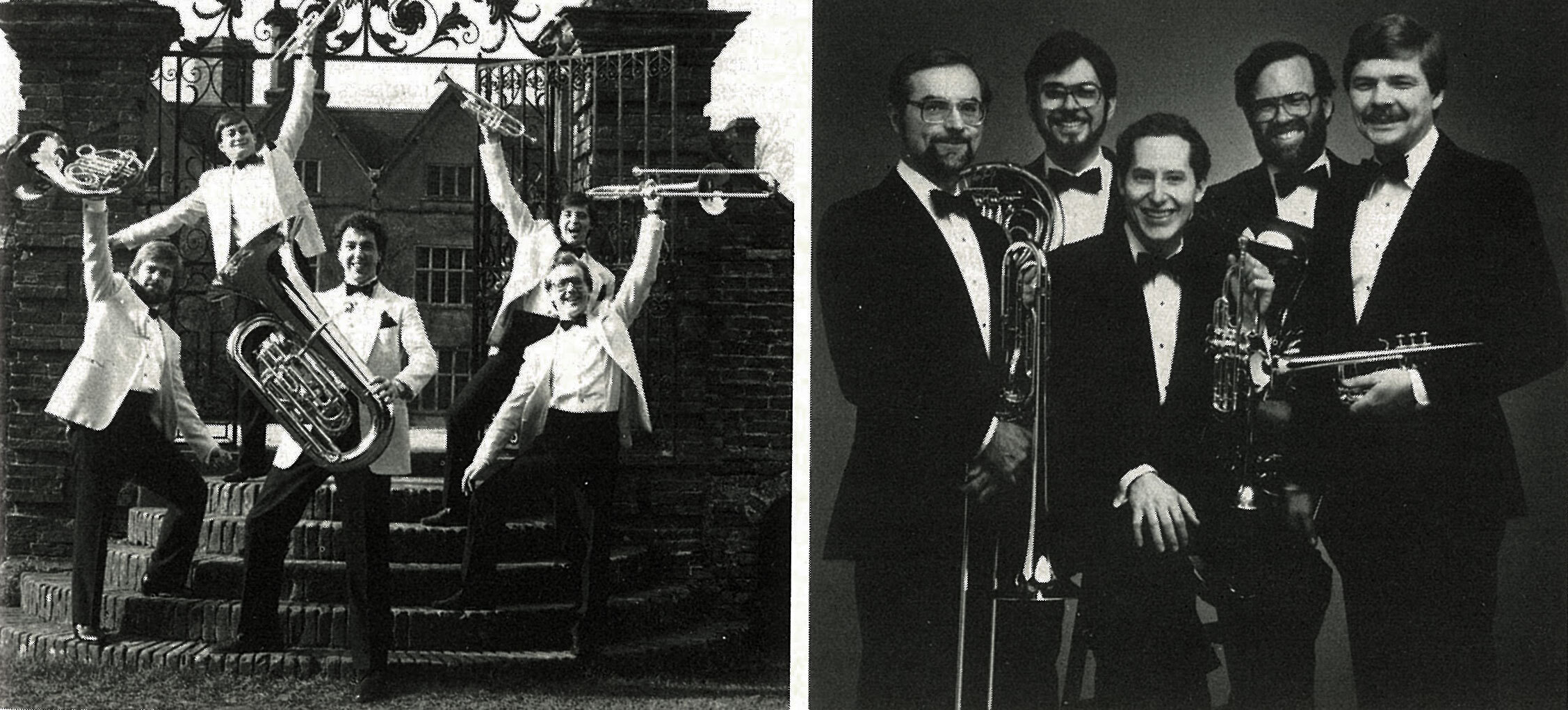
There were a number of ensembles at the conference and the best conclusion to be drawn is that ensembles, more so than players, cannot be compared. As a brass quintet, the Equale Brass demonstrated the greatest sense of ensemble while the Paris Trumpet Quintet were able to present with great conviction a scintillating and demanding programme. More popular ensemble performances came from the Chicago Brass Quintet and the Fine Arts Brass Ensemble, both of which seem to have learned from Canadian Brass that entertainment can be as appreciated as performance.
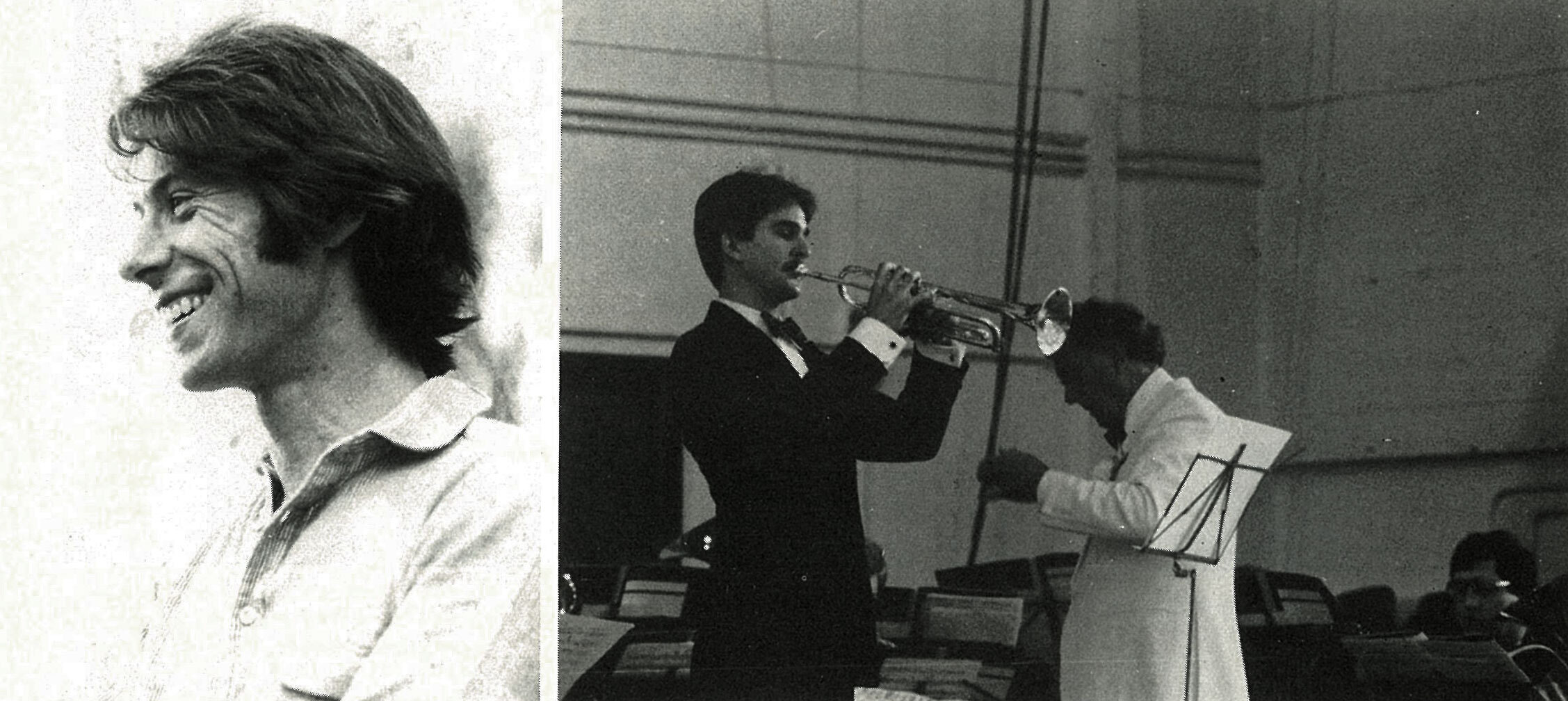
John Wallace – Gavin S. Wells, U.S.A. winner of 1986 ITG Solo Competition
John Wallace – Gavin S. Wells, U.S.A. winner of 1986 ITG Solo Competition

Fine Arts Brass Quintet – Chicago Brass Quintet

Fine Arts Brass Quintet – Chicago Brass Quintet

The student competitions were slightly disappointing, revealing a standard which was adequate but uninspiring. Three competitions were held — a mock orchestral trial, jazz improvisation, and a solo competition.

Most of the trumpet makers were present, but there were no bargains! The assembly under one roof of so many manufacturers did however provide a unique opportunity for comparison, and especially to test new instruments. Some makers still adopt the naive and curious technique of selling a trumpet by claiming that it is similar to one used by a celebrity. It is fortunately no longer true that the best trumpets are the most expensive, and it is clear that competition is forcing the standard to be raised. Of particular interest as new instruments were the A & R trumpets, the Richard Smith trumpets, and the Pro-Brass baroque trumpet, designed by Crispian Steele-Perkins.

The absence of famous names was at first an irritation, but on reflection probably contributed to a more balanced and interesting week. One criticism which must be recorded is that there seems to be more interest in quantity than in quality. What can the value be of a fifty-trumpet arrangement of the “Dies Irae” from Verdi’s “Requiem”, and is it not far more elevating to listen to Gaeton Berton’s Enesco, or Hardenberger’s Henze? The habit of many trumpeters to avoid thoughtful musical discussion is one which of course occurs everywhere, and in this sense the conference was an accurate reflection of the state of the art of trumpeters, and their interests.
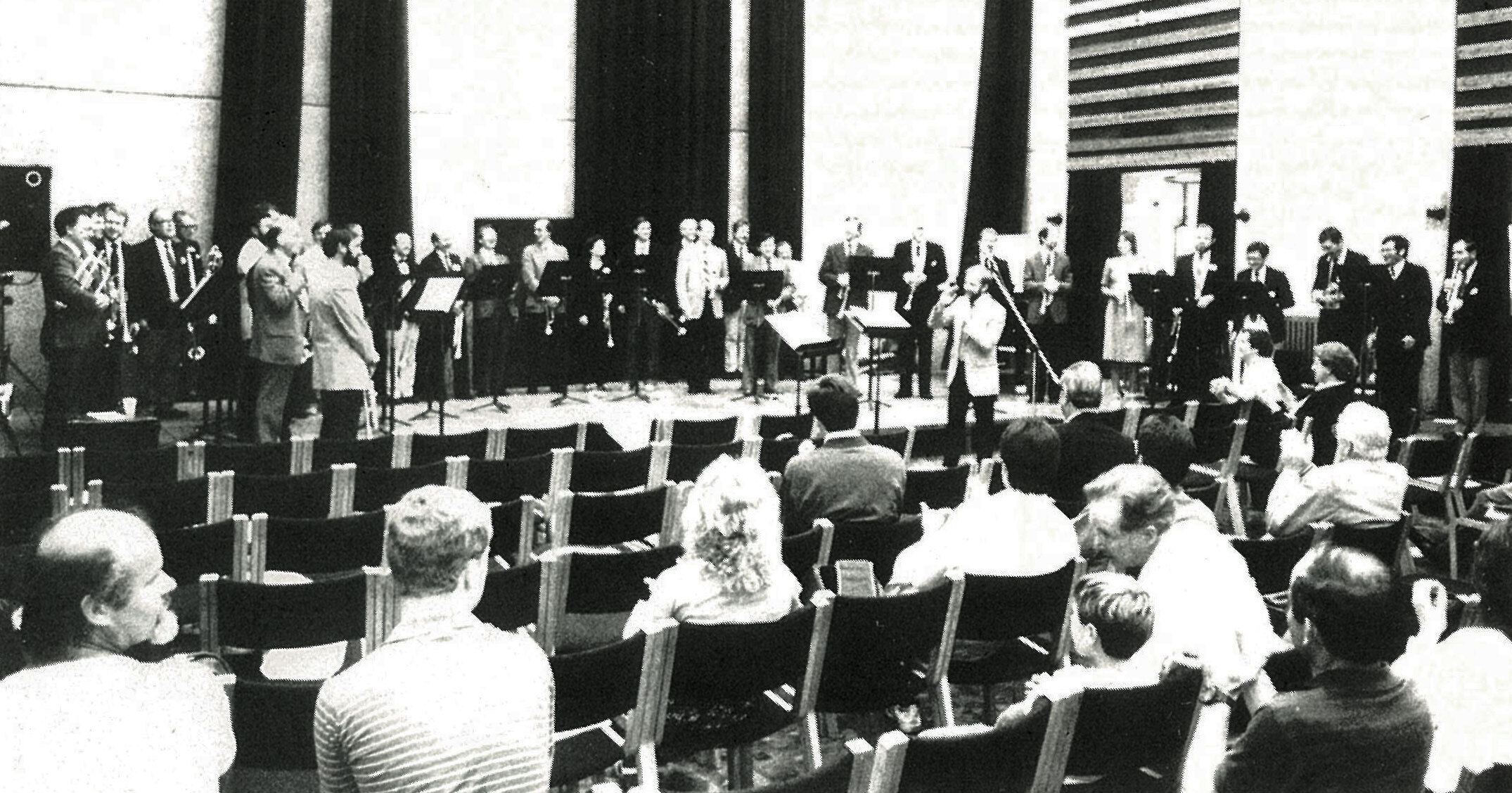
Festival of Trumpets

Festival of Trumpets

Brass Bulletin 56, IV / 1986 páginas 34–38

Todo el contenido está protegido por derechos de autor © Brass Bulletin 1986–2026

Compartir este artículo

Facebook LinkedIn
Cargando…

Preguntas y respuestas

Cómo funciona la edición digital

¿Qué incluye la edición digital?

La edición digital reúne los artículos ya digitalizados como textos legibles y consultables en línea —no simplemente como escaneos o archivos PDF— junto con sus ilustraciones originales, notas, autoría, información del número y traducciones disponibles. Las sugerencias de artículos relacionados incluyen actualmente solo este material digitalizado.

¿Los artículos digitales son idénticos a los originales?

Conservamos con la mayor fidelidad posible el texto original, el idioma, las ilustraciones, los pies de imagen, las notas y el contexto editorial. La presentación se adapta para facilitar la lectura en línea y pueden corregirse errores evidentes de transcripción o escaneado. El contenido y el carácter del artículo publicado permanecen inalterados.

¿Qué idiomas están disponibles?

Brass Bulletin se publicó en inglés, francés y alemán a lo largo de toda su historia. Las traducciones al italiano y al español se añadieron a partir del número 60. Por este motivo, en los sitios italiano y español los artículos de los números 1 a 59 se muestran en inglés de forma predeterminada.

¿Con qué frecuencia se añaden nuevos artículos?

Se añaden nuevos artículos casi a diario, con aproximadamente un número completo digitalizado cada semana. El ritmo puede variar según el trabajo de preparación, tratamiento de imágenes y revisión editorial necesario.

¿Por qué no están disponibles todos los artículos en formato digital?

La colección completa de Brass Bulletin contiene 1.246 artículos publicados entre 1971 y 2003. El índice completo ya está disponible en línea y permite descubrir todos los artículos de la colección, incluidos aquellos cuyo texto íntegro todavía no ha sido digitalizado.

La digitalización comenzó en febrero de 2026. Cada artículo se prepara cuidadosamente para la lectura en línea, se revisa y se vincula con su número, sus autores, sus temas y sus ilustraciones. Al ritmo actual de digitalización, se prevé que la colección completa esté disponible en línea en febrero de 2028.

¿Por qué algunas referencias mencionan artículos que todavía no están disponibles?

Las referencias de los artículos originales se conservan aunque el material al que remiten aún no haya sido digitalizado. De este modo se mantiene intacto el contexto histórico y editorial. A medida que se incorporen más números a la edición digital, un número creciente de estas referencias conducirá a artículos que podrán leerse en línea.

¿Puedo sugerir un artículo o informar de un error de transcripción?

Sí. Si hay algún artículo que le gustaría especialmente ver digitalizado, o si detecta un posible error de transcripción o algún dato que falta, póngase en contacto con nosotros. Los comentarios de los lectores nos ayudan a mejorar la edición digital y a establecer prioridades útiles dentro del archivo.

¿Cómo puedo apoyar a Brass Bulletin?

Su apoyo ayuda a financiar la preparación, verificación y publicación en línea de la colección completa.

Suscríbase a la Edición Digital

¿Prefiere apoyarnos sin suscribirse?

Haga una donación

¿Cómo avanza la digitalización?

Estamos poniendo Brass Bulletin a disposición de los lectores en línea, artículo por artículo. Pueden leer los artículos recién digitalizados en cuanto estén listos, incluso antes de que se complete un número entero.

Consulten nuestro calendario de digitalización para descubrir las últimas novedades y las fechas estimadas de disponibilidad de los próximos números. Estas estimaciones se basan en nuestro ritmo reciente y pueden cambiar.

Busca en Brass Bulletin.