8 min. read
The Wrong Brass?
By Rudolf Lewy
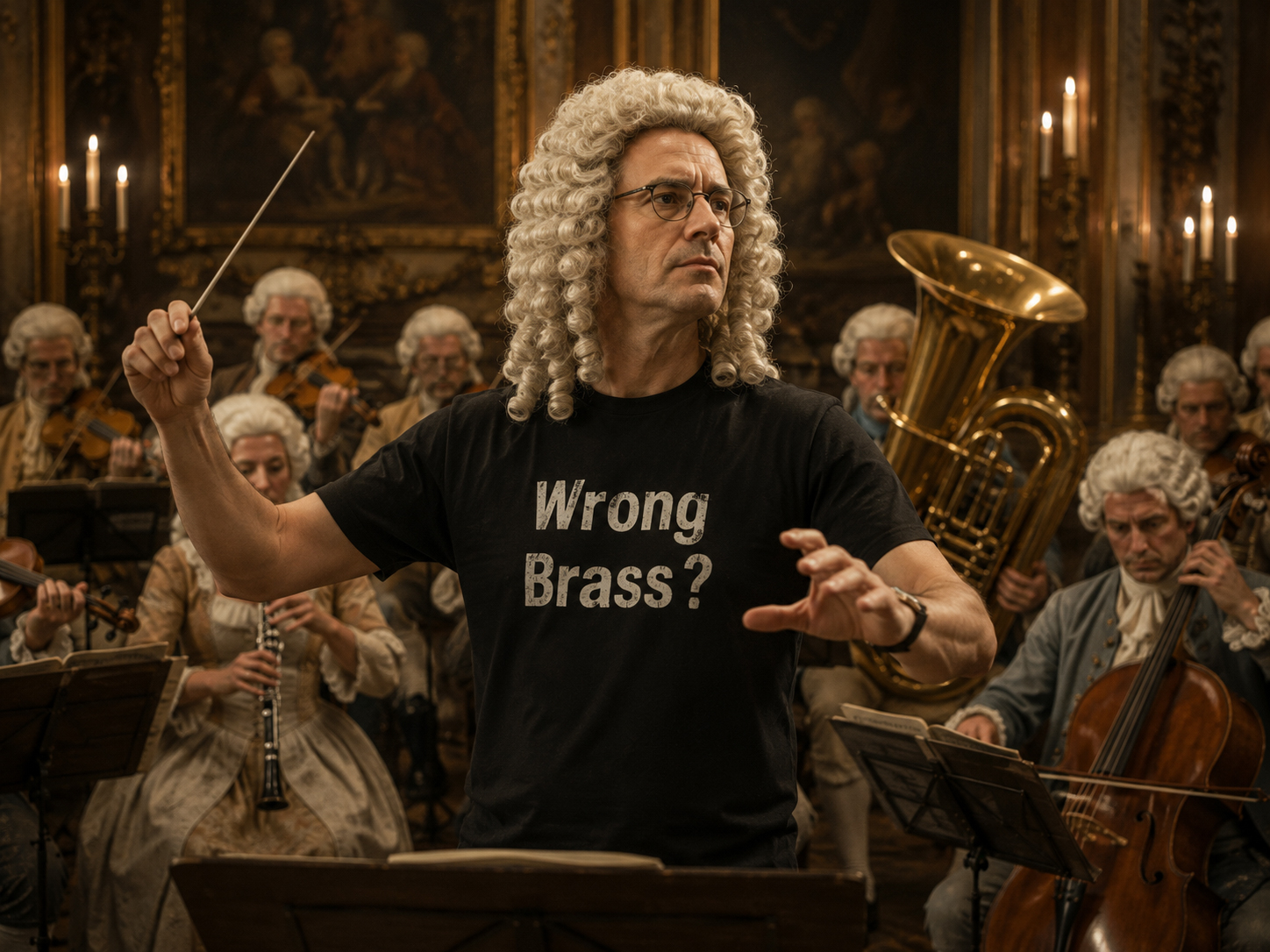
Whereas the piano is a musical jack-of-all-trades and has a musical character to match, the orchestra consists of clearly distinct individuals, largely grouped into homogeneous families. In some small ensembles this instrumental individuality is not paramount, in the string quartet for example, or the hotel orchestra, which functions as a kind of ‘‘expanded piano’’ or ‘‘telescoped orchestra’’ (or both!) as is indicated by the amount of instrumental substitution which takes place. In the symphony orchestra on the other hand instrumental individuality — and therefore faithfulness to the instrumentation as scored — are important; there should be no question of substituting one instrument for another for, given the present standard of our instruments, there is no excuse for giving the audience the wrong brass.
The only exception on this rule is the case where the composer specified an instrument which was not his own first choice because the instrument he would have preferred either did not exist at the time or was unavailable to him for some other reason. If this preferable instrument is available to us (and it must be preferable in terms of the music, not in terms of our likes or convenience!), we are entitled, indeed obliged, to use it and may improve the parts as well as fulfil a composer’s wish frustrated at the time of writing.
The naming of instruments, both in scores and especially in copies, is often so confused that it is impossible to tell what instrument was originally intended. Even apart from ignorance, conservatism and complacency (which is here tantamount to slovenliness), the presumption of wanting to modernise the music and the arrogance of claiming to better than the other man, neither of any musical significance, further exacerbate the problem. Neither should the claim that ‘‘everybody’s doing it’’ — famous conductors, orchestras or soloists — be used as an excuse for switching instruments. A musician’s greatness should not blind us to his possible ignorance about instruments or his unscrupulousness in tampering with them.
I.
A trumpet is neither a cornet nor a flugelhorn; there exists between them the same difference of family as between trombone, French horn and tuba. Players and instrument makers have sinned in trying to erase or blur these differences and in so doing have impoverished the palette of instrumental colours.¹ The genuine trumpet should be cylindrical for at least two thirds of its tube length, the cornet should begin with a narrow mouthpipe and then widen continually (hyperbolically) except of course in the valve block and the flugelhorn, with the same qualification, should be conical throughout and can then just do without an expanding bell. In addition the flugelhorn needs a deep, cup-shaped mouthpiece, the cornet even a conical one, i.e. a French horn mouthpiece since it is the descendant of the horn and was even played originally by horn players.²
Brass Bulletin 41, I / 1983 pages 10–15
All content is protected by copyright © Brass Bulletin 1983–2026