7 min. read
The tuba in France
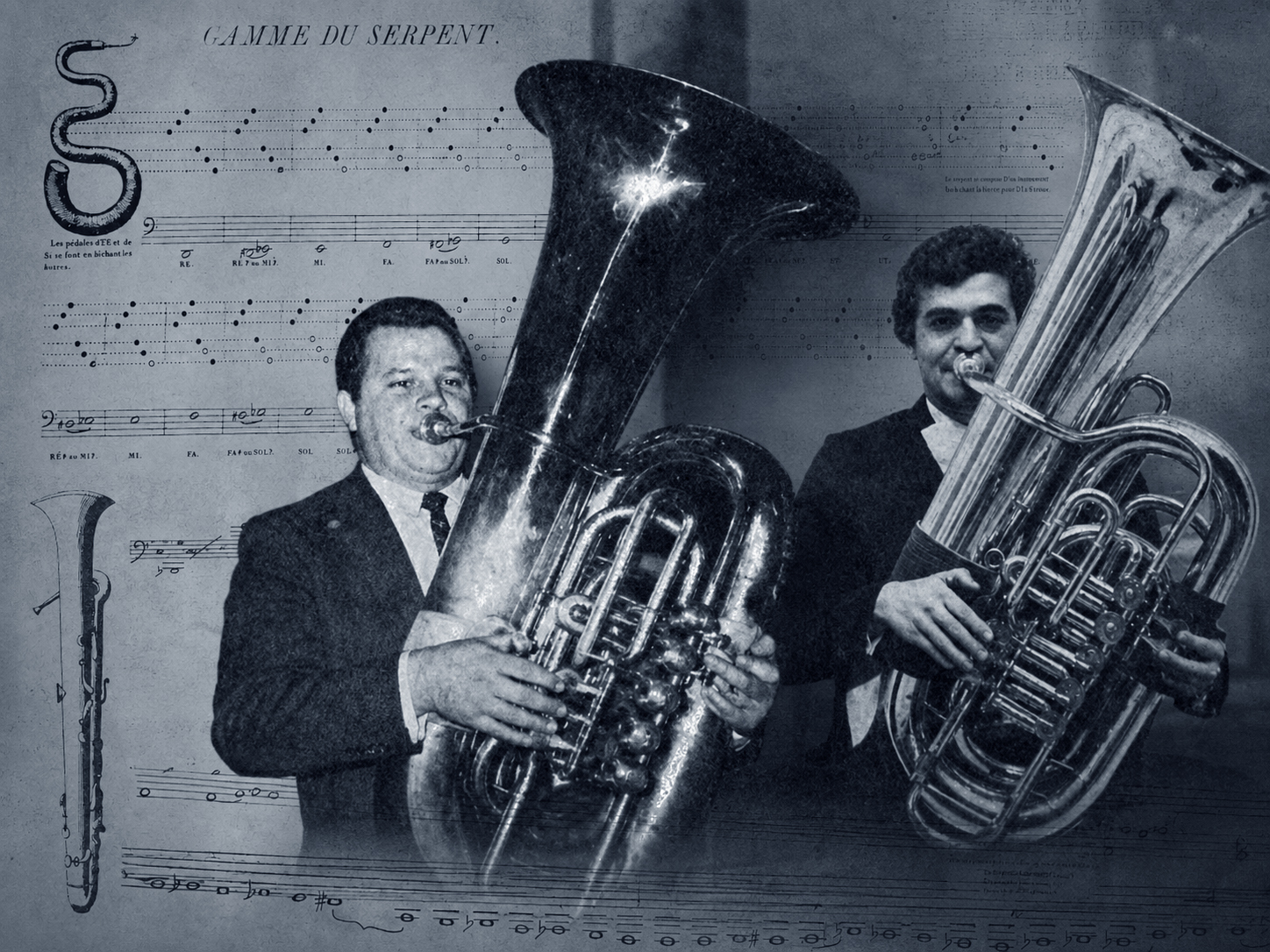
Editor’s note: Lelong and Coutet have been most cooperative in compiling the following article for Brass Bulletin, adding a few introductory words:
We both have adopted the contra tuba in C as our instrument, because of its outstanding aptitude for orchestra playing, in symphonies as well as opera — with perhaps the exception of Italian opera, where extreme lightness of tone is demanded. On the other hand it is ideal for Wagner operas. In spite of this preference, we are still much attached to our «petit tuba français» (small French tuba), although it cannot often be used in the orchestra.
Only a few years ago the tuba was a little-known instrument — but lately a host of young enthusiastic musicians inspired composers to write for the instrument, so that now it is just as important as all the other orchestral solo instruments.
The history of the tuba
The tuba was first used in military bands, where it replaced the serpent and the ophicleide, both out of use now.
The serpent is made of wood covered with leather and bent several times like a wriggling serpent (hence its name) to facilitate the use of its 6 holes (from c. 1800 on, it sometimes had 3 or 4 keys). It is provided with a mouthpiece and had the lowest pitch of all wind instruments until the invention of the contrabassoon in the 18th century.
Brass Bulletin 13, I / 1976 pages 26–35
All content is protected by copyright © Brass Bulletin 1976–2026