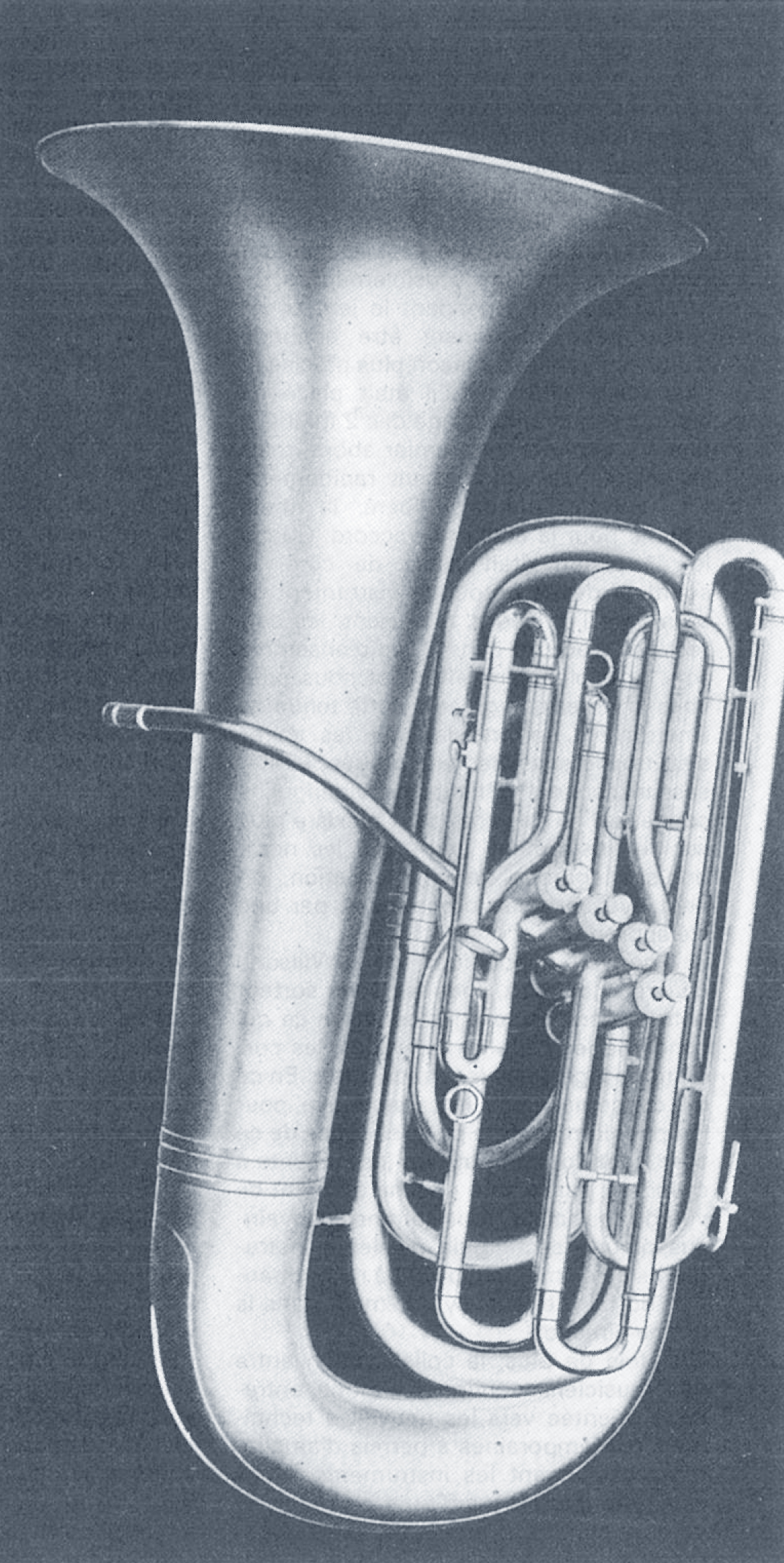
The bell is of particular importance here, a relatively large opening against the curvature creates a correspondingly large bell diameter which allows for wider dynamic possibilities. Opinions vary in this question as well but to a certain extent musicians are in agreement. The instruments with three valves created bad intonation problems but nowadays there are instruments at the disposal of professional musicians which do justice to every conceivable requirement. They are however so expensive that they remain beyond the means of most students. It looks as if this situation isn’t likely to change, for the amount of work involved is extensive, and only experienced specialists can be employed to do it. The easiest thing to do would be to construct a slide, positioned conveniently, which could correct the intonation of the instrument over its whole length. New constructional principles therefore become necessary, and these often mean a hindrance for the manufacturer. Five years ago already, the Willson Band Instrument Company constructed a CC-tuba on this principle which has been further improved in the meantime. The tuning slide was transferred to the left side of the instrument and the slide itself constructed conically. This has caused a tremendous improvement in response and brought the function of the tuning slide to perfection.
The body of the instrument is relatively large and has four valves, arranged according to correct anatomical principles with a bore of between 18 or 20 mm. This CC-tuba is perhaps less suitable for large orchestras, more so for solo work or in chamber ensembles, because it is unusually flexible in response and modulation of sound. Tuning can be described as perfect and the fourth slide is made for either 2½ or 3 steps. These special tubas are likewise supplied with extra large bells. The instrument has stood the test so well that BB and F tubas are also produced.
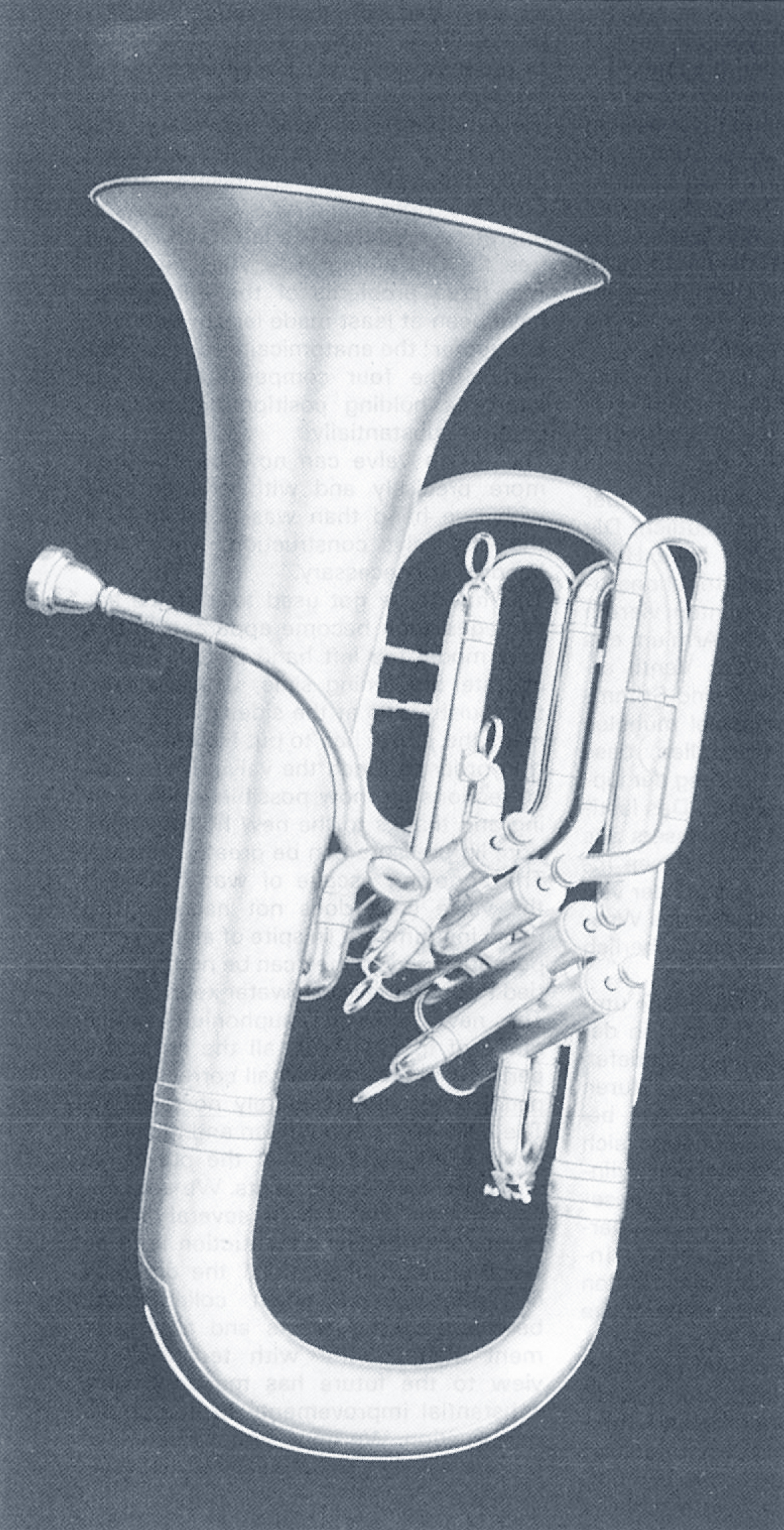
In order to apply the knowledge gained through experience to the euphonium, a great deal of work was necessary. The plans for a four-valve euphonium were discussed with leading players, where only the right hand was necessary to operate everything. The left hand is then free for the tuning slide. As a result of this three problems of the euphonium have been at least made less or removed altogether: the anatomically correct position of the four compensating valves improves holding position and playing comfort substantially. The fourth valve can now be operated more precisely and with greater ease with one hand than was possible with the side valve construction, where two hands were necessary. This has to be got used to, but the advantages soon become apparent. In this new model the left hand is kept free to operate the tuning slide, whereas with the fourth valve at the side of the instrument the player had to put his arm round it in order to reach the valve. Intonation corrections are now possible while playing and thanks to the new holding position, lip pressure can be greatly reduced. The annoying escape of water through the valve caps does not happen with these instruments; in spite of all the compensating slides, they can be neatly emptied through their own water key.
The new “Willson” euphonium has a range of four octaves, all the notes are perfectly in tune and small corrections to pedal notes are absolutely no problem. The bells of the euphonium and tubas are on the left hand side of the player, as with the rotary instruments. We are convinced that the use of several instruments of the same construction is to be recommended because of the direction of sound. Once again collaboration between leading artists and an instrument manufacturer with technically a view to the future has made possible substantial improvements in instrument construction. We hope that conservative players will also get acquainted with this trend.
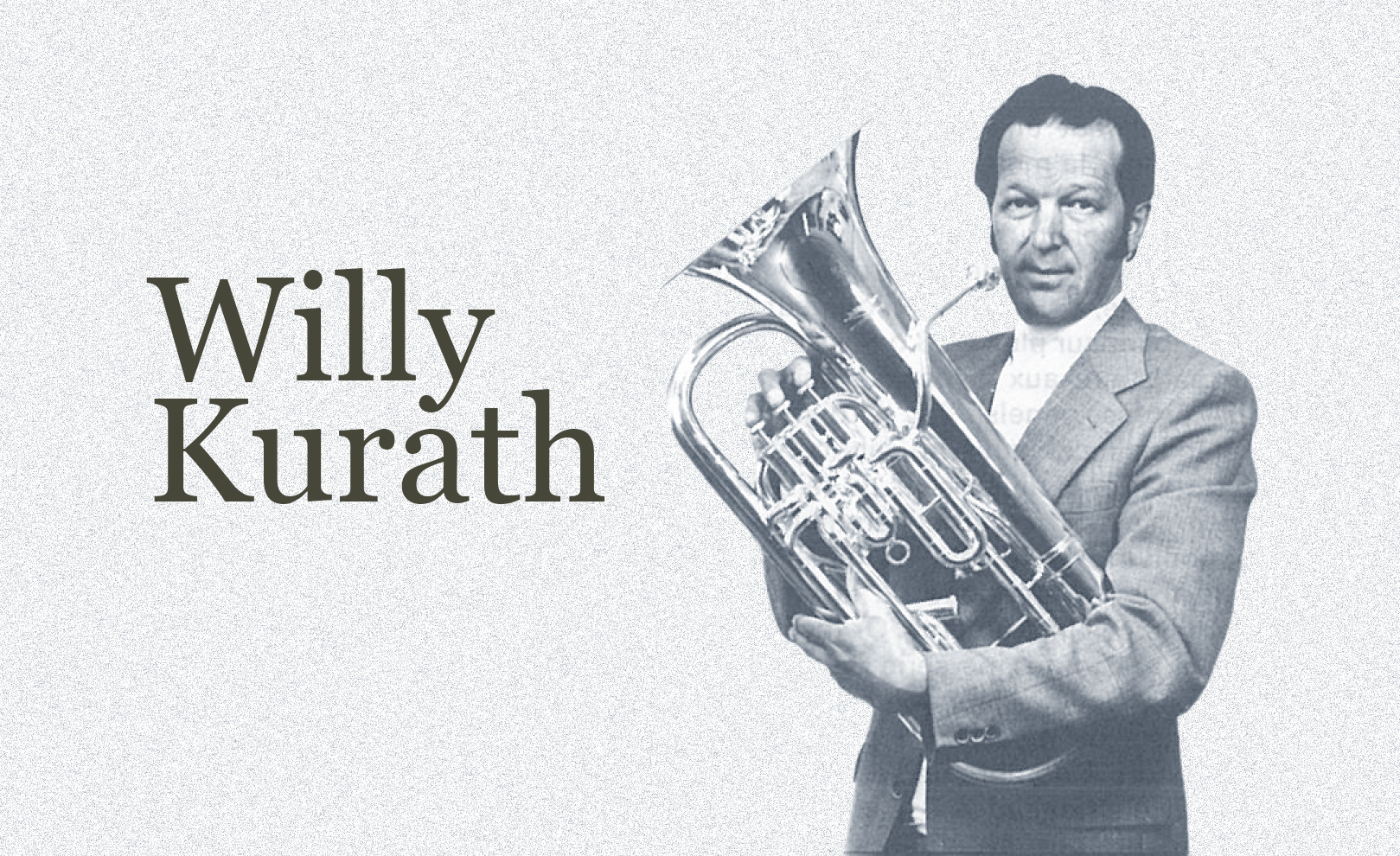
Willy Kurath
Born 1929. Studied music from the age of 12. At 15 started as instrument maker apprentice with his uncle, Ernst Giger in Winterthur. Establishment of a repair workshop for wind instruments. 1954 reconstruction and extension. 1970 erection of today’s Willson musical instrument factory in Flums. Direct contact with experienced brass players in USA, Canada, Germany, Belgium, Holland. For several years tuba player with various bands and active member of the Grisons brass band.