5 min. read
Low register development for the trombone
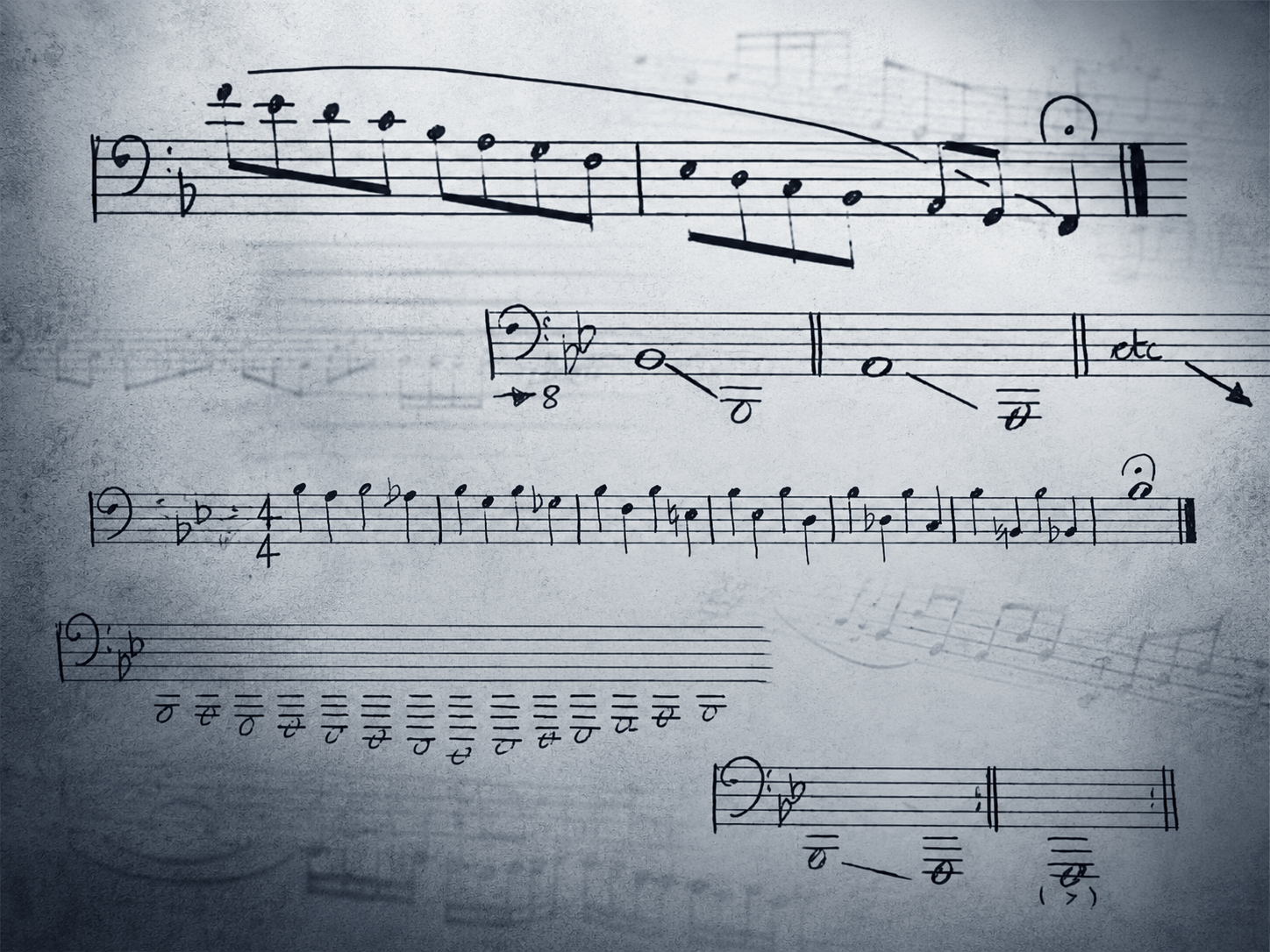
In developing a low register, we are usually told to drop the jaw as we descend. True, we will need to drop the jaw for the low register, but most people overcompensate and drop the jaw too much. Eventually, the jaw drops so far that the lips no longer make contact and therefore can no longer vibrate. This defines the bottom of their low register. Before this, however, the tone will have lost its center, become unfocused, and is not projecting.
Many trombonists, including respected bass trombonists, say that to play the really low pedal tones, i.e. beginning with G or G♭, one must shift the embouchure upwards on the upper lip. This creates the obvious problem that it cannot be done without some embouchure readjustment, and it is true that it is possible to work this out to an acceptable minimum of time required. Even in this case, the player is working with a type of «double embouchure», and since it can be eliminated, I think it should.
I find that by using mouthpiece pressure on the lower lip and jaw as I descend rather than thinking of dropping the jaw, a player is able to play the horn down rather than collapsing downwards. The jaw will still drop, but not to an excess. With a single embouchure, one plays down to the double pedal B♭ or lower. With this technique, the bottom jaw is gradually strengthened and helps to support the high- and low-register playing and can increase endurance.
For the player who worries that not dropping the jaw will rob him of a dark sound: the oral cavity shape need not be changed. We can use any syllable in any register as an aid to creating the «sound» we want. In addition, the airstream speed is a contributing factor to our sound. Lewis Van Haney has described an image of the airstream as being within the continuum: cool, dry (quick) — hot, wet (slow), in order to create one’s desired sound. I find this imagery to be extremely helpful in creating the sound I want for differing musical situations.
Some players are troubled by a somewhat related problem when playing loudly in the low register. Because they use too quick an airstream (and not enough air quantity), the sound cracks up or disintegrates. By remembering Van Haney’s continuum, one could substitute a slower airstream and the tone will not crack up.
Brass Bulletin 13, I / 1976 pages 35–43
All content is protected by copyright © Brass Bulletin 1976–2026