
Rendete Brass Bulletin disponibile nella vostra università, nel vostro conservatorio o nella vostra biblioteca Scoprite l’accesso istituzionale

2 min di lettura

Parte 1

Instrument Makers in USA

Instrument Makers in USA

I had the opportunity, as part of a student visit to the United States, to visit a number of brass instrument makers. I visited all the firms I had planned to (with the exception of the King Music Co. of Eastlake, Ohio, which was closed temporarily) in January and February of this year and I would like to express my deepest thanks for the friendly reception I got everywhere.

My questions were answered by the proprietors or by a manager and I was able to see and photograph the various production departments. The businesses ranged in their number of employees from one to 700. In general the machinery and production methods differ less than one might think. This sector of the economy, when compared with others, has changed relatively little in the last hundred years. There does seem to be some change in the last few years, however, especially in the area of student instruments. The time it takes to produce an instrument is getting shorter all the time, mainly as a result of new developments in the production of valves and bells. Soldering, bending, tube-making and lacquering processes are being modified and, as 95% of the market apparently consists of band instruments, further changes lie ahead. Most of the instruments are made by workers who have little contact with the finished product. As a rule they are trained only in making one particular component or in one limited process and many stay only a few years in the same business.

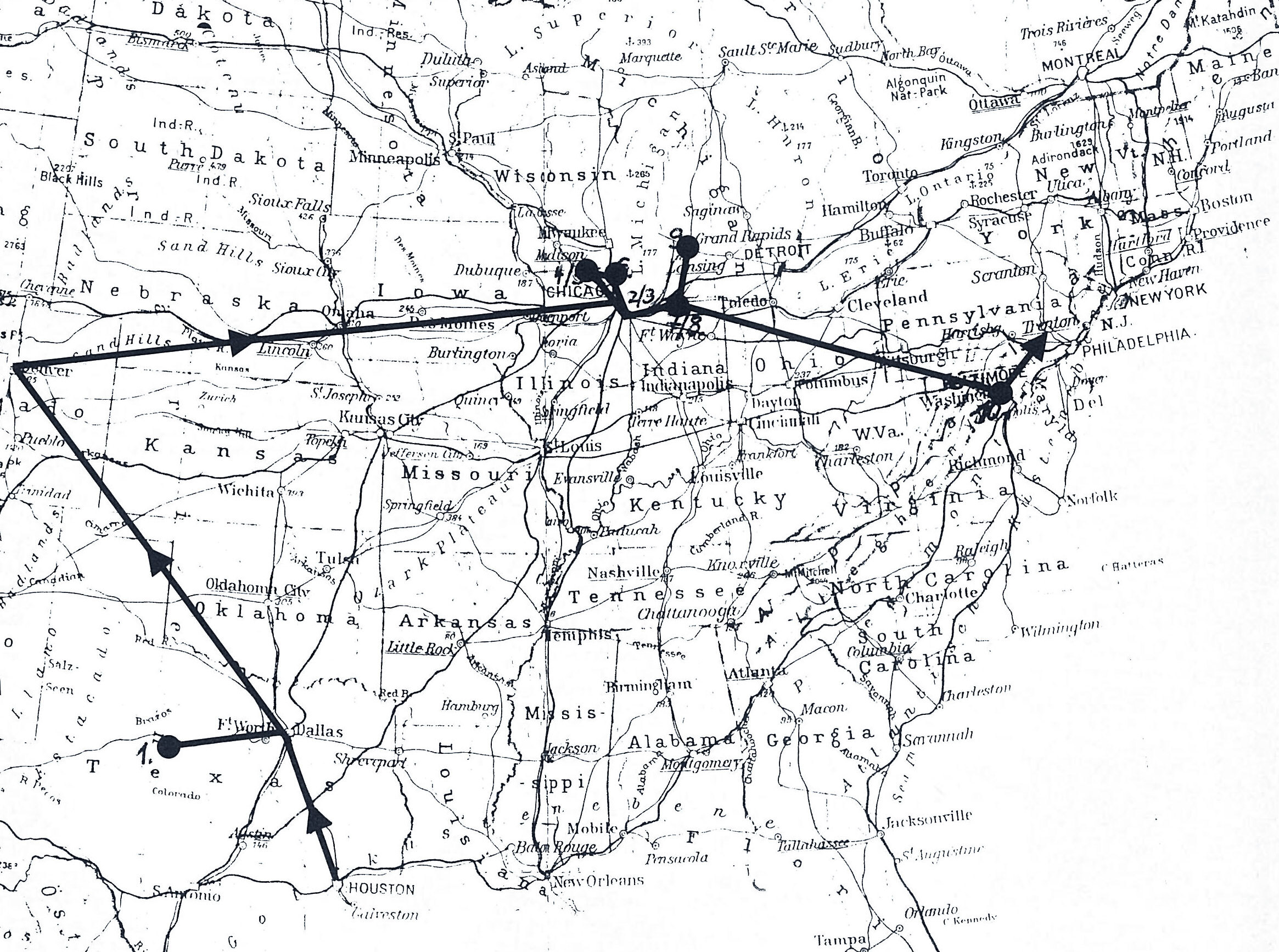
Most brass instruments are produced around Lake Michigan. Elkhart, Indiana, still the most important centre of US instrument making, lies there. As pay rates are higher here than in the southern states, production may be moved southwards. Semi-finished parts are already produced in Mexico, where the pay differential vis-à-vis the parent factories is even greater.

Abilene/ConnChicago/LewisChicago/SchilkeElkhorn/GetzenElkhorn/HoltonKenosha/MartinElkhart/BlessingElkhart/BachGrand Rapi...
  1. Abilene/Conn
  2. Chicago/Lewis
  3. Chicago/Schilke
  4. Elkhorn/Getzen
  5. Elkhorn/Holton
  6. Kenosha/Martin
  7. Elkhart/Blessing
  8. Elkhart/Bach
  9. Grand Rapids/Yamaha
  10. Boonsboro/Lawson

Woodwind instruments were in demand long before brass instruments. A New York document of 1786, for instance, shows a comprehensive import order of various instruments: violins, spinets, clarinets etc., but no brass. These were not yet sufficiently developed to be used in a band. The European invention of keyed instruments at the end of the 18th century and of valves at the beginning of the 19th considerably increased their usefulness. The Dodworth Band of New York, probably the first of its kind, was founded in 1834 and the Boston Brass Band a year later. The first brass instruments were built in the United States in those same years.

The most important early instrument maker was Samuel Graves, who founded Graves + Co. in 1824. At first he made only woodwind and started to make brass instruments only in 1837 with the help of James Keat, a very good instrument maker from London.

Four more 19th-century makers may be mentioned:

  • Joseph Lathrop Allen (active 1839-1869), inventor of a efficient rotary valve;
  • E.G. Wright (active 1839-1869) who, among other things, made gold and silver keyed bugles for bandleaders; together with Samuel Graves he founded the Boston Musical Instrument Manufactory in 1869;
  • Thomas D. Paine (active 1841-1881), inventor of a string mechanism for rotary valves;
  • Isaac Fiske (active 1842-1887), who took out several valve patents; Fiske's Cornet Band, which played only his instruments, was founded in the 1850's; in 1887 he sold the business to C.G. Conn + Co.

[Robert E. Eliason: “Early American Brass Makers” (Nashville, 1979); and Virginia Redway: “Music directory of early New York city” (New York, 1941)]

I plan a series of reports on my visits, beginning in the next issue with C.G. Conn + Co. and Schilke Musical Products.

* Stephan Suter (*1961): 1968-1980: Rudolf Steiner School, Basle; 1980-1984: apprenticeship with A. Egger Co., instrumentmaker in Basle (ended with mastership); 1981-1983: playing the horn with the Youth Symphony Orchestra; 1984-1985: student visit to the U.S.; 1985: working with Egger in Basle again.

Brass Bulletin 50, II / 1985 pagine 18–21

Tutti i contenuti sono protetti dal diritto d’autore © Brass Bulletin 1985–2026

Condividi questo articolo

Facebook LinkedIn
Loading…

Domande e risposte

Come funziona l’edizione digitale

Che cosa comprende l’edizione digitale?

L’edizione digitale riunisce gli articoli già digitalizzati sotto forma di testi leggibili e ricercabili online — non semplicemente come scansioni o file PDF — insieme alle illustrazioni originali, alle note, agli autori, alle informazioni sul numero della rivista e alle traduzioni disponibili. I suggerimenti di articoli correlati comprendono attualmente solo questo materiale digitalizzato.

Gli articoli digitali sono identici agli originali?

Conserviamo il più fedelmente possibile il testo originale, la lingua, le illustrazioni, le didascalie, le note e il contesto editoriale. La presentazione viene adattata per una lettura confortevole online e gli evidenti errori di trascrizione o scansione possono essere corretti. Il contenuto e il carattere dell’articolo pubblicato rimangono invariati.

Quali lingue sono disponibili?

Brass Bulletin è stato pubblicato in inglese, francese e tedesco nel corso di tutta la sua storia. Le traduzioni italiane e spagnole sono state aggiunte a partire dal numero 60. Sui siti italiano e spagnolo, gli articoli dei numeri da 1 a 59 vengono quindi mostrati in inglese per impostazione predefinita.

Con quale frequenza vengono aggiunti nuovi articoli?

Nuovi articoli vengono aggiunti quasi ogni giorno, con circa un numero completo digitalizzato ogni settimana. Il ritmo può variare in base al lavoro di preparazione, elaborazione delle immagini e verifica editoriale necessario.

Perché non tutti gli articoli sono disponibili in formato digitale?

La collezione completa di Brass Bulletin comprende 1.246 articoli pubblicati tra il 1971 e il 2003. L’indice completo è già disponibile online e consente di scoprire tutti gli articoli della collezione, compresi quelli il cui testo integrale non è ancora stato digitalizzato.

La digitalizzazione è iniziata nel febbraio 2026. Ogni articolo viene accuratamente preparato per la lettura online, verificato e collegato al relativo numero, agli autori, agli argomenti e alle illustrazioni. Al ritmo attuale di digitalizzazione, la collezione completa dovrebbe essere disponibile online entro febbraio 2028.

Perché alcuni riferimenti citano articoli che non sono ancora disponibili?

I riferimenti presenti negli articoli originali vengono conservati anche quando il materiale a cui rimandano non è ancora stato digitalizzato. In questo modo si preserva l’integrità storica ed editoriale della rivista. Man mano che nuovi numeri vengono aggiunti all’edizione digitale, un numero crescente di questi riferimenti condurrà ad articoli leggibili online.

Posso suggerire un articolo o segnalare un errore di trascrizione?

Sì. Se desiderate che un determinato articolo venga digitalizzato, oppure se notate un possibile errore di trascrizione o un’informazione mancante, contattateci. I riscontri dei lettori ci aiutano a migliorare l’edizione digitale e a stabilire priorità utili all’interno dell’archivio.

Come posso sostenere Brass Bulletin?

Il vostro sostegno contribuisce a finanziare la preparazione, la verifica e la pubblicazione online dell’intera collezione.

Abbonati all’Edizione digitale

Preferite sostenerci senza abbonarvi?

Fate una donazione

Come procede la digitalizzazione?

Stiamo rendendo Brass Bulletin disponibile online gradualmente, articolo per articolo. Potete leggere gli articoli appena digitalizzati non appena sono pronti, anche prima che un intero numero sia completato.

Consultate il nostro calendario di digitalizzazione per scoprire le ultime aggiunte e le date di disponibilità stimate dei prossimi numeri. Le stime si basano sul nostro ritmo recente e possono cambiare.

Cerca in Brass Bulletin.