Ofrezca Brass Bulletin en su universidad, conservatorio o biblioteca Descubra el acceso institucional

3 min de lectura

Friedemann Immer

A new Trumpet

Friedemann Immer

Friedemann Immer

A gentle giant with lips of steel is quietly but surely working his way up in the hierarchy of present-day trumpeters.

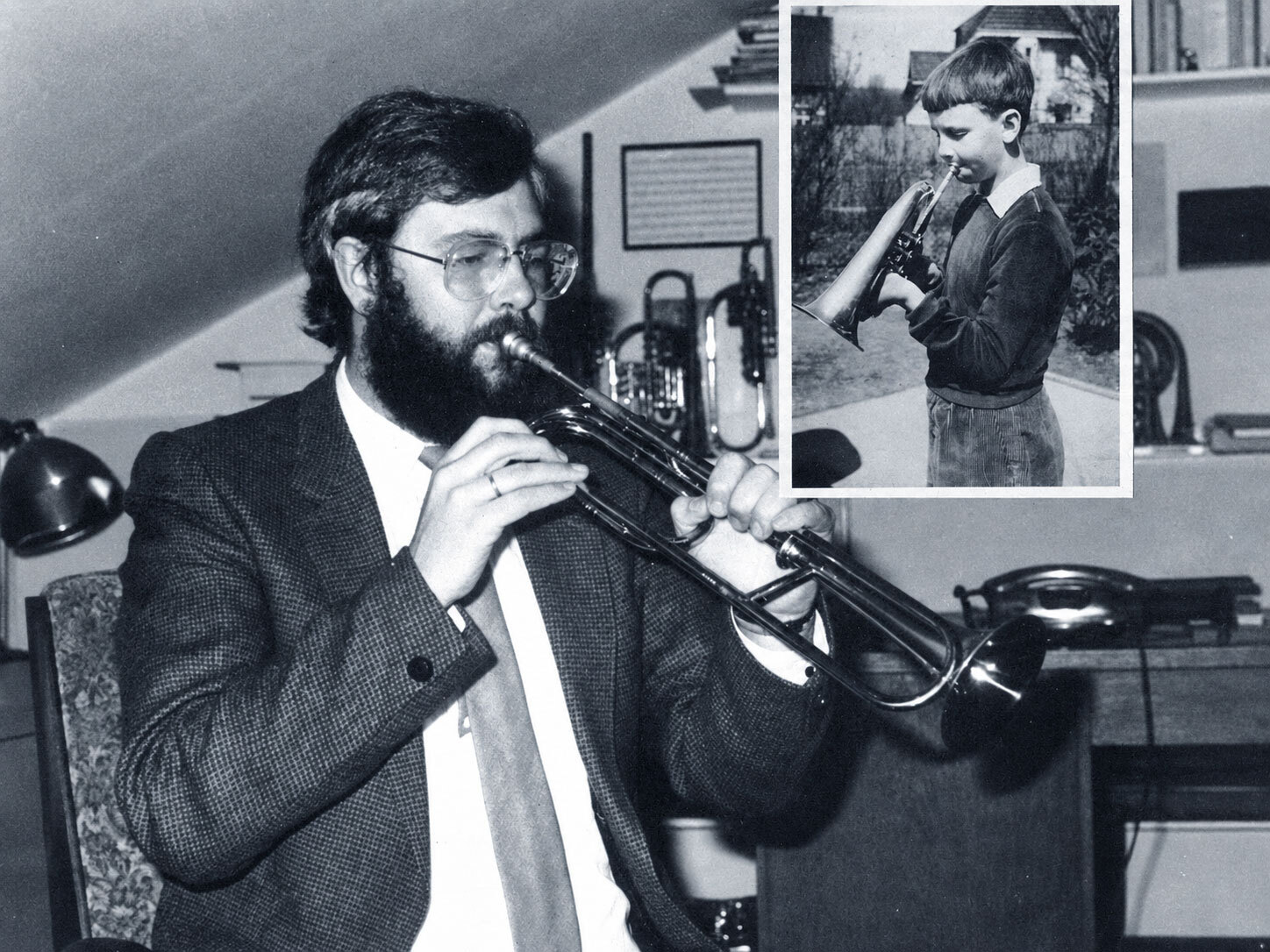
Friedemann Immer was born in Duisburg in West Germany in 1948, amid Germany’s painful efforts to rise from its ruins. His father, a pastor, preached in ruined churches. Having no organ, he turned to the great tradition of Kuhlo’s Posaunenchöre (the German church brass ensembles — see B.B. no. 38, p. 33) and himself played flugelhorn at the services. Young Friedemann was fascinated by this instrument, learned to play it and regularly took part in services with the Posaunenchöre. When very young he had played the recorder; now in addition to the flugelhorn, he learned the cello.

His talent for music strengthened. The family musical environment was based mainly on the past; little modern music or jazz entered the Immer house. No wonder Baroque music had an irresistible attraction for him. The great German tradition of cantatas, oratorios etc. gave him many opportunities to play.

Then he took his first real trumpet lessons, in private, with the solo trumpet at the Duisburg Symphony Orchestra, Baron Heinrich von Senden. The teacher soon recognised his pupil’s exceptional ability in the high register. He took him with him to play cantatas and other small-trumpet parts. After three months von Senden even sent him to play the solo in Handel’s “Messiah”.

These private lessons lasted for three years. He played an old Monke C trumpet. When von Senden got a new job in Hanover, he left his place in Duisburg to Friedemann, who took up quite naturally a trumpeter’s traditional contacts with the German Baroque vocal music culture. More and more difficult works joined his repertoire (the Telemann concertos etc.); he still played them on a D trumpet. He acquired his first piccolo in 1968, a four-valve B♭/A Selmer which he still plays.

Brass Bulletin image

Modern trumpets - first career

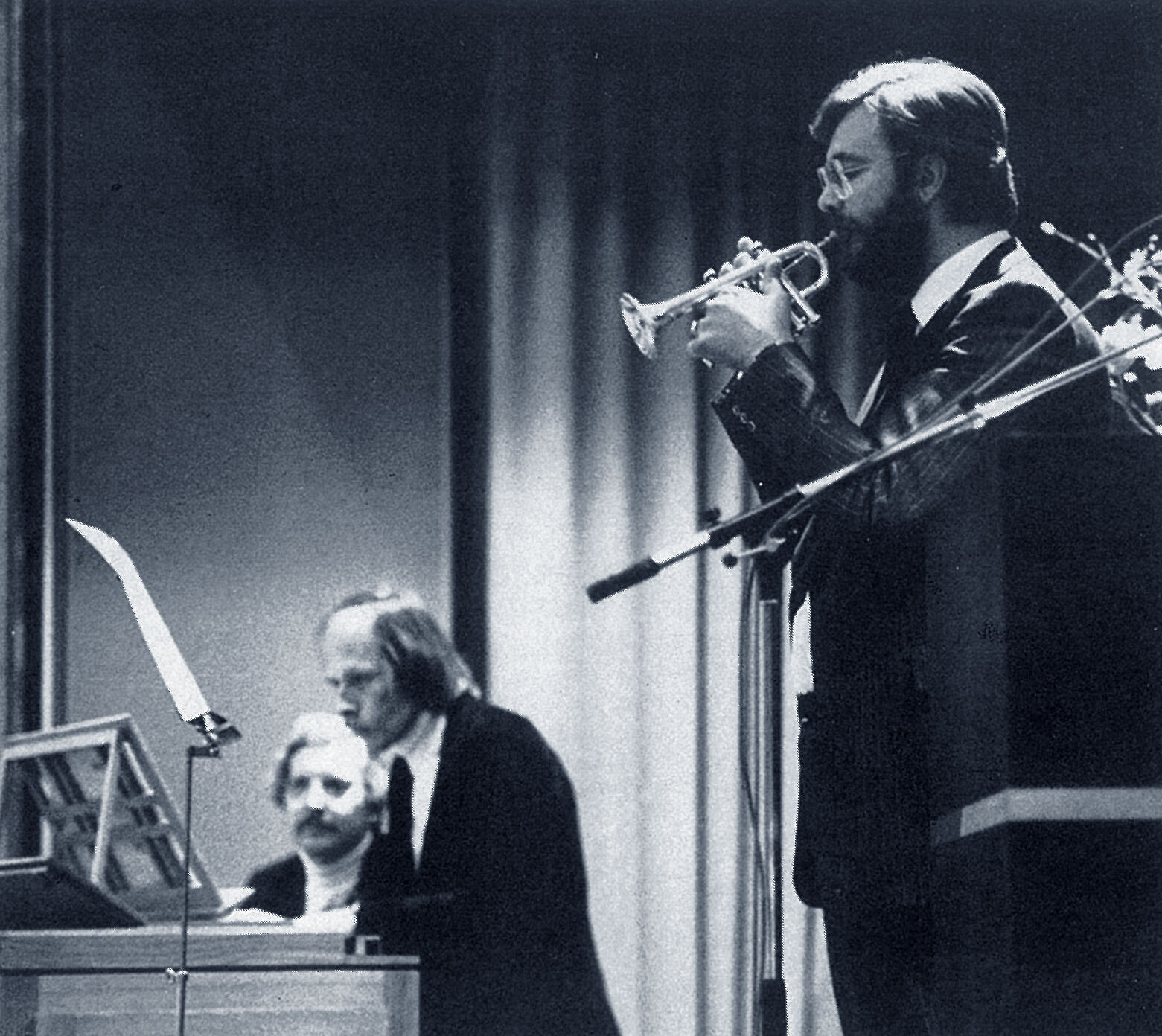
In 1970 at the age of only 22 he successfully tackled the difficult trumpet part in Bach’s 2nd Brandenburg Concerto. He could play the 1st part in the B minor Mass perfectly. His reputation never stopped growing from then on.

Throughout this period, however, he did not only study music. He enrolled first in medecine, then in maths and in physics. It was not until 1977, shortly before his final exams, that he gave up all his scientific studies to devote himself entirely to music.

His solo career was already well under way when he enrolled in the Cologne College of Music to study with Walter Holy¹. What he wanted most of all was the knowledge of theory he needed for his teacher’s diploma.

As a student but also a full-time professional musician he was in an ambiguous and slightly comical situation, especially when the college where he was studying offered him a post teaching early music. Welcome proof that it is still possible to get an important job on the basis of knowledge and talent rather than by presenting diplomas and recommendations.

Friedemann Immer is a self made man who has built his own career without referring to the other pioneers of Baroque trumpet music a great deal. His is an original and interesting path.
Brass Bulletin image

Natural trumpets - second career

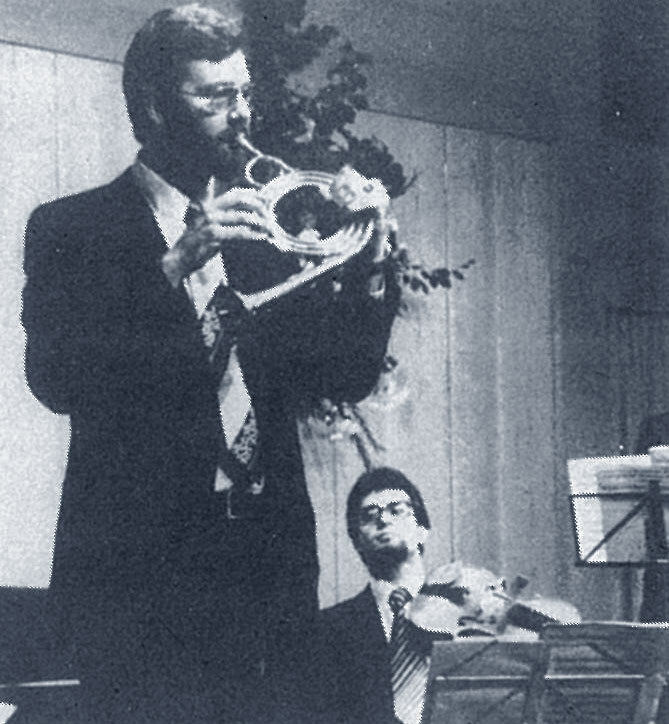
The oboist Helmut Hucke first aroused Friedemann’s interest in the natural trumpet and the cornetto (he started learning the latter in 1972, first on a Moeck instrument, then on one by Christopher Monk).

In 1976 he bought his first D/C natural trumpet from Meinl & Lauber. A year later he played the 2nd Brandenburg in public on an F natural trumpet (also made by Meinl & Lauber), the first time, in May, in Switzerland and the second in the United States where he also made a record (Smithsonian Institution, Washington DC). This was the start of a second career which was to develop parallel to, and by the same criteria as the one which had started in 1970 with the modern trumpet: B minor Mass, cantatas, oratorios etc.

Today his repertoire is divided as follow: 30% modern trumpets, 60% natural trumpets and 10% cornetto. In 1980 Nikolaus Harnoncourt invited him to record with the Vienna Concentus Musicus. In 1982 he made an exceptionally fine recording of the 2nd Brandenburg with this renowned ensemble (Teldec). Further concerts and recordings with the most distinguished early music groups followed without a break: Collegium Aureum, La Petite Bande (Belgium); Leonhardt Consort (Netherlands); Academy of Ancient Music, Taverner Players (Britain); Aston Magna (USA); H.-M. Linde Consort (Switzerland) etc.

He has played the 2nd Brandenburg concerto in public more than 40 times on the natural trumpet and more than 160 times on the modern piccolo trumpet. He has made several recordings under his own direction. Friedemann Immer is joining the top rank of the great modern trumpeters.

In a forthcoming issue Friedemann Immer will tell us in greater detail about the “fundamental techniques” necessary for good natural-trumpet playing.

Notes

¹ Walter Holy, together with the instrument maker Helmut Finke, was one of the pioneers of the renaissance of the natural trumpet. F.I. says, however, that he only studied the modern trumpet with him.

Brass Bulletin 50, II / 1985 páginas 76–79

Todo el contenido está protegido por derechos de autor © Brass Bulletin 1985–2026

Compartir este artículo

Facebook LinkedIn
Cargando…

Preguntas y respuestas

Cómo funciona la edición digital

¿Qué incluye la edición digital?

La edición digital reúne los artículos ya digitalizados como textos legibles y consultables en línea —no simplemente como escaneos o archivos PDF— junto con sus ilustraciones originales, notas, autoría, información del número y traducciones disponibles. Las sugerencias de artículos relacionados incluyen actualmente solo este material digitalizado.

¿Los artículos digitales son idénticos a los originales?

Conservamos con la mayor fidelidad posible el texto original, el idioma, las ilustraciones, los pies de imagen, las notas y el contexto editorial. La presentación se adapta para facilitar la lectura en línea y pueden corregirse errores evidentes de transcripción o escaneado. El contenido y el carácter del artículo publicado permanecen inalterados.

¿Qué idiomas están disponibles?

Brass Bulletin se publicó en inglés, francés y alemán a lo largo de toda su historia. Las traducciones al italiano y al español se añadieron a partir del número 60. Por este motivo, en los sitios italiano y español los artículos de los números 1 a 59 se muestran en inglés de forma predeterminada.

¿Con qué frecuencia se añaden nuevos artículos?

Se añaden nuevos artículos casi a diario, con aproximadamente un número completo digitalizado cada semana. El ritmo puede variar según el trabajo de preparación, tratamiento de imágenes y revisión editorial necesario.

¿Por qué no están disponibles todos los artículos en formato digital?

La colección completa de Brass Bulletin contiene 1.246 artículos publicados entre 1971 y 2003. El índice completo ya está disponible en línea y permite descubrir todos los artículos de la colección, incluidos aquellos cuyo texto íntegro todavía no ha sido digitalizado.

La digitalización comenzó en febrero de 2026. Cada artículo se prepara cuidadosamente para la lectura en línea, se revisa y se vincula con su número, sus autores, sus temas y sus ilustraciones. Al ritmo actual de digitalización, se prevé que la colección completa esté disponible en línea en febrero de 2028.

¿Por qué algunas referencias mencionan artículos que todavía no están disponibles?

Las referencias de los artículos originales se conservan aunque el material al que remiten aún no haya sido digitalizado. De este modo se mantiene intacto el contexto histórico y editorial. A medida que se incorporen más números a la edición digital, un número creciente de estas referencias conducirá a artículos que podrán leerse en línea.

¿Puedo sugerir un artículo o informar de un error de transcripción?

Sí. Si hay algún artículo que le gustaría especialmente ver digitalizado, o si detecta un posible error de transcripción o algún dato que falta, póngase en contacto con nosotros. Los comentarios de los lectores nos ayudan a mejorar la edición digital y a establecer prioridades útiles dentro del archivo.

¿Cómo puedo apoyar a Brass Bulletin?

Su apoyo ayuda a financiar la preparación, verificación y publicación en línea de la colección completa.

Suscríbase a la Edición Digital

¿Prefiere apoyarnos sin suscribirse?

Haga una donación

Busca en Brass Bulletin.