Ofrezca Brass Bulletin en su universidad, conservatorio o biblioteca Descubra el acceso institucional

17 min de lectura

100 Years of Kuhlo's Posaunenchor Book

A century-old brass choir book reveals how revivalist faith, Bach chorales, folk song, and practical notation reshaped church music.
100 Years of Kuhlo's Posaunenchor Book

Papers of Kuhlo's have unexpectedly come to light: copies of music, musical sketch-books, manuscript song collections, first impressions, programmes, letters, notes etc. — an enormous jumble of things, disordered and for the time being impossible to take in.

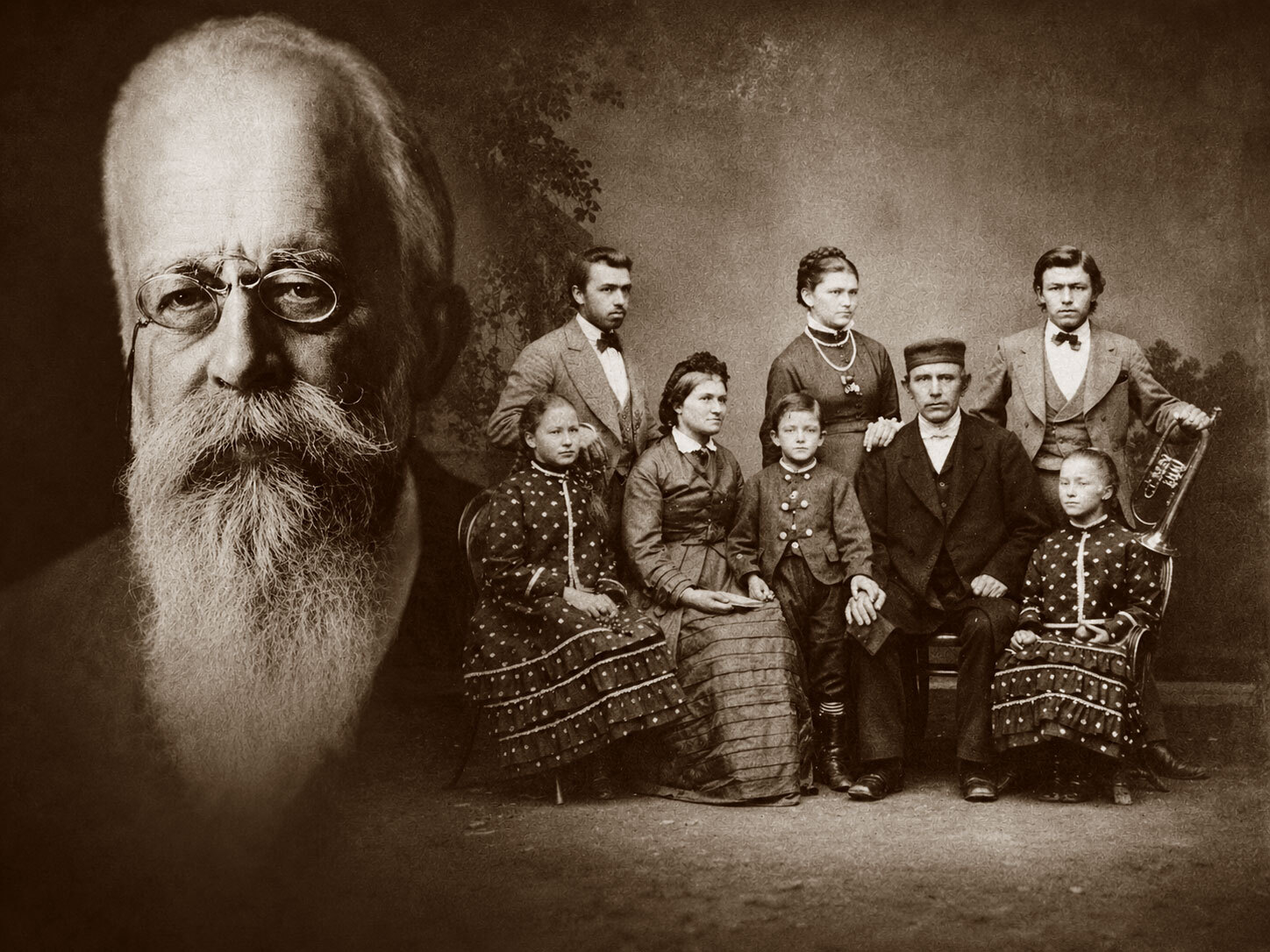
Rummaging through these most informative documents, which stem from the many generations of singers and players in the Ravensberg area who were, unwittingly, to have such an influence on Westphalia, all Germany and even further afield, I came upon the first Posaunenbuch, the first Posaunenchor book, published in Gütersloh in 1881. It is therefore exactly 100 years old. A few words about its creation and its character may thus serve as a grateful contribution to Kuhlo Year.

But first an evaluation of the archive. Singing and playing started between the Teutoburger Wald and the Wiehengebirge as part of the movement of neo-pietistic revival. "Concern to become blessed" was the motive. "Bible peasants", as Kuhlo called them, gathered round the Bible and the song-book. The singing preceded the playing.

Torchbearers of the movement were the "Young Men and Women's Associations" led by Eduard Kuhlo, a parson in rural Gohfeld, near Herford and Bad Oeynhausen. It is characteristic of a "movement" that it seems suddenly to "drop from the heavens" — no-one is prepared for it, least of all for playing and singing in several parts. How would they get the music?

The young theologian had already started on a collection of songs in several parts while working as tutor to the von Laer family on their estate with its pretty little castle and lake in Westphalian style at Oberbehme, before the gates of Herford; he worked together with the daughter of the house, who was his fiancée (the collection is signed: "E. Kuhlo, Ida v. Laer, Oberbehme 1851"). The systematic arrangement proceeds from "Chorales" via "Sacred Folksongs and Children's Songs" and "Sacred Songs" to "Songs" (with piano) by Schubert and Mendelssohn in which the compiler accompanied his bride as soloist.

Written or oral sources are often indicated. Thus the song researcher included some specimens of Gregorian psalms from the Hermannsburg missionary centre (in several parts) "for additional church services". Another of Eduard's collections is intended specifically for choirs of players: "Score for the Posaunenchor at Gohfeld, begun in autumn 1867" (signed: "E. Kuhlo, parson in Gohfeld").

The Posaunenchöre were called into being by the revivalist preacher Heinrich Volkening from the village of Jöllenbeck near Bielefeld. They were to support the singing at the numerous revivalist groups' meetings in farmyards. As a basis for this Kuhlo took the Chorale Book for Evangelical Churches, Arranged in Four Parts Supplied with Preludes and Interludes by C. H. Rinck, first published in Essen in 1829 and commonly used in Westphalia, which this Bach epigone had compiled at the request of the consistory in Münster (Natorp).

Continue reading

Accede a la edición digital completa.

Brass Bulletin 38, II / 1982 páginas 33–53

Todo el contenido está protegido por derechos de autor © Brass Bulletin 1982–2026

Compartir este artículo

Facebook LinkedIn
Cargando…

Preguntas y respuestas

Cómo funciona la edición digital

¿Qué incluye la edición digital?

La edición digital reúne los artículos ya digitalizados como textos legibles y consultables en línea —no simplemente como escaneos o archivos PDF— junto con sus ilustraciones originales, notas, autoría, información del número y traducciones disponibles. Las sugerencias de artículos relacionados incluyen actualmente solo este material digitalizado.

¿Los artículos digitales son idénticos a los originales?

Conservamos con la mayor fidelidad posible el texto original, el idioma, las ilustraciones, los pies de imagen, las notas y el contexto editorial. La presentación se adapta para facilitar la lectura en línea y pueden corregirse errores evidentes de transcripción o escaneado. El contenido y el carácter del artículo publicado permanecen inalterados.

¿Qué idiomas están disponibles?

Brass Bulletin se publicó en inglés, francés y alemán a lo largo de toda su historia. Las traducciones al italiano y al español se añadieron a partir del número 60. Por este motivo, en los sitios italiano y español los artículos de los números 1 a 59 se muestran en inglés de forma predeterminada.

¿Con qué frecuencia se añaden nuevos artículos?

Se añaden nuevos artículos casi a diario, con aproximadamente un número completo digitalizado cada semana. El ritmo puede variar según el trabajo de preparación, tratamiento de imágenes y revisión editorial necesario.

¿Por qué no están disponibles todos los artículos en formato digital?

La colección completa de Brass Bulletin contiene 1.246 artículos publicados entre 1971 y 2003. El índice completo ya está disponible en línea y permite descubrir todos los artículos de la colección, incluidos aquellos cuyo texto íntegro todavía no ha sido digitalizado.

La digitalización comenzó en febrero de 2026. Cada artículo se prepara cuidadosamente para la lectura en línea, se revisa y se vincula con su número, sus autores, sus temas y sus ilustraciones. Al ritmo actual de digitalización, se prevé que la colección completa esté disponible en línea en febrero de 2028.

¿Por qué algunas referencias mencionan artículos que todavía no están disponibles?

Las referencias de los artículos originales se conservan aunque el material al que remiten aún no haya sido digitalizado. De este modo se mantiene intacto el contexto histórico y editorial. A medida que se incorporen más números a la edición digital, un número creciente de estas referencias conducirá a artículos que podrán leerse en línea.

¿Puedo sugerir un artículo o informar de un error de transcripción?

Sí. Si hay algún artículo que le gustaría especialmente ver digitalizado, o si detecta un posible error de transcripción o algún dato que falta, póngase en contacto con nosotros. Los comentarios de los lectores nos ayudan a mejorar la edición digital y a establecer prioridades útiles dentro del archivo.

¿Cómo puedo apoyar a Brass Bulletin?

Su apoyo ayuda a financiar la preparación, verificación y publicación en línea de la colección completa.

Suscríbase a la Edición Digital

¿Prefiere apoyarnos sin suscribirse?

Haga una donación

¿Cómo avanza la digitalización?

Estamos poniendo Brass Bulletin a disposición de los lectores en línea, artículo por artículo. Pueden leer los artículos recién digitalizados en cuanto estén listos, incluso antes de que se complete un número entero.

Consulten nuestro calendario de digitalización para descubrir las últimas novedades y las fechas estimadas de disponibilidad de los próximos números. Estas estimaciones se basan en nuestro ritmo reciente y pueden cambiar.

Busca en Brass Bulletin.