Las traducciones originales al español de Brass Bulletin comienzan con el n.º 60.

3 min de lectura

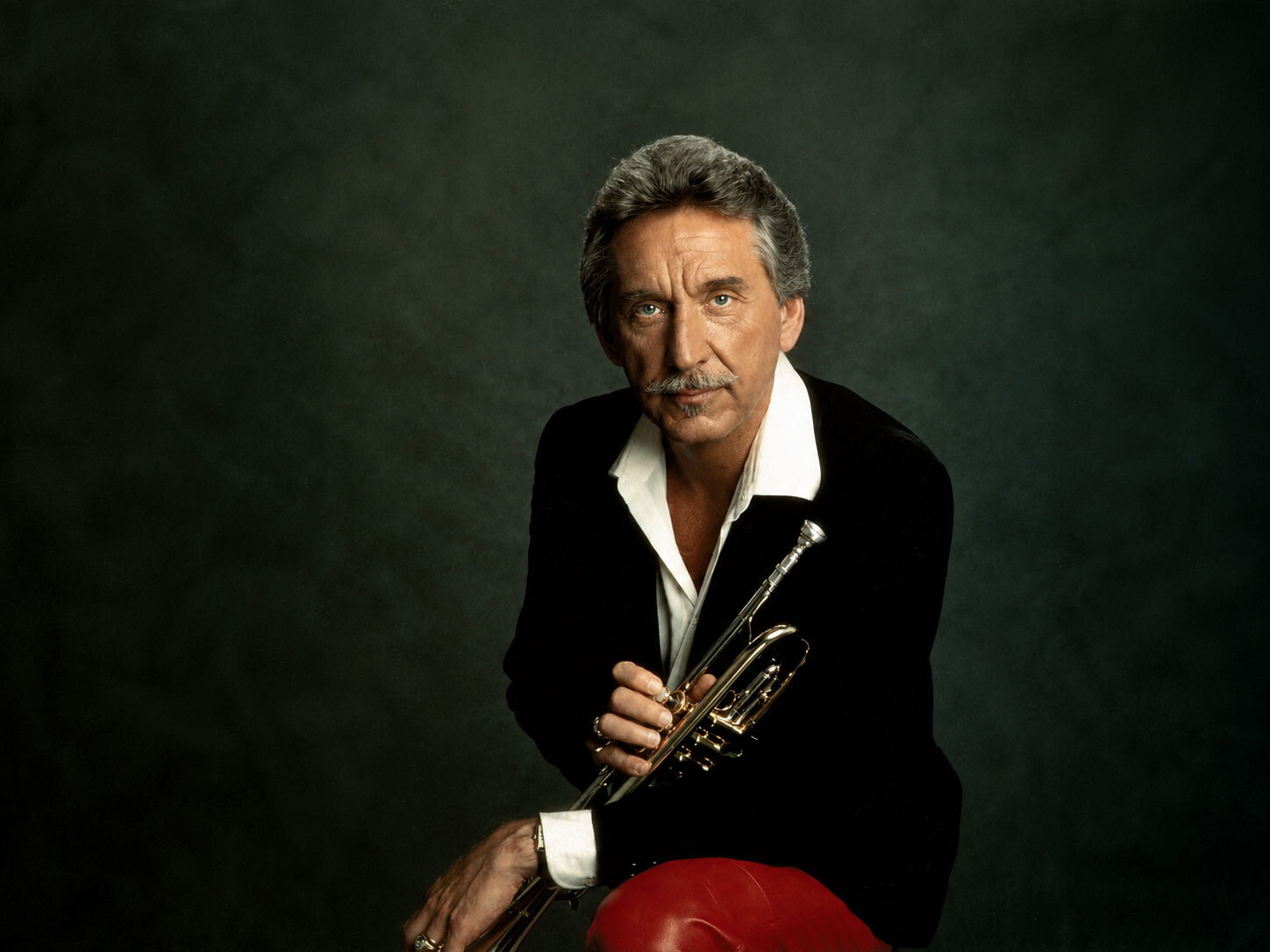
Doc Severinsen

Talent, will and glory

Doc Severinsen

Doc Severinsen

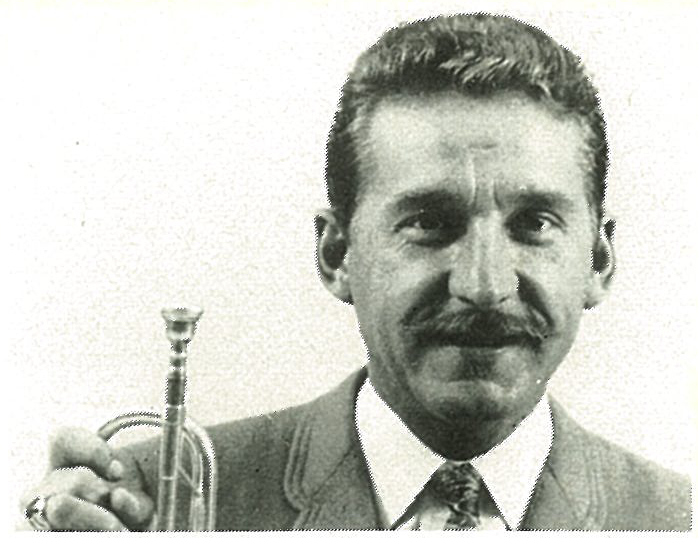
In the United States Doc Severinsen has gained enormous popularity as a trumpet player and a TV star. For more than twenty years, five days a week, he has been at the centre of one of North America's most watched programmes, Johnny Carson's hour-long "Tonight Show".

From the violin to the trumpet

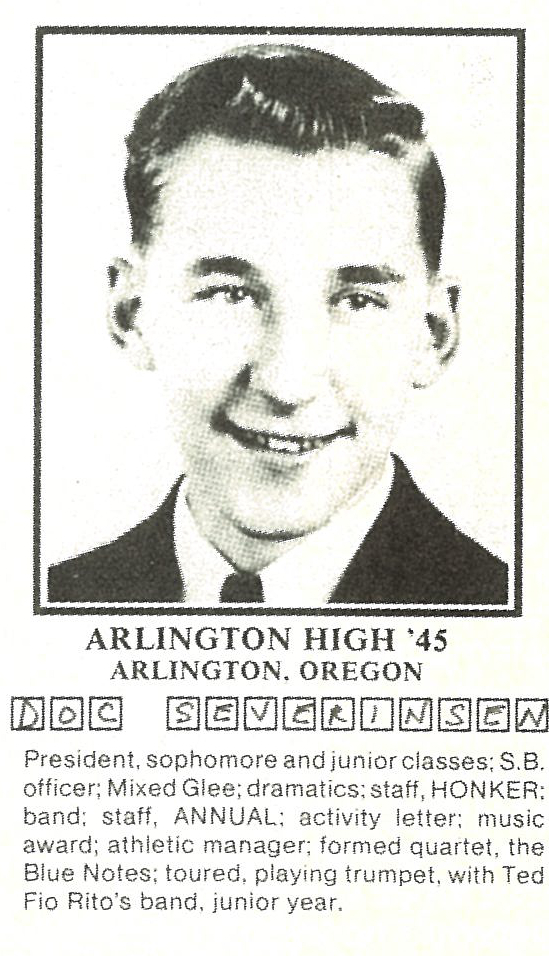
Carl Severin Severinsen was the only dentist in the small town (population: 600) of Arlington, Oregon. It was no surprise that, when Carl Hilding was born on 7th July 1927, he was nicknamed "Little Doc".

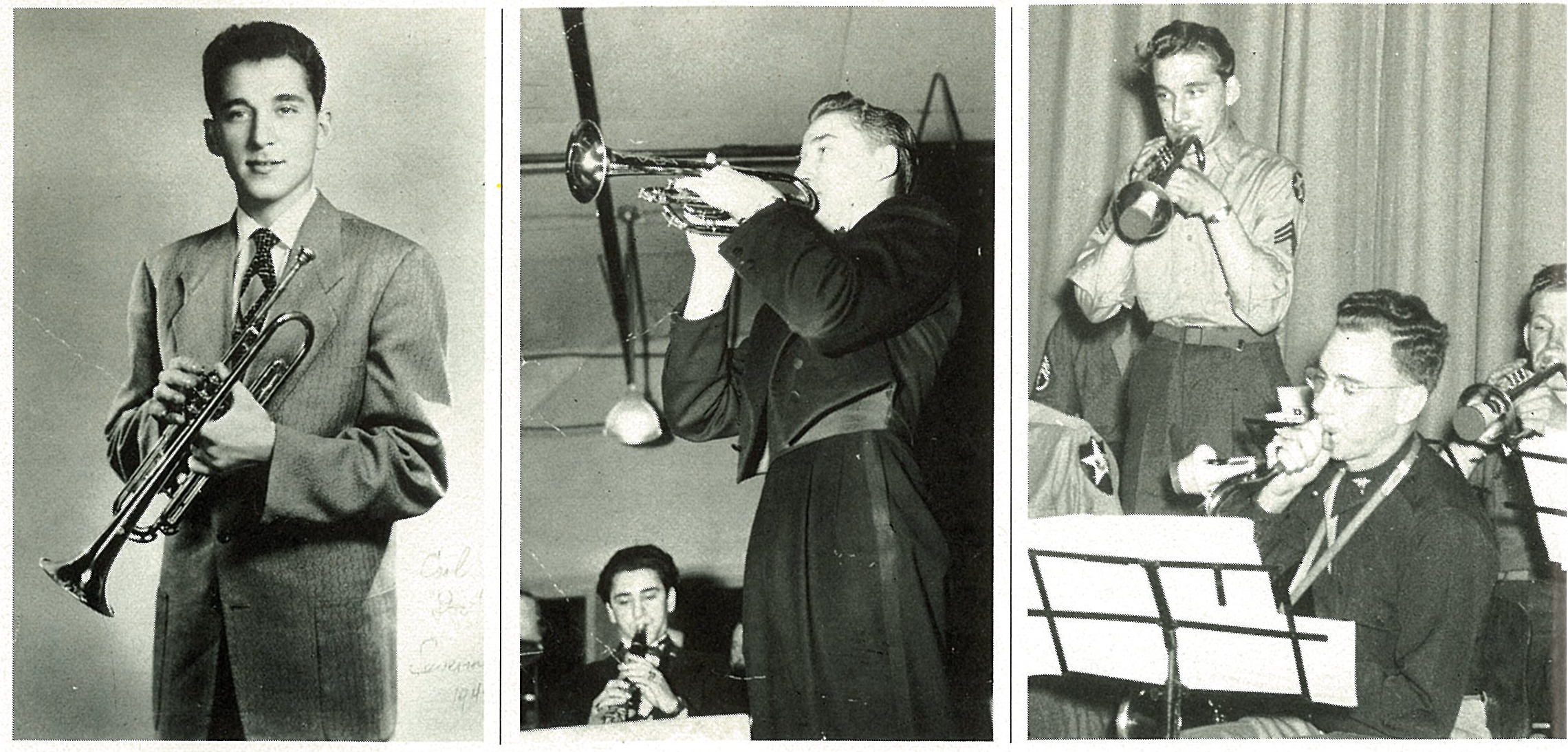
Doc senior, when he was not pulling out his fellow townspeople's teeth, was an enthusiastic and experienced amateur violinist. But nothing would induce his son to draw a bow across the strings. At the age of seven the lad decided it would be the trombone and nothing else. Arms too short? Ok then, the cornet. And the contract for his future was signed.

He got hold of a tutor and took the fingerings and the essential things from it. He hated practising exercises and his father, who knew nothing about brass, more or less introduced him to music in "violinistic" terms by giving him pieces and solos to play. This gave him a flying start and revealed his exceptional skills. A few weeks later he was in the high school wind band.

At the age of twelve he won a regional musical competition and things really took off. He went to play in the famous Ted Fio Rito band while he was still at high school. At fourteen he heard Zigi Elman and discovered the big band. This combined with the Herbert Clarke and Hartmann solos to guide him towards his own style. He did more and more dance work. When he left school at seventeen, he set off on tour, having become a real professional without even realising it. With whom? No less the Tommy Dorsey, Benny Goodman and Charlie Barnet bands.

First full contract

When he came back from military service in 1949, he went to work for the NBC orchestra in New York. There, at last, he was to practise the trumpet regularly and seriously with Benny Baker (then 1st trumpet at the NBC Symphony Orchestra conducted by Arturo Toscanini). This fruitful period lasted several years.

Doc Severinsen

Doc Severinsen

It was Benny Baker who managed to convince the fast-moving young virtuoso that "it is essential to lock the corners of the mouth, while keeping the centre of the lips flexible and relaxed" he was also the man who finally managed to get him to practise exercises (Charlier, St. Jacome, Arban etc.). This is the key to his fabulous technique.

Another important encounter was with Lennie Morrison, a nuclear physicist and violinist who changed to trumpet after an accident. Lennie taught him to compress the air properly to obtain the necessary energy to master the high register. Ray Crisera, who sat beside him in the orchestra, also gave him valuable advice. This completed Doc's mastery and his style became established from then on.

He played more and more as a soloist and many composers wrote concertos "to order" for him (Werle, Lovelock, Fischer-Tull, Jeff Tirsik, Vizzutti, Bilek, etc.). His programmes were generally "American classics" in the first half, jazz and popular in the second. He played an old American B♭ trumpet with a mouthpiece Bob Reeves had turned for him in Los Angeles (medium bore).

Tonight Show

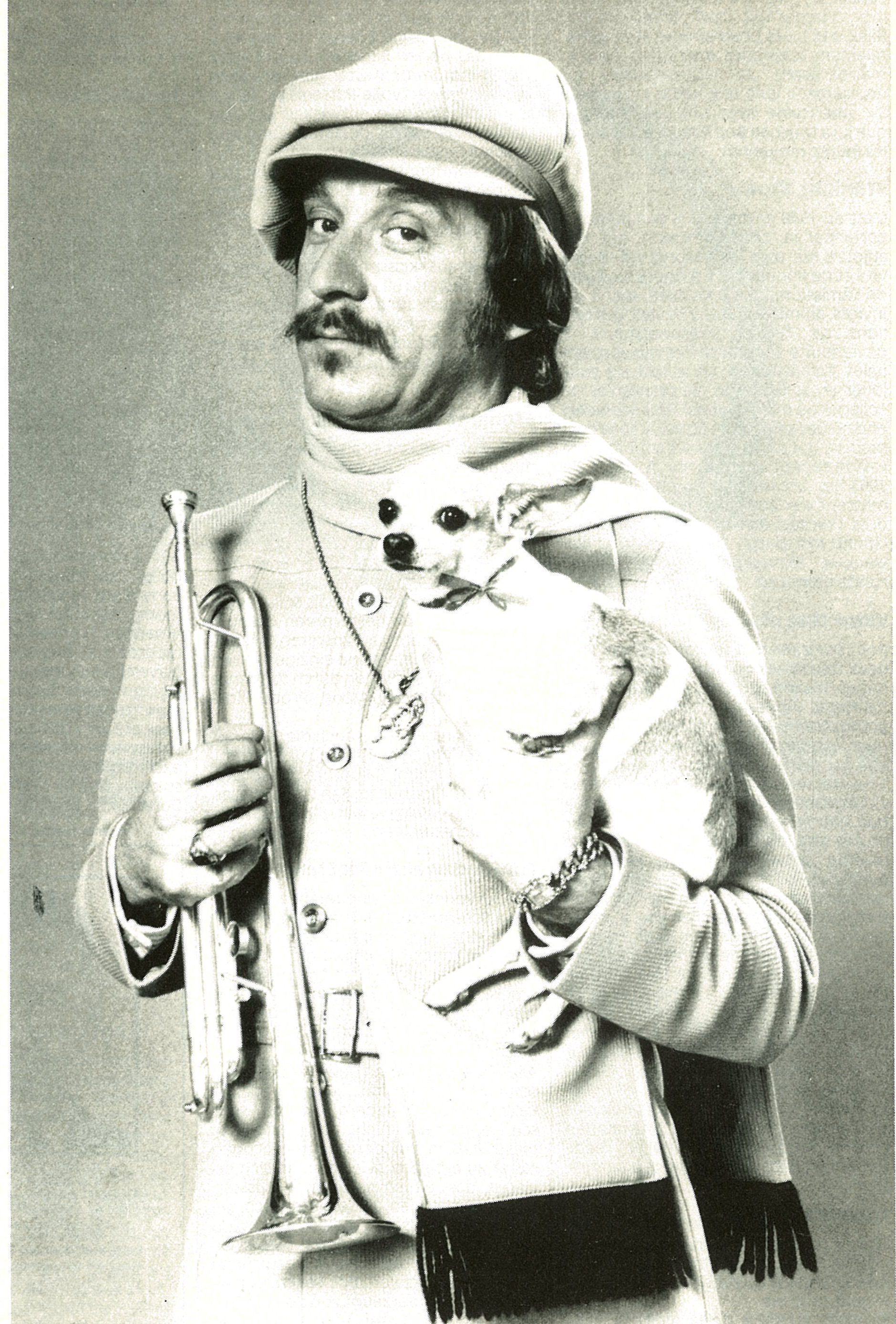
It was around 1958 that he started to take part in this programme which today beats all the records for popularity and length of run. He conducts the show's big band, plays solos, welcomes the guests and is in charge of the floor in front of millions of faithful viewers. He has become one of the great national stars. At the same time people ask him to play as a soloist with university and college orchestras. Every weekend — his only free time — is devoted to these jaunts around the country: "plane-rehearsal-concert".

Since 1963 the symphony orchestras have also been fighting over him: London, Chicago, Baltimore, Cleveland, Cincinnati, Pittsburgh, San Diego, Dallas, Milwaukee, Minneapolis, Denver — quite a list!
Doc Severinsen

Doc Severinsen

Twenty-five records

Doc Severinsen has made about two dozen records (one of which, cut in the early eighties with the London Philharmonic, contains two big contemporary American concertos, rehearsed and recorded in one weekend in London, travelling included).

All these recordings show off his amazing virtuosity and his unique fluency. Yet they are very difficult, if not impossible, to buy. Why is such a famous and such an extraordinarily "commercial" musician so badly distributed?

Don't ask; it's one of the mysteries, one of the contradictions in the man. Doc Severinsen is not absolutely convinced of the quality of his recordings. Strangely, this TV giant, this superstar who chats daily in front of millions of people, is ashamed of his records. "I never had the time to put the finishing touches to them like I should have," he says; "I can't listen to them any more." He makes no effort to promote them or reissue them. Hard luck for his thousands of admirers.
Brass Bulletin gallery image

Still on the look-out

Doc is a spirited performer. It is the present that interests him and he must always have something new to maintain his zest for life.

In 1980, at the peak of his glory, he founded Xebron, a modern jazz quintet, a combination he had long wanted to get to know better.

His style is built on the respect he has for Harry James, Louis Armstrong, Dizzy Gillespie, Rafael Mendez, Clarke Terry, Benny Baker, Bill Vacchiano, Adolph Herseth, Maurice André and many others. All these influences have contributed to make of him what he is today.

Today

Doc Severinsen built his career with an iron will. He still practises every day, looks after his physical (running and weight training), enjoys cooking (especially Italian) and never drinks alcohol. He lives in a magnificent property (Nichols Canyon, in Los Angeles) with his wife, Emily Marshall, who writes for television. He loves horses; he has a fine stable and runs it as a business himself. He also has a large collection of paintings by American artists.

Brass Bulletin 55, III / 1986 páginas 58–63

Todo el contenido está protegido por derechos de autor © Brass Bulletin 1986–2026

Compartir este artículo

Facebook LinkedIn
Cargando…

Preguntas y respuestas

Cómo funciona la edición digital

¿Qué incluye la edición digital?

La edición digital reúne los artículos ya digitalizados como textos legibles y consultables en línea —no simplemente como escaneos o archivos PDF— junto con sus ilustraciones originales, notas, autoría, información del número y traducciones disponibles. Las sugerencias de artículos relacionados incluyen actualmente solo este material digitalizado.

¿Los artículos digitales son idénticos a los originales?

Conservamos con la mayor fidelidad posible el texto original, el idioma, las ilustraciones, los pies de imagen, las notas y el contexto editorial. La presentación se adapta para facilitar la lectura en línea y pueden corregirse errores evidentes de transcripción o escaneado. El contenido y el carácter del artículo publicado permanecen inalterados.

¿Qué idiomas están disponibles?

Brass Bulletin se publicó en inglés, francés y alemán a lo largo de toda su historia. Las traducciones al italiano y al español se añadieron a partir del número 60. Por este motivo, en los sitios italiano y español los artículos de los números 1 a 59 se muestran en inglés de forma predeterminada.

¿Con qué frecuencia se añaden nuevos artículos?

Se añaden nuevos artículos casi a diario, con aproximadamente un número completo digitalizado cada semana. El ritmo puede variar según el trabajo de preparación, tratamiento de imágenes y revisión editorial necesario.

¿Por qué no están disponibles todos los artículos en formato digital?

La colección completa de Brass Bulletin contiene 1.246 artículos publicados entre 1971 y 2003. El índice completo ya está disponible en línea y permite descubrir todos los artículos de la colección, incluidos aquellos cuyo texto íntegro todavía no ha sido digitalizado.

La digitalización comenzó en febrero de 2026. Cada artículo se prepara cuidadosamente para la lectura en línea, se revisa y se vincula con su número, sus autores, sus temas y sus ilustraciones. Al ritmo actual de digitalización, se prevé que la colección completa esté disponible en línea en febrero de 2028.

¿Por qué algunas referencias mencionan artículos que todavía no están disponibles?

Las referencias de los artículos originales se conservan aunque el material al que remiten aún no haya sido digitalizado. De este modo se mantiene intacto el contexto histórico y editorial. A medida que se incorporen más números a la edición digital, un número creciente de estas referencias conducirá a artículos que podrán leerse en línea.

¿Puedo sugerir un artículo o informar de un error de transcripción?

Sí. Si hay algún artículo que le gustaría especialmente ver digitalizado, o si detecta un posible error de transcripción o algún dato que falta, póngase en contacto con nosotros. Los comentarios de los lectores nos ayudan a mejorar la edición digital y a establecer prioridades útiles dentro del archivo.

¿Cómo puedo apoyar a Brass Bulletin?

Su apoyo ayuda a financiar la preparación, verificación y publicación en línea de la colección completa.

Suscríbase a la Edición Digital

¿Prefiere apoyarnos sin suscribirse?

Haga una donación

Busca en Brass Bulletin.