Rendete Brass Bulletin disponibile nella vostra università, nel vostro conservatorio o nella vostra biblioteca Scoprite l’accesso istituzionale

3 min di lettura

Friedemann Immer

A new Trumpet

Friedemann Immer

Friedemann Immer

A gentle giant with lips of steel is quietly but surely working his way up in the hierarchy of present-day trumpeters.

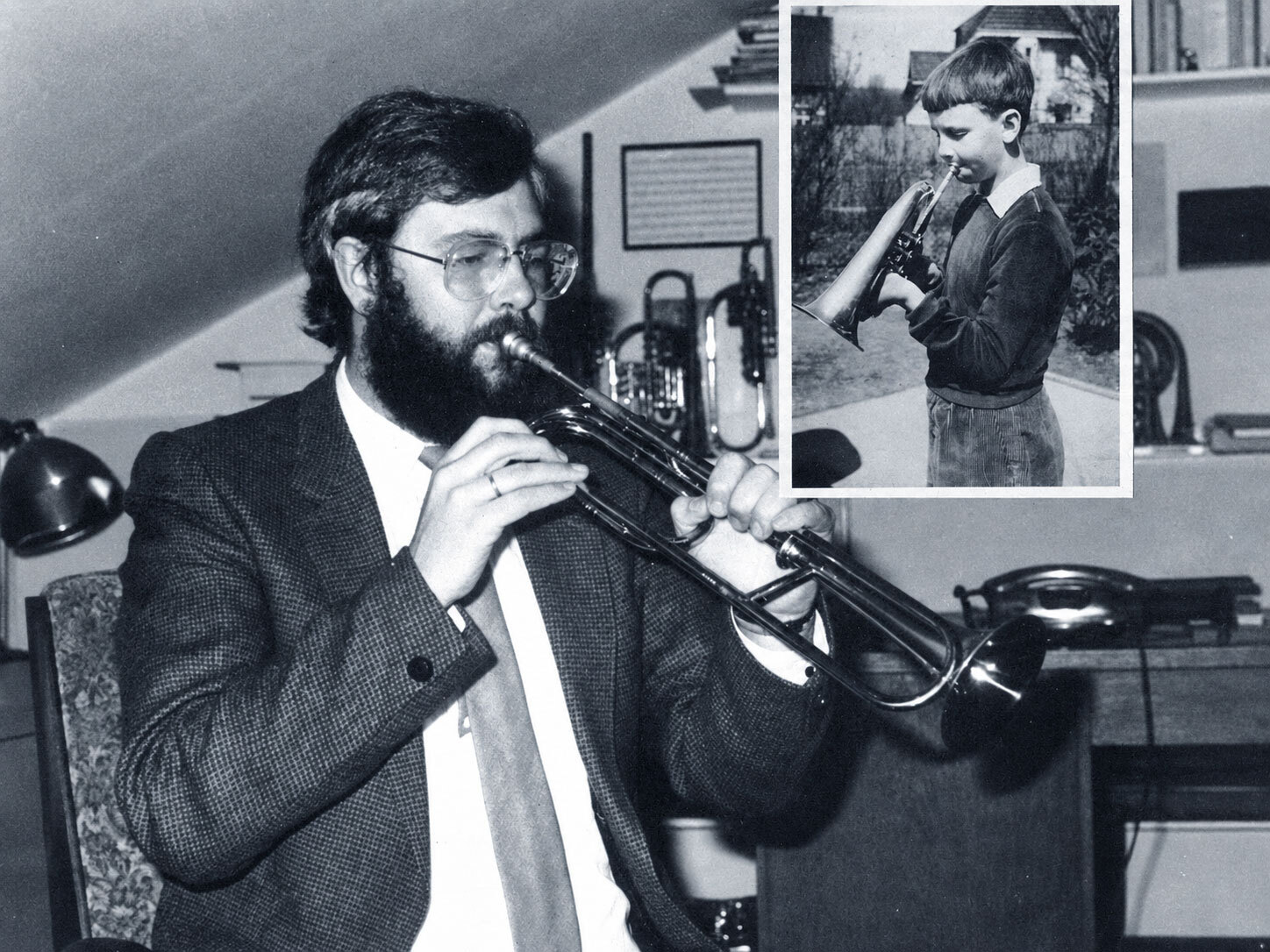
Friedemann Immer was born in Duisburg in West Germany in 1948, amid Germany’s painful efforts to rise from its ruins. His father, a pastor, preached in ruined churches. Having no organ, he turned to the great tradition of Kuhlo’s Posaunenchöre (the German church brass ensembles — see B.B. no. 38, p. 33) and himself played flugelhorn at the services. Young Friedemann was fascinated by this instrument, learned to play it and regularly took part in services with the Posaunenchöre. When very young he had played the recorder; now in addition to the flugelhorn, he learned the cello.

His talent for music strengthened. The family musical environment was based mainly on the past; little modern music or jazz entered the Immer house. No wonder Baroque music had an irresistible attraction for him. The great German tradition of cantatas, oratorios etc. gave him many opportunities to play.

Then he took his first real trumpet lessons, in private, with the solo trumpet at the Duisburg Symphony Orchestra, Baron Heinrich von Senden. The teacher soon recognised his pupil’s exceptional ability in the high register. He took him with him to play cantatas and other small-trumpet parts. After three months von Senden even sent him to play the solo in Handel’s “Messiah”.

These private lessons lasted for three years. He played an old Monke C trumpet. When von Senden got a new job in Hanover, he left his place in Duisburg to Friedemann, who took up quite naturally a trumpeter’s traditional contacts with the German Baroque vocal music culture. More and more difficult works joined his repertoire (the Telemann concertos etc.); he still played them on a D trumpet. He acquired his first piccolo in 1968, a four-valve B♭/A Selmer which he still plays.

Brass Bulletin image

Modern trumpets - first career

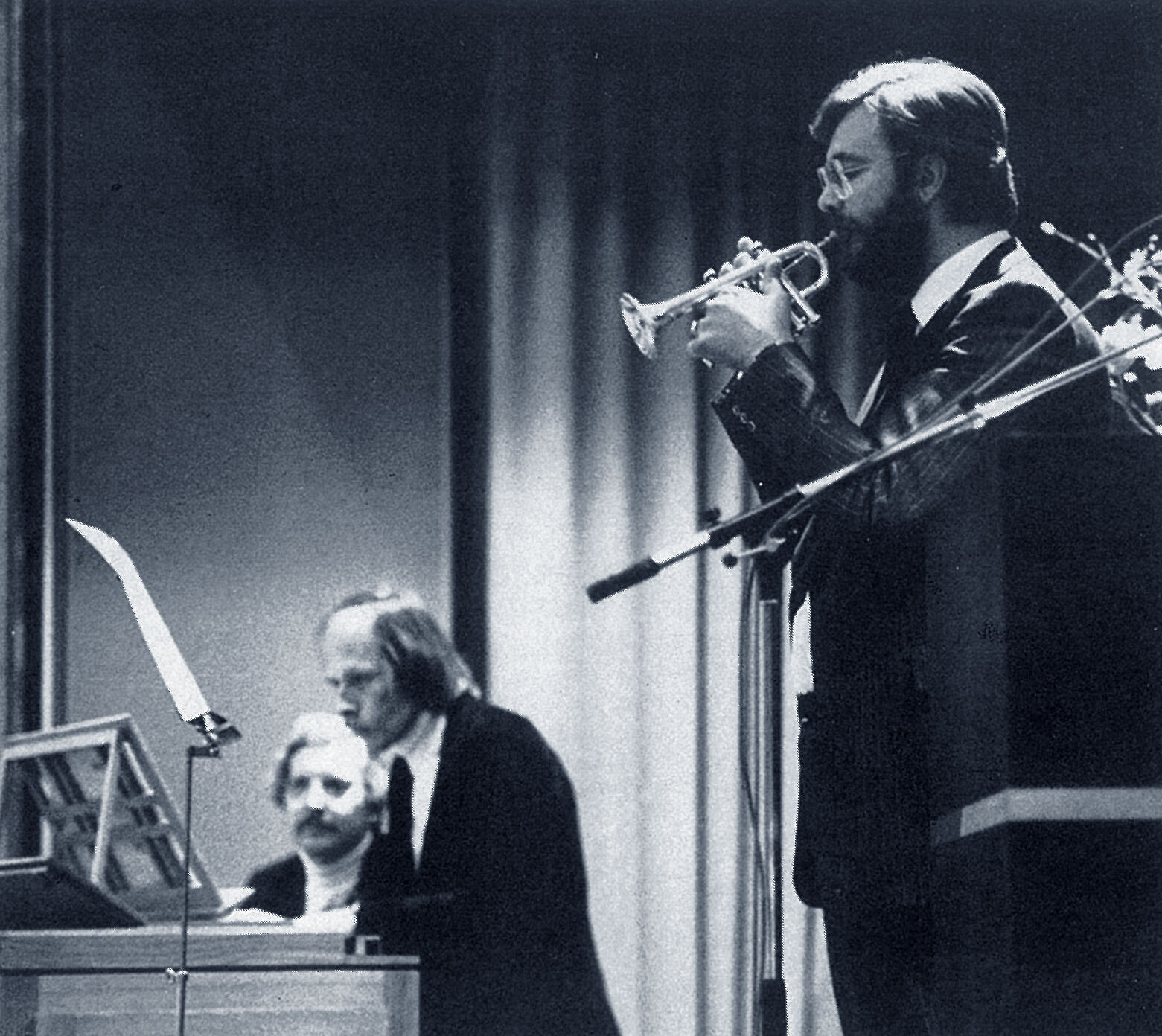
In 1970 at the age of only 22 he successfully tackled the difficult trumpet part in Bach’s 2nd Brandenburg Concerto. He could play the 1st part in the B minor Mass perfectly. His reputation never stopped growing from then on.

Throughout this period, however, he did not only study music. He enrolled first in medecine, then in maths and in physics. It was not until 1977, shortly before his final exams, that he gave up all his scientific studies to devote himself entirely to music.

His solo career was already well under way when he enrolled in the Cologne College of Music to study with Walter Holy¹. What he wanted most of all was the knowledge of theory he needed for his teacher’s diploma.

As a student but also a full-time professional musician he was in an ambiguous and slightly comical situation, especially when the college where he was studying offered him a post teaching early music. Welcome proof that it is still possible to get an important job on the basis of knowledge and talent rather than by presenting diplomas and recommendations.

Friedemann Immer is a self made man who has built his own career without referring to the other pioneers of Baroque trumpet music a great deal. His is an original and interesting path.
Brass Bulletin image

Natural trumpets - second career

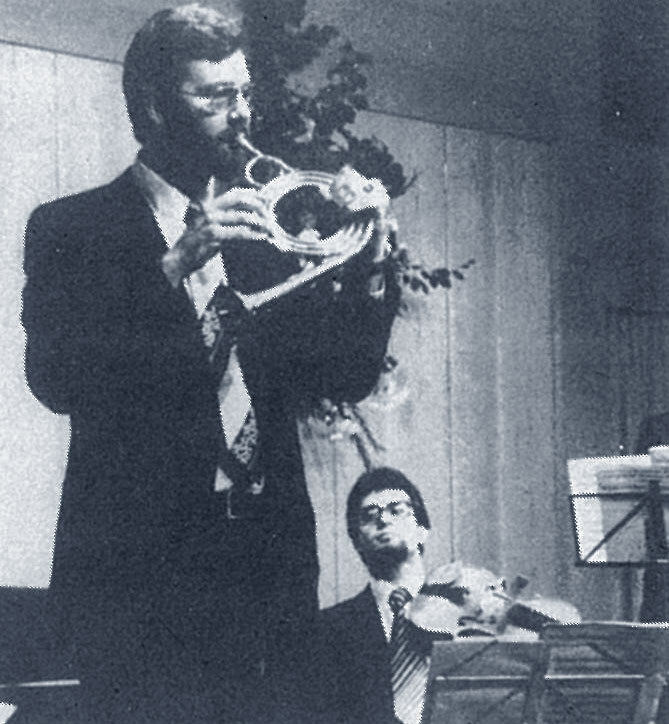
The oboist Helmut Hucke first aroused Friedemann’s interest in the natural trumpet and the cornetto (he started learning the latter in 1972, first on a Moeck instrument, then on one by Christopher Monk).

In 1976 he bought his first D/C natural trumpet from Meinl & Lauber. A year later he played the 2nd Brandenburg in public on an F natural trumpet (also made by Meinl & Lauber), the first time, in May, in Switzerland and the second in the United States where he also made a record (Smithsonian Institution, Washington DC). This was the start of a second career which was to develop parallel to, and by the same criteria as the one which had started in 1970 with the modern trumpet: B minor Mass, cantatas, oratorios etc.

Today his repertoire is divided as follow: 30% modern trumpets, 60% natural trumpets and 10% cornetto. In 1980 Nikolaus Harnoncourt invited him to record with the Vienna Concentus Musicus. In 1982 he made an exceptionally fine recording of the 2nd Brandenburg with this renowned ensemble (Teldec). Further concerts and recordings with the most distinguished early music groups followed without a break: Collegium Aureum, La Petite Bande (Belgium); Leonhardt Consort (Netherlands); Academy of Ancient Music, Taverner Players (Britain); Aston Magna (USA); H.-M. Linde Consort (Switzerland) etc.

He has played the 2nd Brandenburg concerto in public more than 40 times on the natural trumpet and more than 160 times on the modern piccolo trumpet. He has made several recordings under his own direction. Friedemann Immer is joining the top rank of the great modern trumpeters.

In a forthcoming issue Friedemann Immer will tell us in greater detail about the “fundamental techniques” necessary for good natural-trumpet playing.

Notes

¹ Walter Holy, together with the instrument maker Helmut Finke, was one of the pioneers of the renaissance of the natural trumpet. F.I. says, however, that he only studied the modern trumpet with him.

Brass Bulletin 50, II / 1985 pagine 76–79

Tutti i contenuti sono protetti dal diritto d’autore © Brass Bulletin 1985–2026

Condividi questo articolo

Facebook LinkedIn
Loading…

Domande e risposte

Come funziona l’edizione digitale

Che cosa comprende l’edizione digitale?

L’edizione digitale riunisce gli articoli già digitalizzati sotto forma di testi leggibili e ricercabili online — non semplicemente come scansioni o file PDF — insieme alle illustrazioni originali, alle note, agli autori, alle informazioni sul numero della rivista e alle traduzioni disponibili. I suggerimenti di articoli correlati comprendono attualmente solo questo materiale digitalizzato.

Gli articoli digitali sono identici agli originali?

Conserviamo il più fedelmente possibile il testo originale, la lingua, le illustrazioni, le didascalie, le note e il contesto editoriale. La presentazione viene adattata per una lettura confortevole online e gli evidenti errori di trascrizione o scansione possono essere corretti. Il contenuto e il carattere dell’articolo pubblicato rimangono invariati.

Quali lingue sono disponibili?

Brass Bulletin è stato pubblicato in inglese, francese e tedesco nel corso di tutta la sua storia. Le traduzioni italiane e spagnole sono state aggiunte a partire dal numero 60. Sui siti italiano e spagnolo, gli articoli dei numeri da 1 a 59 vengono quindi mostrati in inglese per impostazione predefinita.

Con quale frequenza vengono aggiunti nuovi articoli?

Nuovi articoli vengono aggiunti quasi ogni giorno, con circa un numero completo digitalizzato ogni settimana. Il ritmo può variare in base al lavoro di preparazione, elaborazione delle immagini e verifica editoriale necessario.

Perché non tutti gli articoli sono disponibili in formato digitale?

La collezione completa di Brass Bulletin comprende 1.246 articoli pubblicati tra il 1971 e il 2003. L’indice completo è già disponibile online e consente di scoprire tutti gli articoli della collezione, compresi quelli il cui testo integrale non è ancora stato digitalizzato.

La digitalizzazione è iniziata nel febbraio 2026. Ogni articolo viene accuratamente preparato per la lettura online, verificato e collegato al relativo numero, agli autori, agli argomenti e alle illustrazioni. Al ritmo attuale di digitalizzazione, la collezione completa dovrebbe essere disponibile online entro febbraio 2028.

Perché alcuni riferimenti citano articoli che non sono ancora disponibili?

I riferimenti presenti negli articoli originali vengono conservati anche quando il materiale a cui rimandano non è ancora stato digitalizzato. In questo modo si preserva l’integrità storica ed editoriale della rivista. Man mano che nuovi numeri vengono aggiunti all’edizione digitale, un numero crescente di questi riferimenti condurrà ad articoli leggibili online.

Posso suggerire un articolo o segnalare un errore di trascrizione?

Sì. Se desiderate che un determinato articolo venga digitalizzato, oppure se notate un possibile errore di trascrizione o un’informazione mancante, contattateci. I riscontri dei lettori ci aiutano a migliorare l’edizione digitale e a stabilire priorità utili all’interno dell’archivio.

Come posso sostenere Brass Bulletin?

Il vostro sostegno contribuisce a finanziare la preparazione, la verifica e la pubblicazione online dell’intera collezione.

Abbonati all’Edizione digitale

Preferite sostenerci senza abbonarvi?

Fate una donazione

Cerca in Brass Bulletin.