Ofrezca Brass Bulletin en su universidad, conservatorio o biblioteca Descubra el acceso institucional

3 min de lectura

Emory Brace Remington

A Profile

Born December 22, 1891, Emory Brace Remington took up the trombone at age fourteen.

His own remarks about that beginning are perhaps most appropriate: "All along I was fascinated by the trombone. I'd seen pictures of it and that was all I'd talk about. Finally, the next door neighbor came home with an instrument from a pawnshop and gave it to me. I didn't know the first thing — I thought you just went up and down on the slide."

In 1921, he became a member of the Eastman School of Music faculty and first trombonist in the Eastman Theater Orchestra (which was later called the Rochester Civic Orchestra and then the Rochester Philharmonic). For the next twenty-eight years, he never missed a concert.

After his retirement from the orchestra in 1949, he continued to teach his beloved pupils for another twenty-two years until his death, December 10, 1971, making a grand total of fifty years at Eastman. He taught, as a conservative guess, over one thousand students, spanning three generations. His influence and the influence of his legion of students has been enormous.

A typical lesson with "the Chief" (as he became affectionately known) consisted of his own special warm-ups, etudes involving scale and arpeggio patterns in all keys, vocalises, dramatic — orchestral style etudes, and perhaps a solo piece or a few orchestral excerpts.

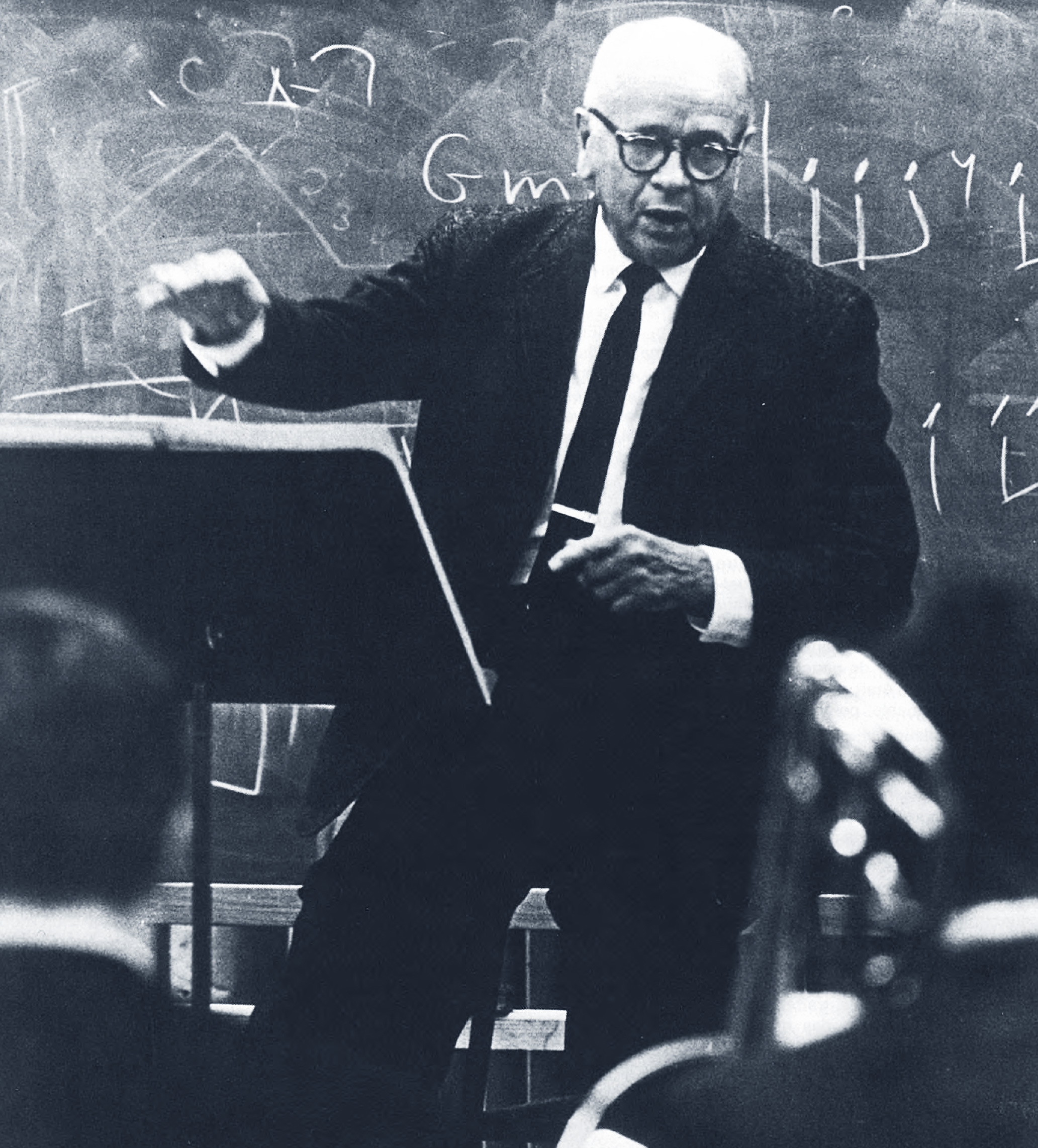
Emory Brace Remington

Emory Brace Remington

As the student became more advanced, the material increased in difficulty at a pace that was demanding but not overwhelming. The number of pages that the student prepared was not assigned, and within reason, could be varied by the individual.

Remington's principal teaching device was to sing virtually every note in every lesson. Again, his own words are most descriptive: "If I had a special distinction, it was that I tried to make the trombone sing with a human quality. In the old days, no one asked fundamental questions like tongue placement, breath control and so on. I just played as it seemed right to me. There was very little material then that treated the vocal line. It was marches, boom, boom, dah, dah, a lot of the German school, very smeary on the slide. The old school was to spit it out. I was strong on articulation, in the mouth like a singer. I didn't blow into the horn, I sang into it, as little resistance as possible. I've always treated the instrument as just another voice."

He had a baritone voice of uneven quality but the ability to convey phrasing, articulation, and sound quality in an uncanny manner. He estimated that he sang six to seven hours a day. If the student listened carefully, the various aspects of playing could be deduced from this continual vocalization.

The only time that he did not "sing along" was when a solo was played just prior to performance, or the occasional opening phrase of an etude. After a few measures, he would usually say: "Hold it! Not like that; more like this", and launch into song. Then student and teacher would begin again together.

On rare occasions when the student captured exactly the right qualities of the first phrase, "the Chief" would enter on the second. This was the highest form of praise and was worth more than any of his spoken encouragements.

Technical explanations were completely absent. It may be difficult for some to fully understand, but this was the essence of his "osmosis" style of teaching. Each student was free to learn as much or as little as was desired.

He treated all his students the same. There was no star system. The talented players were allowed to develop their gifts at the rapid pace on which they thrived. The average players were gently "pushed" to higher levels of attainment. The problem players were usually coerced, without their realizing, into non-performance areas of the profession.

If Remington’s method had a weak point, and this is debatable, it was his reluctance to make technical suggestions to his students. While it is true that some of his former pupils were helped by other teachers more adept at the technical aspects of teaching, this manner of working with people was foreign to his humanistic nature.

He realized (as the teachers of today should) that only a few would ever make their living as performers and that false encouragement and long, painful adjustment periods would usually lead to frustration and disappointment.

As Howard Hanson, former Director of the Eastman School, so eloquently said:

Remington did not teach trombone, he taught people.

Brass Bulletin 21, I / 1978 páginas 37–39

Todo el contenido está protegido por derechos de autor © Brass Bulletin 1978–2026

Compartir este artículo

Facebook LinkedIn
Cargando…

Preguntas y respuestas

Cómo funciona la edición digital

¿Qué incluye la edición digital?

La edición digital reúne los artículos ya digitalizados como textos legibles y consultables en línea —no simplemente como escaneos o archivos PDF— junto con sus ilustraciones originales, notas, autoría, información del número y traducciones disponibles. Las sugerencias de artículos relacionados incluyen actualmente solo este material digitalizado.

¿Los artículos digitales son idénticos a los originales?

Conservamos con la mayor fidelidad posible el texto original, el idioma, las ilustraciones, los pies de imagen, las notas y el contexto editorial. La presentación se adapta para facilitar la lectura en línea y pueden corregirse errores evidentes de transcripción o escaneado. El contenido y el carácter del artículo publicado permanecen inalterados.

¿Qué idiomas están disponibles?

Brass Bulletin se publicó en inglés, francés y alemán a lo largo de toda su historia. Las traducciones al italiano y al español se añadieron a partir del número 60. Por este motivo, en los sitios italiano y español los artículos de los números 1 a 59 se muestran en inglés de forma predeterminada.

¿Con qué frecuencia se añaden nuevos artículos?

Se añaden nuevos artículos casi a diario, con aproximadamente un número completo digitalizado cada semana. El ritmo puede variar según el trabajo de preparación, tratamiento de imágenes y revisión editorial necesario.

¿Por qué no están disponibles todos los artículos en formato digital?

La colección completa de Brass Bulletin contiene 1.246 artículos publicados entre 1971 y 2003. El índice completo ya está disponible en línea y permite descubrir todos los artículos de la colección, incluidos aquellos cuyo texto íntegro todavía no ha sido digitalizado.

La digitalización comenzó en febrero de 2026. Cada artículo se prepara cuidadosamente para la lectura en línea, se revisa y se vincula con su número, sus autores, sus temas y sus ilustraciones. Al ritmo actual de digitalización, se prevé que la colección completa esté disponible en línea en febrero de 2028.

¿Por qué algunas referencias mencionan artículos que todavía no están disponibles?

Las referencias de los artículos originales se conservan aunque el material al que remiten aún no haya sido digitalizado. De este modo se mantiene intacto el contexto histórico y editorial. A medida que se incorporen más números a la edición digital, un número creciente de estas referencias conducirá a artículos que podrán leerse en línea.

¿Puedo sugerir un artículo o informar de un error de transcripción?

Sí. Si hay algún artículo que le gustaría especialmente ver digitalizado, o si detecta un posible error de transcripción o algún dato que falta, póngase en contacto con nosotros. Los comentarios de los lectores nos ayudan a mejorar la edición digital y a establecer prioridades útiles dentro del archivo.

¿Cómo puedo apoyar a Brass Bulletin?

Su apoyo ayuda a financiar la preparación, verificación y publicación en línea de la colección completa.

Suscríbase a la Edición Digital

¿Prefiere apoyarnos sin suscribirse?

Haga una donación

¿Cómo avanza la digitalización?

Estamos poniendo Brass Bulletin a disposición de los lectores en línea, artículo por artículo. Pueden leer los artículos recién digitalizados en cuanto estén listos, incluso antes de que se complete un número entero.

Consulten nuestro calendario de digitalización para descubrir las últimas novedades y las fechas estimadas de disponibilidad de los próximos números. Estas estimaciones se basan en nuestro ritmo reciente y pueden cambiar.

Busca en Brass Bulletin.