Rendete Brass Bulletin disponibile nella vostra università, nel vostro conservatorio o nella vostra biblioteca Scoprite l’accesso istituzionale

3 min di lettura

Emory Brace Remington

A Profile

Born December 22, 1891, Emory Brace Remington took up the trombone at age fourteen.

His own remarks about that beginning are perhaps most appropriate: "All along I was fascinated by the trombone. I'd seen pictures of it and that was all I'd talk about. Finally, the next door neighbor came home with an instrument from a pawnshop and gave it to me. I didn't know the first thing — I thought you just went up and down on the slide."

In 1921, he became a member of the Eastman School of Music faculty and first trombonist in the Eastman Theater Orchestra (which was later called the Rochester Civic Orchestra and then the Rochester Philharmonic). For the next twenty-eight years, he never missed a concert.

After his retirement from the orchestra in 1949, he continued to teach his beloved pupils for another twenty-two years until his death, December 10, 1971, making a grand total of fifty years at Eastman. He taught, as a conservative guess, over one thousand students, spanning three generations. His influence and the influence of his legion of students has been enormous.

A typical lesson with "the Chief" (as he became affectionately known) consisted of his own special warm-ups, etudes involving scale and arpeggio patterns in all keys, vocalises, dramatic — orchestral style etudes, and perhaps a solo piece or a few orchestral excerpts.

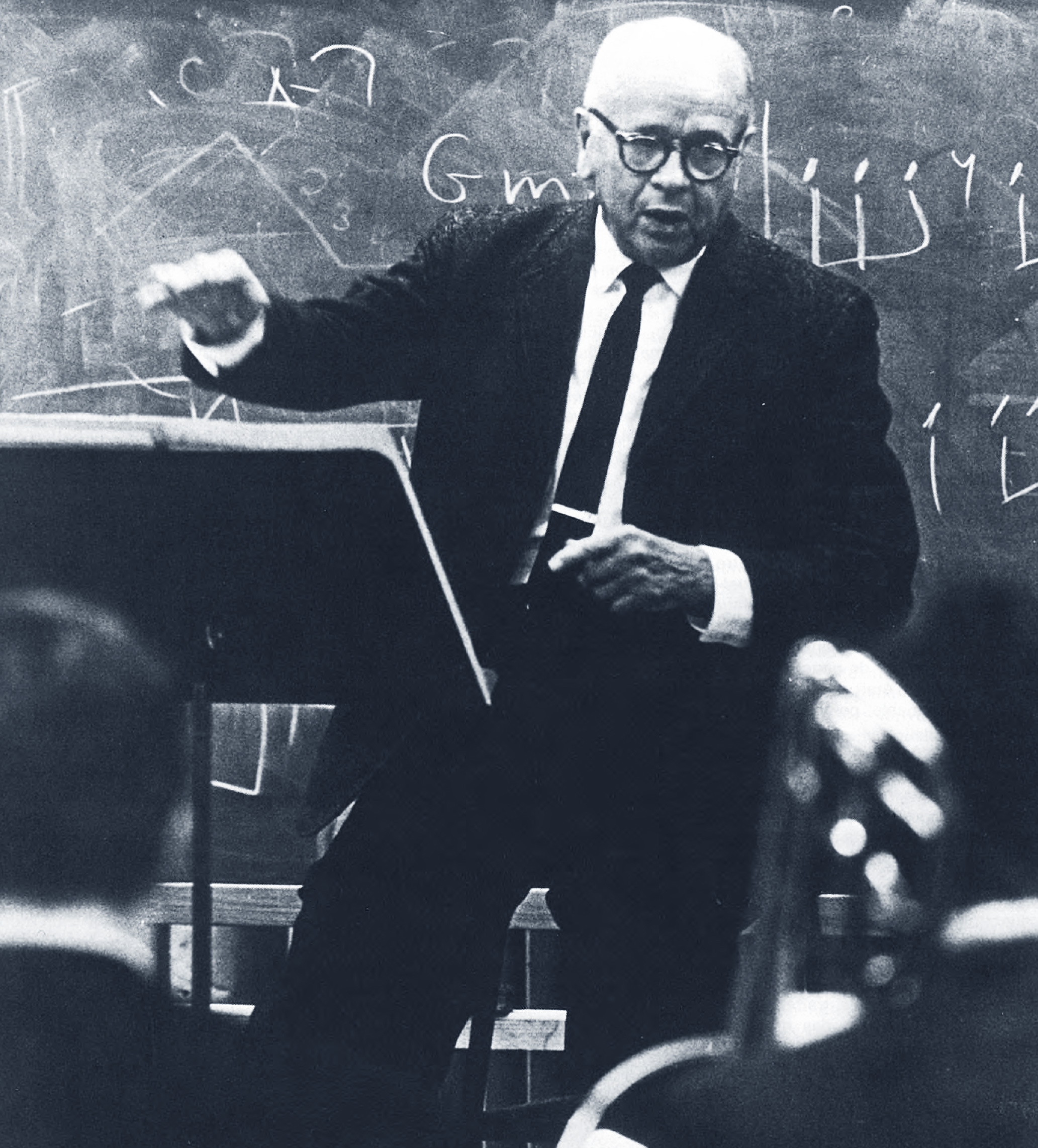
Emory Brace Remington

Emory Brace Remington

As the student became more advanced, the material increased in difficulty at a pace that was demanding but not overwhelming. The number of pages that the student prepared was not assigned, and within reason, could be varied by the individual.

Remington's principal teaching device was to sing virtually every note in every lesson. Again, his own words are most descriptive: "If I had a special distinction, it was that I tried to make the trombone sing with a human quality. In the old days, no one asked fundamental questions like tongue placement, breath control and so on. I just played as it seemed right to me. There was very little material then that treated the vocal line. It was marches, boom, boom, dah, dah, a lot of the German school, very smeary on the slide. The old school was to spit it out. I was strong on articulation, in the mouth like a singer. I didn't blow into the horn, I sang into it, as little resistance as possible. I've always treated the instrument as just another voice."

He had a baritone voice of uneven quality but the ability to convey phrasing, articulation, and sound quality in an uncanny manner. He estimated that he sang six to seven hours a day. If the student listened carefully, the various aspects of playing could be deduced from this continual vocalization.

The only time that he did not "sing along" was when a solo was played just prior to performance, or the occasional opening phrase of an etude. After a few measures, he would usually say: "Hold it! Not like that; more like this", and launch into song. Then student and teacher would begin again together.

On rare occasions when the student captured exactly the right qualities of the first phrase, "the Chief" would enter on the second. This was the highest form of praise and was worth more than any of his spoken encouragements.

Technical explanations were completely absent. It may be difficult for some to fully understand, but this was the essence of his "osmosis" style of teaching. Each student was free to learn as much or as little as was desired.

He treated all his students the same. There was no star system. The talented players were allowed to develop their gifts at the rapid pace on which they thrived. The average players were gently "pushed" to higher levels of attainment. The problem players were usually coerced, without their realizing, into non-performance areas of the profession.

If Remington’s method had a weak point, and this is debatable, it was his reluctance to make technical suggestions to his students. While it is true that some of his former pupils were helped by other teachers more adept at the technical aspects of teaching, this manner of working with people was foreign to his humanistic nature.

He realized (as the teachers of today should) that only a few would ever make their living as performers and that false encouragement and long, painful adjustment periods would usually lead to frustration and disappointment.

As Howard Hanson, former Director of the Eastman School, so eloquently said:

Remington did not teach trombone, he taught people.

Brass Bulletin 21, I / 1978 pagine 37–39

Tutti i contenuti sono protetti dal diritto d’autore © Brass Bulletin 1978–2026

Condividi questo articolo

Facebook LinkedIn
Loading…

Domande e risposte

Come funziona l’edizione digitale

Che cosa comprende l’edizione digitale?

L’edizione digitale riunisce gli articoli già digitalizzati sotto forma di testi leggibili e ricercabili online — non semplicemente come scansioni o file PDF — insieme alle illustrazioni originali, alle note, agli autori, alle informazioni sul numero della rivista e alle traduzioni disponibili. I suggerimenti di articoli correlati comprendono attualmente solo questo materiale digitalizzato.

Gli articoli digitali sono identici agli originali?

Conserviamo il più fedelmente possibile il testo originale, la lingua, le illustrazioni, le didascalie, le note e il contesto editoriale. La presentazione viene adattata per una lettura confortevole online e gli evidenti errori di trascrizione o scansione possono essere corretti. Il contenuto e il carattere dell’articolo pubblicato rimangono invariati.

Quali lingue sono disponibili?

Brass Bulletin è stato pubblicato in inglese, francese e tedesco nel corso di tutta la sua storia. Le traduzioni italiane e spagnole sono state aggiunte a partire dal numero 60. Sui siti italiano e spagnolo, gli articoli dei numeri da 1 a 59 vengono quindi mostrati in inglese per impostazione predefinita.

Con quale frequenza vengono aggiunti nuovi articoli?

Nuovi articoli vengono aggiunti quasi ogni giorno, con circa un numero completo digitalizzato ogni settimana. Il ritmo può variare in base al lavoro di preparazione, elaborazione delle immagini e verifica editoriale necessario.

Perché non tutti gli articoli sono disponibili in formato digitale?

La collezione completa di Brass Bulletin comprende 1.246 articoli pubblicati tra il 1971 e il 2003. L’indice completo è già disponibile online e consente di scoprire tutti gli articoli della collezione, compresi quelli il cui testo integrale non è ancora stato digitalizzato.

La digitalizzazione è iniziata nel febbraio 2026. Ogni articolo viene accuratamente preparato per la lettura online, verificato e collegato al relativo numero, agli autori, agli argomenti e alle illustrazioni. Al ritmo attuale di digitalizzazione, la collezione completa dovrebbe essere disponibile online entro febbraio 2028.

Perché alcuni riferimenti citano articoli che non sono ancora disponibili?

I riferimenti presenti negli articoli originali vengono conservati anche quando il materiale a cui rimandano non è ancora stato digitalizzato. In questo modo si preserva l’integrità storica ed editoriale della rivista. Man mano che nuovi numeri vengono aggiunti all’edizione digitale, un numero crescente di questi riferimenti condurrà ad articoli leggibili online.

Posso suggerire un articolo o segnalare un errore di trascrizione?

Sì. Se desiderate che un determinato articolo venga digitalizzato, oppure se notate un possibile errore di trascrizione o un’informazione mancante, contattateci. I riscontri dei lettori ci aiutano a migliorare l’edizione digitale e a stabilire priorità utili all’interno dell’archivio.

Come posso sostenere Brass Bulletin?

Il vostro sostegno contribuisce a finanziare la preparazione, la verifica e la pubblicazione online dell’intera collezione.

Abbonati all’Edizione digitale

Preferite sostenerci senza abbonarvi?

Fate una donazione

Come procede la digitalizzazione?

Stiamo rendendo Brass Bulletin disponibile online gradualmente, articolo per articolo. Potete leggere gli articoli appena digitalizzati non appena sono pronti, anche prima che un intero numero sia completato.

Consultate il nostro calendario di digitalizzazione per scoprire le ultime aggiunte e le date di disponibilità stimate dei prossimi numeri. Le stime si basano sul nostro ritmo recente e possono cambiare.

Cerca in Brass Bulletin.