9 min de lectura
Akim Alexeyevich Kozlov
A Trombone Artist
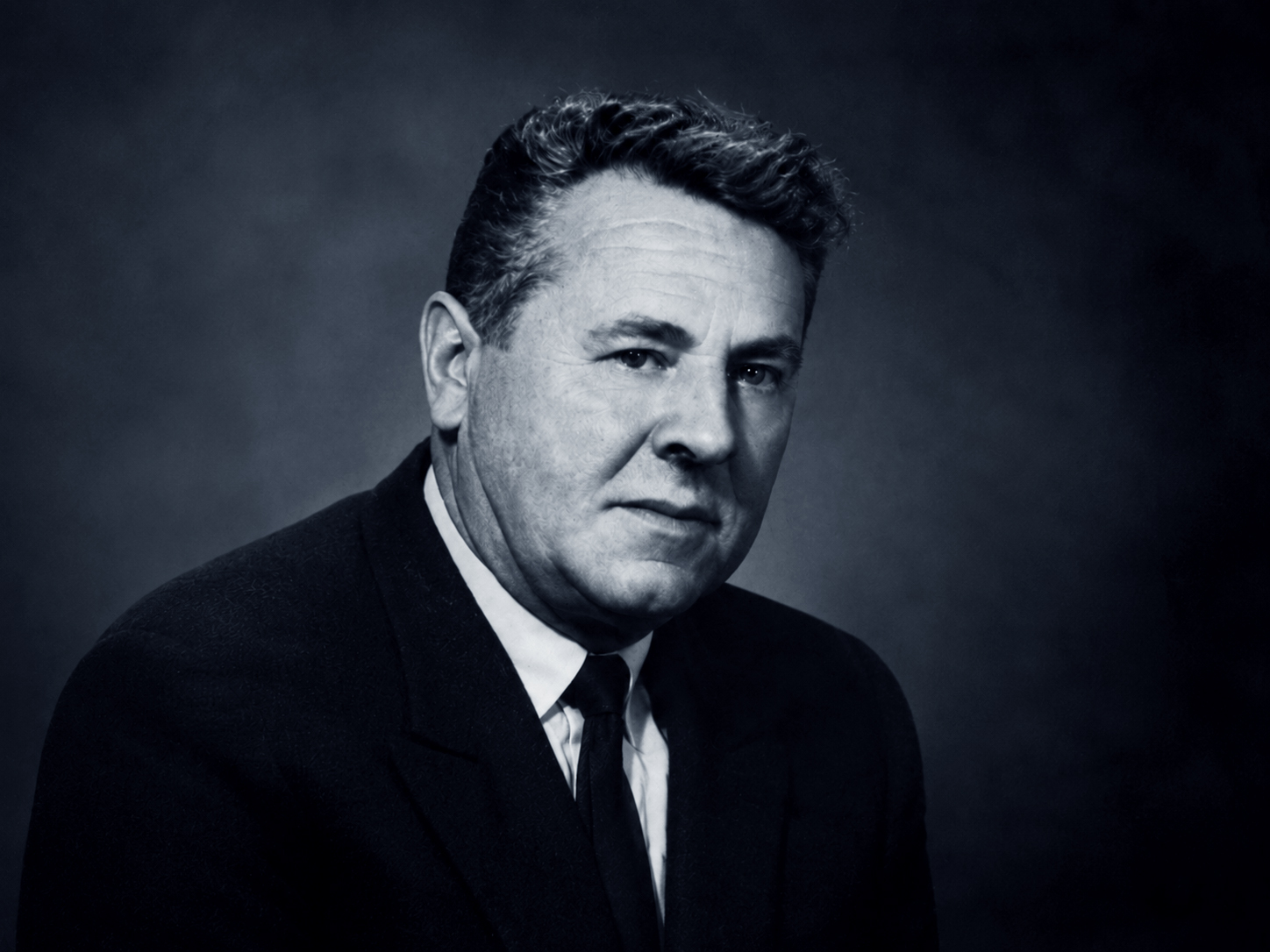
Merited artist of the Russian Federation, professor, solo trombone at the Honoured Academic Symphony Orchestra of the Leningrad Philharmonic, Akim Alexeyevich Kozlov may rightly be considered one of the outstanding 20th-century trombone artists. Akim Alexeyevich's career is quite a unique phenomenon in the world of performing musicians. To manage at the age of 74 to retain the freshness, beauty and glamour of the instrument's sound is something given only to a chosen few.
Describing the creative potential of the orchestra at present, the Philharmonic's artistic director V. Fomin spoke of the trombone section headed by A.A. Kozlov in the following words, "The trombone section is one of the strongest in the orchestra today. Its head — Merited Artist of the Russian Federation A. Kozlov is a veteran philharmonist, who has played in the orchestra for almost four decades. He constantly demonstrates a high class of playing, especially in responsible solo parts (Ravel's Bolero, Sibelius's Seventh Symphony, Shostakovich's Fifteenth)."¹ E.A. Mravinsky says, "If A. Kozlov is engaged in the concert, the harmony of the brass section is ensured". These statements enable one to understand the significance and greatness of an artist whose creative activity and life are of profound interest both for professional musicians and for general audiences.
Akim Alexeyevich was born into the large and quite unmusical family of a worker at the Obukhov factory in the village of Yarygino in the government of Smolensk. Like many others, he made his first acquaintance with music through amateur talent activities. Akim was fond of listening to military bands and there was quite a number of them in those days. At the age of 12 for the first time Akim began playing in an amateur brass band conducted by the trumpet player Petrov, and it was he who taught the boy to play this instrument. Akim played it for three years. In summer, when his father was making some extra money by herding cattle, his son helped him by playing a signal horn to round up the cows.
In 1923 he was enrolled in a railway detachment band under the bandmaster Fyodor Nikolayevich Yakovlev. During the first two years, in view of his accomplishments in amateur concerts, he was given first the trumpet, then the baritone.
Due to the fact that the regiment was deployed in Oranienbaum (present-day Lomonosov) the young musician had the opportunity of attending symphony concerts in Petrograd (now Leningrad). This gave him access to one of the most remarkable types of musical art and, besides, the culture of one of the world's most splendid cities could not but have a favourable influence on the moulding of the creative personality of a young musician, who had his heart set on getting a professional education in music. Exceptional gifts of nature, talent and diligence enabled this young army musician in 1931 to enter a special faculty for workers (rabfak) with practically no professional preparation. The capacity and individuality of Akim Alexeyevich did not escape the attention of the head of the Leningrad trombone school, an outstanding trombonist of the time, professor P.N. Volkov, who took Akim Alexeyevich under his wing. Two years of studies under this venerable professor granted Akim Alexeyevich promotion to the Conservatoire, to the class of professor E.A. Reich.
Studies at the rabfak, rubbing shoulders with famous wind players such as M. Buyanovsky, V. Kuznetsov, A. Berezin, V. Hensler, A. Gordon and many others, who made up the glory of the Petersburg—Leningrad school, undoubtedly exercised a favourable influence on the remarkable headway made by Akim Alexeyevich, who by this time had mastered his instrument so perfectly that it enabled him to win the competition for staff musician in the orchestra of the renowned Mariinsky Opera Theatre but, as it was too difficult to combine work and studies, he unfortunately had to give up the theatre.
Continue reading
Accede a la edición digital completa.
Brass Bulletin 40, IV / 1982 páginas 46–52
Todo el contenido está protegido por derechos de autor © Brass Bulletin 1982–2026