Ofrezca Brass Bulletin en su universidad, conservatorio o biblioteca Descubra el acceso institucional

5 min de lectura

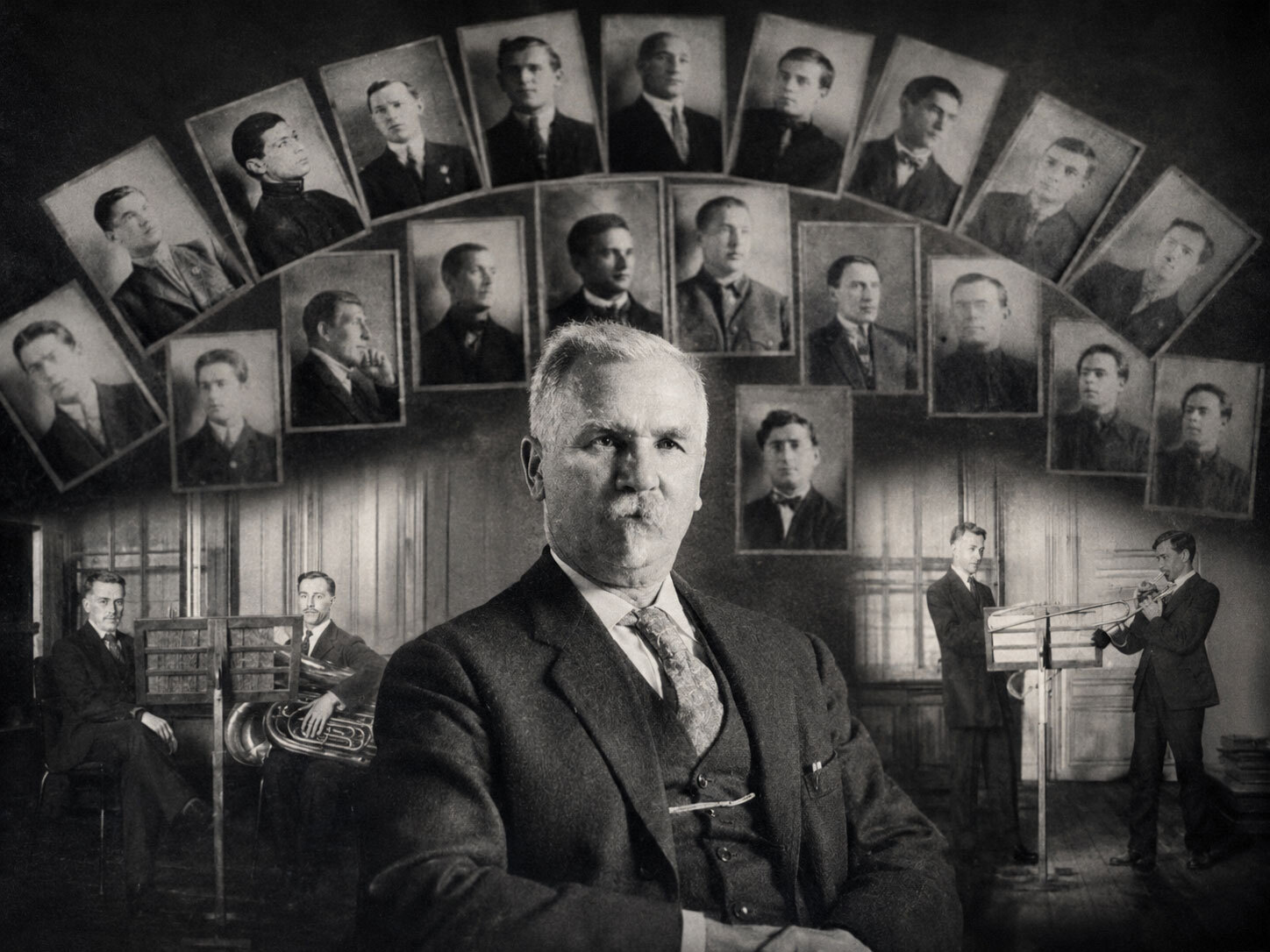
Pyotr Naumovich Volkov (1877-1933)

First trombone professor at St. Petersburg Conservatory

From imperial St. Petersburg to Soviet Leningrad, Volkov shaped a distinctive Russian trombone tradition through performance, teaching and generations of pupils.
Pyotr Naumovich Volkov (1877-1933)

Pyotr Naumovich Volkov

Pyotr Naumovich Volkov, who was Professor of trombone at the first conservatoire in Russia—then St. Petersburg, now Leningrad—was both an ordinary and an extraordinary figure. In order to understand more clearly the significance of this distinguished teacher's work we must consider it in its historical context in the musical life of Russia.

The trombone first appeared in Russia during the reign of Tsar Peter I (Peter the Great). As Yakob Shtelin writes in his book Music and the Ballet in 18th-century Russia, Peter was very fond of the solemn sound of trombones and the now obsolete cornetti which he had probably heard on his first trip to Holland and Germany. He sent for such a group from Riga and this was kept for playing at banquets.

Later trombones became established in military music. Lukashov, from the orchestra of Prince Yusupov, and Kegel from Moscow are two of the gifted Russian military trombone players from those days whose names we know. In 1876–77 Rimsky-Korsakov wrote his concerto for trombone and wind band. It was played for the first time in Kronstadt on 16th March 1878 by an NCO, Leonov, with the composer conducting, and again by a private, Aksyonov, in Nikolaev on 21st June 1882.

Trombones did not appear in opera orchestras in Russia until the first quarter of the 19th century, nor in symphony orchestras until even later. The trombonists in the professional orchestras of the imperial theatres at that time were foreigners.

The second half of the 19th century is notable for the rapid development of musical life in Russia. In 1859 was founded in St. Petersburg the Russian Musical Society whose principal task was to set up an organisation of wide-ranging concert activity and to make music popular amongst the general public. This raised the question of creating a body of Russian musicians and the need for instituting some kind of musical education and so the first Russian conservatoire was opened in St. Petersburg in 1862 on the initiative of Anton Rubinstein.

Since at that time there were no Russian musicians to fill the teaching posts, these were taken by foreigners. The first trombone teacher at the St. Petersburg Conservatoire was Franz Josef Türner (1831–1909), Austrian by birth and musical education. He became a teacher there in 1870 and professor in 1879, while also working as an artist in the orchestras of the St. Petersburg Imperial Theatres and also as director of the wind band of the Life Guards' Regiment.

Pyotr Volkov was one of Türner's pupils. This distinguished trombonist, founder of the Leningrad branch of the Russian school of trombone playing, thus received his training in the old St. Petersburg Conservatoire. He was born on 12th January 1877 in the village of Golovchino in the government of Kursk, son of Naum Volkov, a former military musician and a well known horn player in Russia.

Continue reading

Accede a la edición digital completa.

Brass Bulletin 37, I / 1982 páginas 15–18

Todo el contenido está protegido por derechos de autor © Brass Bulletin 1982–2026

Compartir este artículo

Facebook LinkedIn
Cargando…

Preguntas y respuestas

Cómo funciona la edición digital

¿Qué incluye la edición digital?

La edición digital reúne los artículos ya digitalizados como textos legibles y consultables en línea —no simplemente como escaneos o archivos PDF— junto con sus ilustraciones originales, notas, autoría, información del número y traducciones disponibles. Las sugerencias de artículos relacionados incluyen actualmente solo este material digitalizado.

¿Los artículos digitales son idénticos a los originales?

Conservamos con la mayor fidelidad posible el texto original, el idioma, las ilustraciones, los pies de imagen, las notas y el contexto editorial. La presentación se adapta para facilitar la lectura en línea y pueden corregirse errores evidentes de transcripción o escaneado. El contenido y el carácter del artículo publicado permanecen inalterados.

¿Qué idiomas están disponibles?

Brass Bulletin se publicó en inglés, francés y alemán a lo largo de toda su historia. Las traducciones al italiano y al español se añadieron a partir del número 60. Por este motivo, en los sitios italiano y español los artículos de los números 1 a 59 se muestran en inglés de forma predeterminada.

¿Con qué frecuencia se añaden nuevos artículos?

Se añaden nuevos artículos casi a diario, con aproximadamente un número completo digitalizado cada semana. El ritmo puede variar según el trabajo de preparación, tratamiento de imágenes y revisión editorial necesario.

¿Por qué no están disponibles todos los artículos en formato digital?

La colección completa de Brass Bulletin contiene 1.246 artículos publicados entre 1971 y 2003. El índice completo ya está disponible en línea y permite descubrir todos los artículos de la colección, incluidos aquellos cuyo texto íntegro todavía no ha sido digitalizado.

La digitalización comenzó en febrero de 2026. Cada artículo se prepara cuidadosamente para la lectura en línea, se revisa y se vincula con su número, sus autores, sus temas y sus ilustraciones. Al ritmo actual de digitalización, se prevé que la colección completa esté disponible en línea en febrero de 2028.

¿Por qué algunas referencias mencionan artículos que todavía no están disponibles?

Las referencias de los artículos originales se conservan aunque el material al que remiten aún no haya sido digitalizado. De este modo se mantiene intacto el contexto histórico y editorial. A medida que se incorporen más números a la edición digital, un número creciente de estas referencias conducirá a artículos que podrán leerse en línea.

¿Puedo sugerir un artículo o informar de un error de transcripción?

Sí. Si hay algún artículo que le gustaría especialmente ver digitalizado, o si detecta un posible error de transcripción o algún dato que falta, póngase en contacto con nosotros. Los comentarios de los lectores nos ayudan a mejorar la edición digital y a establecer prioridades útiles dentro del archivo.

¿Cómo puedo apoyar a Brass Bulletin?

Su apoyo ayuda a financiar la preparación, verificación y publicación en línea de la colección completa.

Suscríbase a la Edición Digital

¿Prefiere apoyarnos sin suscribirse?

Haga una donación

¿Cómo avanza la digitalización?

Estamos poniendo Brass Bulletin a disposición de los lectores en línea, artículo por artículo. Pueden leer los artículos recién digitalizados en cuanto estén listos, incluso antes de que se complete un número entero.

Consulten nuestro calendario de digitalización para descubrir las últimas novedades y las fechas estimadas de disponibilidad de los próximos números. Estas estimaciones se basan en nuestro ritmo reciente y pueden cambiar.

Busca en Brass Bulletin.