Explore institutional access →

Complete articles index

Browse Brass Bulletin articles published since 1971. Search by topic, subject, instrument, author, series or issue, with new material added as the digital edition grows.
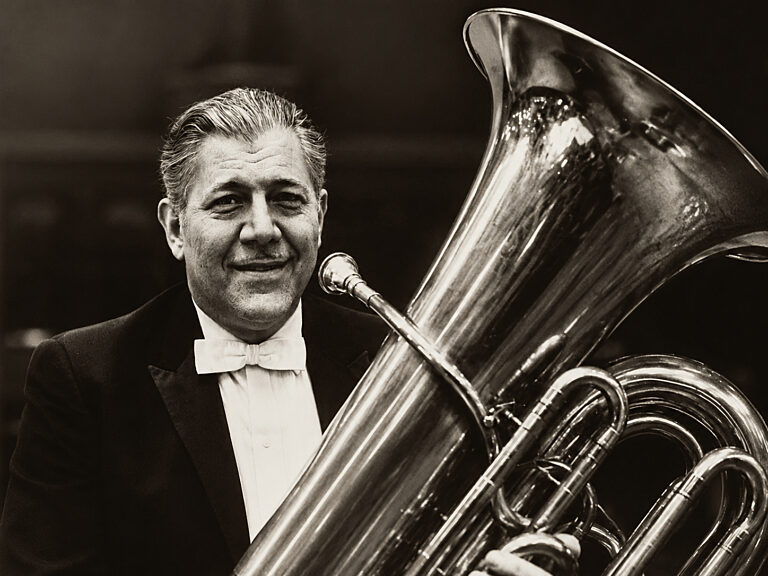
Arnold Jacobs Member
No. 33 • 1981 Digitized

Part 1

Arnold Jacobs

Interview

Two tuba giants meet in 1979 Chicago, where Arnold Jacobs turns technique, sound, orchestral life and pedagogy into a lasting musical ethic.

By Roger Bobo

Encounters Teaching Interpretation Sound Orchestral playing
No. 119 • 2002 Awaiting digitization

Part 4

The modern concert hall

Spreading walls, shrinking sound

By Sabina Pade

Report History Acoustics
No. 103 • 1998 Awaiting digitization

Markneukirchen 1998

International Trumpet Competition

By Max Sommerhalder

Report Competition
No. 112 • 2000 Awaiting digitization

Part 5

On the trail of brasses in Europe - Der Blechbläser

Der Blechbläser

By Jean-Pierre Mathez

No. 62 • 1988 Awaiting digitization

Part 5

Doctor Mouthpiece

The cup 1: Cup depth

By John Stork, Phyllis Stork

No. 95 • 1996 Awaiting digitization

Part 6

Dental Clinic for Wind Players

Causes and cures of sudden vs. gradual embouchure and playing problems due to neuropathy

By Toshio Nemoto
Health Teeth
Benny Sluchin Free
No. 30 • 1980 Digitized

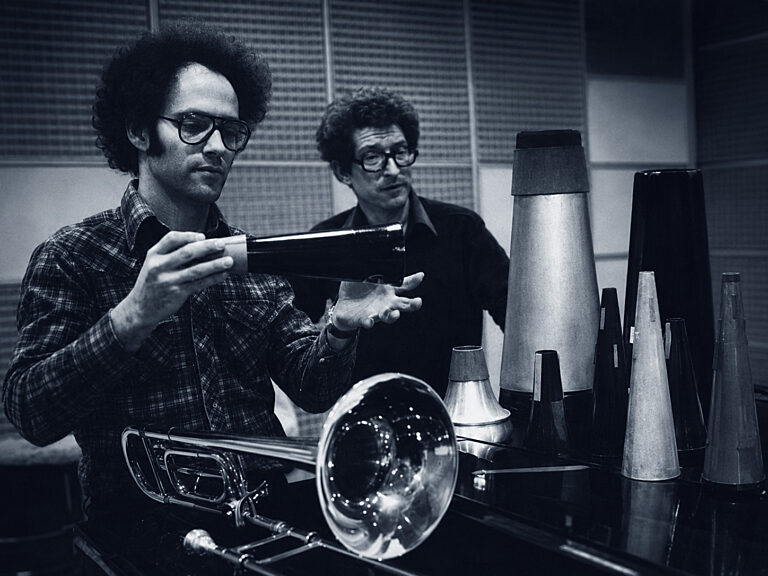
Benny Sluchin

Portrait in brief

Between Paris, Cologne and Tel Aviv, Benny Sluchin brings mathematics, acoustics and contemporary performance into the brass world.

By Jean-Pierre Mathez

Encounters Professional life Contemporary Music Solo playing Orchestral playing
No. 116 • 2001 Awaiting digitization

Part 3

Stage fright and instrumental technique (2)

By Michel Ricquier

Health
No. 72 • 1990 Awaiting digitization

Villars Open Trumpet Academy

Trumpets of the year 2000

By Jean-Pierre Mathez

Event
No. 116 • 2001 Awaiting digitization

Editorial

By Jean-Pierre Mathez

Herbert L. Clarke (1867-1945) Free
No. 18 • 1977 Digitized

Part 1

Herbert L. Clarke (1867-1945)

Boyhood Years

From forbidden beginnings to cornet legend: Herbert L. Clarke’s early years reveal a path shaped by setbacks, persistence, and decisive discoveries.

By David Hickman

History Sociology
Horn singing Member
No. 10 • 1975 Digitized

Horn singing

Earl S. Saxton advocates a “singing” approach to horn playing, emphasizing tone production through vibration, breath control and vocal-inspired technique.

By Earl S. Saxton
Technique Breathing Sound
The founders of the French Trumpet School Member
No. 29 • 1980 Digitized

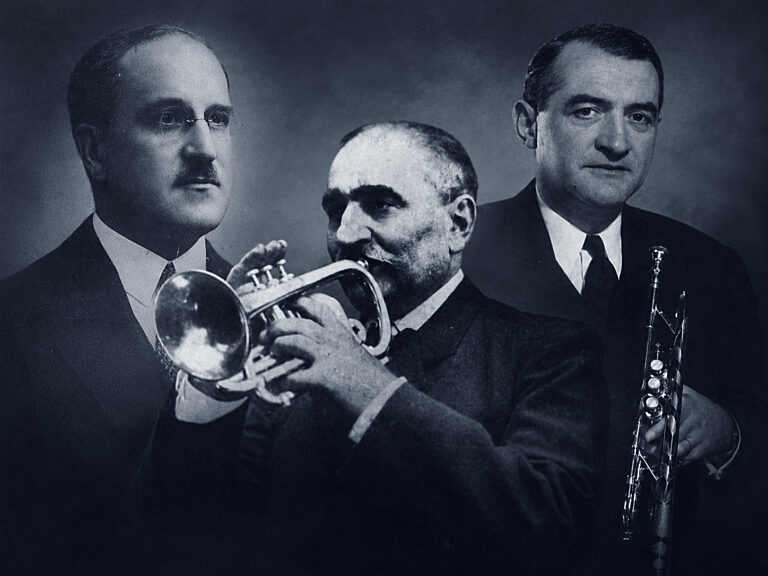
The founders of the French Trumpet School

Merri Franquin, Eugène Foveau and Raymond Sabarich

Franquin, Foveau and Sabarich appear through their Paris careers, teaching legacies, recordings and role in shaping modern French trumpet playing.

By Michel Laplace
History Teaching French school Sound Breathing
The trombone in Jazz and Popular Music Free
No. 50 • 1985 Digitized

Part 1

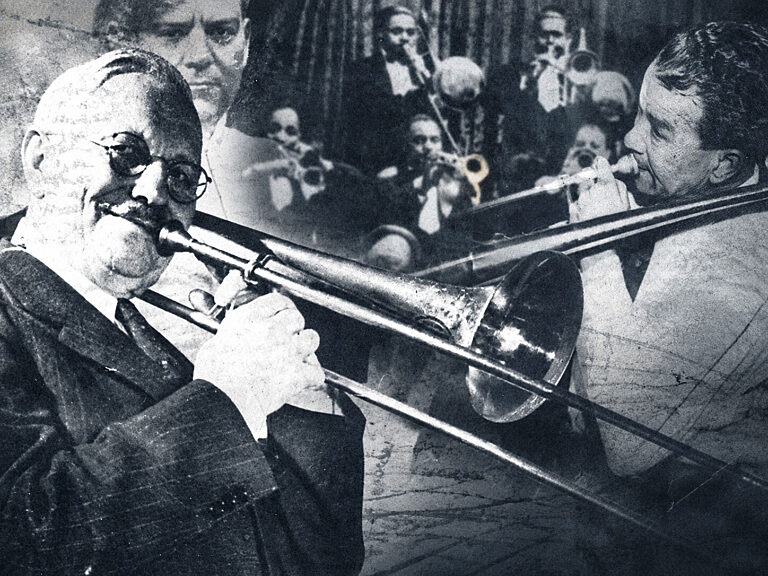
The trombone in Jazz and Popular Music

Jazz did not invent the modern trombone: early virtuosos, New Orleans players and changing techniques reveal a more complex path toward flexibility and legato.

By Michel Laplace

History Technique Jazz Articulation
No. 120 • 2002 Awaiting digitization

The Future of the Past

Interview with Richard Seraphinoff, player, teacher and horn maker

By Jeffrey Agrell

Equipment
No. 120 • 2002 Awaiting digitization

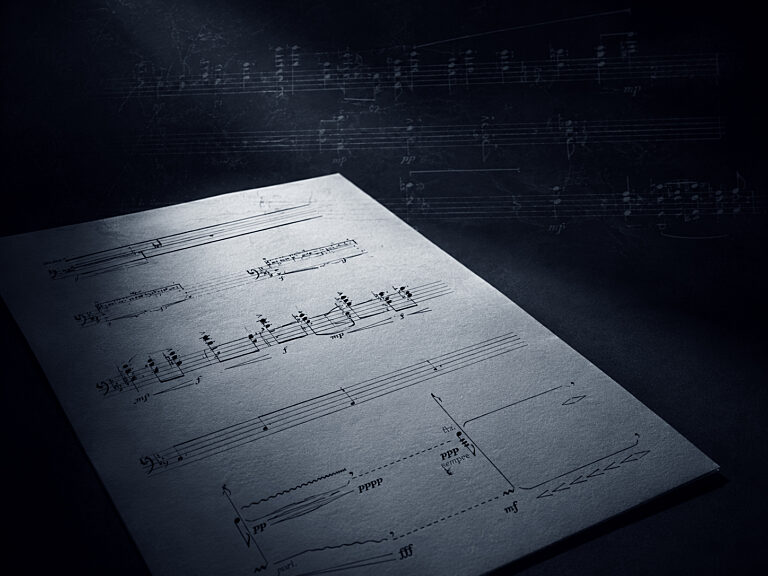
The Composer Adrift

By Stanley Friedman
Repertoire
Playing and singing simultaneously on brass instruments Member
No. 35 • 1981 Digitized

Part 1

Playing and singing simultaneously on brass instruments

From Weber and Vivier to contemporary solo works, singing into the brass instrument becomes a multiphonic technique shaped by notation, acoustics, and practice.

By Benny Sluchin

Technique Contemporary Music Sound Intonation
No. 57 • 1987 Awaiting digitization

Mutes for brass instruments

By Benny Sluchin, René Caussée

Report Equipment
No. 89 • 1995 Awaiting digitization

André Van Driessche

Belgian master of the Horn

By Luc Bergé, Rik Vercruysse, Claudine Novikov
Encounters
Trombone workshops Free
No. 52 • 1985 Digitized

Trombone workshops

In Nashville, Copenhagen and Metz, trombone workshops took strikingly different forms, exposing the artistic ambitions and practical tensions behind a growing movement.

By Benny Sluchin

Report Event
No. 79 • 1992 Awaiting digitization

OPPL (Orchestre Philharmonique des Pays de la Loire)

20 passionate years

By Jean-Pierre Mathez

Report
No. 86 • 1994 Awaiting digitization

Making mute handling easier

By Benny Sluchin
Technique Equipment
Editorial Free
No. 17 • 1977 Digitized

Editorial

Between tradition and innovation: brass players must move beyond routine and embrace new musical directions to remain relevant in the music of tomorrow.

By Jean-Pierre Mathez

Society Ideas Contemporary Music
No. 83 • 1993 Awaiting digitization

Brasses of the Apulia region

By Ennio Leccio

Report
Loading…

Questions & Answers

How the Digital Edition works

What does the Digital Edition include?

The Digital Edition brings together the articles already digitized as searchable online texts—not simply as scans or PDF files—along with their original illustrations, notes, authorship, issue information, and available translations. Related-article suggestions currently include only this digitized material.

Are the digital articles identical to the originals?

We preserve the original text, language, illustrations, captions, footnotes, and editorial context as faithfully as possible. The presentation is adapted for comfortable online reading, and obvious transcription or scanning errors may be corrected. The substance and character of the published article remain unchanged.

Which languages are available?

Brass Bulletin was published in English, French, and German throughout its history. Italian and Spanish translations were added from issue No. 60 onward.

On the Italian and Spanish sites, articles from issues 1–59 are therefore shown in English by default.

How often are new articles added?

New articles are added almost daily, with approximately one complete issue digitized each week. The pace may vary depending on the preparation, image work, and editorial checking required.

Why aren’t all articles available digitally?

The complete Brass Bulletin collection contains 1,246 articles published between 1971 and 2003. The full index is already available online, allowing readers to discover every article in the collection, including those whose complete text has not yet been digitized.

Digitization began in February 2026. Each article is carefully prepared for online reading, checked, and connected to its issue, authors, subjects, and illustrations. At the current pace of digitization, the complete collection is expected to be available online by February 2028.

Why do some references mention articles that are not available yet?

References in the original articles are preserved even when the material they point to has not yet been digitized. This keeps the historical and editorial record intact. As more issues are added to the Digital Edition, an increasing number of these references will lead to articles that can be read online.

Can I suggest an article or report a transcription error?

Yes. If there is an article you would particularly like to see digitized, or if you notice a possible transcription error or missing detail, please contact us. Reader feedback helps us improve the Digital Edition and prioritize useful connections within the archive.

How can I support Brass Bulletin?

Your support helps fund the preparation, verification, and online publication of the complete collection.

Subscribe to the Digital Edition

Prefer to support us without subscribing?

Make a donation

How is the digitization progressing?

We’re gradually making the Brass Bulletin available online, article by article. You can read newly digitized articles as soon as they’re ready, even before an entire issue is complete.

Visit our Digitization Roadmap to browse recent additions and see estimated availability for upcoming issues. These estimates follow our recent pace and may change.

Search Brass Bulletin.