Explore institutional access Explore institutional access

4 min. read

Overlays and bonding

New dental aids for brass players

Overlays and bonding

Is it possible for a brass player to increase his power, endurance and range by altering the contours of the front teeth? Jerry Franks, nationally known trumpet teacher and soloist from Indiana, theorized some years ago that certain tooth formations could be favorable to brass players in dealing with the excessive mouthpiece pressure of high register playing, and that some kind of dental work should be possible to achieve a good formation in those players who were not naturally so endowed. When teeth are flat, the mouthpiece rim presses equally all the way around, and the resulting “tourniquet” effect cuts off blood circulation and thus hinders lip vibrations. The result is difficulty in the high range and reduced endurance.

Jerry Franks’ studies showed that the optimum tooth formation would be one in which the upper two central incisors formed a wedge or V shape, and the result is that the excess pressure is borne by the two pressure points of the upper and lower central incisors. Since the pressure is less on the sides, blood can freely circulate, and the player who has had his teeth so modified experiences an increase in range, power and endurance. Franks worked with several orthodontists, using at first braces, retainers and crowns (or caps) to achieve the proper shape. It was in working with his own dentist, Dr. Thomas D. Van Osdol, that Franks found an even better solution: the hardshell overlay. Through diagrams and pictures Franks described to Dr. Van Osdol a wedge-shaped device that could be fitted over the brass player’s teeth to improve an unfavorable contour. Dr. Van Osdol was able to create a custom-fitted clear plastic overlay, which fitted over the upper front six teeth and adjacent gum area. The overlay is removable and provides a central vertical ridge of support under the lips.

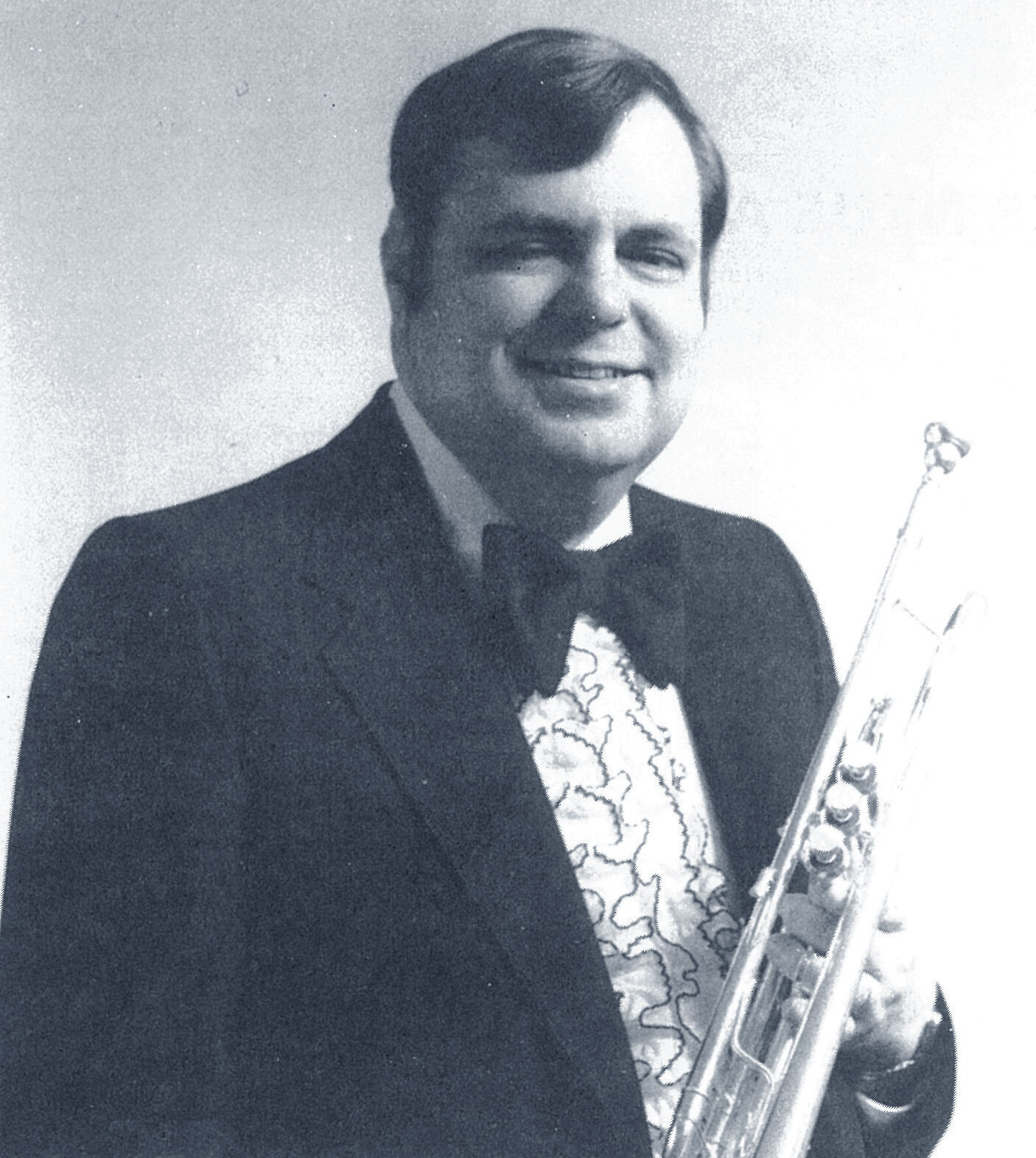
Jerry Franks

Jerry Franks

More recently, Jerry Franks and Dr. Van Osdol have been using another method to achieve the same results, a method called bonding. “The bonding process is by far the simplest”, says Franks, “It only takes about 20 minutes and can be used immediately.” “We now use the technique almost exclusively,” says Dr. Van Osdol. “It involves the use of new dental products which allow us to etch and bond plastic material to the teeth to achieve the form, shape, and the position that we desire. It has the great advantage of being in the mouth all the time, and there’s no need to have a movable appliance (as the overlay). Another nice feature is that it is completely reversible. In other words, if it is not doing what we hoped it would, we can completely and easily remove it. Or we can add to it, reshape it, or whatever we desire to achieve results.”
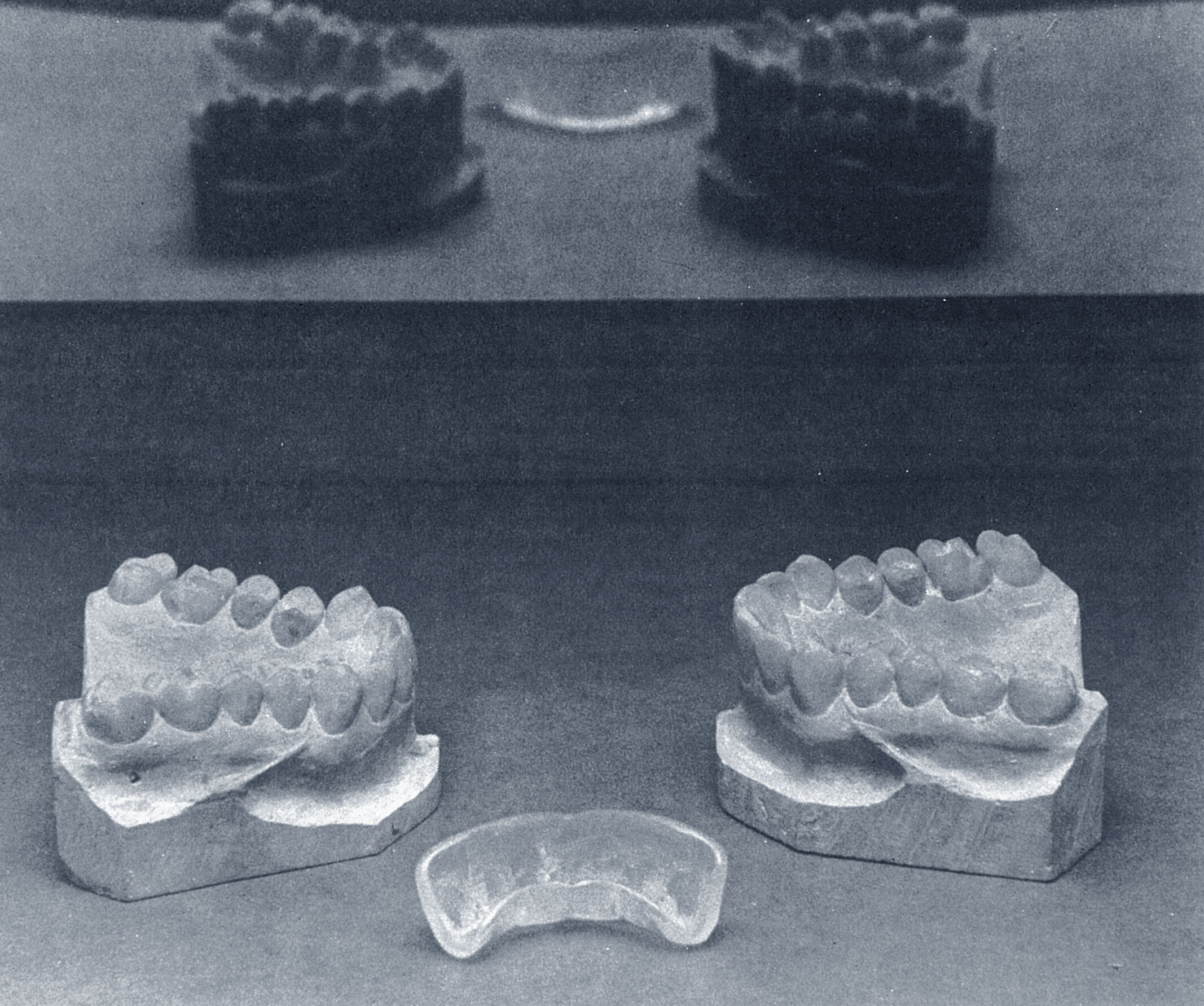
Plastic overlay shown in foreground. Model on left is patient before porcelain crowns - Model on right is after crowns

Plastic overlay shown in foreground. Model on left is patient before porcelain crowns - Model on right is after crowns

In the bonding procedure, a soft plastic material is applied to the two upper central incisors and then shaped. Each tooth acquires thereby a wedge shape, with the thickest part of each wedge in the middle. The dentist then causes the material to harden by the catalyst action of a special fiber optic light. The final shape is refined by using high-speed diamond burrs, and polished to a finish very close to the color and look of the original enamel. From a front-on view, the change is not very noticeable; from a profile or from below, the wedge shape can be detected slightly.
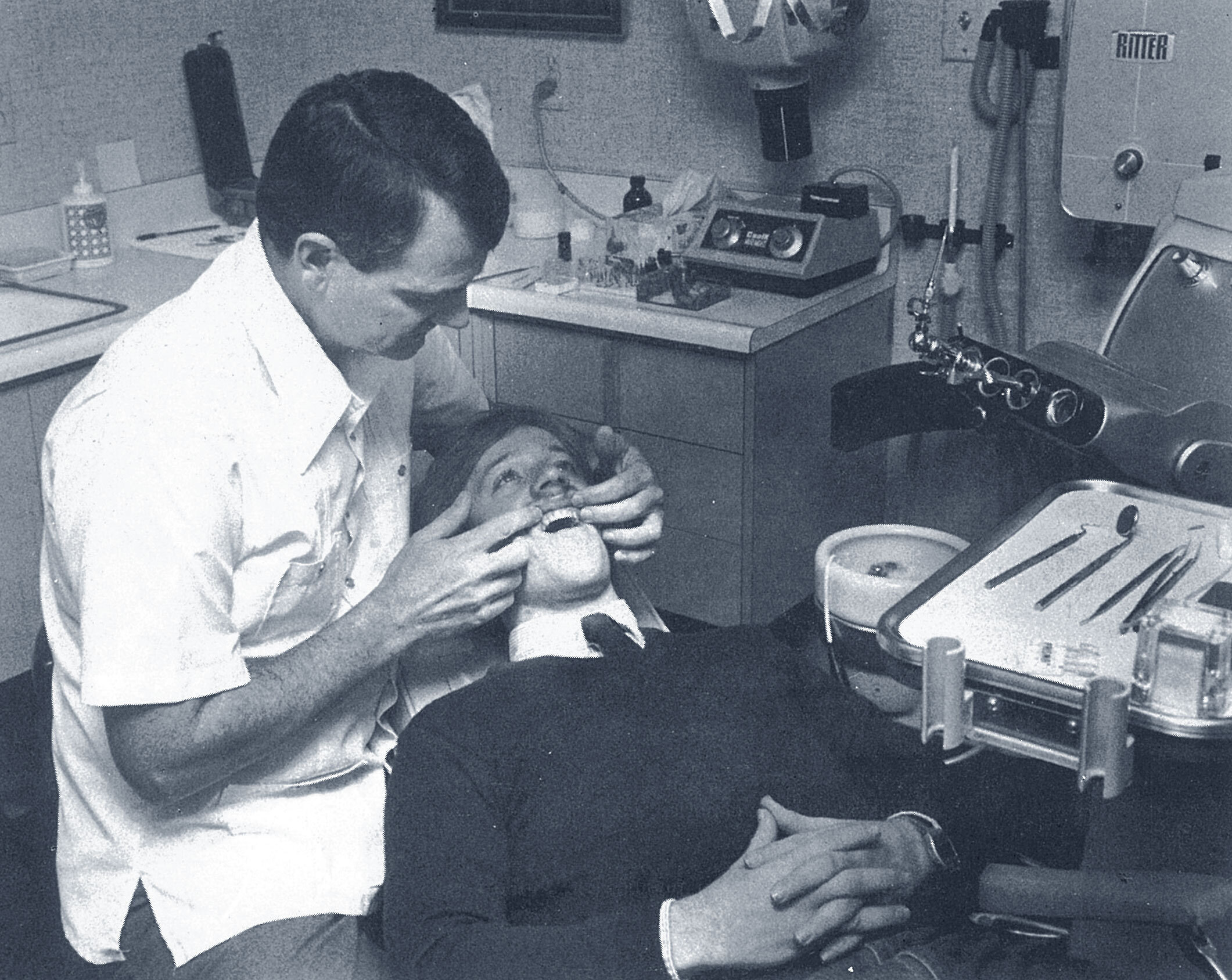
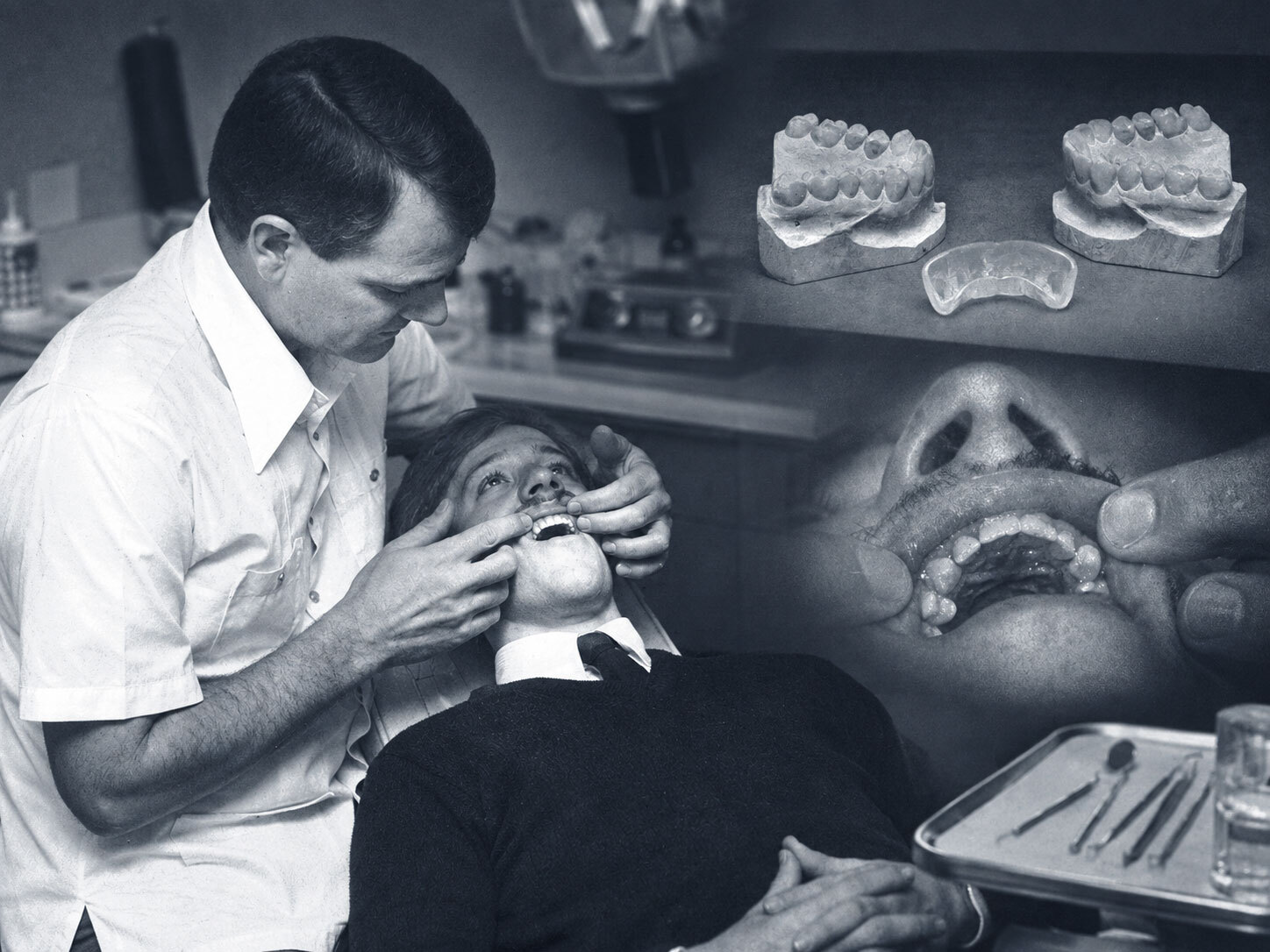
Dr. Van Osdol examining patient for bonding
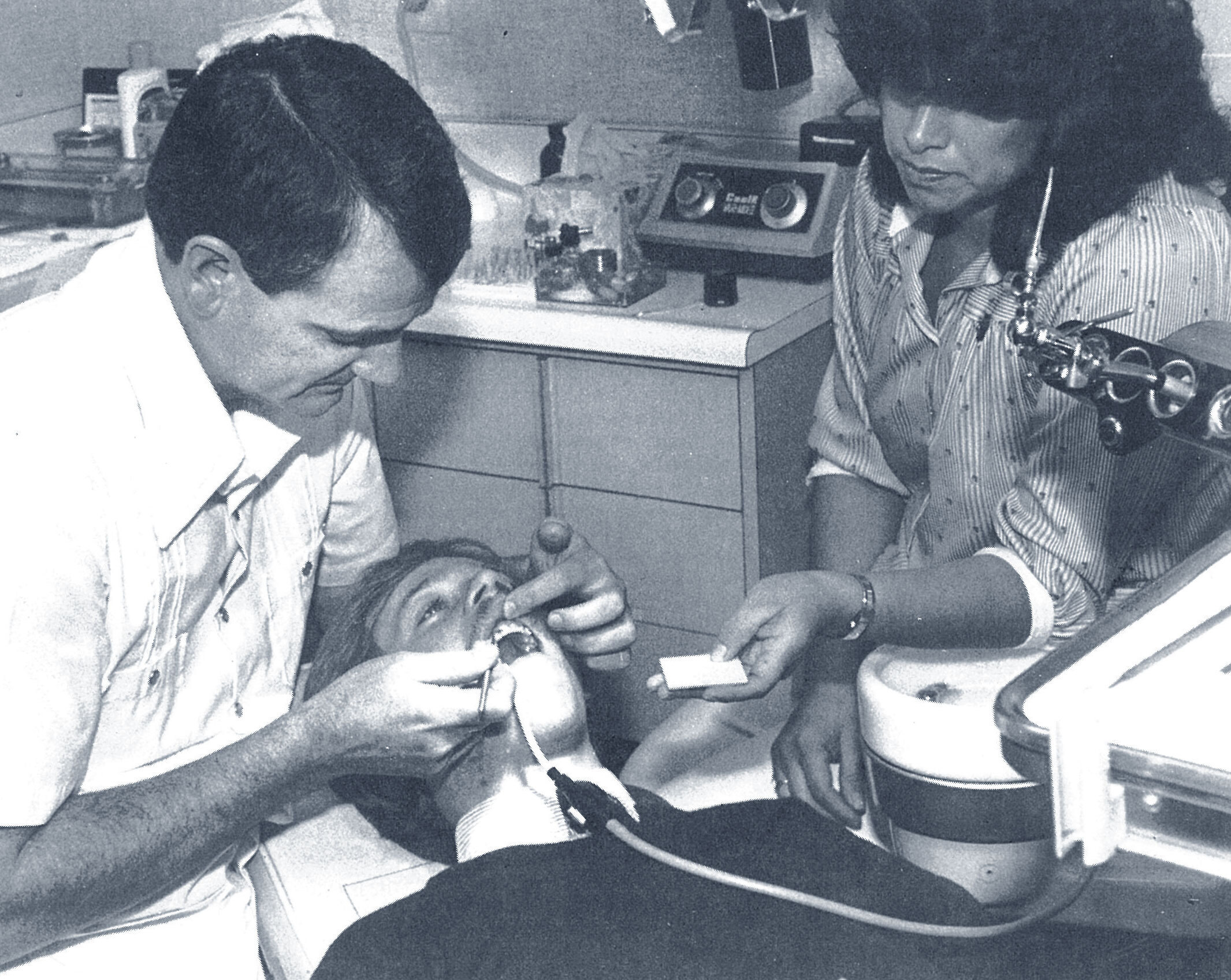
Dr. Van Osdol examining patient for bonding

Applying the putty-like plastic compound prior to curing with light system

Applying the putty-like plastic compound prior to curing with light system

“The patient is encouraged to bring his instrument with him to the appointment. It is then possible to make some adjustments afterward. Usually we find some noticeable improvement is evident immediately, but recommend that the patient return to the instructor, Jerry Franks, so he can help him use and take advantage of the new situation. I have been working with Jerry Franks since 1975 and would estimate that we have treated approximately 40 to 50 of his students. We have had a few musicians who are not students of Jerry Franks, but I prefer to work with an instructor who understands what we are doing and who can help the patient gain the full potential of the changes.”
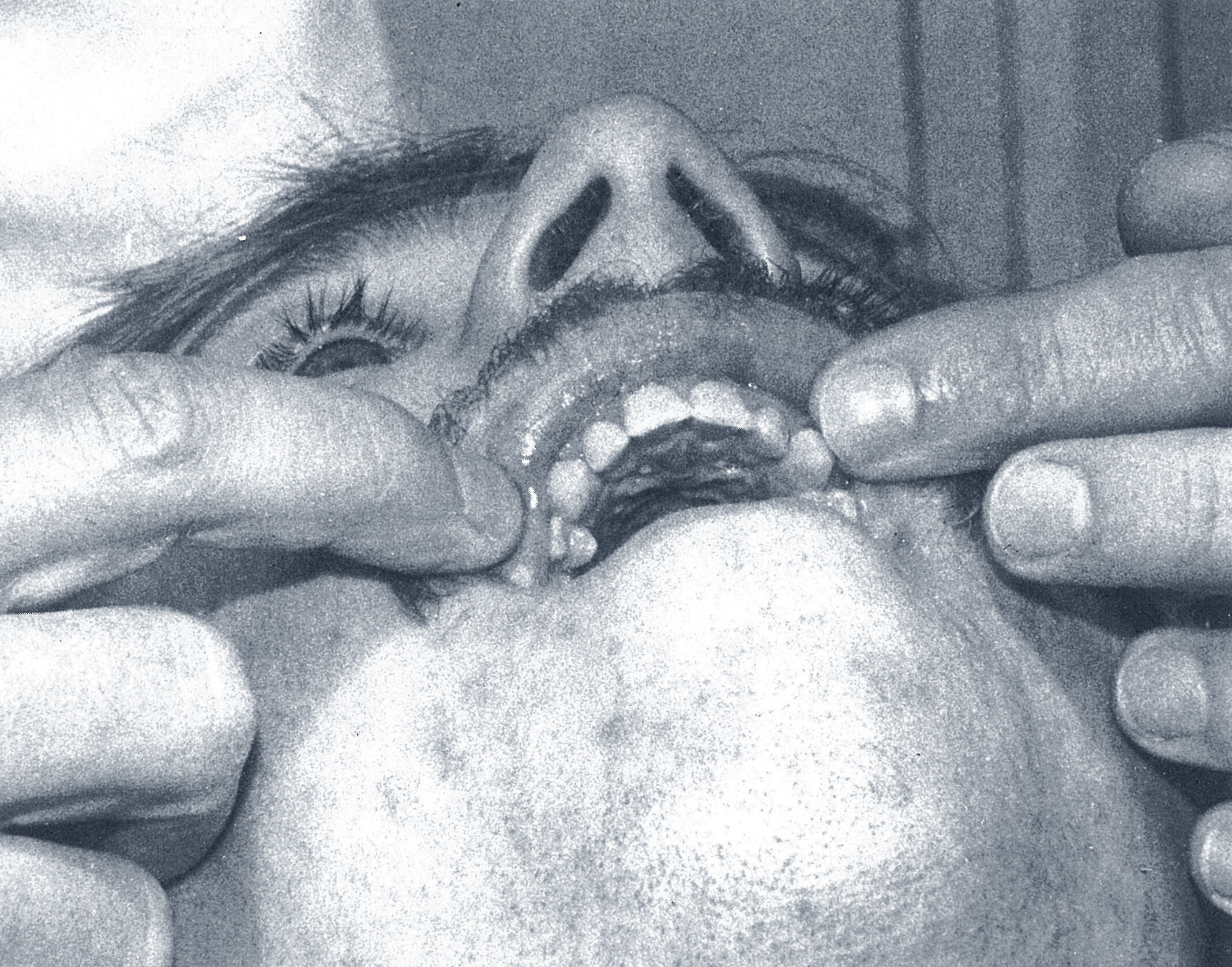
Anterior teeth before bonding
Anterior teeth before bonding

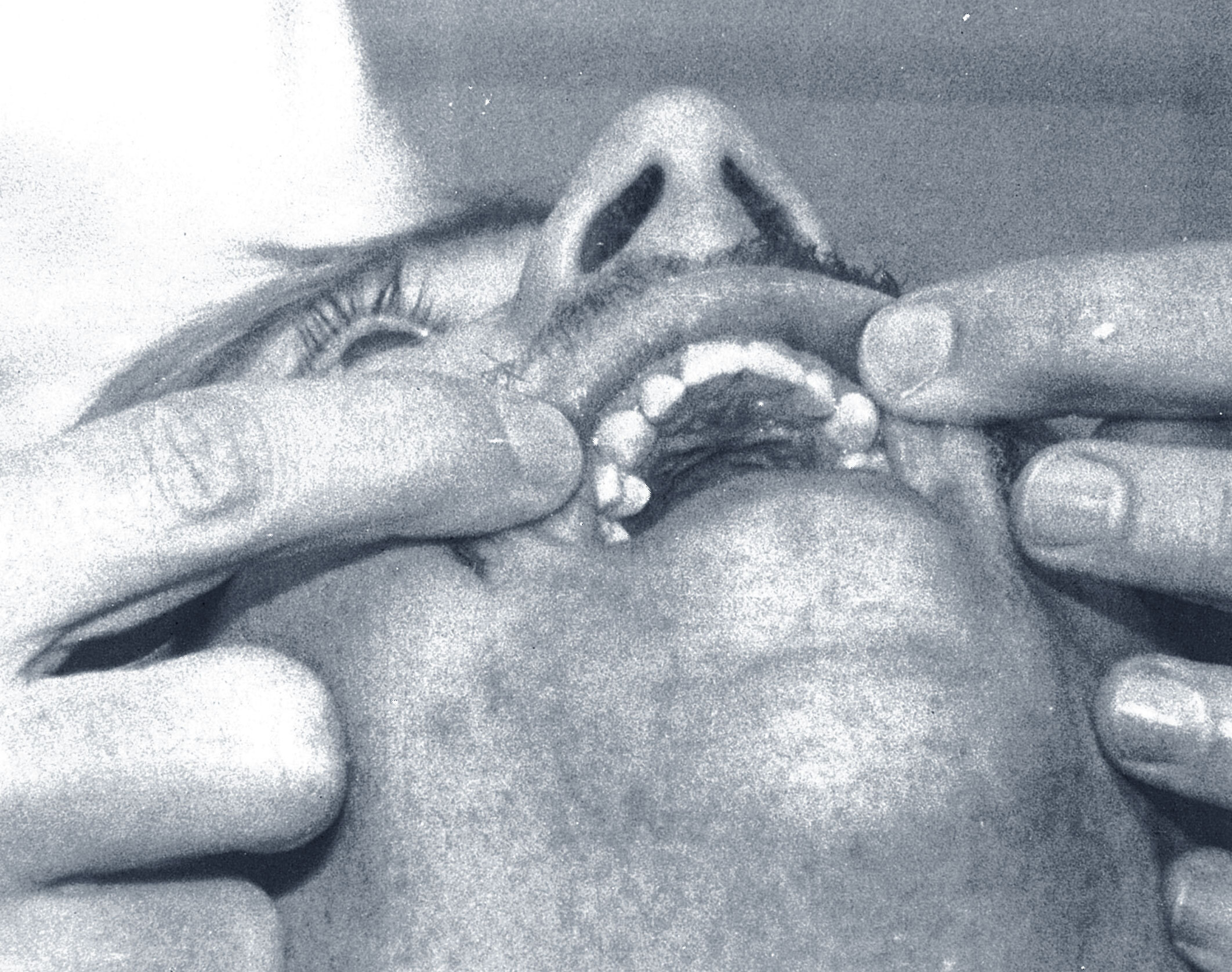
Anterior teeth after bonding

Anterior teeth after bonding

Jerry Franks and Dr. Van Osdol have used the bonding procedure successfully with many brass players from across the US, both college students and professionals from major big bands and symphonies. Franks notes, however, that the overlay is still used for players of the larger brasses who do not rest the mouthpiece on the teeth as trumpet players do. Here, the overlay is better because, unlike bonding, the overlay goes not only on the teeth, but also up on the gums.

Jerry Franks sums it up: “If you don’t have the pressure points, either from a naturally favorable shape or through bonding, your range will be limited. But remember that teeth formation is just a third of the entire process; you still have to develop proper embouchure muscles and the proper diaphragmatic support.”
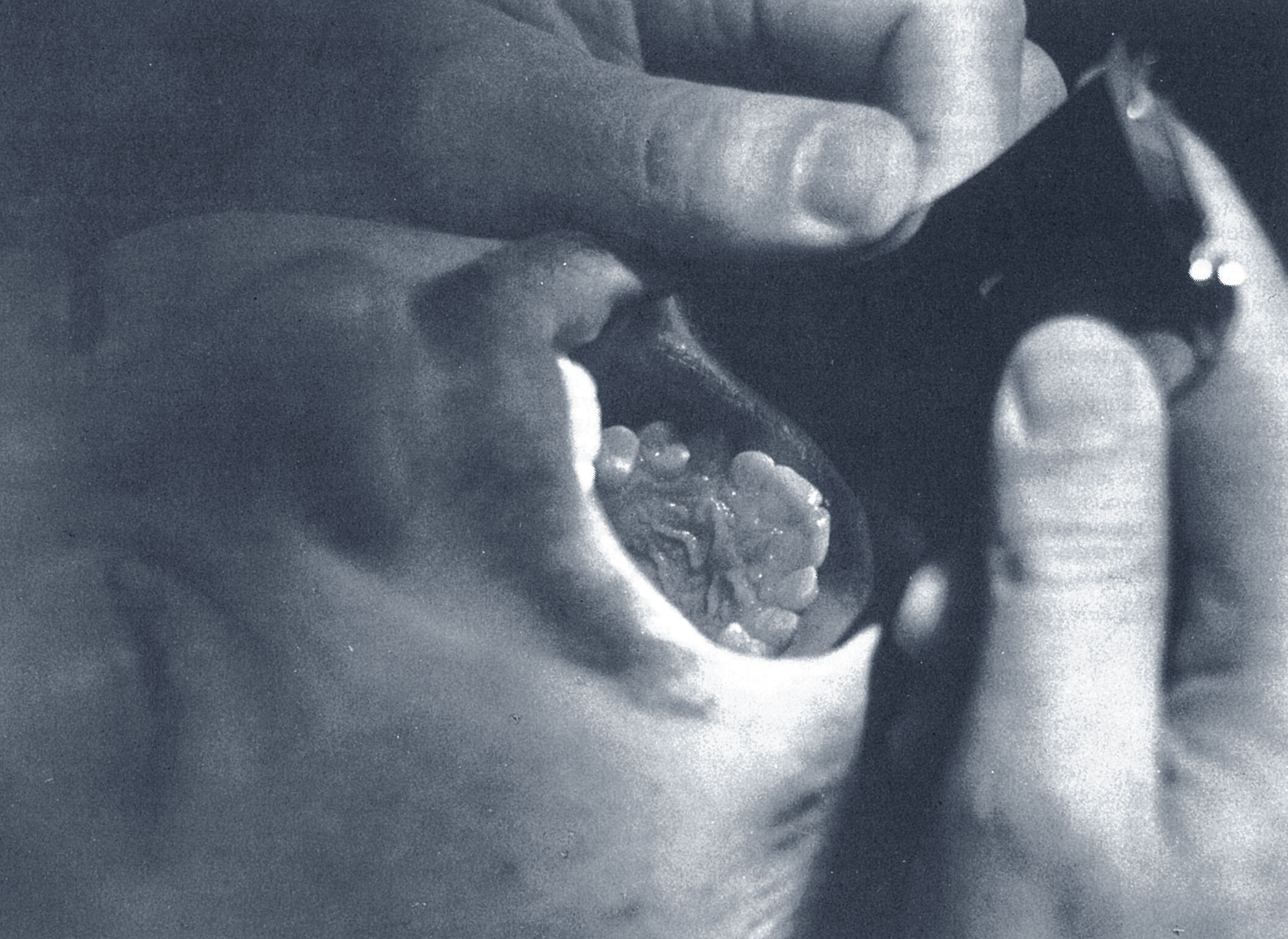
Anterior teeth (reflected in mirror) showing “wedge” shape after bonding

Anterior teeth (reflected in mirror) showing “wedge” shape after bonding

In spite of being blind since 1978 (“It’s just an inconvenience”, he says), Franks continues his studies of the dental aspects of brass playing along with his busy career of college teaching, lecturing, and performing. He says that Dr. Van Osdol is the only dentist in the country that he knows of who is doing work like this with brass players, but that he hopes that soon more dentists, as well as brass players and teachers, learn about it to take advantage of the possibilities of the overlay and the bonding technique.

For further information: Jerry Franks, 501 N. 10th St., Gas City, IN 46933, USA
Dr. Thomas D. Van Osdol, Kosciusko Professional Arts Building, 2259 DuBois Dr., Warsaw, IN 46580, USA

Brass Bulletin 49, I / 1985 pages 80–86

All content is protected by copyright © Brass Bulletin 1985–2026

Share this article

Facebook LinkedIn
Loading…

Questions & Answers

How the Digital Edition works

What does the Digital Edition include?

The Digital Edition brings together the articles already digitized as searchable online texts—not simply as scans or PDF files—along with their original illustrations, notes, authorship, issue information, and available translations. Related-article suggestions currently include only this digitized material.

Are the digital articles identical to the originals?

We preserve the original text, language, illustrations, captions, footnotes, and editorial context as faithfully as possible. The presentation is adapted for comfortable online reading, and obvious transcription or scanning errors may be corrected. The substance and character of the published article remain unchanged.

Which languages are available?

Brass Bulletin was published in English, French, and German throughout its history. Italian and Spanish translations were added from issue No. 60 onward.

On the Italian and Spanish sites, articles from issues 1–59 are therefore shown in English by default.

How often are new articles added?

New articles are added almost daily, with approximately one complete issue digitized each week. The pace may vary depending on the preparation, image work, and editorial checking required.

Why aren’t all articles available digitally?

The complete Brass Bulletin collection contains 1,246 articles published between 1971 and 2003. The full index is already available online, allowing readers to discover every article in the collection, including those whose complete text has not yet been digitized.

Digitization began in February 2026. Each article is carefully prepared for online reading, checked, and connected to its issue, authors, subjects, and illustrations. At the current pace of digitization, the complete collection is expected to be available online by February 2028.

Why do some references mention articles that are not available yet?

References in the original articles are preserved even when the material they point to has not yet been digitized. This keeps the historical and editorial record intact. As more issues are added to the Digital Edition, an increasing number of these references will lead to articles that can be read online.

Can I suggest an article or report a transcription error?

Yes. If there is an article you would particularly like to see digitized, or if you notice a possible transcription error or missing detail, please contact us. Reader feedback helps us improve the Digital Edition and prioritize useful connections within the archive.

How can I support Brass Bulletin?

Your support helps fund the preparation, verification, and online publication of the complete collection.

Subscribe to the Digital Edition

Prefer to support us without subscribing?

Make a donation

Search Brass Bulletin.