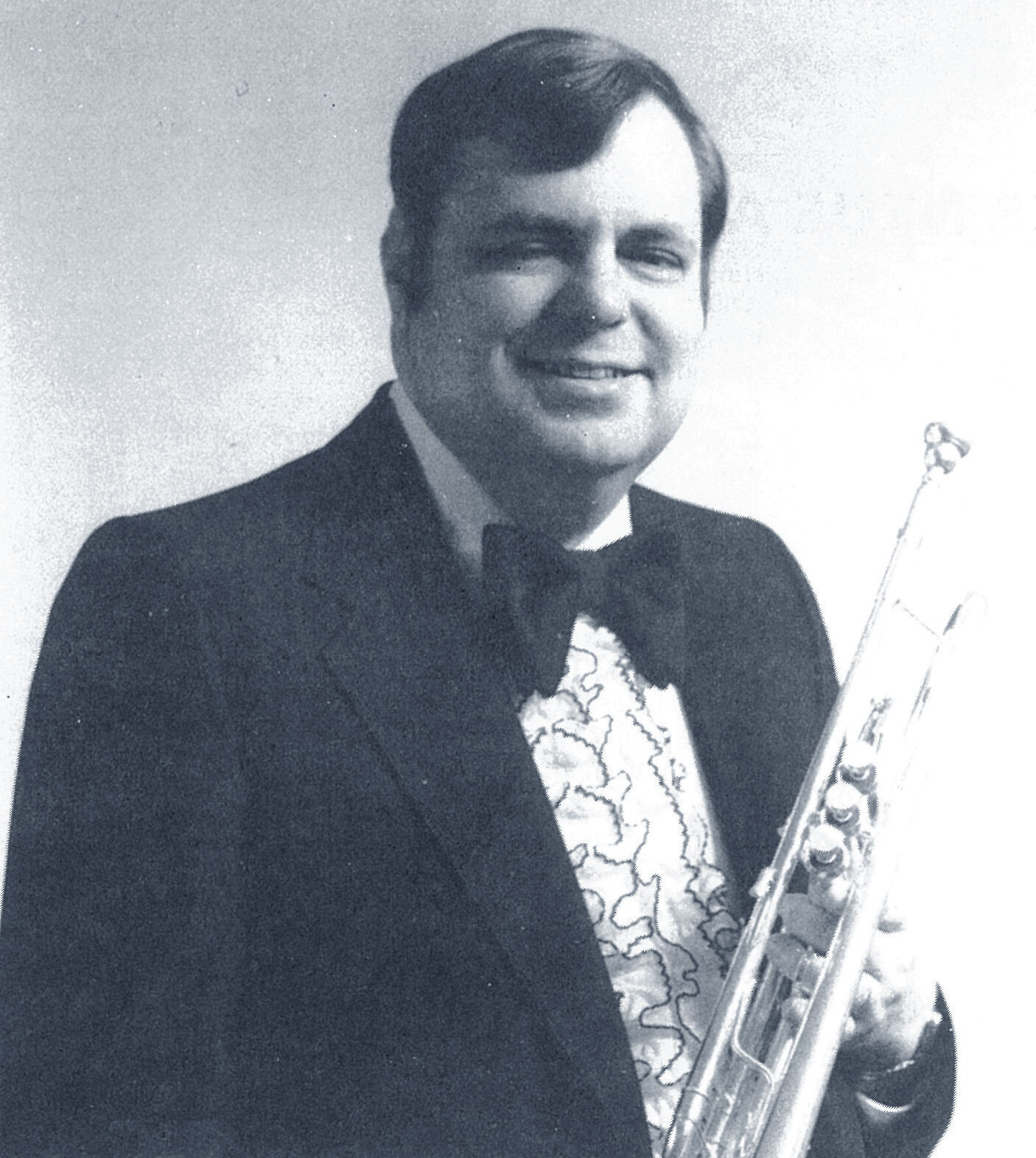
Jerry Franks
More recently, Jerry Franks and Dr. Van Osdol have been using another method to achieve the same results, a method called bonding. “The bonding process is by far the simplest”, says Franks, “It only takes about 20 minutes and can be used immediately.” “We now use the technique almost exclusively,” says Dr. Van Osdol. “It involves the use of new dental products which allow us to etch and bond plastic material to the teeth to achieve the form, shape, and the position that we desire. It has the great advantage of being in the mouth all the time, and there’s no need to have a movable appliance (as the overlay). Another nice feature is that it is completely reversible. In other words, if it is not doing what we hoped it would, we can completely and easily remove it. Or we can add to it, reshape it, or whatever we desire to achieve results.”
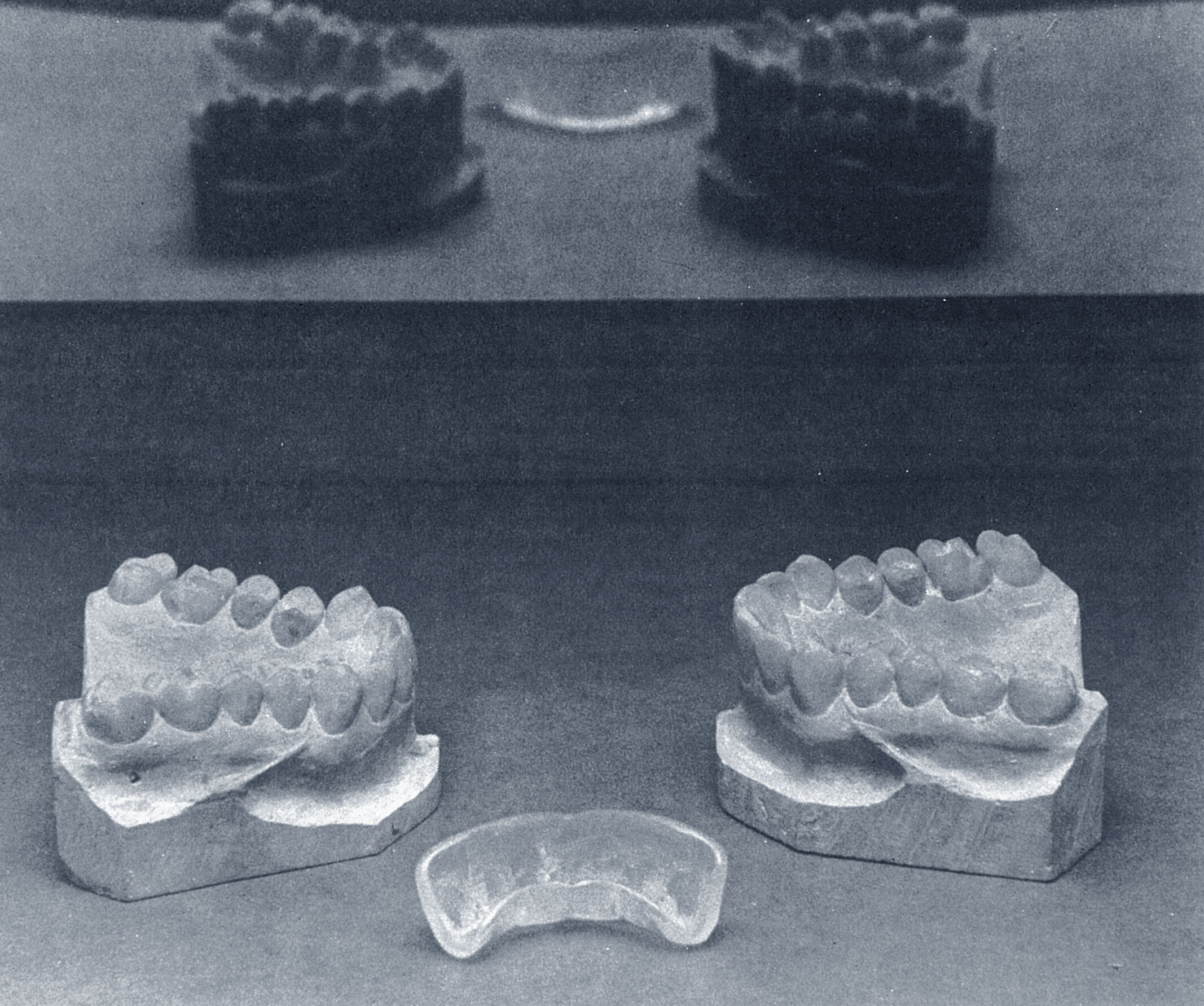
Plastic overlay shown in foreground. Model on left is patient before porcelain crowns - Model on right is after crowns
In the bonding procedure, a soft plastic material is applied to the two upper central incisors and then shaped. Each tooth acquires thereby a wedge shape, with the thickest part of each wedge in the middle. The dentist then causes the material to harden by the catalyst action of a special fiber optic light. The final shape is refined by using high-speed diamond burrs, and polished to a finish very close to the color and look of the original enamel. From a front-on view, the change is not very noticeable; from a profile or from below, the wedge shape can be detected slightly.
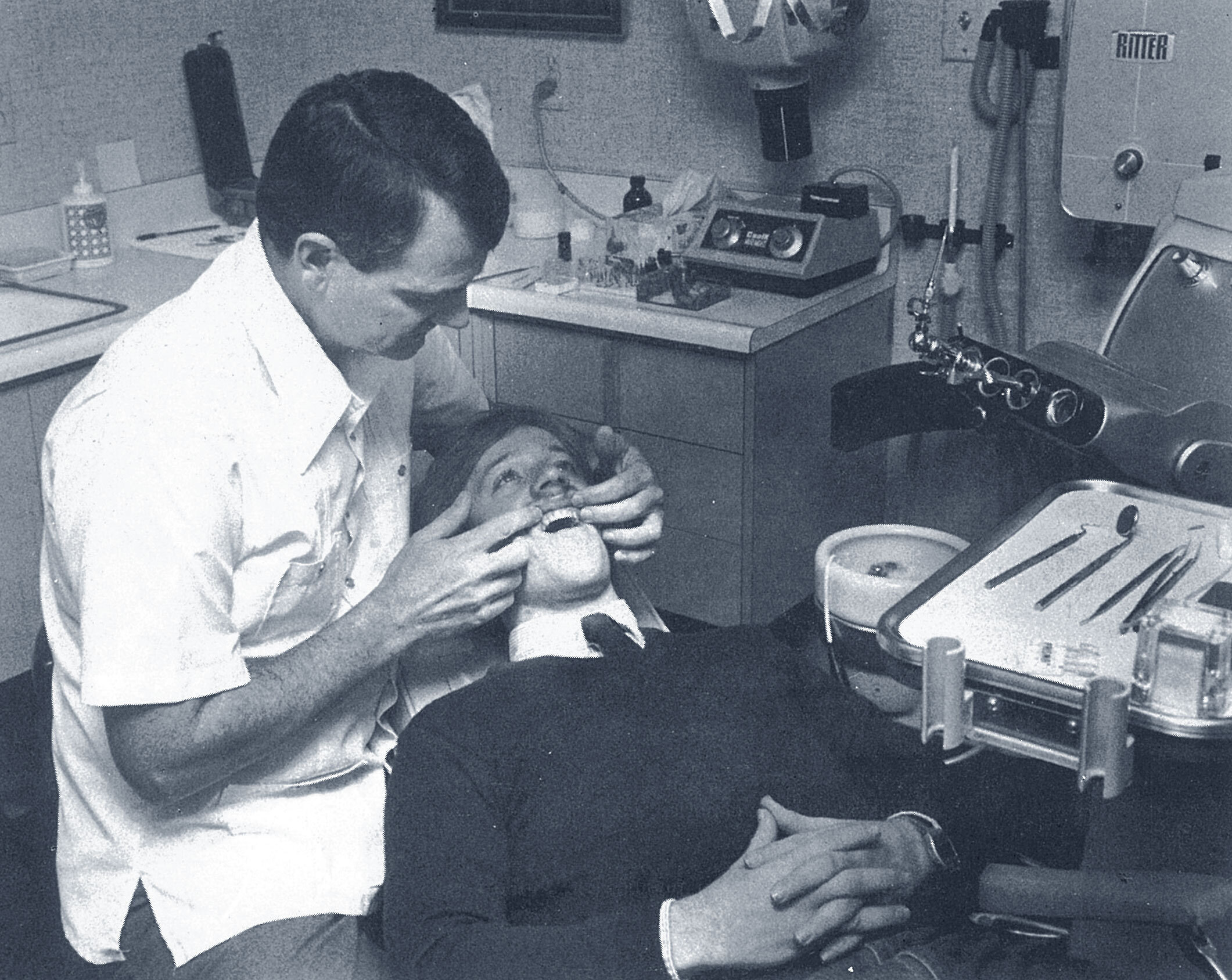
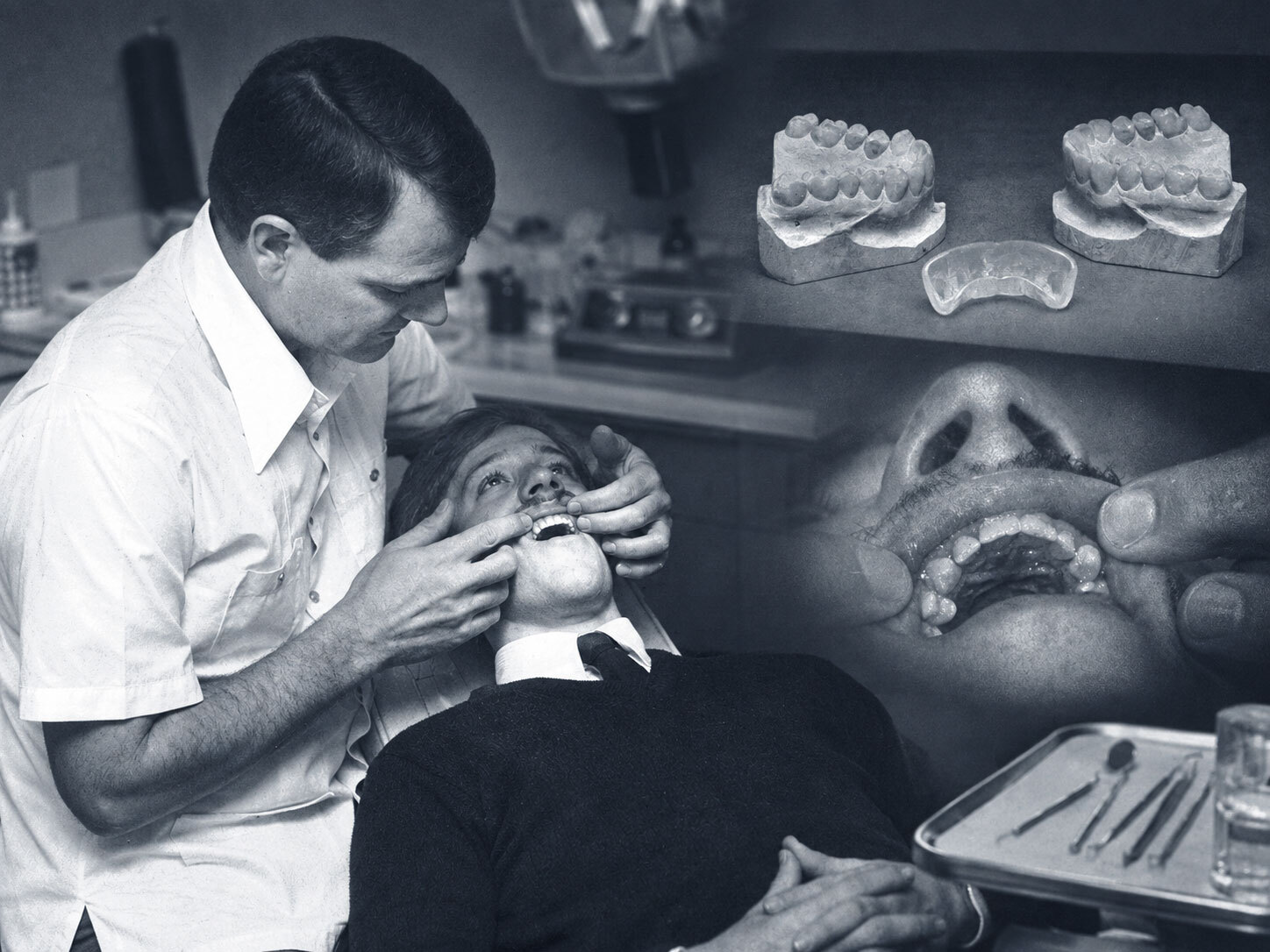
Dr. Van Osdol examining patient for bonding
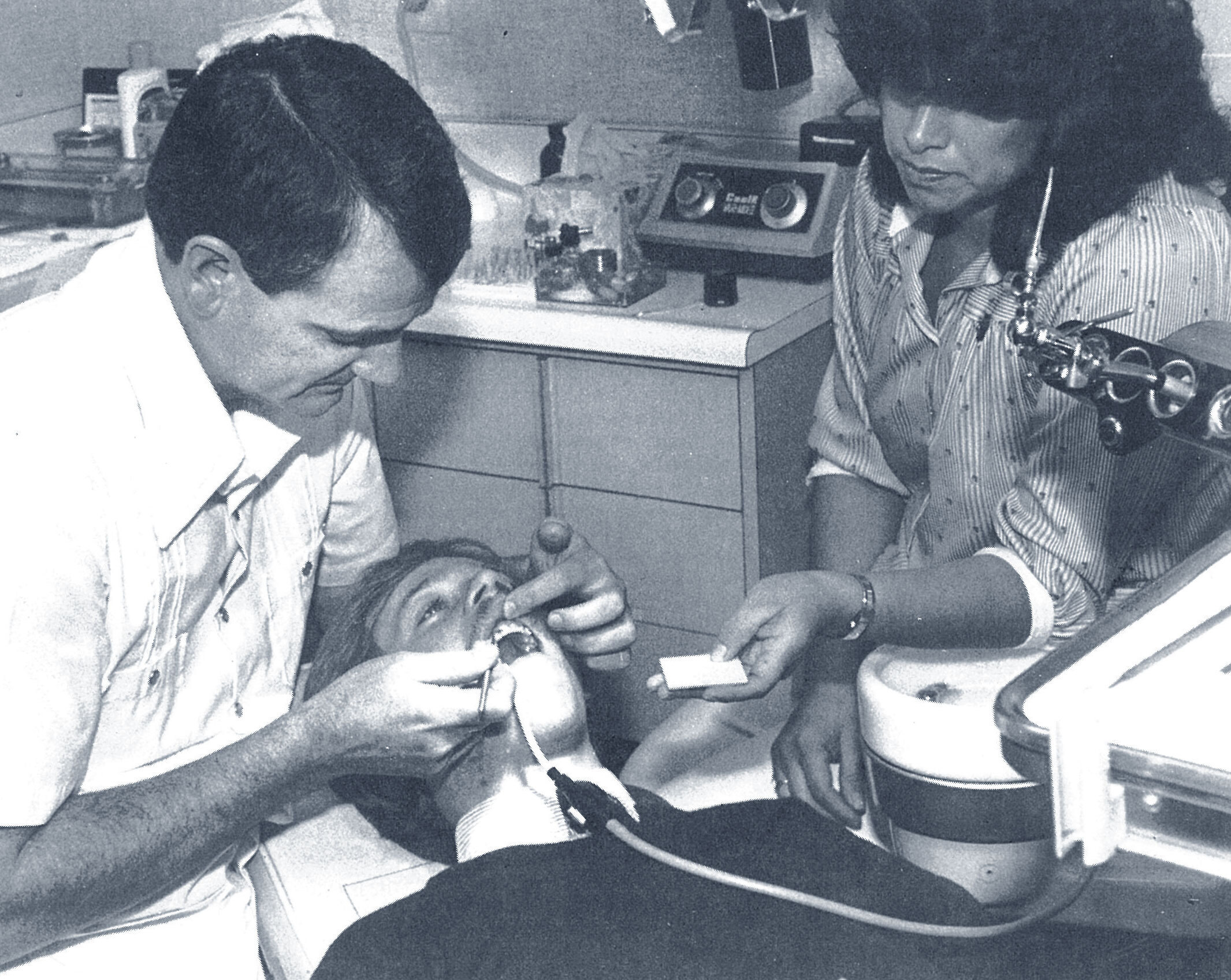
Applying the putty-like plastic compound prior to curing with light system
“The patient is encouraged to bring his instrument with him to the appointment. It is then possible to make some adjustments afterward. Usually we find some noticeable improvement is evident immediately, but recommend that the patient return to the instructor, Jerry Franks, so he can help him use and take advantage of the new situation. I have been working with Jerry Franks since 1975 and would estimate that we have treated approximately 40 to 50 of his students. We have had a few musicians who are not students of Jerry Franks, but I prefer to work with an instructor who understands what we are doing and who can help the patient gain the full potential of the changes.”
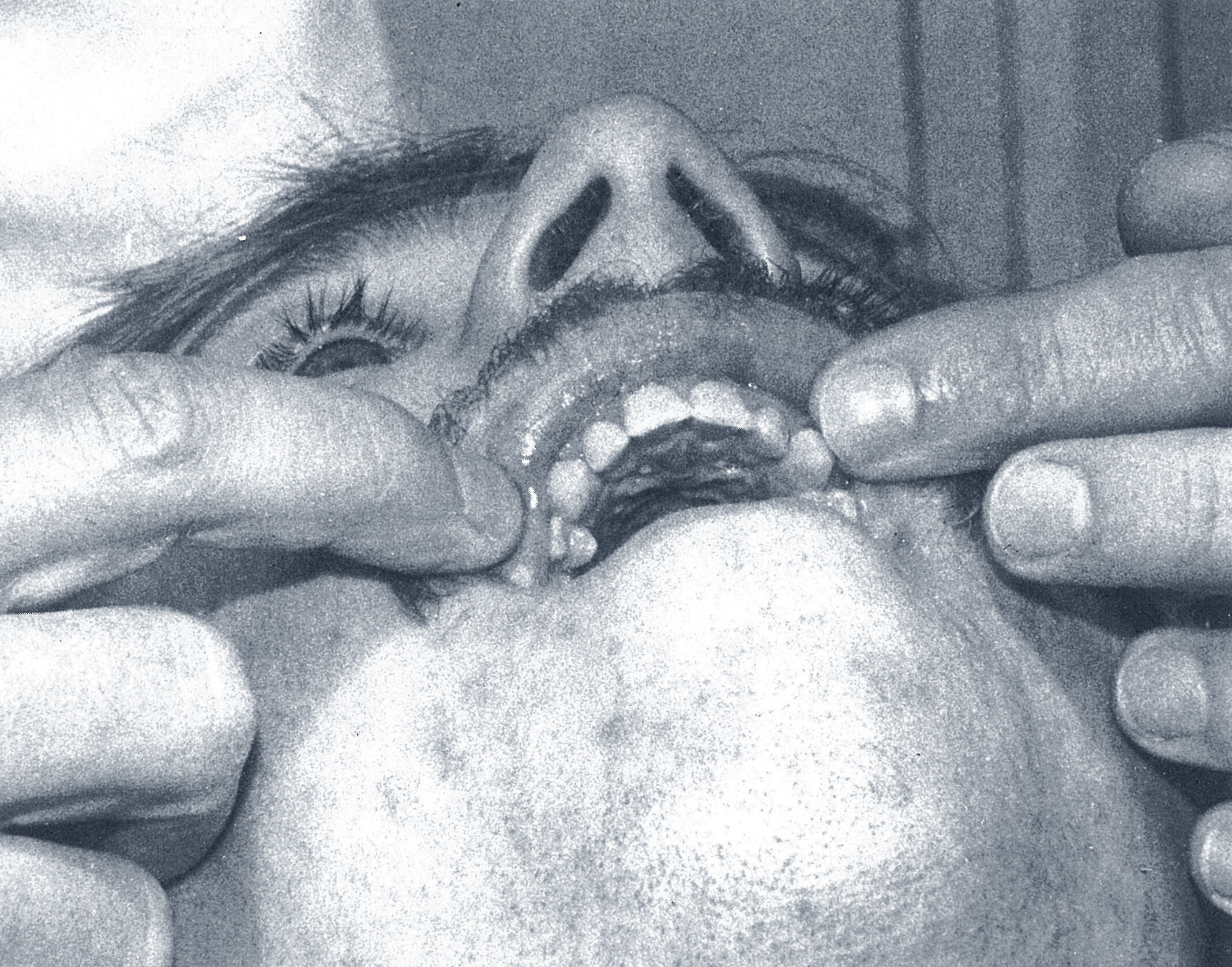
Anterior teeth before bonding
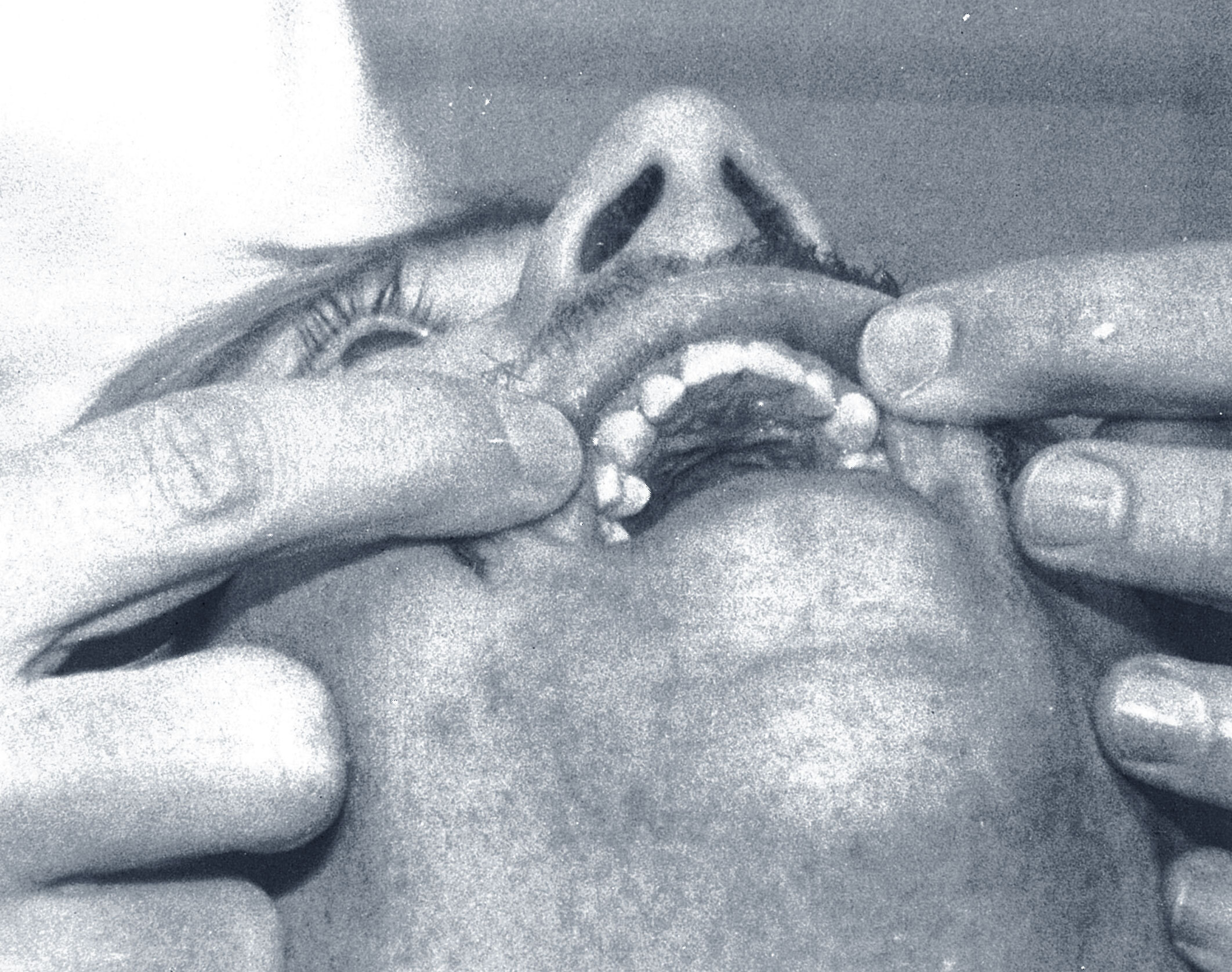
Anterior teeth after bonding
Jerry Franks and Dr. Van Osdol have used the bonding procedure successfully with many brass players from across the US, both college students and professionals from major big bands and symphonies. Franks notes, however, that the overlay is still used for players of the larger brasses who do not rest the mouthpiece on the teeth as trumpet players do. Here, the overlay is better because, unlike bonding, the overlay goes not only on the teeth, but also up on the gums.
Jerry Franks sums it up: “If you don’t have the pressure points, either from a naturally favorable shape or through bonding, your range will be limited. But remember that teeth formation is just a third of the entire process; you still have to develop proper embouchure muscles and the proper diaphragmatic support.”
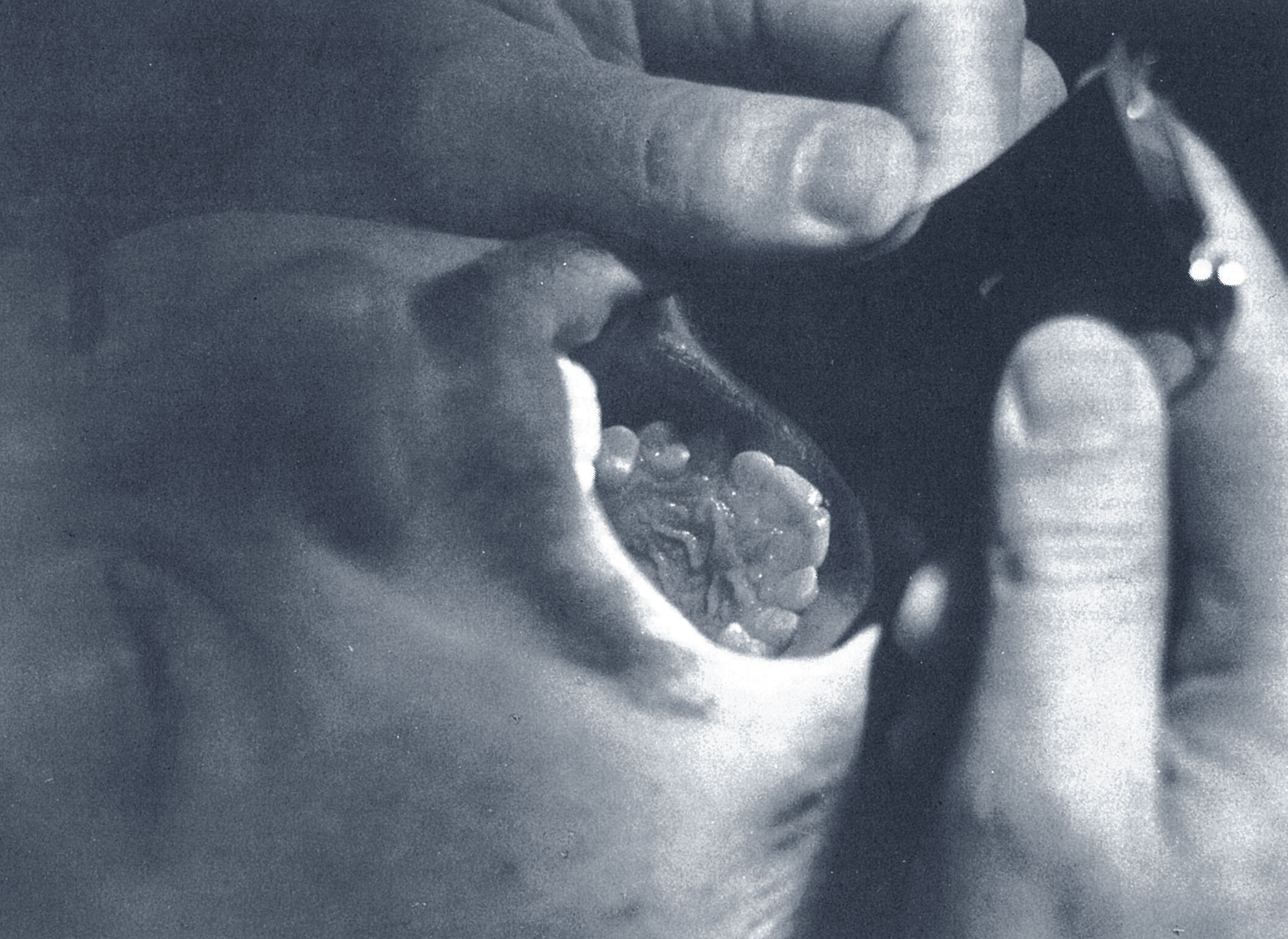
Anterior teeth (reflected in mirror) showing “wedge” shape after bonding
In spite of being blind since 1978 (“It’s just an inconvenience”, he says), Franks continues his studies of the dental aspects of brass playing along with his busy career of college teaching, lecturing, and performing. He says that Dr. Van Osdol is the only dentist in the country that he knows of who is doing work like this with brass players, but that he hopes that soon more dentists, as well as brass players and teachers, learn about it to take advantage of the possibilities of the overlay and the bonding technique.
For further information: Jerry Franks, 501 N. 10th St., Gas City, IN 46933, USA
Dr. Thomas D. Van Osdol, Kosciusko Professional Arts Building, 2259 DuBois Dr., Warsaw, IN 46580, USA