Brass Bulletin is now also available in Italian and Spanish.

1 min. read

Special Hungary

Studying music in Hungary

Studying music in Hungary

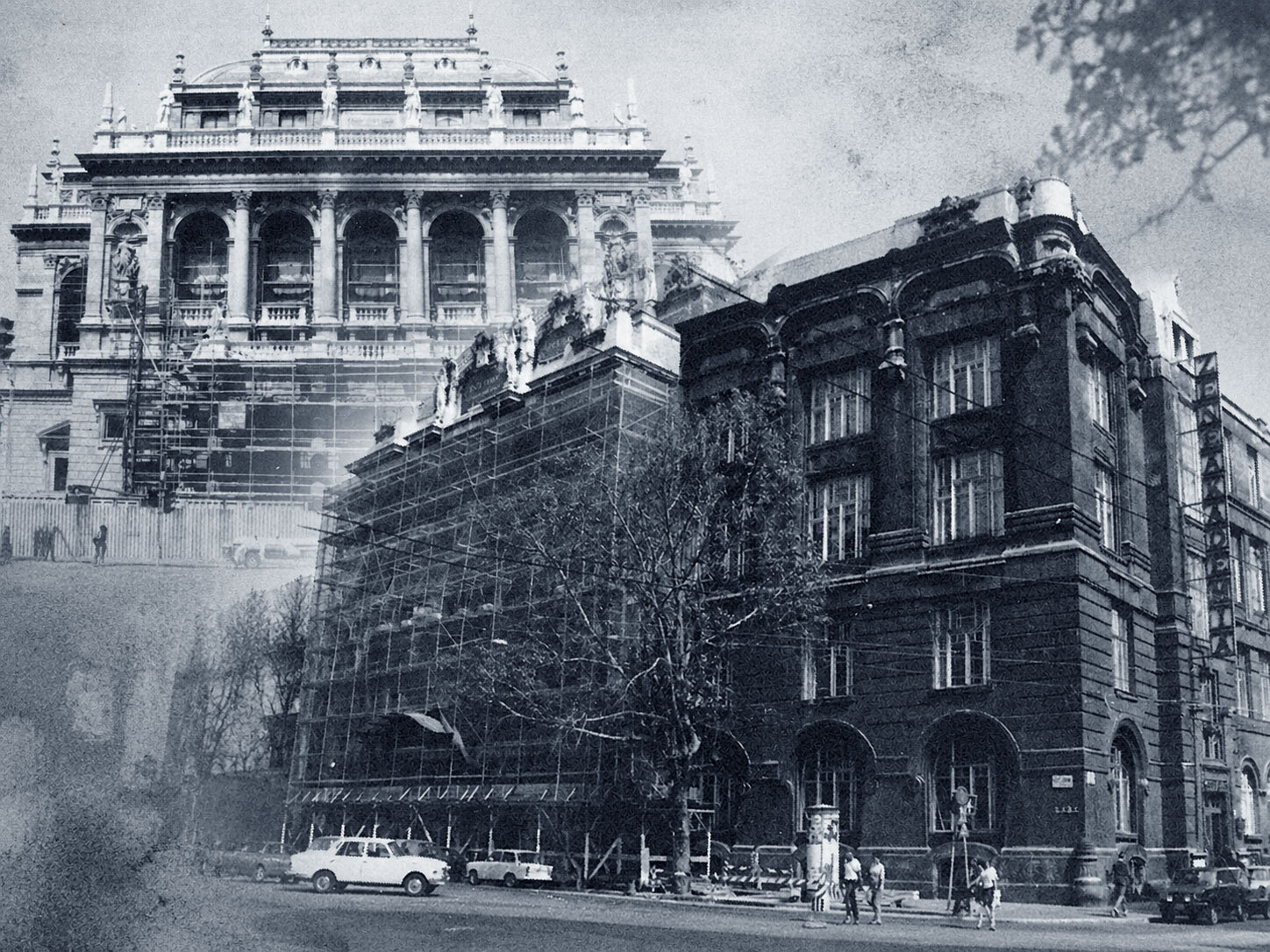
The Opera House - 1984, Music Academy F. Liszt

Musical education figures strongly in school curricula. The talents thus unearthed are directed to music schools where everything possible is done to foster artistic development. Then the pupils are steered with the greatest care towards those instruments which suit their physical aptitudes best. The standard and quality of technical and musical instruction are among the highest in the world. Young brass players can very soon play chamber music in classes set up for this purpose. Every student who successfully completes professional training is assured of a job commensurate with his abilities.

Average monthly salary of a brass player in Hungary:
(e.g.: Budapest Opera Orchestra) 4’000 to 5’500 forints (approx. $ 90.00 to $125.00) (not enough to live on, especially with a family)
Necessary supplementary earnings (lessons, fees, records etc.) 5’000 to 8’000 (approx. $120.00 to $188.00)
These two sources of income, combined, provide a reasonable average standard of living.

Hungarian musicians like to play concerts in the west because fees in western currency enable them to live well at home. Often a single paid concert, perhaps with a fee of $400.00 to $800.00 (which is normal in the west), corresponds to between two and four months’ salary in Hungary.

Getting a job in an orchestra is very difficult because of keen competition. Once obtained, however, these jobs are guaranteed for life — even if the player’s performance gets worse.

Brass Bulletin 48, IV / 1984 pages 38–39

All content is protected by copyright © Brass Bulletin 1984–2026

Share this article

Facebook LinkedIn
Loading…

Questions & Answers

How the Digital Edition works

What does the Digital Edition include?

The Digital Edition brings together the articles already digitized as searchable online texts—not simply as scans or PDF files—along with their original illustrations, notes, authorship, issue information, and available translations. Related-article suggestions currently include only this digitized material.

Are the digital articles identical to the originals?

We preserve the original text, language, illustrations, captions, footnotes, and editorial context as faithfully as possible. The presentation is adapted for comfortable online reading, and obvious transcription or scanning errors may be corrected. The substance and character of the published article remain unchanged.

Which languages are available?

Brass Bulletin was published in English, French, and German throughout its history. Italian and Spanish translations were added from issue No. 60 onward.

On the Italian and Spanish sites, articles from issues 1–59 are therefore shown in English by default.

How often are new articles added?

New articles are added almost daily, with approximately one complete issue digitized each week. The pace may vary depending on the preparation, image work, and editorial checking required.

Why aren’t all articles available digitally?

The complete Brass Bulletin collection contains 1,246 articles published between 1971 and 2003. The full index is already available online, allowing readers to discover every article in the collection, including those whose complete text has not yet been digitized.

Digitization began in February 2026. Each article is carefully prepared for online reading, checked, and connected to its issue, authors, subjects, and illustrations. At the current pace of digitization, the complete collection is expected to be available online by February 2028.

Why do some references mention articles that are not available yet?

References in the original articles are preserved even when the material they point to has not yet been digitized. This keeps the historical and editorial record intact. As more issues are added to the Digital Edition, an increasing number of these references will lead to articles that can be read online.

Can I suggest an article or report a transcription error?

Yes. If there is an article you would particularly like to see digitized, or if you notice a possible transcription error or missing detail, please contact us. Reader feedback helps us improve the Digital Edition and prioritize useful connections within the archive.

How can I support Brass Bulletin?

Your support helps fund the preparation, verification, and online publication of the complete collection.

Subscribe to the Digital Edition

Prefer to support us without subscribing?

Make a donation

Search Brass Bulletin.