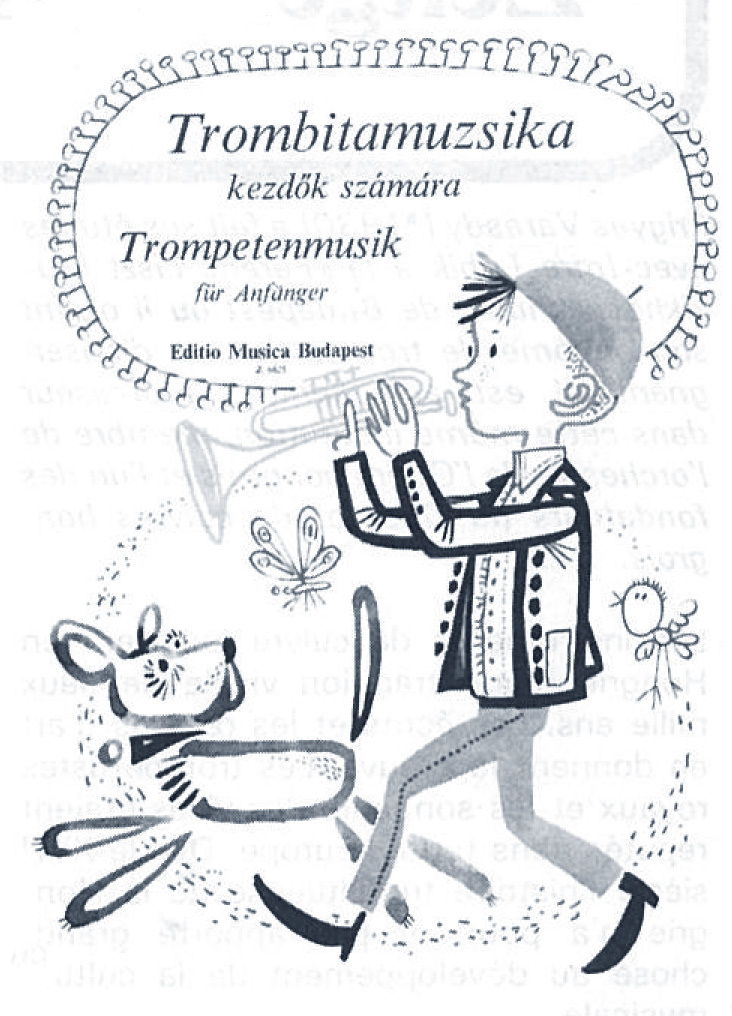
Illustration 1
The talent of the musicians speaks for itself, as fantastic results were obtained in a very short space of time. In this way György Zilcz performed the Albrechtsberger trombone concerto and made a record of the same work. Ferenc Tarjáni, horn artist, gave concerts during the past years with great success, in Europe as well as in the USA. Imre Magyari, the 22-year-old horn player, won the first prize in the competitions of Pabjanica (Poland) and Markneukirchen (GDR). István Palotai (22) and Pál Petz (25) won the first prize last year in the trumpet competition held in Vercelli, Italy. Pál Petz in the last concert season has performed the Haydn trumpet concerto and the 2nd Brandenburg concerto with great success.
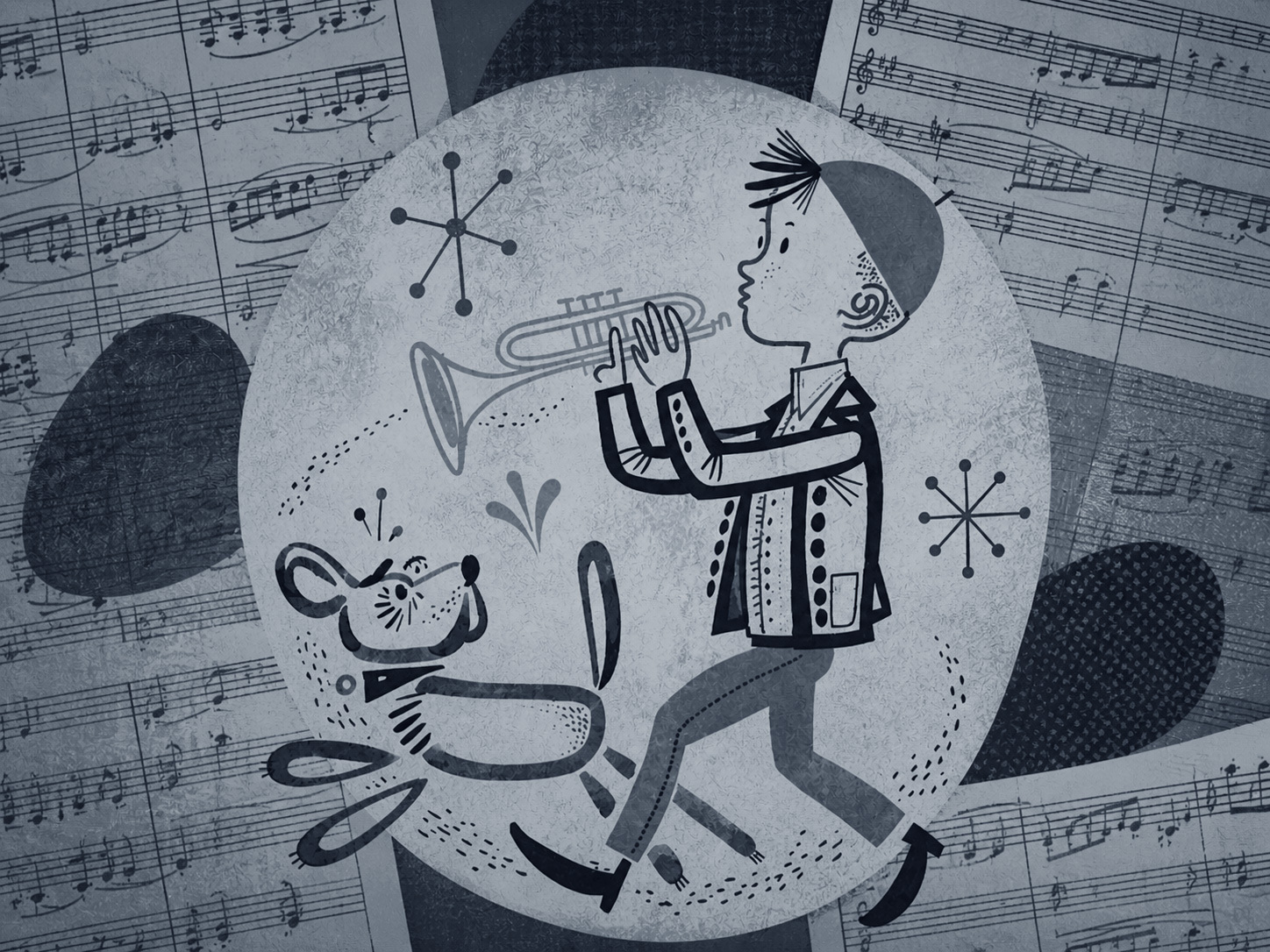
The Edition Musica, in Budapest, made a great contribution to the development of brass music culture. The edition had a beginners' method for all brass instruments written. In order to promote the musical capabilities of the pupils there are several collections, e.g. "Trumpet music for beginners" (III. 1), the individual volumes of which give an insight into all the epochs of the history of music, from the Renaissance up to today.
The duos for horn, trumpet and trombone which have appeared and which at the same time comprise several eras of musical history, further the development of ensemble playing. Chamber music is an obligatory subject in all the music schools and at all levels. Instruction in this sphere is supported by several publications, e.g. "Introduction to the practice of ensemble music-making", which is a collection of the author-trio Máriássy-Varasdy-Zilcz, or by the madrigals and pre-classical dances published by Imre Lubik and the Renaissance dances by Gervaise in the care of Frigyes Varasdy.
The contemporary Hungarian composers have written about 40 chamber works for brass ensembles. I would only like to call attention to some works, without giving any position of preference.
István Láng composed his work "Cassazione" for three trumpets, two trombones and tuba in 1971. The form of this 5-movement piece departs from the usual: after the first fast movement there follows an even faster one, the 3rd and 4th movements are slow and the final movement is again fast. The first movement is a modern formulation of the intrada. At the beginning of the 2nd, amongst all the aleatoric writing there is to be found a composition based on a canon (III. 2).
The sound of the 2 slow movements is completely different: the 3rd movement is an aria, in which the tuba melody is accompanied by the muted trumpets and trombones playing "frullato"; the fourth movement is less melodic, rather consisting of strange tone colour effects. The combined harmonic glissandos of the trumpets and trombones in the final movement form a virtuoso and interesting means of expression (III. 3). The composer used many modern compositional techniques in this piece and made maximum use of the innate possibilities of the instruments.
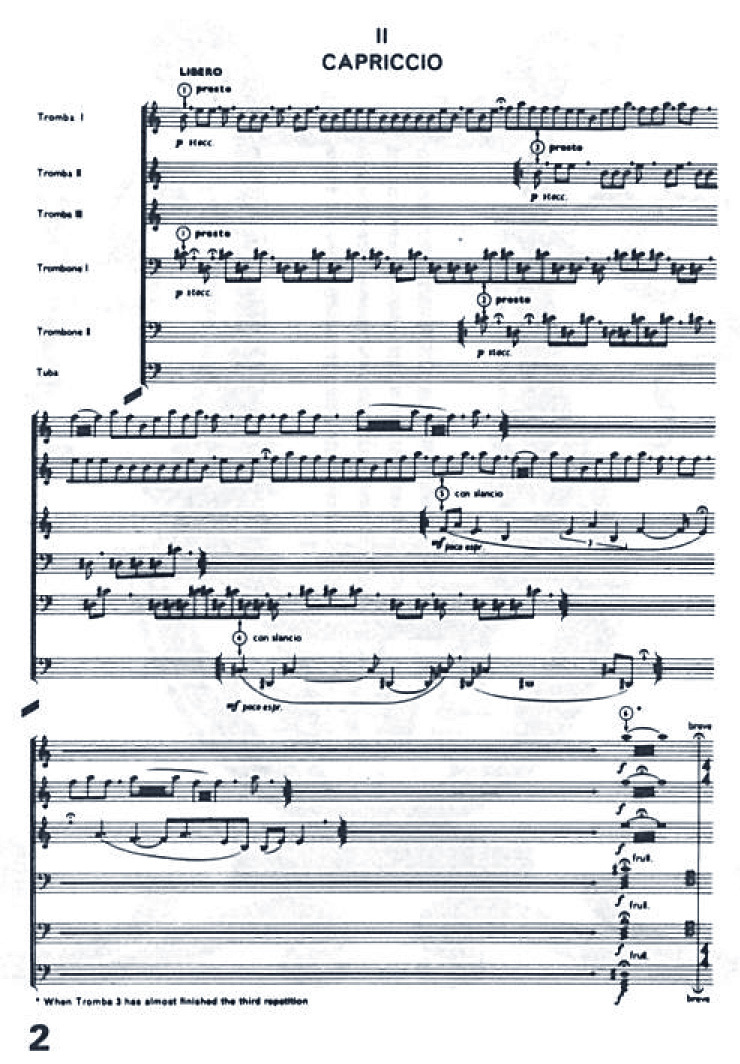
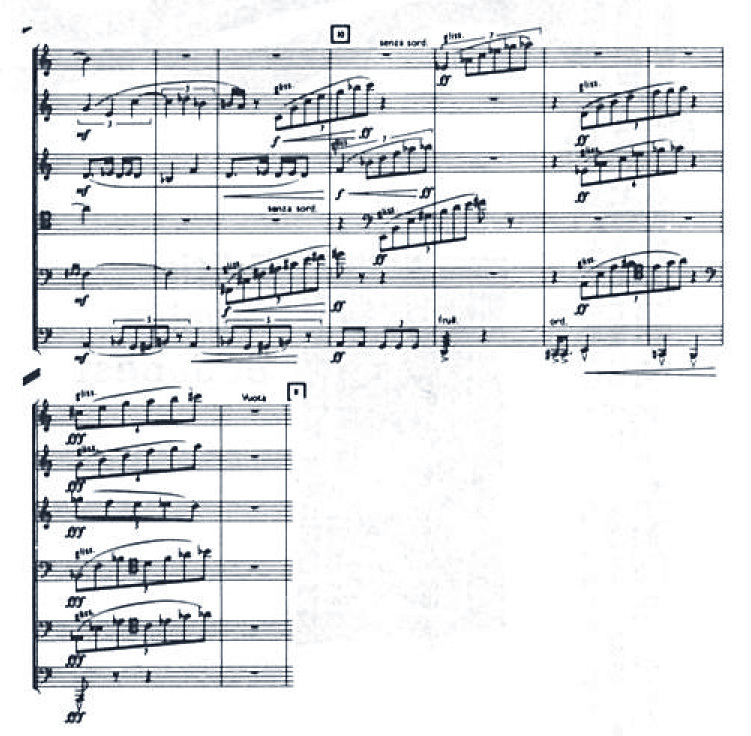
Illustration 2, 3
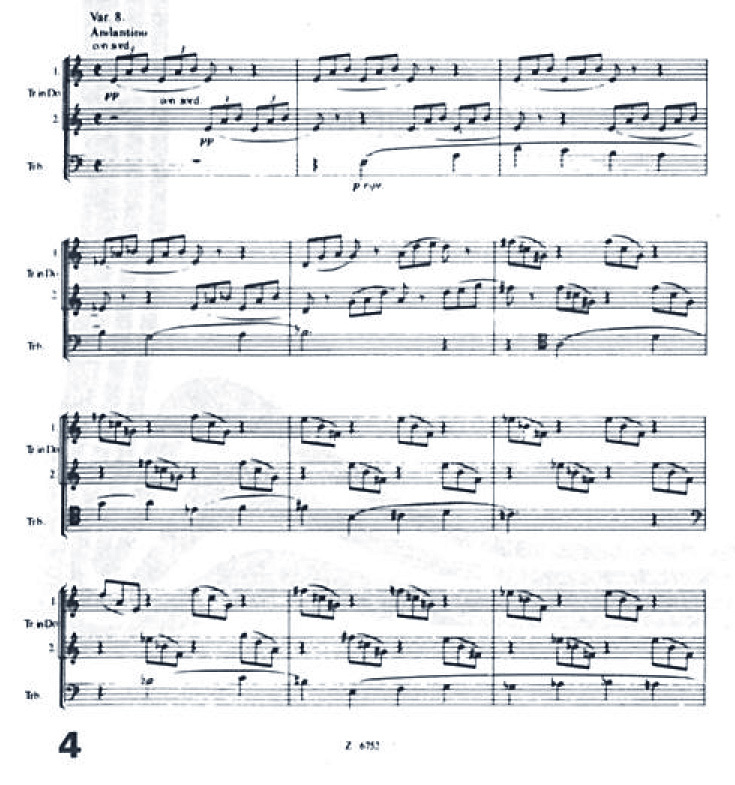
István Bogár wrote "Three Movements for Brass Quartet" in 1972 (2 trumpets, trombone, tuba). His manner of composition is more traditional than the aforementioned work. I would like to call attention to the second movement, which consists of a theme and 9 character variations. Several of the variations are not characteristic of brass instruments, but their carrying out and perfection contributes to the development of the brass ensemble, as for example the 8th variation, in which two muted trumpets accompany the melody in the trombone in the manner of the harp (III. 4).
In the 3rd variation one should pay attention to the exact way the parts switch. Some variations exploit the instruments' capabilities of caricature, as for example the 4th variation, which produces the atmosphere of folk brass ensemble playing.
Miklós Kocsár wrote his "Trio for brass instruments" (2 trumpets and trombone) when he was still at the academy. The piece follows the classical form: the first movement is a sonata, the second tripartite, the third a rondo. The material is polyphonic, at a high level of chamber music playing. All three instruments play equal parts, both technically and musically speaking.
The composer has a completely clear notion of what each instrument is capable of, as he learnt the trombone for several years himself. This fact is apparent, particularly in the first movement, where the fanfare-like main theme corresponds to the peculiarities of the instrument, after which there follows a smooth subsidiary theme which fits the character of the trombone excellently. In the recapitulation the melody of the trombone is imitated by the trumpet. This concentration of the material puts a particular stress on the end of the movement.
The second movement is lyrical in character, an interrupted smooth melody and strange new harmonies. The finale is a virtuoso piece, full of drive. The trio is one of the most often played chamber works for brass instruments, because it takes account of the peculiarities of the instruments and the trumpet parts, not being too high, are playable by less advanced pupils. At the same time this piece can stand up on any concert platform due to its musical values and the virtuosity of the first and final movements.
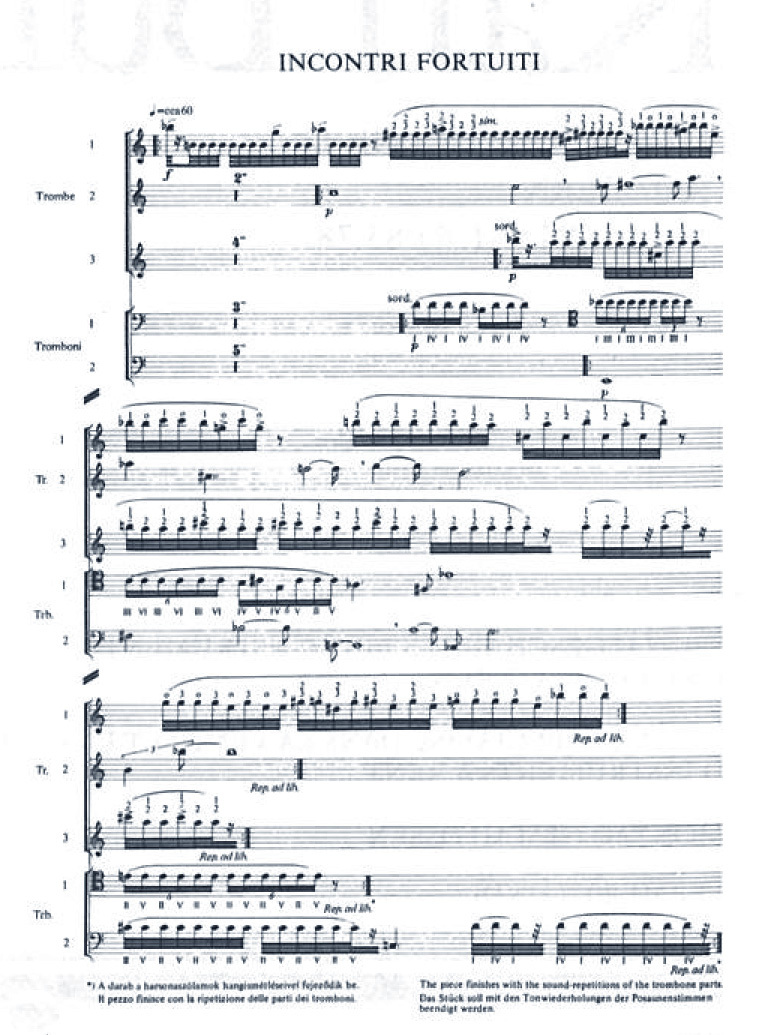
András Szőllősy composed "Musiche per Ottoni" for three trumpets, two trombones and tuba in 1975. The work consists of 20 shorter or longer movements in a collection which comprises duos to sextets of all kinds. The composer has conceived it first and foremost as a collection of "chamber studies", but can be played in concerts in the form of a suite (various selections) with great success.
The movements are partly traditional (as for example chorale, canon, organum) or however are completely surprising in character (vibrato, operetta, glissando). The traditional as well as the more unusual titles contain highly modern musical means and expression. So for example the first movement seems to be totally traditional (intrada), but due to its complicated rhythmical structure and world of harmonies it is nearer punctualism.
The movement Riflesso uses the inversion of the 12-tone row. In the other movements we have aleatoric writing and strange effects, various mutes, glissandos, trills, particular repeats, etc. This cycle could be applied in higher instruction as a kind of bridge between traditional playing and the avant-garde performance style.
The Hungarian brass players can perform other valuable and interesting works apart from the pieces previously mentioned. It should be mentioned that the composers are eager to create more new works for the performing artists who have now been distinguished. By means of foreign brass players some contemporary works are spread world-wide.
It is to be hoped that these lines will awaken the interest of the brass players in other parts of the world and that they will have pleasure in performing these modern works.