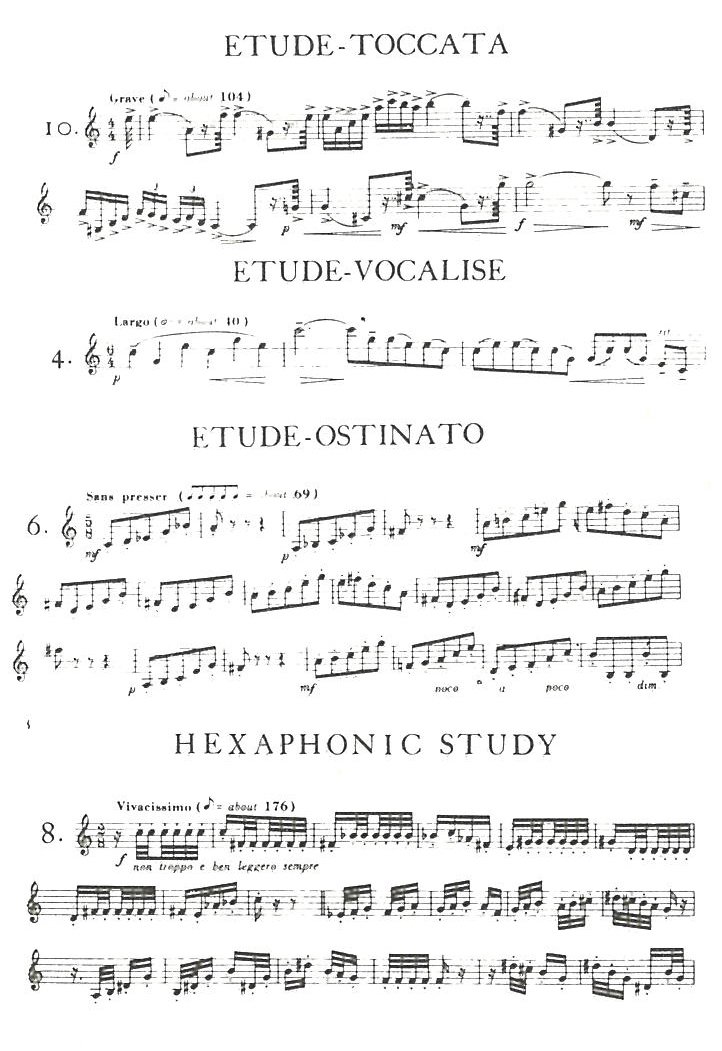
Paolo Longinotti, Studies in Classical and Modern Style by I.M.C. in New York.
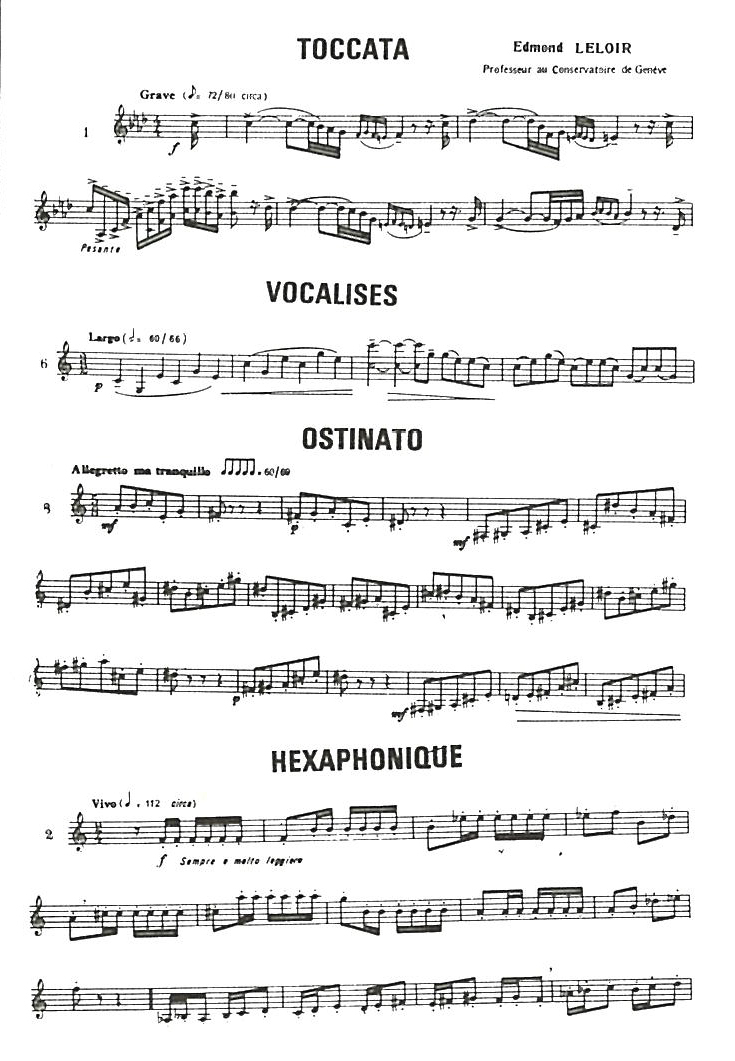
Edmond Leloir, Dix Etudes pour le cor en Fa G. Billaudot, Paris 1981)
Photocopying
With the invention of photocopying machines a new form of plagiarism has arisen — fast, cheap copies of a printed score. This illegal practice is now very widespread in the world, to the publishers' great loss. The publishers defend themselves mainly by bringing cases ‘‘to make an example’’ of someone (although these are extremely expensive for those found guilty).¹
Some music colleges push scorn for the law even further by coolly placing a photocopier at the disposal of staff and students. One may ask why these musical institutions have so little respect for the work of the composers or teachers whose employers they themselves often are. When asked for an explanation they usually reply that publishers charge excessive prices. If some publishers do indeed seem to charge excessively inflated prices, it is not for public institutions to pass judgement, much less to commit an illegal act by way of ‘‘punishment’’. By photocopying a score one implicitly recognises that it has a value. That value has been created by someone (the composer) and realised, distributed and marketed by a publishing house. Is it right to ignore the work and investment involved? People's replies to this question will be qualified in various ways according to their conscience. There are degrees of seriousness in theft by photocopy as there are in all crimes.
A typical example
Some years ago a Swiss trombone player (who was perfectly well aware that it is illegal to photocopy sheet music protected by copyright) was preparing, as he always did, a music course for amateur brass players. He thus ordered a number of scores and books of studies on approval from a specialised shop. Imagine the surprise of the shop staff when, a few days later, they received a large parcel containing hundreds of pages of ‘‘musical’’ photocopies taken from these publications.
The musician's wife had put the labels on the wrong parcels and, in sending back the ‘‘approvals’’, had let the cat out of the bag.