Out of print
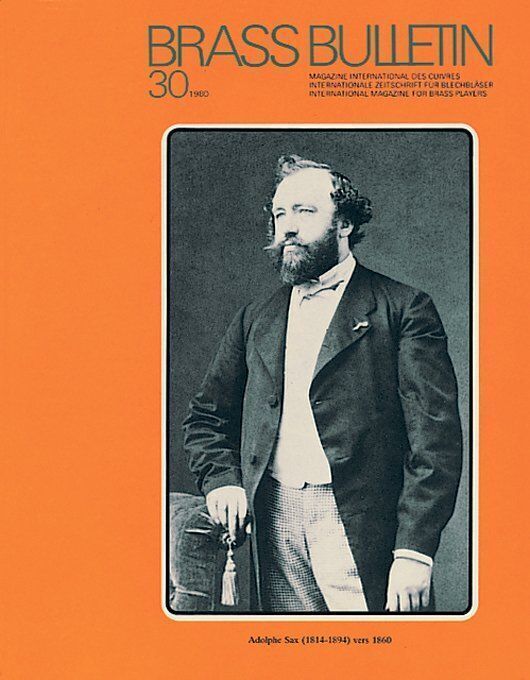
Brass Bulletin No. 30
II / 1980
Contents
Editorial
So your trumpet plays in tune
Thomas Stevens
Keyboard tuning, just intonation and string phrasing place brass players between conflicting pitch systems, as Thomas Stevens outlines practical compromises.
Benny Sluchin
Portrait in brief
Jean-Pierre Mathez
Between Paris, Cologne and Tel Aviv, Benny Sluchin brings mathematics, acoustics and contemporary performance into the brass world.
Practical Hints
Part 1James Stamp
Built around Herbert L. Clarke’s Technical Studies, these practice routines refine flexibility, intonation and note placement through structured brass exercises.
Articulation or bowing on the trumpet
Part 1Timofey Dokschidser
Trumpet articulation becomes a precise study of attack, sustain, release and legato, linking tongue, breath, lips and sound in Dokshitser’s method.
The double-slide trombone
museum-piece with a future?
Boris G. Manzora
As virtuosity reshaped 20th-century brass playing, Boris G. Manzora argued that the forgotten double-slide trombone could redefine technique and range.
The stamps on Sax instruments
M. Haine, I. De Keyser
Sax instrument stamps reveal makers, addresses, patents and distinctions, giving collectors concrete clues for dating instruments across three generations.
On the sensitivity of brass instruments
Emile Ferron
Metal, pressure nodes and temperature shifts shape response, timbre and tuning, as Emile Ferron links instrument acoustics to the player’s imprint.
The use of the mind in instrumental performance
Michel Ricquier
Relaxation, concentration and mental imagery reshape technical practice, linking self-confidence and instrumental control beyond physical training alone.