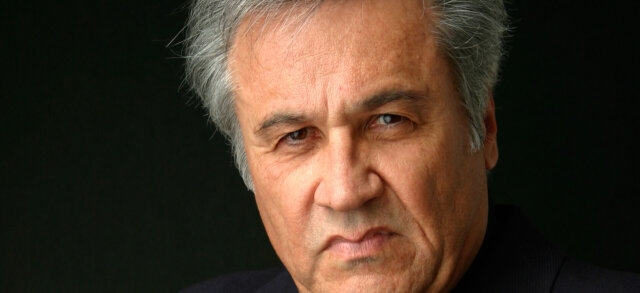
Thomas Stevens
Thomas Stevens (1938–2018) was an American trumpeter, composer, teacher and writer whose influence extended from the orchestral stage to contemporary music, brass education and the international musical press. Appointed to the Los Angeles Philharmonic in 1965 by music director Zubin Mehta, Stevens became principal trumpet in 1972 and remained with…
Read biography
Thomas Stevens (1938–2018) was an American trumpeter, composer, teacher and writer whose influence extended from the orchestral stage to contemporary music, brass education and the international musical press.
Appointed to the Los Angeles Philharmonic in 1965 by music director Zubin Mehta, Stevens became principal trumpet in 1972 and remained with the orchestra until his retirement in December 1999. He also served as principal trumpet with the World Orchestra for Peace, Sir Georg Solti’s hand-picked ensemble assembled in Geneva to celebrate the fiftieth anniversary of the United Nations, and with the Casals Festival Orchestra in Puerto Rico.
Before joining the Los Angeles Philharmonic, Stevens served in the U.S. Army as a solo trumpeter with the West Point Band, followed by a one-year engagement with the Dallas Symphony Orchestra.
Alongside his orchestral career, he performed and recorded as a soloist and chamber musician with major organizations worldwide, including the Chamber Music Society of Lincoln Center. In the early 1980s, Pierre Boulez invited him to participate in a project devoted to new brass music with the Ensemble intercontemporain in Paris. Stevens was also a founding member of the Los Angeles Brass Quintet and worked extensively in Hollywood’s recording studios.
His advocacy for contemporary trumpet music was a defining part of his career. Through performances, collaborations and premiere recordings, he helped establish works that became important additions to the solo trumpet repertoire. Among them was Luciano Berio’s Sequenza X, written specifically for him.
Stevens also made a substantial contribution to the international brass community through his writing for Brass Bulletin. His contributions spanned three decades, from 1973 to 2003, and addressed trumpet playing, teaching, repertoire, equipment and the realities of professional musical life. In articles such as The Trumpet in the USA, his tribute to James Stamp, and essays on orchestral auditions and musicianship, he brought a performer’s experience and an independent, questioning voice to readers around the world. These writings form an important part of his legacy as both a musician and an educator.
As a composer, arranger and orchestrator, Stevens produced works performed in major concert venues and on recordings. His educational publications complemented his teaching and advocacy for musical development. He edited the definitive published version of James Stamp’s Warm-Ups and Studies for Editions Bim, as well as Stamp’s Supplemental Studies (2009). In 2011, he compiled and edited After Schlossberg, a collection of trumpet studies drawing on the pedagogical tradition that followed Max Schlossberg.
His teaching was also preserved on video. In 2016, Gossamer Wings Music released Thomas Stevens on Musicianship: Vacchiano’s Rules and Beyond, featuring excerpts from his masterclasses at the Center for Advanced Musical Studies at Chosen Vale, New Hampshire. The following year, the hour-long Thomas Stevens, The Schlossberg Workshop at Chosen Vale was made available on YouTube.
Stevens studied principally with Lester Remsen and James Stamp in Los Angeles, and William Vacchiano in New York City. He went on to teach at the University of Southern California, the California Institute of the Arts and the Music Academy of the West, while giving masterclasses and holding residencies at leading institutions internationally. His students included prominent soloists, members of major symphony orchestras and teachers at universities and conservatories. He was also a member of the founding board of directors of the International Trumpet Guild.
Following his retirement from the Los Angeles Philharmonic, Stevens continued teaching throughout the United States and Europe. His engagements included repeat appointments at the Lake Placid Institute, the Center for Advanced Musical Studies at Chosen Vale and TAW Bremen in Germany, as well as a return to CalArts during the autumn term of 2008.
In 1996, the University of Southern California’s Thornton School of Music, where he had completed his undergraduate studies, named him Outstanding Alumnus of the Year. In 2007, he received a Certificate of Special Recognition from the United States Congress, together with a similar citation from the California State Senate, for “outstanding and invaluable service to the community.”
Thomas Stevens died on July 14, 2018, in Cambria, California. His recordings, compositions, teaching materials and writings preserve a lifetime devoted to music and to sharing its knowledge with others.
29 Articles by Thomas Stevens
Brass Bulletin 5 - 2 / 1973

Stevens, Thomas
I chose to address myself to new music rather than new trumpet
Thomas Stevens argues that progress in trumpet playing depends on better training, repertoire and musical thinking rather than on equipment.
pp. 47–70
Brass Bulletin No 5 · 1973
Trumpet· Repertoire· Contemporary Music
Brass Bulletin 27 - 3 / 1979
Stevens, Thomas
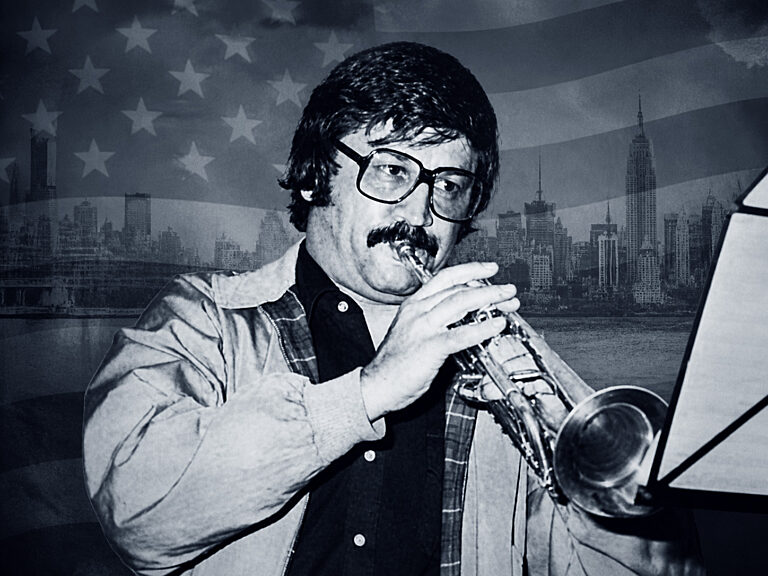
The Trumpet in the USA
Across competitions, teaching and equipment in the U.S., trumpet practice exposes clashing ideas of musicality, raising the question of shared standards beyond national styles
pp. 5–8
Brass Bulletin No 27 · 1979
Trumpet· Society· American school· Interpretation
Brass Bulletin 28 - 4 / 1979
Stevens, Thomas
The Trumpet in the USA
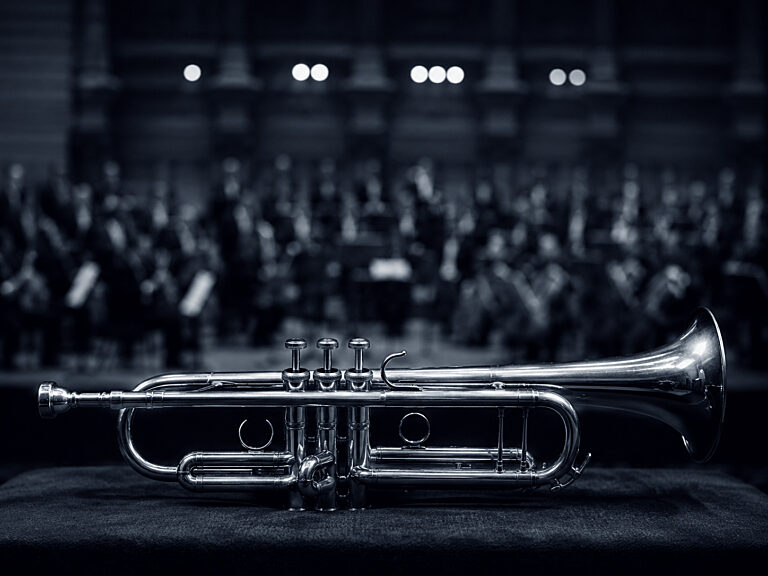
The Piston C Trumpet in American Orchestras
American orchestral trumpeters reveal how Bach C trumpets, hall acoustics and extensive modifications shaped playing traditions in major ensembles.
pp. 35–41
Brass Bulletin No 28 · 1979
Trumpet· Report· Equipment· Instrument making· American school
Brass Bulletin 29 - 1 / 1980
Stevens, Thomas
The Trumpet in the USA
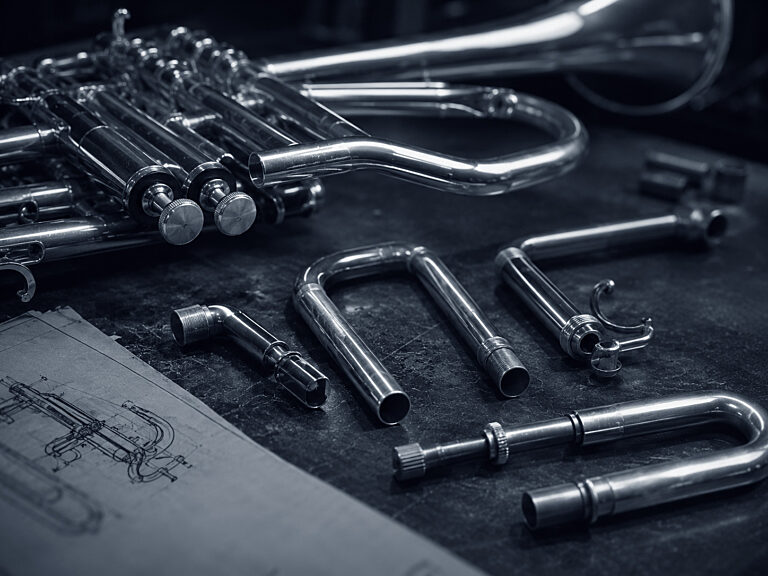
Gadgets I
From Schilke soundposts to piccolo trumpet extensions, American performers turned technical frustrations into specialized tools for modern playing.
pp. 17–18
Brass Bulletin No 29 · 1980
Trumpet· Equipment· Instrument making· Sound
Brass Bulletin 30 - 2 / 1980
Stevens, Thomas
Editorial
So your trumpet plays in tune
Keyboard tuning, just intonation and string phrasing place brass players between conflicting pitch systems, as Thomas Stevens outlines practical compromises.
pp. 3–4
Brass Bulletin No 30 · 1980
Trumpet· Acoustics· Technique· Intonation· Interpretation
Brass Bulletin 33 - 1 / 1981
Stevens, Thomas
The Trumpet in the USA
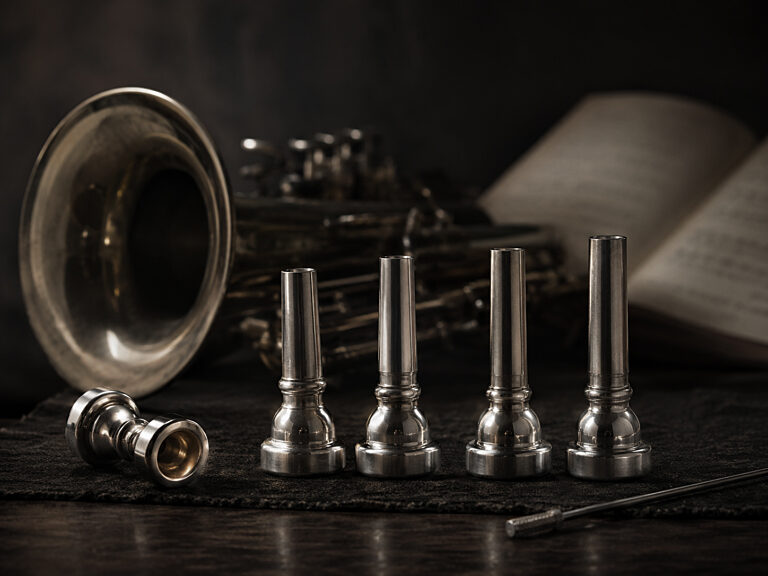
Gadgets II
Mouthpiece backbores for piccolo and C trumpet are compared through practical performer testing, linking equipment choices to sound, volume and intonation.
pp. 41
Brass Bulletin No 33 · 1981
Trumpet· Equipment· Mouthpiece· Sound
Brass Bulletin 37 - 1 / 1982
Stevens, Thomas
The Trumpet in the USA
The Confidence Pill
Stage fright meets medical research as performers, physicians and early beta-blocker studies reshape the debate over confidence, fairness and public performance.
pp. 8–9
Brass Bulletin No 37 · 1982
Trumpet· Health· Nerves· Mental approach
Brass Bulletin 43 - 3 / 1983
Stevens, Thomas
The Trumpet in the USA
Diverse makers
As trumpet makers rethink their standard instruments, Monette, Malone and Blackburn bring leadpipe design into a new dialogue between players and workshops.
pp. 67–68
Brass Bulletin No 43 · 1983
Trumpet· Instrument Makers· Equipment· Intonation
Brass Bulletin 53 - 1 / 1986
Stevens, Thomas
Homage to James Stamp (1904-1985)
pp. 3–4
Brass Bulletin No 53 · 1986
Mathez, Jean-Pierre · Stevens, Thomas
Editorial
Homage to James Stamp
pp. 3–4
Brass Bulletin No 53 · 1986
Brass Bulletin 57 - 1 / 1987
Stevens, Thomas
Can jazz performance be taught?
A profile of Charlie Shoemake
pp. 13–19
Brass Bulletin No 57 · 1987
Repertoire· Teaching· Jazz· Ideas
Brass Bulletin 58 - 2 / 1987
Stevens, Thomas
David Monette
Profile
pp. 71
Brass Bulletin No 58 · 1987
Trumpet· Equipment
Brass Bulletin 61 - 1 / 1988
Stevens, Thomas
U.S.A. Profile
Bob Malone
pp. 103
Brass Bulletin No 61 · 1988
Equipment· Encounters
Brass Bulletin 72 - 4 / 1990
Stevens, Thomas
The Minute counter!
pp. 48–50
Brass Bulletin No 72 · 1990
Society· Ideas
Brass Bulletin 75 - 3 / 1991
Stevens, Thomas
Sampling?
pp. 26–28
Brass Bulletin No 75 · 1991
Society· Ideas
Brass Bulletin 76 - 4 / 1991
Stevens, Thomas
Sampling? A hard rality !
pp. 44–47
Brass Bulletin No 76 · 1991
Society· Ideas
Brass Bulletin 83 - 3 / 1993
Stevens, Thomas
Yes! We have no repertoire!
pp. 62–63
Brass Bulletin No 83 · 1993
Trumpet· Repertoire
Brass Bulletin 102 - 2 / 1998
Stevens, Thomas
About my “48 Lyric Studies”
pp. 59–62
Brass Bulletin No 102 · 1998
Trumpet· Repertoire· Teaching
Brass Bulletin 111 - 3 / 2000
Stevens, Thomas
Suppose they had an orchestra audition and nobody won?
pp. 106–121
Brass Bulletin No 111 · 2000
Society· Auditions· Ideas
Brass Bulletin 114 - 2 / 2001
Stevens, Thomas
The Composer’s Many Deaths
pp. 42–44
Brass Bulletin No 114 · 2001
Backstage
Brass Bulletin 115 - 3 / 2001
Stevens, Thomas
Hooray for Hollywood (land of illusion)
pp. 118–120
Brass Bulletin No 115 · 2001
Backstage
Brass Bulletin 116 - 4 / 2001
Stevens, Thomas
Fortissimo!
pp. 18–19
Brass Bulletin No 116 · 2001
Backstage
Brass Bulletin 117 - 1 / 2002
Stevens, Thomas
Quotables
pp. 28–29
Brass Bulletin No 117 · 2002
Backstage
Brass Bulletin 118 - 2 / 2002
Stevens, Thomas
Credit to the non-participants
pp. 28–29
Brass Bulletin No 118 · 2002
Backstage
Brass Bulletin 119 - 3 / 2002
Stevens, Thomas
Feelings
pp. 22–23
Brass Bulletin No 119 · 2002
Backstage
Brass Bulletin 120 - 4 / 2002
Stevens, Thomas
Marketing - One musician’s story
pp. 26–27
Brass Bulletin No 120 · 2002
Backstage
Brass Bulletin 121 - 1 / 2003
Stevens, Thomas
Salud to the Managers!
pp. 26–27
Brass Bulletin No 121 · 2003
Backstage
Brass Bulletin 122 - 2 / 2003
Stevens, Thomas
“Rienzi” at la Scala
pp. 28–30
Brass Bulletin No 122 · 2003
Backstage
Brass Bulletin 123 - 3 / 2003
Stevens, Thomas
How does a mouthpiece feel?
pp. 20–21
Brass Bulletin No 123 · 2003
Backstage
1 Article about Thomas Stevens
Brass Bulletin 91 - 3 / 1995
Mathez, Jean-Pierre
Thomas Stevens, Survey
pp. 50–57
Brass Bulletin No 91 · 1995
Trumpet· Encounters